









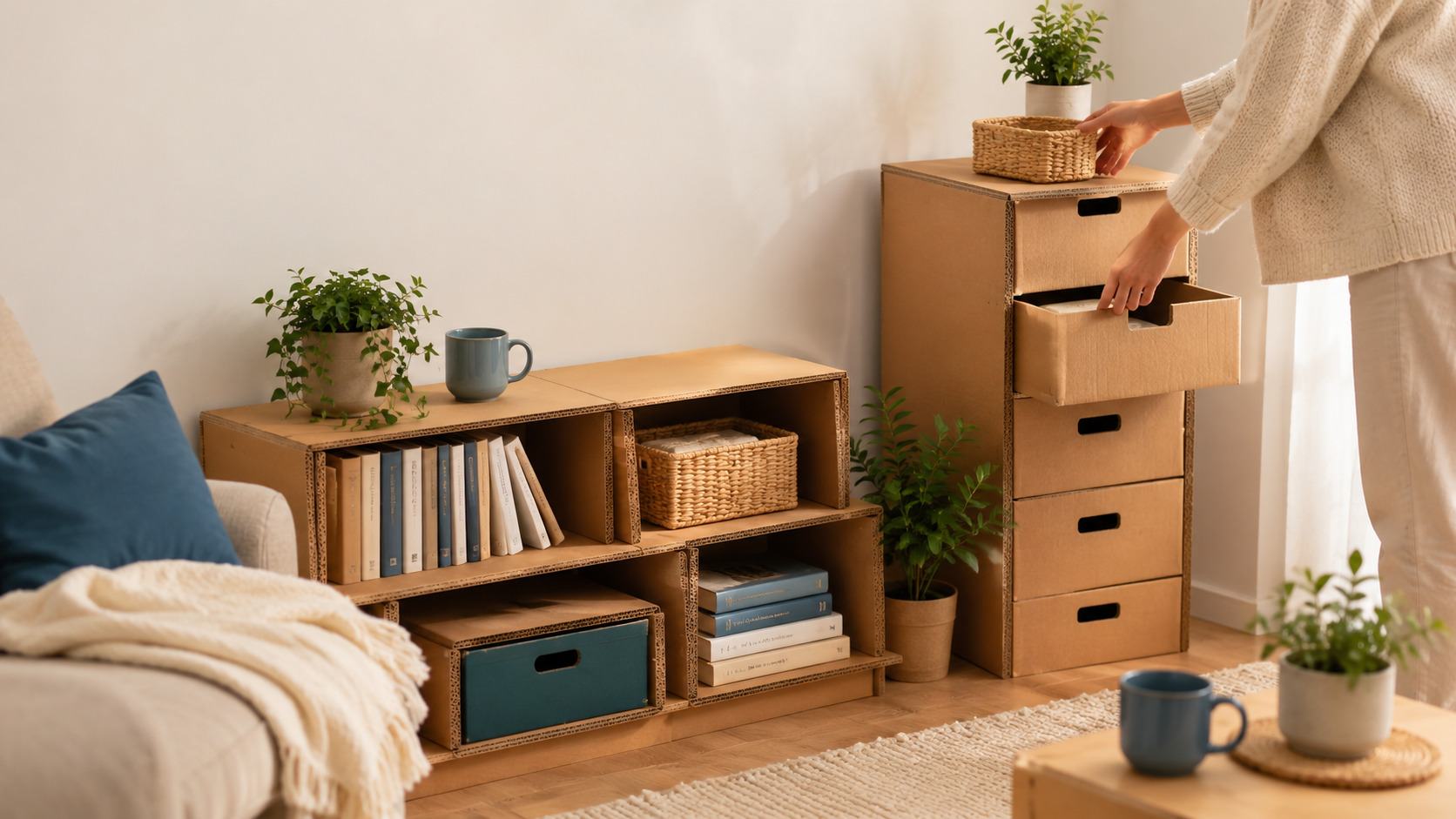


If you’ve been staring at a pile of Amazon boxes thinking “there has to be a better way,” this diy cardboard furniture storage guide is for you. You’ll learn how to turn basic boxes into surprisingly strong shelves, a cardboard storage cabinet with drawers, and cute desk organizers that actually survive real life. We’ll talk through how to make strong cardboard furniture, how to keep it from sagging, and tons of cardboard shelving and storage ideas that fit tiny apartments, dorm rooms, and family homes. By the end, you’ll have step‑by‑step basics, a big checklist, and practical diy cardboard shelves for storage projects you can start this weekend. Save this post to your “DIY storage” board and come hang out with us on Pinterest at @theclutteredblog for more cozy ideas.

Who This Guide Is For (And What’s Inside)
This guide is made for busy renters in small spaces, creative students in dorms, and anyone who wants eco friendly cardboard furniture ideas instead of buying more plastic bins. You’re probably juggling limited storage, a tight budget, and a love for cozy Pinterest‑worthy corners. In here, you’ll find diy cardboard furniture storage basics, strong cardboard shelves tutorials, modular units, and easy cardboard organizer ideas you can finish in an afternoon. Moreover, we’ll touch on cheap diy storage furniture from cardboard, plus ways to make it look cute enough to actually keep out on display.
- What cardboard you need (and what to avoid)
- Core strength tricks so your diy cardboard shelves don’t sag
- Project ideas: bookshelves, shoe racks, cabinets with drawers, desk organizers
- Styling tips so it feels like decor, not just boxes stacked in a corner
- A printable‑style checklist and an idea bank you can turn into pins
Cardboard Basics: What Makes Furniture “Strong Enough”?
Before you build a cardboard storage unit diy project, the secret is understanding how cardboard works. Strong diy cardboard furniture starts with double‑wall or thick corrugated boxes, not flimsy cereal boxes. For shelves and cabinets, you want to layer 2–3 sheets of cardboard with the corrugation running in opposite directions; this cross‑direction layering helps stop bending and warping over time. In addition, aim for a total thickness of around 3 cm for load‑bearing pieces like side panels and main shelves, especially if you’re storing books, shoes, or craft supplies.
If you can, pick boxes that originally held heavy items like appliances, cat litter, or bulk groceries. Those are designed to carry weight, which makes them perfect for diy cardboard shelves for books or shoes. Finally, keep everything dry: store your cardboard furniture away from damp floors and steamy bathrooms, and add little felt or plastic feet if it sits on the ground to avoid moisture wicking up into the layers.

Core Strength Tricks: How to Make Strong Cardboard Furniture
To make strong cardboard furniture, think like you’re building a tiny house out of cardboard: you need a skeleton, walls, and braces. Use 3‑ply laminated cardboard (three layers glued together) for the vertical “bones” on the sides and inside the piece. These become your main supports for books, shoes, or puzzles, and they carry the weight instead of the thin back panel. Then, add horizontal shelves that are at least 2–3 layers thick, and glue triangular or strip‑style rib supports underneath each shelf to stop sagging.
Always glue first, tape second. A strong PVA or wood glue gives you long‑term strength, and then paper tape or duct tape reinforces all joints and corners, especially on a diy cardboard cabinet or bookshelf. For added durability, wrap shelf edges in tape before painting so they don’t get fuzzy or damaged every time you slide a box in or out. As a result, your diy cardboard shelves will feel surprisingly solid and can handle everyday use in a bedroom, playroom, or craft corner.
Project 1: DIY Cardboard Bookshelf or Shoe Rack
A classic starter project is a diy cardboard bookshelf or shoe rack that looks like a small wooden shelf but is way lighter. Start by sketching the size you want: for shoes, go low and wide; for books, go a little taller with 3–4 shelves. Cut two side panels from double‑wall cardboard and laminate 2–3 layers together so each side feels sturdy when you flex it. Next, cut shelves the same width, again in multiple layers, and make sure the corrugation direction alternates between each layer to add strength.
You can assemble this with a simple box‑style construction (shelves glued between the sides) or use a slot system where shelves slide into pre‑cut notches in the side panels. Either way, add small vertical ribs or triangle wedges underneath each shelf, especially in the middle, to prevent bending. Once the structure is solid, cover the whole thing with kraft paper, contact paper, or leftover wallpaper to match your room. This kind of diy cardboard bookshelves and diy cardboard shoe storage is perfect for entryways, kids’ rooms, or a cozy reading nook.
Project 2: Cardboard Storage Cabinet with Drawers
If you want something more advanced, try a cardboard storage cabinet with drawers for craft supplies, toys, or office bits. Think of it as a mini dresser made entirely from cardboard, where the outer “box” is your cabinet and smaller boxes become drawers. First, build the outer shell: laminate 3 layers for the top, bottom, and sides, and glue them into a sturdy rectangle, adding a 2–3 layer back panel. Inside, add vertical dividers and shelf rails to guide your drawers and share the weight.
For drawers, reuse smaller cardboard boxes or build your own with double‑wall sides and a reinforced front. You can even add little tabs or ribbon loops as “handles” without adding much weight. To keep things sliding smoothly, sand or burnish the edges of the drawer fronts, and line the interior of the cabinet with smooth paper. This kind of diy cardboard cabinet is ideal for a craft desk, a kid’s art station, or a small closet nook where you need extra compartments without buying plastic drawer towers.
Project 3: One‑Box Cardboard Storage Shelf
If you’re low on time or tools, a cardboard storage shelf from a single box is a great shortcut. Grab one large, sturdy shipping box and stand it upright like a mini wardrobe. Use the existing folds as natural shelf edges: cut the front flaps off, then cut sections from the side or back panels and reinsert them as horizontal shelves. Glue and tape them in place so they’re supported by the side walls, and add extra strips of cardboard underneath if needed.
You can turn this into a small pantry shelf, a toy cubby, or a bedside organizer. It is especially handy for renters or students who move often, because you can recycle it at the end of the year without guilt. Moreover, this style of diy cardboard storage is perfect when you want to test a layout before committing to a permanent piece, like planning how many shelves you need for skincare, craft supplies, or game controllers.
Tiny Desk & Drawer Organizers from Cardboard
Cardboard isn’t just for big furniture pieces; it shines in small desk organizers and drawer inserts too. To make a diy cardboard organizer box for desk, start with one shoebox or cereal box, then divide the inside using thin cardboard strips to create sections for pens, sticky notes, skincare, or nail polish. Glue the dividers so they create a grid or custom compartments for things you reach for daily. You can wrap each divider in decorative paper before gluing for a polished look.
You can also create stackable mini drawers that slide into a simple cardboard frame, perfect for jewelry, washi tape, or sewing notions. This is where cardboard storage ideas feel really satisfying: you can design every compartment around what you own instead of forcing your stuff into a generic plastic tray. Add labels, washi edges, or color‑coded sections to keep everything intuitive, and suddenly your desk, vanity, or nightstand feels calmer and easier to reset at the end of the day.
Styling & Protecting Your Cardboard Storage
Once your diy cardboard furniture storage pieces are built, it’s time to make them cute and durable. For a cozy, modern look, cover flat surfaces with kraft paper, neutral contact paper, or peel‑and‑stick wallpaper scraps, and paint edges in a soft accent color like muted blue‑green or warm beige. If your space leans boho, wrap a few drawer fronts in fabric or add rattan‑style labels and woven baskets inside cardboard shelves for contrast. This blend of textures makes your cardboard shelving and storage ideas feel intentional, not temporary.
To protect surfaces from daily wear, add a thin layer of clear acrylic or Mod Podge on high‑touch areas like shelf tops and drawer fronts. For anything holding liquids or plants, use a tray or waterproof liner on top instead. Finally, treat your cardboard furniture like wood: don’t overload shelves, keep it away from direct splashes or wet mops, and give it a quick check every few months to make sure tape and glue are still holding strong.
Cardboard Furniture for Small Spaces & Renters
Cardboard furniture is especially kind to small apartments and dorms because it’s lightweight, customizable, and almost free. You can build diy cardboard shelves for storage that exactly fit that awkward gap between a bed and the wall, or a slim cardboard shoe rack that sits behind a door. Since you’re working with scissors and a craft knife instead of power tools, it’s also very renter‑friendly and quiet to make. If you move often, you can recycle the piece and build a new one that fits your next place instead of dragging heavy furniture up stairwells.
Moreover, cardboard fits beautifully into “eco‑friendly storage ideas” and low‑waste lifestyles. Instead of buying new shelving units, you’re extending the life of packaging and reducing plastic clutter. Combine your diy cardboard storage cabinet with drawers and some soft textiles, and you get a cozy, personalized look that still feels functional and grown‑up. The key is to choose one area to transform first—maybe a desk, entryway, or kids’ corner—so you can see the impact without feeling overwhelmed.
Practical DIY Cardboard Furniture Storage Ideas for Real Life

- A slim diy cardboard shoe rack that tucks under a hanging rail in your closet, with three layers of shelves for sneakers, sandals, and slippers.
- A low, wide cardboard bookshelf under a window, layered to 3 cm thick, perfect for paperbacks, plants on top, and storage baskets underneath.
- A modular cardboard storage unit built as separate cubes you can stack or rearrange, ideal for renters and kids’ rooms that keep changing.
- A bedside mini cabinet from cardboard with one open shelf for books and a drawer for skincare and chargers.
- A desk‑height cardboard storage cabinet with drawers for craft supplies, with each drawer dedicated to a specific hobby or project.
- A one‑box pantry shelf made from a single large box, with four internal shelves for cans, snacks, or baking supplies.
- A diy cardboard organizer box for desk that fits exactly in your drawer, with thin dividers for pens, sticky notes, cables, and lip balm.
- A vertical cardboard storage tower for kids’ toys, with labeled cubbies for puzzles, blocks, and stuffed animals.
- A cardboard shoe and bag combo rack near the entryway, with shoe shelves on the bottom and hooks or side pockets for bags and umbrellas.
- A set of shallow cardboard trays that slide onto existing shelves, turning tall, awkward spaces into easy‑to‑pull‑out storage.
- A compact cardboard cupboard with doors for hiding visual clutter like routers, chargers, and random cables.
- A cube‑style cardboard toy storage with picture labels for toddlers who can’t read yet.
- A diy cardboard shelf unit that wraps around a corner, using L‑shaped shelves and triangular supports underneath.
- A slim cardboard storage unit for bathroom backups—extra toilet paper, tissues, and towels—kept away from water and lined with contact paper.
- A craft‑room cardboard paper organizer with horizontal slots for cardstock, gift wrap, and scrap paper sorted by color.
- A cardboard organizing hub for entryway mail and keys, with a mini shelf, hooks, and a tiny drawer for stamps or spare change.
- A bedside cardboard book caddy that hooks over the side of the bed frame, keeping current reads within reach.
- A recycled cardboard storage unit for kids’ art, with wide flat drawers or cubbies for sketchbooks and finished masterpieces.
- A cardboard shelving unit built to sit on top of an existing dresser, adding vertical storage for baskets and decor without drilling the wall.
- A mini cardboard storage cabinet that lives inside a closet, holding seasonal accessories like scarves, gloves, and hats so they don’t get lost.
DIY Cardboard Furniture Storage Checklist
Use this checklist when planning any diy cardboard furniture storage project, from small organizers to full shelving units.
- Measure the space where your furniture will live (height, width, depth).
- Decide what you want to store (books, shoes, toys, craft supplies, pantry items).
- Choose sturdy double‑wall cardboard from heavy‑duty boxes.
- Plan which parts need 3‑ply laminated cardboard (sides, main shelves, vertical supports).
- Mark corrugation directions and alternate them in layered panels.
- Sketch a simple front and side view with shelf spacing.
- Cut panels with a sharp craft knife and metal ruler for clean edges.
- Dry‑fit pieces before gluing to check alignment.
- Glue joints first, then reinforce with tape on all edges and corners.
- Add vertical ribs or triangle supports under each shelf to prevent sagging.
- Decide whether you want open shelves, doors, or drawers.
- Test weight gradually, starting with lighter items and slowly adding more.
- Cover surfaces with kraft paper, contact paper, or paint for a finished look.
- Keep cardboard furniture away from direct water, spills, and damp floors.
- Add felt pads or small feet if your piece sits on the floor.
- Label shelves, drawers, or bins so everyone knows what lives where.
- Take a quick photo when you love a layout so you can rebuild or tweak it later.
FAQs About DIY Cardboard Furniture Storage
How long does it take to build a diy cardboard furniture storage project?
Most small diy cardboard shelves for storage or desk organizers can be built in one evening, especially if you already have boxes and basic tools at home. Larger projects like a cardboard storage cabinet with drawers might take a weekend, since you’ll want drying time between gluing and painting. The longest part is usually planning and cutting panels, not the actual assembly. If you break it into steps—measure, cut, glue, then decorate—it feels way more manageable. You can also start with a simple one‑box shelf to warm up before attempting a full unit.
Can I do this on a low‑energy day?
Yes, cardboard furniture diy can be extremely low‑energy if you keep expectations tiny. On a tired day, focus on one micro‑task: cutting dividers for a drawer organizer, laminating a single shelf, or just measuring your space and sketching an idea. You don’t have to finish a whole cardboard storage unit diy project in one go for it to “count.” Spread it over the week and treat these as calm, crafty sessions rather than a big home‑improvement mission. Even taping edges while you watch a show can move the project forward.
Will cardboard shelves hold up in small spaces with heavy use?
Cardboard shelving ideas can absolutely work in small apartments and busy family homes if you design them realistically. Use 3‑ply panels and ribs under shelves, and keep heavy items like textbooks and big jars on the lowest shelves. In tiny spaces, it helps to build shorter, wider pieces that are harder to tip over and easier to tuck under windows or beside beds. As a result, your diy cardboard furniture storage will feel safe and functional in everyday life, not just cute in photos. Just remember cardboard has limits, so don’t treat it like solid wood.
What if my space is really tiny or awkwardly shaped?
That’s where diy cardboard shelves for books or shoes shine, because you can size every panel exactly to your weird nook or corner. You can build narrow towers, low units that slip under hanging clothes, or corner shelves that wrap around a wall. Cardboard is easy to trim by a few millimeters so you can get that satisfying “perfect fit” in small spaces. For super tight rooms, think vertical: taller shelving and wall‑leaning units make use of height instead of floor area.
How do I keep the mental load low and avoid feeling overwhelmed?
Treat diy cardboard storage as play, not perfection. You’re experimenting with free materials, so there’s no pressure to get it “right” the first time. Start with one drawer or one tiny organizer, then build up to bigger furniture once you’ve seen how strong cardboard can be. Moreover, keep a list of small, repeatable steps—measure, cut two pieces, tape one joint—so on busy weeks you can just do one of them and still feel progress. Save pins of the projects that feel calm and doable, not just the fanciest ones.
Start Small With One Cozy Storage Project
You don’t need a garage workshop or fancy tools to build diy cardboard furniture storage that actually helps your home feel calmer. Pick one tiny spot—your nightstand clutter, the jumble of shoes by the door, or a chaotic craft drawer—and build a simple cardboard solution just for that corner. Once you see how well layered cardboard and a bit of tape can hold up, you’ll feel more confident trying shelves, cabinets, or full storage units. Save this guide to your favorite Pinterest board and follow @theclutteredblog for more cozy, budget‑friendly organizing ideas you can actually pull off this week.

Now that you’ve got the basics of diy cardboard furniture storage, let’s look at real Pinterest examples you can copy. Below is a curated visual roundup of shelves, cabinets, organizers, and smart cardboard storage units so you can see how other people turned plain boxes into cute, functional furniture. Use this little gallery like a menu: pick one or two ideas that feel doable in your space, save the pins you love to your own boards, and come back later when you’re ready for your next small upgrade.
DIY Cardboard Furniture Storage Ideas You’ll Want to Try
These diy cardboard furniture storage ideas show how far a simple box can go when you add smart layering, cute styling, and a little bit of patience.
Scroll through like a menu: pick a few shelves, cabinets, or organizers that feel doable this week, tap through to the original Pin if you want a tutorial, and save your favorites to your own boards so you can find them again later.
Turn a Cardboard Box into a Cute Toy Wardrobe

This project transforms sturdy shipping boxes into a bright little cardboard wardrobe with doors, shelves, and hanging space sized just right for kids’ toys or dress-up clothes.
It’s a fun way to add storage to a playroom without buying more plastic, and you can match the colors to your child’s favorite characters or room palette.
Use extra layers on the sides and bottom for strength, and add baskets inside the shelves so toys are easy to toss in during quick clean-ups.
Build a Chic Cardboard Shelves Cabinet for Decor

This tall diy shelves cabinet uses layered cardboard panels and a simple grid design to mimic a built-in, with room for books, baskets, and decor pieces.
It’s perfect if you want a statement storage piece in the living room but need something lightweight and renter-friendly.
Stick to a neutral paint color and a few woven baskets to keep the look calm and cohesive, even if you’re hiding a lot of everyday clutter inside.
Create Bright Cardboard Organizer Towers for Your Desk

These stacked cardboard organizer boxes turn a messy desk into a cheerful little command center, with compartments sized for pens, markers, and tiny supplies.
It’s a great example of diy cardboard organizer box for desk ideas that make creative chaos feel curated instead of overwhelming.
Use different colors or patterns for each tier so you can visually separate categories like mail, craft tools, and tech accessories.
Make a Sleek Cardboard Holder for Books and Essentials

This compact cardboard holder proves you don’t need a huge unit to feel organized, with tall slots for books and smaller pockets for remotes or notebooks.
It’s ideal for a bedside table or sofa side where you want everything within reach but neatly contained.
Layer the base and dividers so they stay rigid, then finish with neutral paper so it blends into your existing decor.
Try a Budget-Friendly Cardboard Storage Rack

This tall storage rack made from cardboard shows how layering and clean lines can give you a surprisingly polished, furniture-like feel.
It’s perfect for books, folded linens, or decorative boxes, especially in small bedrooms or guest rooms where every inch counts.
Reinforce each shelf with ribs underneath if you plan to store heavier items like jars or stacks of magazines.
Build a Tiny Cardboard Desktop Cabinet with Drawers

This mini desktop cabinet is a perfect example of a cardboard storage cabinet with drawers, giving every paperclip and sticker its own little home.
It’s ideal for stationery lovers, journaling fans, or anyone who hoards cute office supplies but wants them off the surface of the desk.
Use labels or tiny icons on each drawer so you can grab what you need without rummaging through everything.
Create a Cardboard Storage Rack for Books and Decor

This sturdy shelf uses thick, layered panels and a simple boxy design, making diy cardboard furniture feel much more like real furniture.
It looks at home in a bedroom, office, or living room, especially once you style the shelves with books, plants, and a few personal treasures.
Because it’s made from cardboard, you can adjust shelf height and width to perfectly match your favorite reads or storage bins.
Use Cardboard Shelves as a Shoe Storage Wall

This tall shoe rack made from cardboard showcases how effective diy cardboard shoe storage can be for families or roommates with lots of footwear.
Each cubby keeps pairs together and off the floor, making your entryway look instantly more intentional and less chaotic.
Keep heavier boots on the bottom shelves and use the top rows for lighter sneakers and sandals to extend the life of the structure.
Clip Together Simple Cardboard Shelving Units

This clever shelving idea uses clipped-together cardboard boxes to create a flexible grid that can stretch across a wall or stay compact.
It’s great when you need a cardboard storage unit diy project that can change shape as your home or needs evolve.
Experiment with staggered heights and alternating box directions to make it look like an intentional design feature rather than just storage.
Make a Mini Drawer Stack from a Shoebox

This miniature drawer unit starts with a single shoebox and turns it into stacked drawers for jewelry, craft supplies, or tiny toys.
It’s a perfect weekend project if you’re curious about diy cardboard drawers but don’t want to commit to a huge cabinet yet.
Line each drawer with patterned paper so opening them feels like a tiny bit of joy, even if you’re just grabbing paperclips.
Upgrade Your Vanity with a Cardboard Desk Organizer

This pretty desk organizer corrals makeup, pens, and tiny essentials into tiers and sections so your vanity or worktop stays clear.
It’s a great example of diy cardboard desk organizer ideas that can be duplicated in different sizes for drawers or shelves.
Play with color blocking by painting each section a different tone to subtly separate skincare, hair, and stationery zones.
Stack Cardboard Compartments for Stationery Storage

This stacked stationery organizer uses slim cardboard sections to hold notebooks, envelopes, and pens upright so they’re easy to grab.
It’s perfect for a homework station, home office, or craft desk where paper clutter tends to explode across every surface.
Customize the height of each slot so your favorite notebooks or planners fit perfectly without flopping over.
Build a Cardboard Shelf Tower for Paper Supplies

This tall tower divides paper and stationery into clear layers, so you can see everything at a glance instead of digging through piles.
It’s a great cardboard storage idea for cardmakers, scrapbookers, or anyone who hoards cute paper and stickers.
Keep light items like papers and envelopes on these shelves, and use sturdier pieces elsewhere for heavier supplies.
Craft a Mini Chest of Drawers from Cardboard

This small chest of drawers shows how detailed and decorative diy cardboard furniture can be, especially when you add pretty knobs and papers.
Use it on a dresser or vanity to hold jewelry, hair ties, or tiny keepsakes that normally get lost in a bigger drawer.
Because it’s cardboard, you can easily adjust drawer sizes to fit rings, bracelets, or even essential oils.
Stack Cardboard Cubes for Modular Office Storage

These square cardboard cubes are designed to be stacked and rearranged, making them perfect for home offices that need flexible storage.
They’re strong enough to hold files and binders when built with thick, layered panels and snug joints.
Try mixing open cubes with ones that have doors or baskets so you can hide clutter but keep everyday items easy to access.
Design a Mini Cardboard Cabinet with Upcycled Style

This compact cabinet blends shelves, doors, and drawers into one tiny cardboard piece that still feels surprisingly premium.
It’s a great inspiration if you want an eco-friendly cardboard furniture idea that can handle lots of small supplies in one place.
Use calm, muted colors and simple handles so it can blend into a living room or office without screaming “this used to be a box.”
Build a Corner Wall Shelf with Cardboard and Paper

This corner shelf combines corrugated cardboard and grocery bags to create a surprisingly sturdy, paper-mache-like unit with a warm, handmade feel.
It’s perfect for small rooms where corners are underused, and you want display space for books or decor without adding bulky furniture.
Stick to lightweight items on the higher tiers and use the lower levels for slightly heavier books or baskets.
Turn Cardboard into a Desk-Height Storage Shelf

This organizer proves cardboard shelves aren’t just for books; here they’re used to sort folded clothes or linens in a neat vertical stack.
It’s ideal for closets without built-in shelves, giving you extra layers without drilling into walls or buying heavy units.
Keep frequently used items at eye-level and less-used pieces on the very top or bottom tiers.
Organize Kids’ Puzzles with a Cardboard Book Rack

This low rack is sized perfectly for kids’ puzzles and thin books, keeping everything visible instead of hidden in a deep bin.
It’s a smart cardboard storage idea for playrooms where you want kids to grab and put away their own activities.
Use simple picture labels on the front so even toddlers can match items back to the right slots.
Build a Tall Cardboard Shelf for Art Supplies

This tall, narrow shelving column fits perfectly into tight corners of craft rooms or offices where you still need vertical storage.
It’s designed for lightweight items like CDs, paper, or smaller boxes stacked one above another.
Anchor it to the wall with discreet brackets if you have kids or pets who might bump into it.
Play with Hexagon Cardboard Shelves on the Wall

These hexagon shelves bring a playful, geometric look to the wall while still acting as small storage for plants, candles, or trinkets.
They’re a great diy cardboard shelf design if you want decor and storage in one, especially above a desk or sofa.
Stick to lightweight decor and cluster them in groups to create a visually strong focal point.
Style a Neutral Cardboard Bookcase for the Living Room

This neutral-toned bookcase blends seamlessly into a living room, proving diy cardboard furniture can look sophisticated and intentional.
Mix books, baskets, and a few decor objects to make it feel styled rather than purely functional.
Use a consistent color palette across the items you display to keep the overall effect calm and cohesive.
Try Super-Sturdy Cardboard Shelving for Utility Rooms

This instructables-style project shows how to engineer super-sturdy shelving from cardboard with smart layering and bracing.
It’s ideal for storing pantry items, cleaning supplies, or bulk goods in a utility space when you’re on a budget.
Follow the idea of thick side supports and reinforced shelves if you want your own heavy-duty cardboard storage shelves at home.
Craft a Classic Cardboard Bookshelf for Everyday Use

This straightforward bookshelf uses cardboard panels and simple joints to create a familiar, functional shape you can adapt to any room.
Whether you fill it with groceries, books, or storage boxes, the design is proof that basic can still be beautiful.
Adjust the height and number of shelves to match your wall space and the items you reach for most often.
Go Bold with Sculptural Cardboard Furniture

This sculptural shelving piece shows the artistic side of diy cardboard furniture, with curves and cut-outs that double as art and storage.
It’s a fun option if you want your storage to be a statement piece rather than something that fades into the background.
Use it to display a small, curated collection of books and objects so the shape and negative space stay the star.
Love saving ideas like these? Follow us on Pinterest for more inspiration, templates, and easy-to-use resources.