









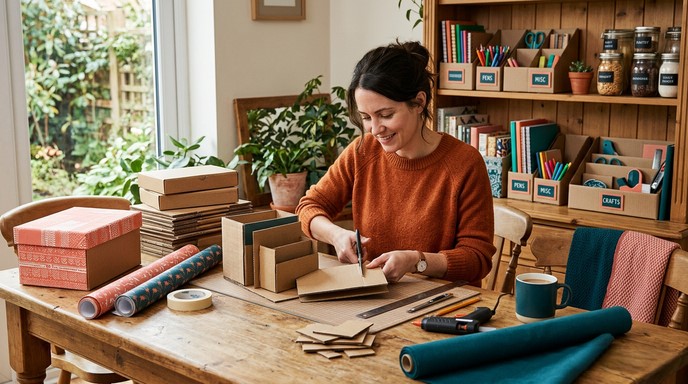
You probably have at least one shipping box or cereal box sitting around “just in case.” Meanwhile, your drawers, desk, and shelves are overflowing with tiny items that never seem to stay where they belong. It’s a very specific kind of chaos.


Cardboard organizer diy projects are the sweet spot between decluttering, saving money, and reducing waste. Instead of buying new bins, you can turn those boxes into custom organizers that actually fit your space, your stuff, and your style. With a few simple techniques, you can make strong, pretty organizers that don’t look like “random cardboard” at all.
In this guide, you’ll learn how to create diy cardboard storage organizer projects for your desk, drawers, closets, and pantry, plus how to reinforce and decorate them so they last. There’s also a practical checklist at the end so you can start small without getting overwhelmed.

Why Cardboard Organizer DIY Projects Work So Well
Before you reach for another plastic bin, it helps to understand why diy cardboard box organizer ideas are worth your time.
- They’re incredibly budget‑friendly
You’re using what you already have: shipping boxes, cereal boxes, shoe boxes, and packaging. - They’re customizable
You can size diy desk organizer from cardboard projects to fit narrow shelves, deep drawers, or awkward corners in a way store‑bought bins often can’t. - They’re eco‑friendly
Upcycled cardboard organizer ideas keep boxes out of the trash and turn them into zero waste diy storage for your home. - They’re quick wins
Many designs use straight cuts and simple gluing—a great low‑energy project that still gives you a visible, satisfying result.
Once you’ve made one or two, it becomes very easy to look at any box and immediately see its organizing potential.
Types of DIY Cardboard Organizers For Every Room
You can use cardboard for almost any light‑to‑medium weight organizing job. Here are the most useful diy cardboard storage organizer types by function.
DIY cardboard desk organizer for stationery and office supplies
A diy desk organizer from cardboard can sit on top of your desk and hold: pens, markers, scissors, sticky notes, small notebooks, and chargers.
- Start with a sturdy shipping box or shoe box.
- Cut smaller compartments from thinner cardboard or cereal boxes.
- Arrange vertical and horizontal dividers to create sections for different tools.
- Add a back panel to support taller items like rulers or notebooks.
Decorate with contact paper, wrapping paper, or scrapbooking paper so it blends with your workspace.
DIY cardboard drawer divider organizer
Drawer organizer out of cardboard ideas work in kitchen drawers, dressers, and desks.
- Measure the interior of your drawer (length, width, and height).
- Cut strips of cardboard to that height and use a simple grid pattern (slots cut halfway through each strip) to make intersecting dividers.
- Adjust sections to fit utensils, socks, skincare, or office supplies.
You can also use multiple small boxes side‑by‑side to divide a drawer instead of building a full grid.
DIY cardboard storage box with lid for closet or shelves
For closets or open shelves, diy cardboard storage box with lid projects are ideal:
- Use larger shipping boxes for clothes, linens, seasonal decor, or kids’ toys.
- Reinforce the bottom and corners (more on that below) so they can handle weight.
- Add a lid from another piece of cardboard and cut a handle opening on each side.
- Cover the box with fabric or contact paper for a finished, decor‑friendly look.
DIY cardboard makeup or jewelry organizer tray
Shallow diy cardboard makeup or jewelry organizer tray designs work inside drawers or on top of dressers.
- Choose shallow boxes (like gift boxes, lid bases, or cereal box bottoms).
- Add small compartments with folded cardboard pieces for lipstick, palettes, earrings, and rings.
- Line sections with felt or fabric for a softer, more luxurious feel.
DIY cardboard pantry or snack organizer
For kitchen shelves and pantries, diy cardboard pantry or snack organizer bins help you group similar items.
- Use long, low boxes for snacks, breakfast items, or baking supplies.
- Add front openings (cut a U‑shape in one side) so you can reach items easily.
- Label each bin: “Snacks,” “Pasta,” “Tea & Coffee,” etc.
Organizing with cardboard boxes instead of buying new bins keeps your pantry tidy and your budget intact.
How to Make Strong Cardboard Organizers (So They Actually Last)
To make cardboard organizer diy projects durable, focus on reinforcement and good adhesives.
Basic reinforcement tips
- Double up the cardboard
Glue two layers together for the base or sides of heavier‑duty diy cardboard storage organizer designs (closets, pantry boxes). - Reinforce corners and edges
Use strips of cardboard on the inside corners as braces, or run packing tape along edges and joints to prevent splitting. - Choose the right adhesive
Use white PVA glue, tacky glue, or strong craft glue for long‑lasting bonds. Hot glue is fast but can be brittle; combine it with tape for best results.
How to make strong cardboard organizers – step by step
- Plan the load
- Light: stationery, makeup, snacks → single‑layer walls are often enough.
- Medium: clothes, books, files → double‑layer base and reinforced corners.
- Cut cleanly
- Tape + glue combo
- Glue the joints and then tape along the outside and/or inside seams.
- Press firmly and let it dry fully before adding weight.
- Test before decorating
- Place a few items inside and gently shake or move the box to check for wobble.
- Add extra reinforcement where needed, then cover with fabric or paper.
This makes your diy cardboard box organizer ideas feel closer to store‑bought bins in strength while staying budget‑ and eco‑friendly.

Decorating & Covering Cardboard Organizers
The fun part: turning plain boxes into pretty organizers that match your home. There are three main approaches: fabric, contact paper/wrapping paper, or a mix of both.
Fabric covered cardboard storage box diy
Fabric covered cardboard storage box diy projects look polished and can pass as boutique baskets.
- Choose medium‑weight cotton or canvas (too thin shows every bump, too thick is hard to fold).
- Use spray adhesive or fabric glue to attach the fabric, smoothing out bubbles.
- Wrap the fabric around the outside, then fold it neatly into the inside of the box.
- Cover the bottom with another piece of fabric‑covered cardboard for a clean finish.
Decorate cardboard organizer with contact paper or wrapping paper
Contact paper is ideal for smooth, wipeable finishes; wrapping paper is great for quick upcycled cardboard organizer ideas.
- Cut pieces slightly larger than each panel and fold edges over the top for a neat look.
- Start on the largest surfaces and work toward smaller ones.
- Smooth as you go to avoid bubbles or wrinkles.
Patterns like faux wood, marble, or linen instantly elevate diy cardboard storage organizer projects and help them blend with furniture.
Easy no sew fabric cover for cardboard bins
If you don’t sew, no‑sew fabric covers are your friend:
- Use hot glue, fabric glue, or strong double‑sided tape instead of stitching.
- Wrap fabric like a gift—fold corners neatly and secure them on the inside.
- Add decorative rope handles or ribbon tabs glued to the sides if you want handles.
This technique works beautifully on diy cardboard storage box with lid designs for closets, shelves, or kids’ rooms.
Eco‑Friendly Organizing With Cardboard: Simple Checklist
If you’re trying to declutter sustainably, zero waste diy storage using cereal boxes and shipping boxes is a powerful habit. Here’s a practical checklist to get started without making a huge mess.
- Step 1 – Collect smart, not everything
- Keep: sturdy shipping boxes, cereal boxes, shoe boxes, gift boxes.
- Recycle: flimsy, damaged, or dirty boxes you won’t realistically use.
- Step 2 – Match box to function
- Desk: thinner boxes for diy desk organizer from cardboard.
- Drawers: shallow boxes and cut‑to‑size dividers for drawer organizer out of cardboard.
- Closet: larger, stronger boxes for diy cardboard storage box with lid projects.
- Bathroom/vanity: small boxes for diy cardboard makeup or jewelry organizer tray.
- Pantry: long, low boxes for diy cardboard pantry or snack organizer bins.
- Step 3 – Plan your layout
- Measure shelves or drawers before cutting.
- Sketch a simple layout (sections, dividers, stack height).
- Step 4 – Build and reinforce
- Cut neatly, glue joints, and tape corners.
- Double‑layer bases for heavier loads.
- Step 5 – Finish and label
- Choose one finish: fabric covered cardboard storage box diy or contact paper/wrapping paper.
- Add clear labels so everyone in the house knows where things go.
- Step 6 – Maintain the system
- Once a month, do a 5‑minute check: remove clutter, wipe surfaces, and adjust boxes if needed.
Upcycled cardboard organizer ideas help you organize with intention, not impulse buys, so your home becomes calmer without a big spending spree.
With a handful of shipping boxes, some tape, and a free afternoon, you can build a custom organizing system that fits your real life and supports your goal of a more ordered, eco‑friendly home. Cardboard organizer diy projects are proof that you don’t need fancy products to feel more in control—you just need simple, repeatable systems that work with what you already have.

FAQ
FAQs About Cardboard Organizer Diy
How can I find time to work on cardboard organizer diy projects when my schedule is already packed?
Think in tiny pockets of time instead of full crafting days. One evening you can just collect and sort boxes, another day you measure drawers, and a third day you cut and glue. A single diy cardboard desk organizer from cardboard can often be done in under an hour once you know your layout. Treat it like a small, satisfying task between bigger responsibilities—not another giant project on your list.
What if I have low energy but still want better storage without buying new bins?
Start with the easiest wins: use boxes almost as‑is. For example, place shoe boxes side‑by‑side as a quick drawer organizer out of cardboard, or use cereal boxes as diy cardboard pantry or snack organizer bins with minimal cutting. You can always decorate or reinforce them later. Zero waste diy storage doesn’t have to be Pinterest‑perfect to be effective—function first, aesthetics later when you have more energy.
How do I keep my cardboard organizers consistent throughout the house?
Pick one or two finishing styles and stick to them: for example, fabric covered cardboard storage box diy in bedrooms and closets, and contact paper for kitchen and office. Using the same color palette or pattern family keeps everything feeling cohesive even if boxes are different sizes. You can also standardize labels (same font, same label style) so the system looks intentional and not random.
Will cardboard organizers work in small spaces, or will they just add more visual clutter?
Cardboard organizer diy projects are actually perfect for small spaces because you can size them to fit narrow drawers, shelves, and corners where store‑bought bins don’t work. Keep finishes simple—solid colors or subtle patterns—and avoid too many mismatched prints. Use diy cardboard drawer divider organizer grids to make every inch of drawer space useful, and rely on labels to keep everything visually calm and easy to maintain.
How do I manage the mental load of “I should be organizing more” without burning out?
First, notice that thought and gently downgrade it to “I’m allowed to organize one small thing at a time.” Choose one tiny project: a single diy cardboard makeup or jewelry organizer tray, or one diy cardboard drawer divider organizer for your most chaotic drawer. Celebrate each finished box as a real win instead of focusing on what’s left. Over time, these small, repeatable projects add up to a much more organized home without the all‑or‑nothing pressure.
Tiny, repeated steps will always beat one huge, exhausting organizing sprint. Start with one drawer, one box, or one diy cardboard storage organizer, and let your confidence grow from there. Save this post so you can come back to the ideas whenever you have a few spare minutes, and don’t forget to follow @theclutteredblog on Pinterest for more cozy, practical organizing inspiration.