









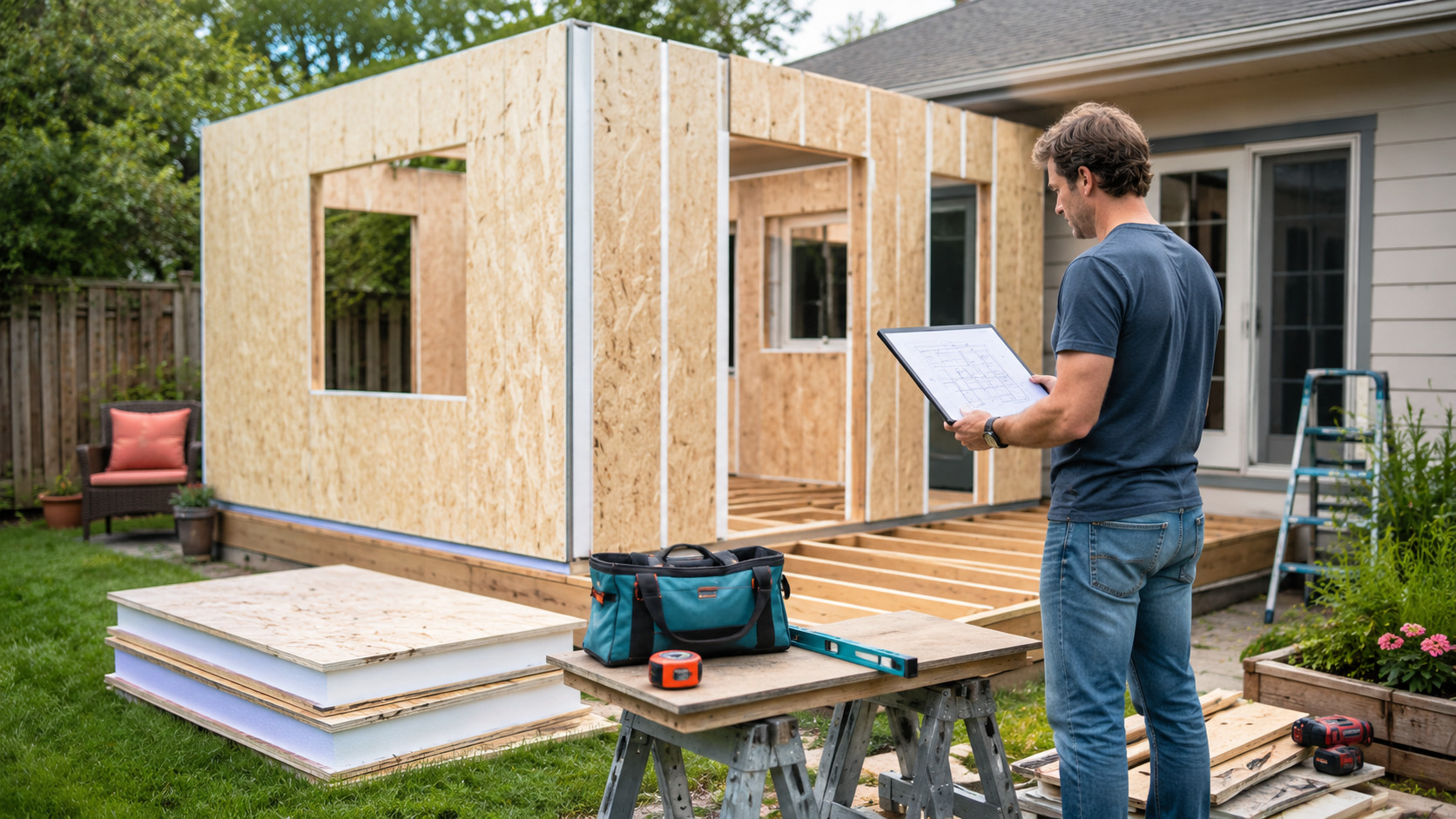
If your home is bursting at the seams but full‑scale construction makes you want to lie down, Diy Room Addition Kits can be a smart middle path. Prefab room addition kit options, flat pack house extension diy systems, and modular home addition kits are designed so reasonably handy homeowners can add livable space with less mess and fewer unknowns. Many of these systems use structural insulated panels (SIPs) or panelized framing so walls and roofs arrive pre‑cut and ready to assemble.


In this guide, we’ll break down the main types of diy room addition kits—panelized extensions, flat‑pack systems, and prefab garden room or diy sunroom / garden room kit setups—plus what’s usually included in a self build house extension kit. You’ll also find key planning steps, a practical checklist, and notes on prefab modular room addition cost, permits, and mini split heating and cooling for room additions so you can expand without chaos.

Types Of Diy Room Addition Kits You’ll See
Manufacturers and modular‑building guides usually group diy room addition kits into a few main categories: panelized timber systems, flat‑pack extensions, and fully prefab garden rooms or ADUs. Some also sell lighter‑duty kits like carports, patio covers, and diy sunroom addition kits or RV sunroom awnings that attach to an existing structure.
Common types:
- Timber frame / panelized additions
- These often come as 12′ x 16′ or similar packages sized to create a family room, mudroom, pantry, or small office. They use SIPs (structural insulated panels) or “stress‑skin” panels that arrive pre‑cut for doors, windows, corners, and roof ridges.
- Panelized kits are popular because walls and roof sections are labeled and include detailed assembly drawings, making them approachable for experienced DIYers.
- Flat‑pack house extension diy systems
- Flat pack house extension diy products like Addroom‑style systems arrive as a kit of steel or timber frames, insulated wall panels, and cladding options (brick slips, steel, fiber‑cement, timber). They’re assembled on‑site using a clear sequence, sometimes by self‑builders.
- A flat pack extension vs traditional extension can be up to about 25% cheaper for similar floor area and is typically faster to install because most cutting and design work is done in a factory.
- Prefab ADU / garden room modules
- Modular home addition kits and diy garden room / office kits are often delivered as large prefabricated sections or complete units (for offices, guest rooms, or studios). They may be marketed as self build house extension kit options, but many still recommend pro help for foundations and utilities.
- Sunrooms, patio covers, and RV add‑ons
- Many brands sell diy sunroom addition kits, patio covers, and light garden rooms with aluminum or steel frames and pre‑cut glazing or roof panels. There are also sunroom attached to RV‑type products that create a screened room beside a motorhome or trailer.
Choosing between these depends on how much space you need, whether it’s attached or freestanding, and how comfortable you are with structural work.
What’s Typically Included In A Diy Room Addition Kit
While every manufacturer is different, panelized, flat‑pack, and modular home addition kits tend to share a core set of components. Understanding what’s included helps you compare kits and see what extra work (and budget) you’ll still need to plan for.
You’ll often see:
- Pre‑cut wall and roof panels
- Structural insulated panels or similar “stress‑skin” components arrive cut to size with routed chases for wiring and openings for doors, windows, and roof connections.
- Manufacturers usually specify R‑values—commonly in the R‑20–R‑30 range for walls and higher for roofs—to meet or exceed energy code in many regions.
- Framing and connection hardware
- Kits typically include splines, fasteners, specialty screws, foam sealants, and sometimes proprietary brackets to join panels together.
- Flat‑pack house extension diy systems may also supply metal frames, base channels, and guttering that tie into your existing house.
- Plans, drawings, and tech support
- Detailed assembly drawings, panel layout diagrams, and step‑by‑step manuals are standard for self build house extension kit packages, often backed by remote technical support.
- Many companies offer drafting services to tweak sizes or openings so you effectively receive a semi‑custom prefab room addition kit.
You usually still supply finishes (flooring, interior wall coverings, paint) and arrange for foundation, electrical, plumbing, and HVAC separately.
Key Planning Steps Before You Order A Kit
Modular and prefab guides repeat the same warning: even though Diy Room Addition Kits simplify the build, they’re still structural projects. Planning up‑front saves you from expensive surprises later.
Focus on:
- Structure and compatibility
- You need to confirm your existing house can safely accept a new load path where the prefab room addition kit attaches. Many manufacturers recommend you consult a local structural engineer or building professional, especially for multi‑story attachments.
- Foundation and site prep
- Most modular home addition kits and flat‑pack extensions still require a concrete slab, strip footing, or piers sized to local code. This is rarely a DIY‑only step unless you’re very experienced.
- For diy sunroom / garden room kit or diy garden room / office kits, some brands allow treated‑timber bases or ground screws, but engineering guidance is still key.
- Permits and building code
- Even if components arrive as a prefab room addition kit, your jurisdiction typically treats it as a conventional addition needing permits, inspections, and code‑compliant energy, egress, and structural details.
- HVAC and utilities
- Electrical, plumbing, and gas are usually handled by licensed contractors. For heating and cooling, mini split heating and cooling for room additions has become a go‑to solution because it avoids extending existing ductwork.
- Recent cost breakdowns suggest homeowners might expect roughly a few thousand dollars per mini‑split zone depending on size and complexity, so factor that into prefab modular room addition cost from the start.
Taking a weekend to talk with your local building office and a contractor before clicking “buy now” will make your Diy Room Addition Kits experience far smoother.
Flat Pack Extension vs Traditional Extension
If you’re debating flat pack extension vs traditional extension, think in terms of time, cost, and on‑site disruption. Flat‑pack systems front‑load design and cutting into the factory phase, while conventional builds spread complexity over weeks or months on site.

High‑level differences:
- Cost
- A typical flat‑pack extension in UK examples runs in the ballpark of £24,000–£35,000 for around 20 square metres, which can be up to roughly 25% cheaper than masonry‑built alternatives.
- Prefab modular room addition cost will vary widely by country and finish level, but the big savings often come from reduced labor hours, less waste, and fewer weather‑delay risks.
- Speed and disruption
- Flat‑pack house extension diy systems are designed so the shell can go up in days instead of weeks, assuming foundations and approvals are ready.
- Traditional extensions may be more flexible but often mean longer on‑site noise, dust, and trades coordination.
- Customization and finish
- Self build house extension kit options can be surprisingly flexible—many allow custom window positions, doors, and claddings—but very unusual shapes or highly bespoke details may still suit a conventional design‑build path better.
For many homeowners, the sweet spot is a panelized or flat‑pack shell plus conventional interior finishing, giving them both predictability and personality.
Practical Checklist For Planning Diy Room Addition Kits
Use this checklist to keep your project organized and realistic:
- Clarify your goal: extra bedroom, diy garden room / office kits space, diy sunroom addition kits, or a small prefab room addition kit for storage or a mudroom.
- Decide attached vs freestanding: modular home addition kits that connect to the house need more structural and permit coordination than a garden room.
- Confirm local rules: talk to your building department about setbacks, height limits, and whether mobile home room addition kits on a budget or RV‑type sunrooms are treated differently.
- Plan your foundation: slab, piers, or ground screws; get at least a rough quote if you’re not doing it yourself.
- Shortlist kit types: prefab room addition kit, flat pack house extension diy, self build house extension kit, diy garden room / office kits, or diy sunroom / garden room kit.
- Ask what’s included: check whether your kit supplies SIPs, framing, fasteners, doors, windows, roofing, and drawings—or just the shell.
- Budget for systems: include electrical, plumbing (if needed), and mini split heating and cooling for room additions in your prefab modular room addition cost estimate.
- Schedule your time: realistically block out days for foundation, kit assembly, inspections, and interior finishing, leaving margin for weather and learning curve.
Keeping this list in front of you turns a big, fuzzy “maybe someday” project into a series of concrete steps you can handle one at a time.
Adding space with Diy Room Addition Kits doesn’t have to take over your life. Break the project into decisions, lean on the kit manufacturer’s guidance, start with a smaller garden room or sunroom if you need a low‑risk test run, and let yourself move slowly instead of all at once.

FAQ
FAQs About Diy Room Addition Kits
I don’t have much time—can a kit really save me that much compared to a traditional build?
Kits can significantly cut on‑site time because cutting, sizing, and much of the design happens in the factory. Panelized SIP systems and flat‑pack extensions are designed to go up in days instead of weeks once the foundation and permits are ready. You’ll still need time for inspections and finishes, but many homeowners find prefab room addition kit options easier to fit around a full‑time job than managing an open‑ended extension.
My energy is low—what’s the smallest, easiest way to start?
If your bandwidth is limited, start with a freestanding diy garden room / office kits or diy sunroom / garden room kit instead of a full attached extension. Freestanding modular home addition kits usually mean fewer structural tie‑ins and simpler approvals, especially for smaller footprints. You can treat it like a “practice build” before tackling a larger flat pack house extension diy project.
How do I stay consistent and avoid scope creep once I begin planning?
Pick a clear project type and lock it in: for example, “12′ x 16′ self build house extension kit with mini split heating and cooling for room additions, no plumbing.” Then use a checklist to guard your scope—foundation, kit, electrical, HVAC, interior finish. When new ideas pop up, park them on a “phase two” list instead of changing the core prefab modular room addition cost and design mid‑stream.
My plot is small—are there space‑efficient options?
Yes—flat‑pack and modular home addition kits shine on tight lots because they’re often designed with compact footprints and efficient layouts. Many diy garden room / office kits and diy sunroom addition kits are under 200 square feet, which can simplify zoning in some areas. A small garden office, studio, or RV‑style sunroom can give you a surprising amount of functional space without overwhelming a small yard.
The planning feels mentally heavy—where should I start if I’m overwhelmed?
When your brain is tired, skip the catalogs and start with constraints. First, check what your local code allows (size, height, setbacks); second, decide attached vs freestanding; third, set a ballpark budget including mini split heating and cooling for room additions. Once those guardrails are in place, it becomes much easier to choose between different Diy Room Addition Kits because you’re filtering options instead of staring at an endless menu.
It’s more than okay to move slowly with a project this big. Let yourself take one planning step at a time, save this post so you’re not starting from scratch next time you sit down with your notebook, and don’t forget to follow @theclutteredblog on Pinterest for more calm, checklist‑driven home projects.