









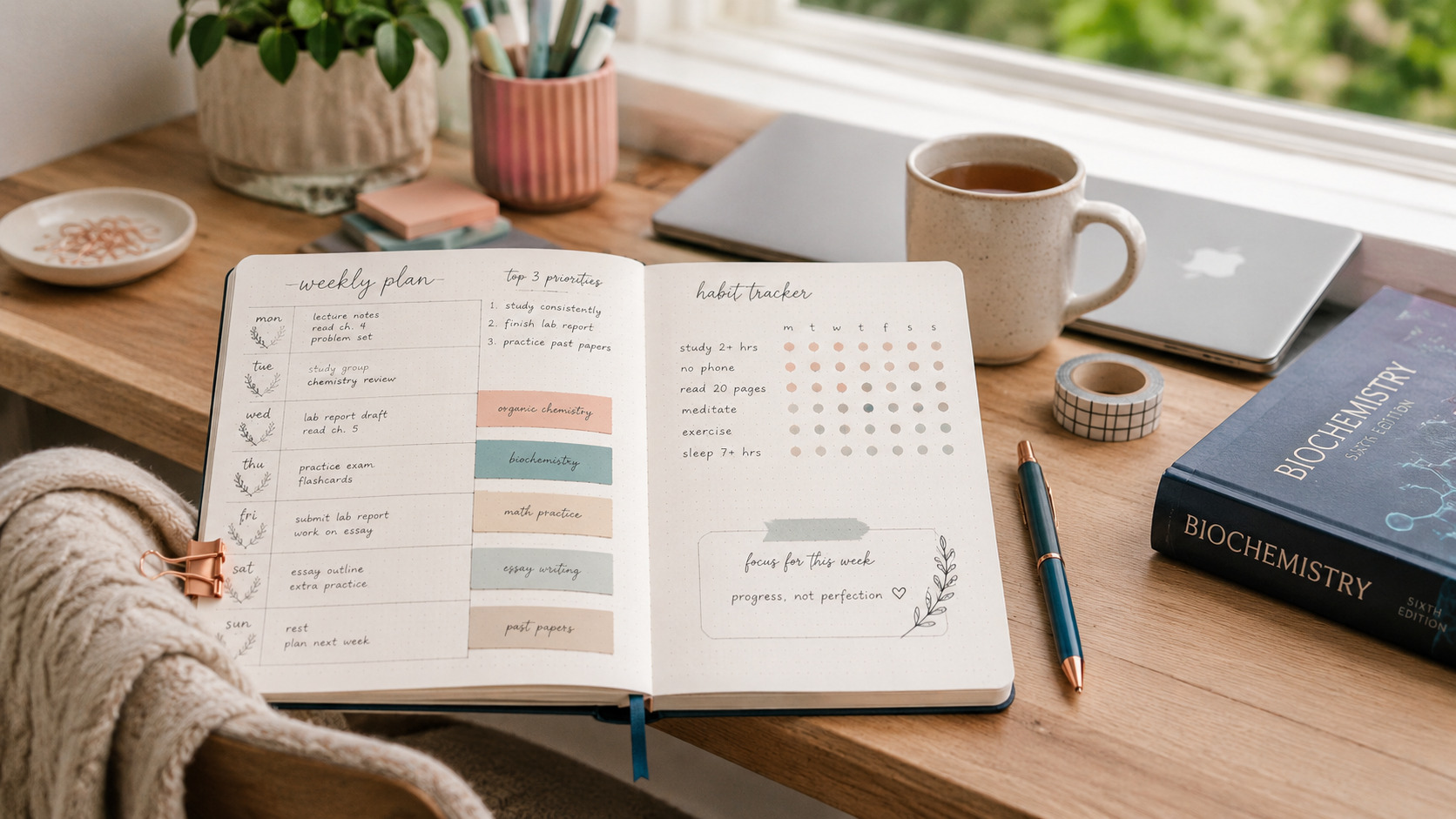
If you’ve ever opened your notebook and instantly felt tired just looking at the chaos, you’re not alone. A simple, cohesive study journal aesthetic makes your pages feel calmer, which actually makes it easier to sit down, plan, and focus. Many students use study journal theme ideas, aesthetic study planner setup layouts, and bullet journal study spreads to turn their study time into something they quietly look forward to.


In this guide, you’ll find minimalist study journal inspiration, aesthetic weekly study spread ideas, and exam‑friendly trackers you can copy even if you “can’t draw.” We’ll also walk through easy aesthetic bullet journal ideas for beginners using washi tape, simple shapes, and neutral palettes so your notebook looks put‑together without eating your entire weekend.

Choosing A Study Journal Aesthetic That Fits You
Start with the overall vibe before you worry about tiny details. A consistent study journal aesthetic helps your brain recognize “this is my study space” the moment you open the notebook. Creators often repeat one theme across the monthly cover, weekly study planner, and key trackers so the whole journal feels cohesive.
Here are four easy study journal theme ideas:
- Minimalist neutral
- Think thin lines, lots of white space, and 1–2 neutral shades like beige, grey, or dusty green—perfect for a neutral minimalist study planner look.
- Use simple block letters or a tiny script for headings; this “clean girl” aesthetic is easy to reproduce on every spread.
- Gingham / plaid & simple patterns
- Instead of drawing complex art, repeat small patterns like grid, plaid, or polka dots as borders or header backgrounds.
- This works beautifully for aesthetic bullet journal themes no drawing, because you can create patterns using a ruler and two markers.
- Nature & celestial
- Small leaves, flowers, or celestial details (moon and stars study journal theme) are popular in aesthetic journals and easy to stylize.
- Try soft sky blue, navy, and gold or silver accents around your study tracker and reading log.
- Stationery collage
- Mix washi tape study journal decoration, kraft paper scraps, printed photos, and simple icon stickers to build a layered look without drawing.
- This style is perfect if you love scrapbooking vibes or Lemon8/TikTok‑inspired collages.
Pick one mood for the month and stick to it. That single decision will do 80% of the work for your aesthetic study planner setup.
Essential Layouts For An Aesthetic Study Planner Setup
Once your vibe is clear, focus on layouts that actually help you study. Aesthetic study planner setup doesn’t mean every page is packed; the most useful bullet journal study spreads balance function and breathing room.

Core spreads to consider:
- Weekly study planner spread
- An aesthetic weekly study spread usually combines columns for each day, a small weekly overview, and boxes for “Top 3 priorities” and “Today’s focus subject.”
- Keep lines simple and let your theme colors do the aesthetic work so you don’t overcomplicate the layout.
- Study timetable & exam countdown
- A study timetable bullet journal layout uses a grid with days on one axis, subjects on the other, and light color‑coding so you can see your weekly pattern at a glance.
- Add a slim exam revision tracker bullet journal column with countdown boxes for each exam or big deadline.
- Notes & topic tracker pages
- A simple list of chapters, units, or modules with checkboxes makes it easy to track revision progress.
- Pair this with a “brain dump” or mind map page where you dump messy thoughts before organizing them into tasks.
- Habit & pomodoro trackers
- A minimalist habit tracker grid for “study x minutes,” “review notes,” and “no phone while studying” keeps your focus habits visible.
- You can also add a tiny pomodoro log—just rows of circles or squares to mark each 25‑minute session.
These core spreads become your home base. Once they’re in place, you can sprinkle aesthetic details without worrying that you’re sacrificing function.
Easy Aesthetic Elements You Can Copy Without Drawing Skills
Aesthetic bullet journal themes no drawing are extremely popular because not everyone wants to spend an hour doodling. Many tutorials rely on the same visual shortcuts to keep pages pretty and quick.

Simple things that make a big difference:
- Color discipline
- Choose 1–3 colors for the month—say sage, beige, and dark brown—and use them for lines, headings, and accents so your pages instantly match.
- This approach is at the core of minimalist study journal inspiration because it looks calm even when the page is full of tasks.
- Simple study journal headers
- Alternate between two header styles: a small script for months/sections and clean block letters for days or lists.
- You can also use highlighter bars with tiny uppercase text on top for a very easy aesthetic bullet journal ideas for beginners look.
- Stickers, washi, and small photos
- Use washi tape study journal decoration along the top or bottom of pages to frame your spreads.
- Add mini quotes, printed photos, or sticker labels as anchors—these add personality even when the rest of the page stays minimal.
Think of these elements as your “visual toolkit.” Once you know which ones you like, you can plug them into any weekly or study tracker layout you try.
A Practical Checklist To Plan Your Study Journal Theme Setup
Use this checklist when you’re setting up a new month or semester:
- Choose one main aesthetic: minimalist neutral, gingham/plaid, nature/celestial, or stationery collage.
- Pick 1–3 colors for the month (for example: sage, beige, dark brown) and stick to them.
- Decide your core spreads: weekly study planner, study timetable bullet journal layout, exam revision tracker bullet journal, notes/topic tracker, and habit & pomodoro tracker.
- Set a header style (simple study journal headers using one script and one block font) and repeat it on all pages.
- Choose 2–3 aesthetic shortcuts you’ll lean on—like washi tape study journal decoration, mini quotes, and one recurring doodle (leaf, star, or tiny grid).
- Block 30–60 minutes once a week to prep your aesthetic weekly study spread so you’re not scrambling each morning.
You can always add extra spreads later, but this checklist gives you a solid, realistic base that looks intentional from day one.
A beautiful notebook won’t magically study for you—but a calm, consistent study journal aesthetic can make it a little easier to sit down, focus, and keep your brain organized. Start with one theme and one weekly spread, let it be imperfect, and tweak the details as you go.

FAQ
FAQs About Study Journal Aesthetic Theme Setup Inspiration
I don’t have much time—what’s the quickest aesthetic setup I can do?
Focus on a minimalist neutral theme and one weekly spread. Start with a simple weekly study planner using a few straight lines, a “Top 3 priorities” box, and a “Today’s focus subject” area—then add one color for accent. This gives you a functional aesthetic weekly study spread without spending hours on art or decoration.
My energy is low—how can I keep things cute without burning out?
When your energy is low, lean on stickers, washi tape study journal decoration, and printed elements instead of drawing. Pick one of the aesthetic bullet journal themes no drawing, like gingham or stationery collage, and repeat a few easy elements (like tape + photo + simple heading) each week. That way, your spreads stay pretty while your effort stays tiny.
How do I stay consistent with my themes over the whole semester?
Consistency comes from rules, not talent. Decide your monthly palette, one style of simple study journal headers, and 2–3 recurring icons (leaf, star, grid square) and use them in every bullet journal study spreads that month. You can switch to a new color palette or motif when a new month starts so it feels fresh without re‑inventing your entire aesthetic study planner setup each week.
I have a very small desk—does an aesthetic planner still help?
Yes, especially if your planner replaces big piles of loose notes. A compact notebook with a clean study timetable bullet journal layout and exam revision tracker bullet journal can live open on a small stand or clip. With a tidy, minimalist study journal inspiration theme, your notebook becomes a visual anchor that makes a cramped space feel more intentional and less chaotic.
My brain feels overloaded—where do I even start with spreads and themes?
When your mental load is high, start with a single page: one aesthetic weekly study spread that includes a tiny brain dump area. Use a neutral minimalist study planner style—one color, simple boxes—to avoid decision fatigue. Once that page feels helpful, you can add a basic topic tracker or habit tracker, but there’s no rush to build a full aesthetic study planner setup in one night.
You’re allowed to build your journal slowly. Start with one calm weekly spread, add a small quote or strip of washi, and let your aesthetic grow as your routines settle—then save this post and follow @theclutteredblog on Pinterest so you always have new layouts to try when you’re ready.