












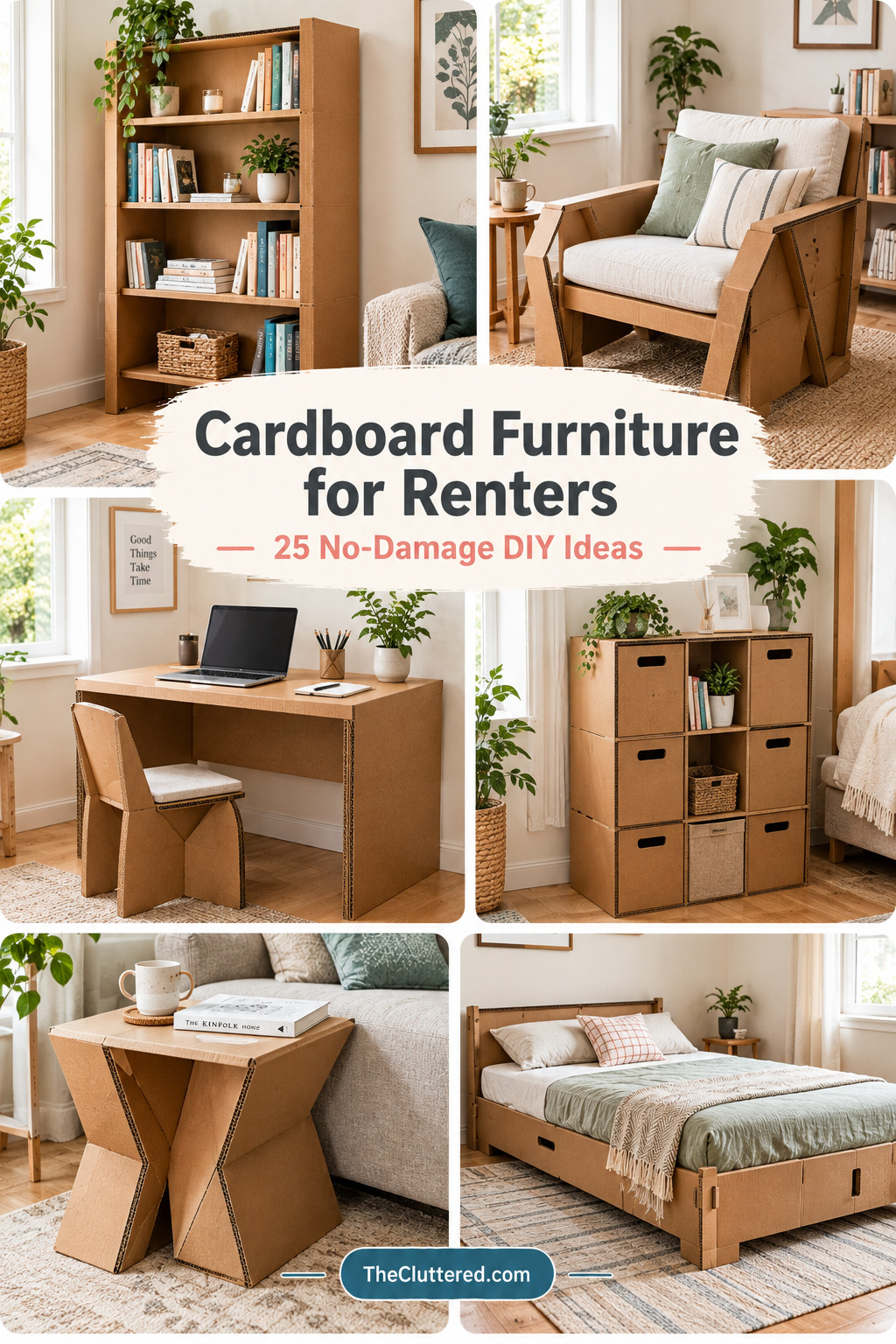


Moving into a new apartment and staring at a pile of cardboard boxes? Before you break them down for recycling, consider this: those boxes could become your next coffee table, bookshelf, or even a surprisingly sturdy nightstand. Cardboard furniture has evolved far beyond the flimsy college dorm stereotype, and it’s becoming the secret weapon for renters who want stylish, functional pieces without breaking their security deposit.
The best part? You don’t need power tools, woodworking skills, or a big budget to create furniture that actually looks good and holds up. Whether you’re dealing with a tiny studio, planning a short-term lease, or just love the idea of upcycling, cardboard furniture offers a no-damage, portable solution that’s as practical as it is eco-friendly.
In this guide, we’re diving into 25 renter-friendly cardboard furniture ideas that prove temporary doesn’t have to mean tacky. From minimalist shelving units to cozy seating options, these projects range from quick afternoon builds to more elaborate statement pieces. Let’s turn those moving boxes into something you’ll actually want to keep around.
Quick Start: Find What Fits Your Space
Not sure where to begin? Here’s a quick guide to help you choose the right cardboard furniture project based on your needs:
Best for Small Spaces
- Vertical storage shelves – Maximize wall space without floor footprint
- Floating wall shelves – No drilling required, easy to remove
- Stackable storage cubes – Reconfigure as needed
- Foldable side tables – Flat storage when not in use
Best for Zero Budget
- Moving box upcycles – Use boxes you already have
- Basic bookshelf – Requires only cardboard and glue
- Shoe rack – Simple stacking design
- Desk organizer – Small project, big impact
Best for Durability
- Layered cardboard bed frame – Can support 7,000+ lbs when built correctly
- Honeycomb structure furniture – Engineering-grade strength
- Corrugated layered seating – Multiple layers for stability
- Reinforced storage units – Double-wall construction
Best for Style Points
- Malachite-patterned shelves – Paint technique looks expensive
- Minimalist modern desk – Clean lines, professional look
- Geometric room divider – Architectural interest
- Modular sofa system – Configurable seating
Why Cardboard Furniture Works for Renters
Before we dive into the ideas, let’s talk about why cardboard furniture is having a moment—and why it makes perfect sense for rental living.
No Damage, No Problem
Traditional furniture assembly often means drilling holes, mounting brackets, and leaving marks that cost you your security deposit. Cardboard furniture sits freely, requires zero installation, and leaves walls and floors completely untouched. When it’s time to move, you simply break it down and recycle—or rebuild it in your new space.
Lightweight and Portable
Try moving a solid wood bookshelf up three flights of stairs. Now try moving a cardboard one. The weight difference is dramatic, making cardboard furniture ideal for apartment dwellers who handle their own moves or frequently rearrange their space.
Budget-Friendly
Quality furniture is expensive, especially when you’re furnishing a temporary space. Cardboard costs nothing if you’re upcycling moving boxes, or very little if you’re buying sheets. Even with glue, paint, and finishing supplies, you’re looking at a fraction of retail furniture costs.
Eco-Conscious Choice
The average American generates about 160 pounds of cardboard packaging waste per year. By transforming boxes into furniture, you’re extending the material’s lifecycle and keeping it out of landfills—even if just for a few months or years before recycling.
Essential Materials & Tools
One of the beauties of cardboard furniture is the minimal tool requirement. Here’s what you’ll typically need:
Basic Supplies
- Cardboard boxes – Various sizes, double-wall corrugated is strongest
- Strong adhesive – PVA glue, hot glue gun, or wood glue
- Box cutter or utility knife – Fresh blades for clean cuts
- Measuring tape and ruler – Precision matters for stability
- Pencil – For marking cuts
Optional Finishing Materials
- Paint – Acrylic or spray paint for color
- Polyurethane – Adds durability and water resistance
- Contact paper or fabric – For decorative finishes
- Sandpaper – Smooth rough edges
- Packing tape – Reinforcement and edge finishing
Building Techniques That Actually Work
The difference between furniture that collapses and furniture that lasts comes down to construction method. Here are the proven techniques:
Layering Method
Stack multiple sheets of cardboard and glue them together to create thick, sturdy panels. The more layers, the stronger the piece. This is essential for weight-bearing surfaces like shelves and tabletops.
Honeycomb Structure
Create internal support by cutting cardboard strips and arranging them in a grid or honeycomb pattern between two flat panels. This distributes weight evenly and prevents sagging.
Interlocking Design
Cut slots in cardboard pieces so they fit together without glue (though glue adds strength). This creates modular, easily assembled/disassembled furniture.
Corrugation Direction
Always orient the corrugation (the wavy inner layer) vertically for maximum strength. Horizontal corrugation is significantly weaker.
Common Mistakes to Avoid
Learn from others’ failures—these are the most common cardboard furniture pitfalls:
- Using single-layer cardboard for weight-bearing surfaces
- Not allowing glue to dry fully before adding weight
- Ignoring moisture – keep cardboard furniture away from humidity and spills
- Overloading shelves – respect weight limits
- Skipping edge reinforcement – edges wear fastest
- Poor cutting technique – jagged edges weaken structure
25 Cardboard Furniture Ideas for Renters
Now for the inspiration! Here are 25 renter-friendly cardboard furniture projects, from simple to stunning. Each one is designed to be no-damage, portable, and surprisingly stylish.
Layered Cardboard Bookshelf with Modern Finish

Source: Pinterest
This bookshelf demonstrates how layered cardboard construction creates a surprisingly sturdy vertical storage solution. The design features multiple shelves capable of holding books, decorative items, and everyday essentials. What makes this particularly renter-friendly is its freestanding nature—no wall mounting required—and the fact that it breaks down flat for easy moving.
The appeal goes beyond functionality. With clean lines and a natural cardboard finish, this piece looks intentional rather than temporary. The layered construction method adds significant strength, allowing each shelf to support a reasonable weight of books and decor. For renters in small apartments or studios, this vertical design maximizes storage without consuming much floor space.
To recreate this, focus on using double-wall corrugated cardboard and gluing multiple layers together for each shelf panel. Allow adequate drying time between steps, and consider adding a clear polyurethane coating for durability. You can customize the height and width to fit your specific space, and even paint or decorate the finished piece to match your aesthetic.
Cozy Cardboard Lounge Chair with Cushions

Source: Pinterest
This lounge chair proves cardboard furniture can be genuinely comfortable, not just functional. The design features an angled backrest and wide seat base, constructed from multiple layers of corrugated cardboard for stability. Soft cushions and pillows transform the structural base into a cozy reading nook or relaxation spot.
What makes this particularly appealing for renters is the combination of comfort and portability. Unlike heavy traditional furniture, this chair can be easily moved, reconfigured, or broken down when needed. The addition of removable cushions means you can wash or replace them independently, extending the piece’s lifespan.
For your own version, focus on creating a sturdy base with at least 10-15 layers of cardboard glued together. The angle of the backrest is crucial for comfort—aim for approximately 100-110 degrees. Use high-density foam cushions covered in washable fabric, and consider adding armrests for extra comfort. This works beautifully in bedrooms, living rooms, or even as a temporary guest seating solution.
Modular Cardboard Storage Cube System

Source: Pinterest
This modular storage system demonstrates the versatility of cardboard furniture. Individual cube units can be stacked, arranged side-by-side, or reconfigured as your storage needs change. The design is particularly popular for children’s rooms, closets, and living areas where flexible organization is essential.
The performance metrics on this pin—over 6,500 saves—speak to its practical appeal. Renters love this solution because it’s completely non-permanent, lightweight enough to move easily, and can be broken down and rebuilt in a new space. The cubes work with or without fabric bins, allowing you to customize the look.
To build this system, create individual cube frames using reinforced cardboard panels. Each cube should be identical in size for easy stacking and reconfiguration. Reinforce corners with extra layers of cardboard or packing tape. You can leave them natural for a minimalist look, paint them for a pop of color, or cover them with contact paper for a more polished finish. Add fabric bins for a cohesive, organized appearance.
Handcrafted Cardboard Sofa from Scrap Boxes

Source: Pinterest
This stunning sofa demonstrates the artistic potential of cardboard furniture. With over 10,000 saves, this pin has gone viral for good reason—it transforms what could be considered waste into a genuinely beautiful, functional piece. The curved design and thoughtful construction show that cardboard furniture doesn’t have to look boxy or temporary.
The craftsmanship involved here elevates cardboard from craft project to art piece. Each curve and angle is carefully planned and executed, creating a sofa that’s as much a conversation starter as it is seating. For renters who want unique, Instagram-worthy furniture without the investment, this approach offers endless creative possibilities.
While this particular design requires more advanced planning and skill, the principle is accessible: use cardboard’s flexibility to create curved, organic shapes rather than just straight lines. Start with a basic frame, then build up layers to create your desired form. Add comfortable cushions and throws to complete the look. Even a simpler version of this concept can create a statement piece for your rental space.
Floating Cardboard Shelf with Aesthetic Finish

Source: Pinterest
This shelf design has resonated with over 1,000 Pinterest users seeking budget-friendly organization that doesn’t sacrifice style. The warm, aesthetic finish and minimalist design make it perfect for study spaces, bedrooms, or dorm rooms where every inch counts and every dollar matters.
What sets this apart is the attention to finish and styling. Rather than leaving the cardboard raw, this approach uses paint, stain, or decorative techniques to create a polished look that rivals store-bought shelving. The compact size makes it ideal for renters who need vertical storage without committing to large furniture pieces.
To achieve this look, start with a sturdy layered cardboard base. Sand edges smooth, then apply your chosen finish—acrylic paint, wood stain, or even a malachite pattern using cardboard stamping techniques. Add decorative items like small plants, books, or trinkets to complete the aesthetic. The beauty of this project is its scalability: make one shelf or create an entire wall system.
DIY Cardboard Wardrobe and Closet System

Source: Pinterest
This ambitious project shows that cardboard furniture isn’t limited to small accessories. With over 2,000 saves, this wardrobe design proves you can create substantial, functional storage solutions from cardboard boxes. The design includes hanging space for clothes, shelves for folded items, and compartments for accessories.
For renters dealing with inadequate closet space or awkward bedroom layouts, a cardboard wardrobe offers a non-permanent solution that can be customized to exact dimensions. It’s particularly useful in studio apartments where defined storage zones help create visual separation between living and sleeping areas.
Building a wardrobe requires careful planning and reinforced construction. Use the strongest cardboard available (double or triple-wall), create a solid frame structure, and reinforce all weight-bearing points. Install a sturdy rod for hanging clothes—PVC pipe works well. Add shelves using the layering method for strength. Finish with paint or fabric covering for a polished look. This project takes time but delivers impressive results.
Paper Mache Cardboard Bookshelf with Finish

Source: Pinterest
This approach takes cardboard furniture to the next level by using paper mache to create a smooth, finished surface. With over 8,500 saves, this technique has proven popular among crafters who want cardboard furniture that looks and feels more substantial than raw cardboard.
Paper mache adds several benefits: it strengthens the structure, creates a smooth paintable surface, and extends the furniture’s lifespan. The finished piece can be painted any color, stained to look like wood, or decorated with patterns and designs. This makes it easy to match your existing decor or create a statement piece.
The process involves building your basic cardboard structure, then applying layers of paper mache (paper strips dipped in glue-water mixture or flour paste). Sand between layers for smoothness, then apply your finish. While this adds time to the project, the result is furniture that’s more durable and visually appealing. It’s worth the extra effort for pieces you’ll use long-term.
Cardboard Storage Organizer with Drawers

Source: Pinterest
This storage solution brings drawer functionality to cardboard furniture, creating organized compartments for everything from craft supplies to bedroom essentials. The design features multiple pull-out drawers that maximize vertical space while keeping items easily accessible.
What makes this particularly useful for renters is its adaptability. Use it as a nightstand, desk organizer, craft station, or bathroom storage. The drawer design keeps items dust-free and hidden, maintaining a clean aesthetic even when storage is full. It’s also completely portable—break it down and rebuild it in your next apartment.
Construction requires precision cutting to ensure drawers slide smoothly. Create a sturdy outer frame, then build individual drawer boxes that fit with just enough clearance for easy movement. Add handles made from cardboard, rope, or ribbon. Reinforce drawer bottoms with extra layers to prevent sagging. For a polished look, line drawers with decorative paper or fabric.
Minimalist Cardboard Desk for Remote Work

Source: Pinterest
This desk design addresses one of the most common renter needs: a functional workspace that doesn’t require a huge investment or permanent installation. With nearly 1,500 saves, it’s clear that remote workers and students appreciate this practical solution.
The minimalist aesthetic means it fits seamlessly into any decor style, from modern to bohemian. The desk provides adequate surface area for a laptop, notebook, and essentials while maintaining a small footprint—crucial for studio apartments or shared living spaces. When built correctly with proper layering, it’s sturdy enough for daily use.
Focus on creating a thick, reinforced tabletop using 15-20 layers of cardboard. The leg structure should use honeycomb or box-beam construction for maximum stability. Consider adding a modesty panel or simple shelving underneath for storage. Finish with paint or contact paper for a professional appearance. This desk can support typical work-from-home needs while remaining completely portable.
Foldable Cardboard Bed Frame – 7000 lb Capacity

Source: Pinterest
This might be the most impressive cardboard furniture project in our collection. The claim of 7,000+ lb capacity sounds unbelievable, but with proper honeycomb construction and layering techniques, cardboard can achieve remarkable strength. This bed frame design has captured attention for its combination of sustainability and engineering.
For renters, a cardboard bed offers unique advantages: it’s lightweight enough to move solo, breaks down completely flat for storage or moving, and costs a fraction of traditional bed frames. It’s particularly useful for temporary housing, short-term leases, or as a guest bed that can be stored when not needed.
The construction method is crucial here. Use a honeycomb or grid internal structure with multiple layers of cardboard. The frame should distribute weight evenly across the entire surface. While this project requires more cardboard and time than smaller pieces, the result is genuinely functional furniture. Add a standard mattress on top for comfort. This is cardboard furniture at its most impressive.
Modern Cardboard Chair Design

Source: Pinterest
This chair design demonstrates that cardboard furniture can be genuinely stylish, not just practical. The geometric construction and clean lines create a piece that looks like it belongs in a modern design magazine. With 357 saves, it’s resonating with design-conscious renters.
The angular design isn’t just aesthetic—it’s structural. The geometric shapes distribute weight efficiently and create inherent stability. This approach shows how thoughtful design can turn cardboard’s limitations into strengths, creating furniture that’s both beautiful and functional.
To recreate this, focus on precise cutting and assembly. The geometric panels need to fit together perfectly for both appearance and stability. Use the interlocking method where possible, reinforcing with glue at stress points. Consider the seat angle carefully for comfort—too upright and it’s uncomfortable, too reclined and it’s unstable. Finish with paint or leave natural for an eco-friendly look.
Floating Cardboard Shelves – Budget Hack

Source: Pinterest
This floating shelf design has gone viral for good reason—it looks like expensive custom shelving but costs virtually nothing. The clean, modern aesthetic and the “looks expensive, costs nothing” promise has earned it 335 saves and counting.
What makes this particularly renter-friendly is the installation method. These shelves can be mounted using removable adhesive strips or command hooks, meaning no holes in walls and no security deposit worries. When it’s time to move, remove them cleanly and rebuild in your new space.
The construction uses layered cardboard to create thick, substantial-looking shelves. Cover with paint, contact paper, or wood-look vinyl for a polished finish. The key to the floating appearance is hiding the mounting hardware. Use L-brackets covered by the shelf structure, or create a box design that slips over wall-mounted supports. Style with plants, books, and decor for maximum impact.
Stylish Cardboard Side Table

Source: Pinterest
This side table draws inspiration from Frank Gehry’s famous cardboard furniture designs, proving that temporary furniture can be high-design. The sculptural form and elegant finish make it suitable for living rooms, bedrooms, or any space where you want style without permanence.
What sets this apart is the attention to form and finish. Rather than a simple box design, this table features interesting angles and curves that create visual interest. The finished piece looks like a designer purchase, not a DIY project—perfect for renters who want elevated style on a budget.
To achieve this look, experiment with curved and angled cardboard panels. Use the layering technique to create thickness and strength. The finish is crucial—sand edges smooth, apply multiple coats of paint or stain, and consider a clear protective topcoat. Style with a lamp, books, or decorative objects to complete the look. This piece proves cardboard furniture can be genuinely beautiful.
DIY Cardboard Storage Shelves System

Source: Pinterest
This shelving system offers flexible storage that adapts to your needs. With 564 saves, it’s clear that renters appreciate the combination of functionality and ease of construction. The design can be customized to any height or width, making it perfect for awkward spaces or specific storage needs.
The modular nature means you can start small and expand as needed, or reconfigure the shelves for different uses over time. Use it for books, decorative items, storage bins, or a combination. The open design keeps spaces feeling airy while providing substantial storage capacity.
Construction focuses on creating sturdy vertical supports and reinforced horizontal shelves. Use the layering method for all weight-bearing surfaces. Consider adding backing panels for extra stability and to prevent items from falling behind the shelves. Finish with paint or leave natural. This is a foundational piece that can serve multiple purposes throughout your tenancy.
Compact Cardboard Storage Organizer

Source: Pinterest
This storage organizer has earned over 2,600 saves by solving a universal renter problem: how to maximize storage in limited space. The compartmentalized design keeps items organized and accessible while maintaining a compact footprint.
Perfect for desks, dressers, bathrooms, or kitchens, this organizer transforms cardboard into a functional storage solution that rivals expensive retail options. The customizable compartments mean you can design it specifically for your needs—whether that’s craft supplies, office materials, bathroom essentials, or kitchen tools.
Build this by creating a box frame, then adding internal dividers using the interlocking method. Cut slots in the cardboard so dividers fit together without glue (though glue adds strength). Customize compartment sizes based on what you’re storing. Cover with decorative paper or paint for a polished look. This is a quick weekend project that delivers immediate organization benefits.
Creative Cardboard Box Furniture Transformation

Source: Pinterest
This pin, with over 3,300 saves, showcases the creative potential of simple cardboard boxes. Rather than breaking them down, this approach uses whole boxes as the foundation for furniture, demonstrating how minimal modification can create maximum impact.
The beauty of this method is its simplicity. Boxes become the structural framework, requiring only cutting, stacking, and finishing to create functional furniture. This is ideal for renters who want quick results without complex construction techniques. The eco-friendly aspect—upcycling moving boxes instead of recycling them—adds to the appeal.
Start with sturdy boxes in various sizes. Cut openings for doors or drawers, stack and glue boxes together for stability, then finish with paint, fabric, or contact paper. Add hardware like knobs or handles for a professional touch. This approach works for nightstands, storage units, entertainment centers, or even temporary desks. It’s the fastest path from moving box to furniture.
Simple DIY Cardboard Bookshelf

Source: Pinterest
This straightforward bookshelf design proves you don’t need advanced skills to create functional cardboard furniture. The emphasis on “free” and “sturdy” resonates with renters looking for practical solutions without complexity or cost.
The design prioritizes function over form, creating a reliable storage solution for books, decor, or everyday items. It’s perfect for beginners attempting cardboard furniture for the first time, or for anyone who needs quick, no-fuss storage. The small-room focus makes it ideal for apartments, dorms, or home offices.
Construction is straightforward: cut panels to size, layer for strength, assemble using glue or interlocking slots, and reinforce corners. No fancy techniques required. Finish simply with paint or leave natural. The key is using enough layers to ensure stability—don’t skimp on cardboard thickness. This is cardboard furniture at its most accessible and practical.
Cardboard Wardrobe and Closet System

Source: Pinterest
This wardrobe design addresses a common renter challenge: inadequate closet space. With 237 saves, it’s helping people create additional storage without permanent modifications. The design includes hanging space, shelves, and compartments for complete clothing organization.
Particularly useful in older apartments with minimal closet space or studios where defined storage zones help organize the room, this cardboard wardrobe offers flexibility that built-in closets can’t match. You can customize dimensions to fit your exact space and reconfigure as needs change.
Build a sturdy frame using reinforced cardboard panels. Install a PVC pipe or wooden dowel for hanging clothes. Add shelves using the layering method for strength. Create compartments with dividers for shoes, accessories, or folded items. Finish with fabric covering or paint for a polished appearance. This project requires time and materials but delivers substantial storage capacity.
Portable Cardboard Tables and Desks

Source: Pinterest
This collection showcases the versatility of cardboard for tables and desks. Whether you need a dining surface, work desk, or coffee table, cardboard can deliver a lightweight, portable solution that’s easy to move and store.
The portability factor is huge for renters who frequently rearrange furniture, work from different locations in their home, or need to store furniture when not in use. These pieces can be broken down flat, stored behind a couch or in a closet, then quickly reassembled when needed.
Focus on creating strong leg structures using box-beam or honeycomb construction. The tabletop should use multiple layers for rigidity. Consider foldable or interlocking designs for easy assembly and disassembly. Finish with a protective coating to prevent water damage and make cleaning easier. These tables prove cardboard furniture can be genuinely practical for daily use.
Cardboard Ottoman and Stool Designs

Source: Pinterest
Cardboard ottomans and stools offer flexible seating that doubles as footrests, side tables, or extra seating when guests visit. The compact size makes them perfect for small apartments where every piece needs to earn its keep.
These pieces are particularly practical because they’re so lightweight—easy to move around as needed, then tuck away when not in use. Add a cushion on top for comfort, or use the flat surface as an impromptu table. The versatility makes them valuable in any rental space.
Construction requires dense layering to support sitting weight. Create a cylindrical or box shape with at least 20-30 layers of cardboard for strength. Cover with fabric for a polished look and added comfort, or paint for a modern aesthetic. Add non-slip pads to the bottom to prevent sliding. This is a quick project with immediate utility.
Cardboard Furniture Design and Shelving

Source: Pinterest
This design-forward approach to cardboard furniture shows how thoughtful construction can create pieces that look intentional and stylish. The integration of storage shelves demonstrates how form and function work together in cardboard furniture design.
What elevates this beyond basic DIY is the attention to proportions, clean lines, and overall aesthetic. The piece looks like it belongs in a designed interior, not just a craft project. This is the level of finish and design thinking that makes cardboard furniture truly viable for long-term use.
Achieve this look by planning your design carefully before cutting. Use precise measurements and clean cuts. Layer cardboard for substantial thickness. Sand all edges smooth. Apply a professional finish—paint, stain, or veneer. Consider how the piece fits into your overall interior design. This approach transforms cardboard from craft material to legitimate furniture medium.
Modular Cardboard Sofa System

Source: Pinterest
This modular sofa system represents sophisticated cardboard furniture design. The VOYAGE system features interchangeable modules—ottomans and single-seaters—that can be configured in countless ways to adapt to different spaces and needs.
The internal grid-reinforced structure allows each seat to support over 100 kg (220 lbs), demonstrating that cardboard furniture can meet real-world durability requirements. For renters in compact living situations or those who need temporary lounge areas, this modularity offers unmatched flexibility.
While this particular design is professionally manufactured, the concept is adaptable for DIY. Create individual modules using reinforced cardboard construction with internal support grids. Cover with cushions and fabric for comfort. The modular approach means you can build one piece at a time, reconfigure as needed, and easily move or store individual components. This is cardboard furniture thinking big.
Compact Cardboard Cube Stool

Source: Pinterest
This compact cube stool proves that cardboard furniture doesn’t need to be large to be useful. At just 9.8 inches, it’s perfect as a footrest, extra seating, or small side table. The tool-free assembly and lightweight design make it incredibly practical for renters.
The cube shape is inherently stable and strong, distributing weight evenly. Despite its small size, proper construction makes it sturdy enough for regular use. The natural brown cardboard finish is simple and clean, or you can decorate it to match your space.
Build this by creating a hollow cube with reinforced walls—use at least 15-20 layers of cardboard for each side. The interior can be left hollow or filled with a honeycomb structure for extra strength. No tools required for assembly if you use interlocking tabs. This is a perfect beginner project that delivers immediate utility.
Temporary Cardboard Bed Frame Setup

Source: Pinterest
This temporary bed frame addresses a real renter need: what do you sleep on while waiting for furniture to arrive, or during a short-term lease? The cardboard solution is immediate, affordable, and completely temporary—perfect for transitional situations.
The casual, real-world presentation shows this isn’t about creating permanent furniture, but solving an immediate problem. For someone between apartments, waiting for a delivery, or in temporary housing, this is a practical solution that costs almost nothing and can be recycled when done.
Construction can be simple or elaborate depending on your needs. A basic platform using layered cardboard works for short-term use. For longer situations, invest time in a reinforced frame with proper support. Add a mattress topper for comfort. The beauty is in the flexibility—build exactly what you need for your situation, then recycle when you’re done.
DIY Cardboard Table Ideas and Inspiration

Source: Pinterest
This final image showcases the breadth of possibility in cardboard table design. With over 2,500 saves, it’s inspiring renters to see tables not as fixed, expensive purchases but as creative projects they can customize to their exact needs and style preferences.
From coffee tables to dining tables, side tables to desks, cardboard can handle them all with proper construction. The variety shown here demonstrates that you’re not limited to one look or one function—cardboard furniture adapts to your lifestyle.
Use this inspiration to design your own table based on your specific space, needs, and aesthetic preferences. Consider height, surface area, storage requirements, and style. Then apply the construction techniques we’ve covered: layering for strength, honeycomb structures for support, and finishing for durability and appearance. The only limit is your imagination and the amount of cardboard you have available.
Love these ideas? Follow @theclutteredblog on Pinterest for more cozy, practical gift inspiration!