







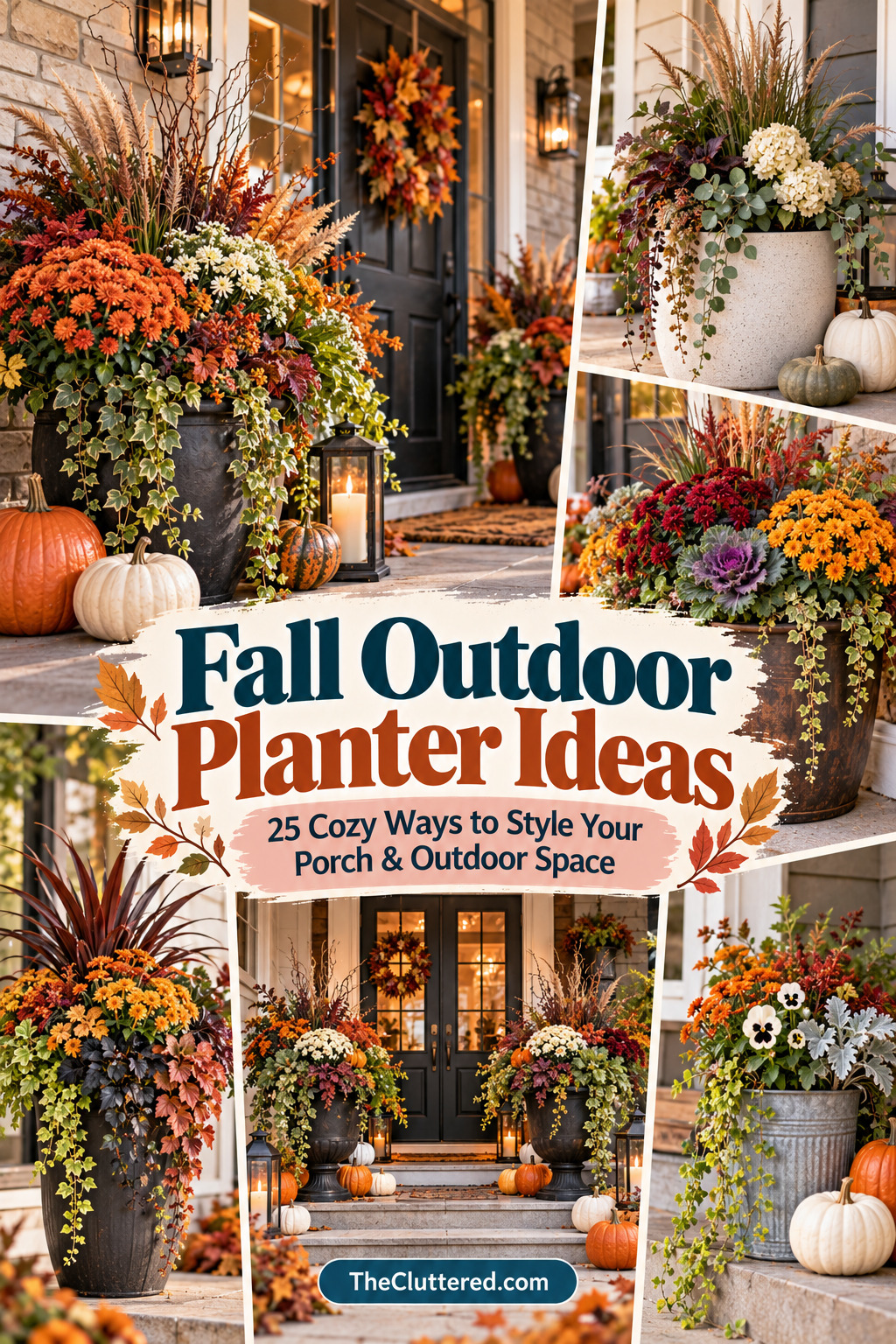


Fall is a particularly good time to refresh an outdoor space with containers because a small planting change can make a porch, entry, patio, or set of steps feel completely different. These fall outdoor planter ideas focus on practical combinations of seasonal flowers, foliage, texture, and container styling rather than complicated displays. Whether you want a colorful front-door moment, a neutral modern look, or an easy arrangement for a small porch, the goal is to help you build a planter that fits your space and your style.
Start With the Look You Want
- Classic: combine warm flowers with leafy fall texture.
- Modern: keep the palette restrained and let the container shape show.
- Cozy: layer flowers, foliage, and natural-looking accents.
- Small-space: use one compact container with vertical interest.
- Low-effort: refresh an existing container instead of rebuilding everything.
How to Build a Fall Outdoor Planter That Looks Intentional
A successful container usually has a simple visual hierarchy. Start with the largest structural element, then add fuller plants that occupy the middle of the pot and finish with a lower or trailing element when the container allows it. This familiar thriller, filler, spiller approach is useful because it gives you a starting point without locking you into one exact plant combination.
Choose the Container Before You Choose Every Plant
Think about where the planter will sit first. A broad front porch can handle a larger container, while a narrow step or small balcony usually benefits from a slimmer footprint. The container should feel proportional to the door, furniture, path, or other nearby features.
For a more polished look, repeat one visual element across several containers. That could be the container finish, one flower color, or a particular foliage texture. Repetition creates connection even when the individual arrangements are not identical.
Build Around Color and Texture
Traditional fall colors such as rust, orange, burgundy, cream, and deep green can create a warm seasonal display. A quieter palette of green, cream, muted brown, and soft autumn tones can feel more modern. You do not need every fall color in one pot; choosing one dominant family and one or two supporting tones is often easier to coordinate.
Texture matters just as much as color. Flowers provide focal points, while foliage, ornamental grasses, and leafy plants add shape that remains interesting between blooms. Mixing broad leaves with fine textures can make a simple container feel fuller without adding excessive plant variety.
Use What You Already Have
Refreshing an existing summer container can be one of the easiest ways to transition into fall. Keep healthy structural plants or a container you still like, remove tired seasonal material, and add a few fall-friendly elements. This can give the porch a new look without requiring an entirely new arrangement.
Where to Use Fall Planters
Front doors and porches are natural focal points, but fall containers can also define patio seating areas, soften steps, frame an entry path, or add seasonal color to a deck or balcony. On a small space, one well-proportioned container can have more impact than several crowded pots. On a larger porch, a pair or grouping of containers can help establish balance.
Simple Styling Formulas to Try
- Flower + foliage: let seasonal blooms provide color while foliage supplies structure.
- Warm + neutral: pair one warm autumn tone with cream, green, or muted brown.
- One plant, repeated: use the same flower or foliage in several containers for a cohesive entry.
- Layered texture: combine an upright plant, a rounded filler, and a softer trailing or fine-textured element.
- Container as the accent: keep the planting restrained when the pot has a strong shape or finish.
Making a Small Porch Feel Bigger
Small porches benefit from vertical structure and visual restraint. A narrow planter can add height without blocking the walkway, while a repeated color can connect the container to the front door or nearby decor. Avoid filling every available corner; leaving a little negative space helps the entry feel more open.
Easy Ways to Add Personality
Once the planting structure works, add personality through the container finish or one restrained seasonal accent. Pumpkins, gourds, or other natural-looking elements can work when they support the composition rather than compete with it. A rustic vessel can reinforce a farmhouse feel, while a simple dark or neutral container can make colorful flowers stand out.
Fall Planter Quick Checklist
- Choose the location first.
- Check available light.
- Measure the available footprint.
- Consider the mature size of plants.
- Choose a container with suitable drainage.
- Pick one dominant color family.
- Add contrasting foliage texture.
- Plan the tallest element first.
- Keep the middle of the container full but not crowded.
- Use trailing plants only where the space allows.
- Repeat one color or texture across multiple pots.
- Keep pathways clear.
- Use seasonal accents sparingly.
- View the arrangement from the street and from the doorway.
- Refresh or remove tired material as the season changes.
FAQ
What plants work well in fall outdoor planters?
Common fall container choices include seasonal flowers, ornamental foliage, ornamental grasses, mums, ornamental kale, and other plants suited to the light and conditions of the specific location. The best combination depends on your climate, container size, and available light.
How many plants should go in one fall planter?
There is no single number that works for every container. Use the mature size and growth habit of the plants as your guide, and leave enough room for the arrangement to look layered without becoming overcrowded.
How can I make a fall planter look more expensive?
Focus on proportion, repetition, and restraint. A well-sized container, a limited color palette, and a few contrasting textures can create a polished look without needing many decorative elements.
Can I use the same fall planter idea on a small porch?
Yes. Scale the formula down rather than copying a large arrangement. A narrow container with one taller element and a compact supporting layer can provide seasonal impact while keeping the walkway open.
The best fall outdoor planter is not necessarily the busiest one. Choose a container that fits the space, build around a simple plant structure, and use color and texture to create the seasonal feeling you want. With a few repeatable formulas, you can adapt the same approach for a front door, porch, patio, steps, deck, or small outdoor corner.
25 Fall Outdoor Planter Ideas to Explore
Use the gallery below as a visual idea bank. Each example offers a different route into seasonal container styling, from colorful flowers and foliage to neutral palettes, layered textures, larger curb-appeal arrangements, and compact porch solutions.
Cozy Porch Layers

Source: Pinterest
A layered porch planter arrangement with warm foliage and seasonal flowers creates an inviting first impression.
The mix works because height, fullness, and autumn color make a container feel finished without requiring a complicated display.
Use the same idea with one tall thriller, a rounded filler, and a trailing accent, adjusting the proportions to your container.
Classic Fall Container

Source: Pinterest
A classic fall container combines rich foliage and flowers in a compact arrangement that reads immediately as seasonal.
It is a flexible starting point for a front door, porch corner, patio, or steps because the palette can be made bold or restrained.
Swap flower colors or foliage to match your home's exterior, and repeat the same combination in smaller pots for continuity.
Flower-Focused Pot

Source: Pinterest
A flower-forward planter puts seasonal blooms at the center while foliage provides shape and visual support.
This approach is useful when you want color to do most of the decorating work without adding many separate porch accessories.
Try one dominant bloom color with two supporting foliage tones, or echo a flower color elsewhere on the porch.
Modern Neutral Planter

Source: Pinterest
A neutral fall planter uses restrained colors and clean shapes instead of a highly colorful autumn palette.
The quieter look can feel especially polished beside modern exteriors, dark doors, stone, or simple wood finishes.
Choose cream, green, muted rust, or soft brown tones and let the container itself become part of the composition.
Refresh a Summer Container

Source: Pinterest
Existing summer containers can be refreshed for fall by replacing tired seasonal elements and adding plants with stronger autumn texture.
This can be a practical option when the container is still attractive and the structure is worth keeping.
Remove spent plants, keep healthy structural elements, then add a few fall-friendly plants rather than rebuilding the entire pot.
Skip the Mums

Source: Pinterest
A fall planter does not have to rely on mums; foliage plants and other seasonal textures can create a fuller, less expected display.
Using different plant shapes gives the container more visual interest and helps avoid making every fall pot look alike.
Combine upright foliage, rounded leaves, and fine textures, then add one small seasonal accent if you want extra color.
Flowers and Foliage

Source: Pinterest
A mixed container pairs flowering plants with foliage so the display still has structure when individual blooms fade.
Foliage provides color and texture that can carry the planter through changing fall conditions.
Use flowers as the focal point and choose foliage with contrasting leaf shapes so the arrangement remains visually layered.
Thriller, Filler, Spiller

Source: Pinterest
The thriller-filler-spiller formula creates an easy framework for building balanced fall containers.
A tall focal plant establishes height, fuller plants fill the middle, and trailing plants soften the rim.
If space is tight, use a compact version of the formula rather than forcing three large plants into a small container.
Designer-Looking Front Porch

Source: Pinterest
A carefully repeated container style can make a front porch feel more intentional and coordinated.
Matching or visually related planters on both sides of a door can create symmetry without requiring identical plants in every pot.
Repeat the container shape or color, then vary the plant mix slightly so the porch feels coordinated rather than staged.
Porch, Patio, or Entryway

Source: Pinterest
A versatile fall container can move beyond the front door and work as an accent on patios, steps, or entry paths.
Thinking about location first helps you choose a container size and plant height that fit the space.
For walkways, keep the footprint controlled; for open patios, use larger containers to create stronger visual anchors.
Outdoor Planter Arrangement

Source: Pinterest
A grouped arrangement of fall containers can create more impact than one isolated pot.
Different heights and container sizes add rhythm while keeping the overall palette connected.
Place the tallest container toward the back and use shorter pots to step the composition down toward the viewer.
Colorful Mums

Source: Pinterest
Colorful mums bring instant fall color and can anchor a cheerful porch planter.
They work particularly well when the container itself is simple, allowing the flowers to carry the seasonal statement.
Use one color for a clean look or combine two related shades, then add foliage for contrast.
Autumn Container Garden

Source: Pinterest
A container garden can combine several fall plants to create a miniature seasonal planting bed.
This is useful when you want a richer garden look but have limited ground space or want flexible placement.
Repeat a few plant types across multiple containers to make a collection feel like one garden rather than unrelated pots.
Fall Patio Combo

Source: Pinterest
A patio planter can be designed as a small outdoor focal point with layered color and texture.
Because patios are often viewed from several directions, a fuller arrangement can work better than a one-sided display.
Rotate the container during planting and check it from the seating area, walkway, and house before finalizing the composition.
Festive Fall Planter

Source: Pinterest
A festive planter can lean into autumn color while remaining natural and easy to live with.
Warm foliage, seasonal flowers, and understated accents can make the display feel celebratory without becoming cluttered.
Add pumpkins or gourds only when they complement the plants and leave enough breathing room around the container.
Large Curb-Appeal Planter

Source: Pinterest
A large planter can create a stronger entry statement and visually anchor a porch or front walk.
Scale matters outdoors: a generous container can balance a broad doorway or a long set of steps better than several tiny pots.
Use height and width together, and repeat the same palette in a second container if the space calls for symmetry.
Fall Planter Color Combos

Source: Pinterest
Color combinations can change the mood of a fall planter even when the plant types remain similar.
Warm oranges and rusts feel traditional, while greens, creams, and muted tones create a calmer look.
Choose one dominant color family, one supporting neutral, and one small accent rather than competing with every autumn color at once.
Cozy Small Porch Planter

Source: Pinterest
A compact planter can still create a strong seasonal moment when the arrangement is scaled to the entry.
Small spaces benefit from vertical interest because it adds presence without taking over the walkway.
Choose a narrow container, keep the plant count controlled, and repeat one color or texture elsewhere near the door.
Shade-Friendly Entry

Source: Pinterest
A shaded entry can still feel seasonal when the planter relies on foliage, texture, and plants suited to lower-light conditions.
The key is to work with the light available instead of choosing a display only for its color.
Observe the area first, then select suitable plants and use container color or texture to add warmth.
Decorating Outdoor Planters

Source: Pinterest
Seasonal styling can be as simple as refreshing the container's plant mix and adding one or two complementary accents.
This approach keeps the planter practical while giving it a distinctly autumn feel.
Start with the plants, then add accents only if the container still looks balanced and easy to access.
Easy Autumn Garden

Source: Pinterest
An easy fall planter focuses on a few reliable visual elements rather than a complicated collection of plants.
Simple combinations are easier to repeat across several containers and easier to maintain.
Choose one focal plant, one supporting texture, and one accent color, then repeat that recipe where it makes sense.
Unique Fall Container

Source: Pinterest
A less conventional container can make an autumn display feel more personal and less like a standard seasonal arrangement.
The container itself can provide shape, texture, or contrast before any flowers are added.
Reuse a suitable vessel you already own, as long as it provides adequate drainage and works safely in its intended outdoor location.
Five-Way Front Porch Styling

Source: Pinterest
A front porch planter can be styled in several directions, from colorful and traditional to restrained and modern.
Having a few style routes makes it easier to choose a look that fits the house instead of copying a single formula.
Keep the plant structure consistent while changing color, container finish, or accent materials to create a different mood.
Layered Porch Planter Recipe

Source: Pinterest
A layered container using mums, ornamental kale, and grasses demonstrates how different plant forms can share one pot.
The combination works visually because the plants contribute different heights, leaf shapes, and textures.
Use the same principle with other available fall plants, keeping the tallest element toward the center or back and lower plants around it.
Front-Door Seasonal Mums

Source: Pinterest
A front-door planter centered on seasonal mums creates a clear focal point while leaving room for foliage and texture around the flowers.
Mums are an easy way to bring recognizable fall color to an entry, especially when the container itself is kept simple.
Use one mum color for a clean statement or surround the blooms with contrasting foliage, keeping the overall arrangement proportional to the doorway.
Love these ideas? Follow @theclutteredblog on Pinterest for more cozy, practical gift inspiration!