









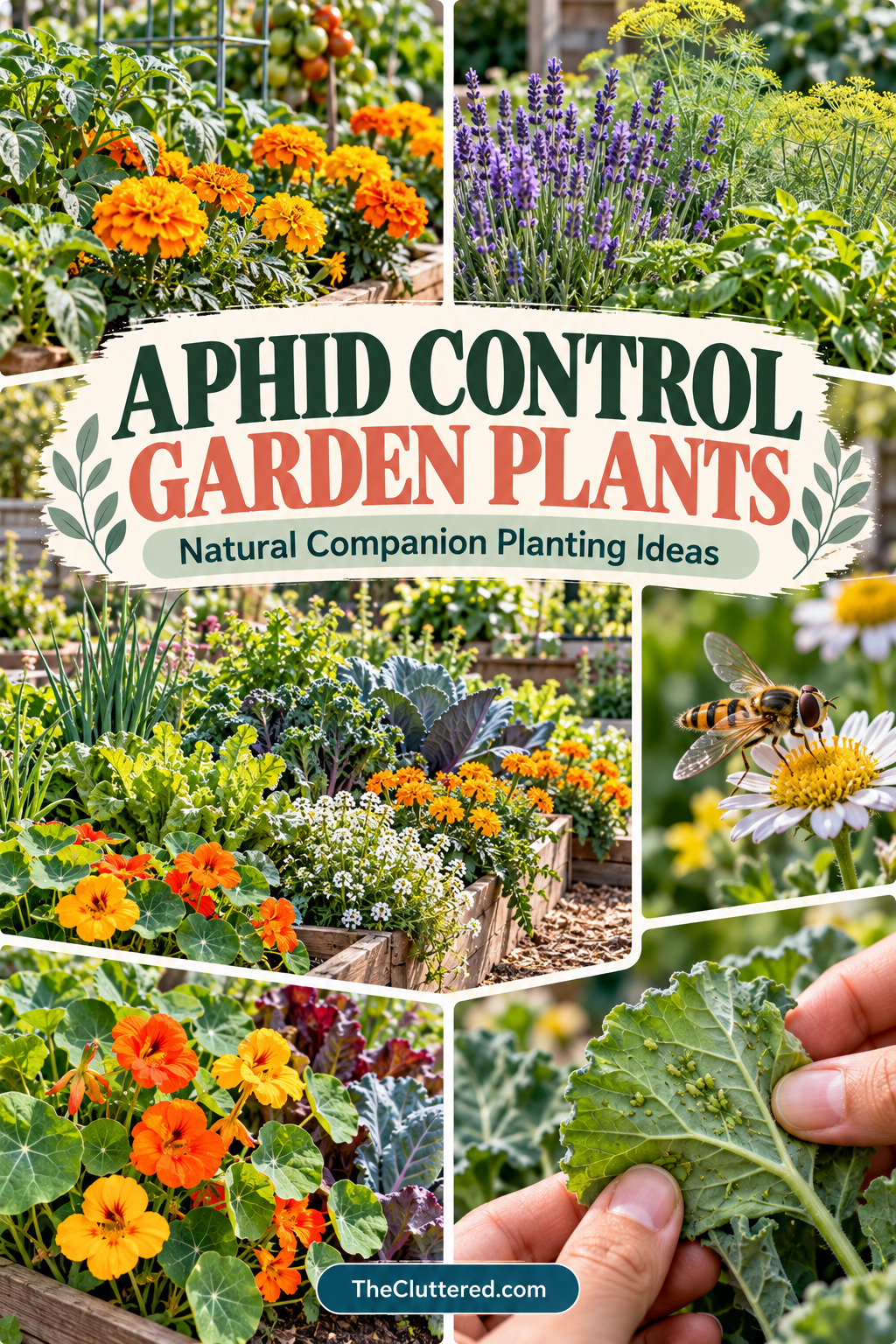


Aphid control garden plants can help you build a more balanced garden, especially when you combine useful companion plants with regular inspection and gentle, targeted responses. Aromatic herbs and flowering plants may contribute to pest-management goals, while flowers can also support beneficial insects that feed on aphids or use garden blooms for food.
The important distinction is that no plant reliably keeps every aphid away. Think of companion planting as one layer of an integrated approach—not a substitute for checking leaves, identifying the problem, and responding when colonies appear.
Quick Start: What to Plant and What to Do
- For plant diversity: mix vegetables with suitable herbs and flowering plants rather than growing every crop in a single block.
- For beneficial insects: include accessible flowers and allow some bloom continuity through the growing season.
- For early control: inspect tender shoots and leaf undersides, then remove small colonies before they build up.
- For an active infestation: start with the least disruptive practical method and protect beneficial insects.
- For expectations: treat marigolds, aromatic herbs, and other companion plants as supporting tactics, not guaranteed aphid repellents.
How Plants Can Support Aphid Control
Companion planting can influence the mix of plants and insects in a garden. Different plant shapes, scents, and flowering periods create a more varied habitat. Some flowers provide nectar or pollen to adult beneficial insects, while a diverse planting plan can make it easier to combine prevention with routine monitoring.
However, a plant described as “aphid-repelling” may not protect every nearby crop in every situation. Aphid species, weather, plant health, and garden layout all matter. Use observation to decide whether a planting combination is helping in your own space.
Plants to Consider in a Diverse Garden
Aromatic herbs
Gardeners often experiment with herbs such as garlic, onions, lavender, dill, and fennel as part of companion planting. Choose herbs that fit your climate, available space, and culinary preferences. Their presence should be considered one element of a mixed planting plan rather than a promise that aphids will stay away.
Flowering companions
Flowers such as yarrow and marigolds can add color and structure to vegetable beds. Select plants suited to your growing conditions and leave enough space for crops to receive adequate light and airflow. Flowering plants are most useful as part of a habitat plan, not as a stand-alone treatment for an existing infestation.
Trap-plant experiments
Nasturtiums are sometimes used as trap plants because aphids may gather on them. If you try this approach, inspect the plants frequently and decide in advance how you will manage any colonies. A trap plant that becomes heavily infested can also become a source of aphids if it is ignored.
Encourage Beneficial Insects Without Guesswork
Lady beetles, lacewings, and hoverfly larvae are among the beneficial insects associated with aphid predation. Adult hoverflies and some other helpful insects use flowers as food sources, so a garden with accessible blooms may support them. The insects you attract will depend on the local environment and the plants available.
- Choose a mix of flowering plants rather than relying on one bloom.
- Avoid spraying broad-spectrum products over flowers or directly onto beneficial insects.
- Learn to recognize beneficial larvae before removing insects from a plant.
- Keep a close eye on aphid colonies and the predators visiting them; visible predators may be part of the control process.
Natural Aphid Control: A Practical Routine
- Inspect: check leaf undersides, tender tips, stems, and flower buds.
- Assess: note whether the colony is small, whether leaves are curling, and whether beneficial insects are present.
- Use a gentle first response: for suitable sturdy plants, a directed stream of water may dislodge aphids. Avoid damaging delicate seedlings or blooms.
- Prune selectively: if a small shoot is heavily infested and pruning will not harm the plant, remove it and dispose of it appropriately.
- Escalate carefully: if you choose a garden spray, use a product labeled for the plant and pest, follow the label, and test a small area first. Avoid applying products to pollinators or beneficial insects.
- Recheck: inspect the plant again over the next several days and repeat only when needed and consistent with product directions.
Homemade mixtures are not automatically safe simply because the ingredients are familiar. Concentrated soap, oils, or other ingredients can injure foliage, especially in heat or on sensitive plants. Avoid improvised recipes unless you can verify they are appropriate for the specific plant and use.
Adjust the Approach to the Crop
Tomatoes and peppers
Inspect the newest growth and leaf undersides. If you find aphids, identify whether predators are already present and choose a targeted response that will not unnecessarily affect them.
Cucumbers and other tender crops
Check young leaves and stems often, especially when plants are actively growing. Keep companion plants from crowding the crop or competing excessively for water and light.
Roses and flowering plants
Look around buds and soft new stems. A small colony may be manageable with a directed water spray or selective removal, while beneficial insects may help suppress aphids over time.
Indoor plants
Separate a newly affected plant from nearby houseplants when practical, inspect nearby foliage, and use a method specifically suitable for indoor use. Avoid outdoor garden sprays indoors unless the label explicitly allows that use.
Companion Planting Checklist
- Identify which plants are affected before choosing a response.
- Check the undersides of leaves and tender new growth.
- Look for lady beetles, lacewing larvae, and hoverfly larvae.
- Choose herbs and flowers that suit your growing conditions.
- Give vegetables enough light, water, and airflow.
- Mix plant types where practical instead of relying on one companion plant.
- Try trap plants only if you can monitor them regularly.
- Remove heavily infested shoots only when pruning is appropriate.
- Use water to dislodge small colonies from sturdy plants when suitable.
- Read labels before using any pest-control product.
- Test a product on a small part of the plant if the label recommends it.
- Avoid spraying blooms when pollinators are active.
- Do not assume homemade sprays are harmless to foliage.
- Recheck treated plants and adjust based on what you observe.
- Keep notes on companion combinations that work in your own garden.
Frequently Asked Questions
Which plants are best for aphid control?
There is no universally best plant. Gardeners commonly try aromatic herbs and flowering companions such as garlic, onions, lavender, dill, fennel, yarrow, and marigolds, but results vary. Combine plant diversity with monitoring and targeted control.
Do marigolds keep aphids away?
Marigolds can be useful flowering companions in a diverse garden, but they should not be treated as a guaranteed aphid repellent. Watch the plants and nearby crops to see what happens in your conditions.
Can nasturtiums be used as trap plants?
They are sometimes planted with that purpose in mind. Inspect them frequently and manage aphid colonies so the trap plant does not become an overlooked source of pests.
What flowers attract aphid predators?
Small, accessible flowers can provide food for some adult beneficial insects. A varied selection of flowering plants is a reasonable starting point, but local insect activity and growing conditions affect which species visit.
What is the first thing to do when aphids appear?
Confirm the pest, inspect the extent of the colony, and look for beneficial insects. For a small infestation on a sturdy plant, a directed stream of water or selective removal may be enough to start; choose any further treatment carefully.
Healthy aphid management is usually a combination of plant diversity, early observation, and careful action when needed. Try a few suitable companion plants, keep checking your crops, and let what you observe guide the next step rather than expecting any single plant to solve every aphid problem.
25 Visual Ideas for Aphid Control Garden Plants
Explore garden-pest inspiration and companion-planting concepts from the supplied Pinterest CSV. These source images are references, not guarantees that a particular plant will repel aphids; use them alongside the practical guidance above.
Natural Aphid Control: Companion Planting Guide

This source pin is part of the garden-pest and aphid-management inspiration set, with a visual topic centered on companion planting for aphids.
Pair herbs and flowers with vegetables to add diversity and encourage a more balanced garden.
Use the example as a starting point: adapt the plant mix to your own growing conditions, leave room to inspect leaves, and monitor results rather than assuming a companion plant guarantees control.
DIY Natural Pesticides: 6 Easy Homemade Sprays for Garden Pests 🌿

This source pin is part of the garden-pest and aphid-management inspiration set, with a visual topic centered on natural pest control garden.
A mixed planting plan can complement regular inspection and targeted aphid management.
Use the example as a starting point: adapt the plant mix to your own growing conditions, leave room to inspect leaves, and monitor results rather than assuming a companion plant guarantees control.
Identify Aphids Early

This source pin is part of the garden-pest and aphid-management inspiration set, with a visual topic centered on identify aphids early.
Check tender new growth and the undersides of leaves before colonies spread.
Use the example as a starting point: adapt the plant mix to your own growing conditions, leave room to inspect leaves, and monitor results rather than assuming a companion plant guarantees control.
Natural Ways to Get Rid of Aphids on Vegetable Plants

This source pin is part of the garden-pest and aphid-management inspiration set, with a visual topic centered on attract beneficial insects.
Include flowering plants and let helpful insects find food and shelter in the garden.
Use the example as a starting point: adapt the plant mix to your own growing conditions, leave room to inspect leaves, and monitor results rather than assuming a companion plant guarantees control.
How to Get Rid of Aphids Naturally (Without Harsh Chemicals!) 🛑🐛

This source pin is part of the garden-pest and aphid-management inspiration set, with a visual topic centered on natural aphid management.
Combine plant diversity, monitoring, and careful physical control instead of relying on one fix.
Use the example as a starting point: adapt the plant mix to your own growing conditions, leave room to inspect leaves, and monitor results rather than assuming a companion plant guarantees control.
Aphids Disappear In no Time: A Natural Solution You Must Try

This source pin is part of the garden-pest and aphid-management inspiration set, with a visual topic centered on plants that repel aphids.
Aromatic herbs may be useful companions, but results vary by plant and garden conditions.
Use the example as a starting point: adapt the plant mix to your own growing conditions, leave room to inspect leaves, and monitor results rather than assuming a companion plant guarantees control.
Organic Pest Control Methods: Safe Solutions for Your Garden

This source pin is part of the garden-pest and aphid-management inspiration set, with a visual topic centered on organic garden pest care.
Use the least disruptive method that fits the size of the infestation and the plant.
Use the example as a starting point: adapt the plant mix to your own growing conditions, leave room to inspect leaves, and monitor results rather than assuming a companion plant guarantees control.
Get Rid of Aphids Naturally 🐛 (4 Easy Fixes!)

This source pin is part of the garden-pest and aphid-management inspiration set, with a visual topic centered on protect vegetable leaves.
Inspect tomatoes, peppers, cucumbers, and other susceptible crops regularly.
Use the example as a starting point: adapt the plant mix to your own growing conditions, leave room to inspect leaves, and monitor results rather than assuming a companion plant guarantees control.
7 Plants that Repel Aphids: Growing a Biodiverse, Aphid-Resistant Garden

This source pin is part of the garden-pest and aphid-management inspiration set, with a visual topic centered on garden biodiversity.
A range of flowers, herbs, and crops supports a more varied garden habitat.
Use the example as a starting point: adapt the plant mix to your own growing conditions, leave room to inspect leaves, and monitor results rather than assuming a companion plant guarantees control.
12 Natural Predators That Keep Aphids Away for Good

This source pin is part of the garden-pest and aphid-management inspiration set, with a visual topic centered on aphid control on roses.
Look at rose buds and tender stems; remove small colonies early when practical.
Use the example as a starting point: adapt the plant mix to your own growing conditions, leave room to inspect leaves, and monitor results rather than assuming a companion plant guarantees control.
Neem Oil Spray for Plants That Stops Aphids & Spider Mites Naturally

This source pin is part of the garden-pest and aphid-management inspiration set, with a visual topic centered on beneficial insect habitat.
Flowers can provide nectar and pollen for some adult beneficial insects.
Use the example as a starting point: adapt the plant mix to your own growing conditions, leave room to inspect leaves, and monitor results rather than assuming a companion plant guarantees control.
Everything You Need to Know About Aphids in Scottish Gardens

This source pin is part of the garden-pest and aphid-management inspiration set, with a visual topic centered on natural pest spray caution.
If using a labeled garden product, follow its directions and test plant sensitivity first.
Use the example as a starting point: adapt the plant mix to your own growing conditions, leave room to inspect leaves, and monitor results rather than assuming a companion plant guarantees control.
Plants That Repel Aphids for a Healthier Garden

This source pin is part of the garden-pest and aphid-management inspiration set, with a visual topic centered on recognize aphid damage.
Look for clusters of small soft-bodied insects, curled leaves, and sticky honeydew.
Use the example as a starting point: adapt the plant mix to your own growing conditions, leave room to inspect leaves, and monitor results rather than assuming a companion plant guarantees control.
10 DIY Organic Pest Control Sprays That Actually Work

This source pin is part of the garden-pest and aphid-management inspiration set, with a visual topic centered on companion planting layout.
Place companion plants where they receive suitable light, water, and room to grow.
Use the example as a starting point: adapt the plant mix to your own growing conditions, leave room to inspect leaves, and monitor results rather than assuming a companion plant guarantees control.
Aphids on Your Plants? Here's How to Get Rid of Them Naturally

This source pin is part of the garden-pest and aphid-management inspiration set, with a visual topic centered on herbs in the vegetable garden.
Try aromatic herbs as part of a diverse planting plan, not as a guaranteed repellent.
Use the example as a starting point: adapt the plant mix to your own growing conditions, leave room to inspect leaves, and monitor results rather than assuming a companion plant guarantees control.
How To Get Rid Of Aphids Naturally: Identify And Control Aphid Damage On Plants

This source pin is part of the garden-pest and aphid-management inspiration set, with a visual topic centered on flowers for helpful insects.
Choose flowering plants with bloom times that support insects through the season.
Use the example as a starting point: adapt the plant mix to your own growing conditions, leave room to inspect leaves, and monitor results rather than assuming a companion plant guarantees control.
Natural Aphid Control

This source pin is part of the garden-pest and aphid-management inspiration set, with a visual topic centered on monitor new growth.
Check shoot tips and leaf undersides, where aphids often gather.
Use the example as a starting point: adapt the plant mix to your own growing conditions, leave room to inspect leaves, and monitor results rather than assuming a companion plant guarantees control.
Best Insecticidal Soap for Yellow Bugs

This source pin is part of the garden-pest and aphid-management inspiration set, with a visual topic centered on keep plants healthy.
Consistent watering and appropriate spacing help reduce avoidable plant stress.
Use the example as a starting point: adapt the plant mix to your own growing conditions, leave room to inspect leaves, and monitor results rather than assuming a companion plant guarantees control.
Gentle First Response

This source pin is part of the garden-pest and aphid-management inspiration set, with a visual topic centered on gentle first response.
For a small colony, a firm water spray may dislodge aphids from sturdy plants.
Use the example as a starting point: adapt the plant mix to your own growing conditions, leave room to inspect leaves, and monitor results rather than assuming a companion plant guarantees control.
Natural Pest Control for Terrace Garden Plants

This source pin is part of the garden-pest and aphid-management inspiration set, with a visual topic centered on protect tender seedlings.
Inspect young plants frequently because small infestations can be easy to miss.
Use the example as a starting point: adapt the plant mix to your own growing conditions, leave room to inspect leaves, and monitor results rather than assuming a companion plant guarantees control.
How to Get Rid of Aphids Naturally: 3 Methods That Work

This source pin is part of the garden-pest and aphid-management inspiration set, with a visual topic centered on aphids on pepper plants.
Check new leaves and stems and respond early when colonies appear.
Use the example as a starting point: adapt the plant mix to your own growing conditions, leave room to inspect leaves, and monitor results rather than assuming a companion plant guarantees control.
Aphids on Pepper Plants, Oh My! » Tips for…

This source pin is part of the garden-pest and aphid-management inspiration set, with a visual topic centered on aphids on tomato plants.
Look beneath leaves and around new growth; avoid disrupting beneficial insects unnecessarily.
Use the example as a starting point: adapt the plant mix to your own growing conditions, leave room to inspect leaves, and monitor results rather than assuming a companion plant guarantees control.
Potato Aphid

This source pin is part of the garden-pest and aphid-management inspiration set, with a visual topic centered on aphid control in raised beds.
Mix crop types and flowers where practical while keeping access for inspection.
Use the example as a starting point: adapt the plant mix to your own growing conditions, leave room to inspect leaves, and monitor results rather than assuming a companion plant guarantees control.
DIY Neem Oil Spray Recipe for Aphid Control

This source pin is part of the garden-pest and aphid-management inspiration set, with a visual topic centered on integrated garden care.
Use prevention, observation, and targeted action together for more resilient pest management.
Use the example as a starting point: adapt the plant mix to your own growing conditions, leave room to inspect leaves, and monitor results rather than assuming a companion plant guarantees control.
Identifying and Addressing the Causes of Aphids in Your Garden

This source pin is part of the garden-pest and aphid-management inspiration set, with a visual topic centered on build a balanced garden.
Plant diversity helps create habitat; no single companion plant guarantees aphid-free crops.
Use the example as a starting point: adapt the plant mix to your own growing conditions, leave room to inspect leaves, and monitor results rather than assuming a companion plant guarantees control.
Love these ideas? Follow @theclutteredblog on Pinterest for more cozy, practical gift inspiration!