






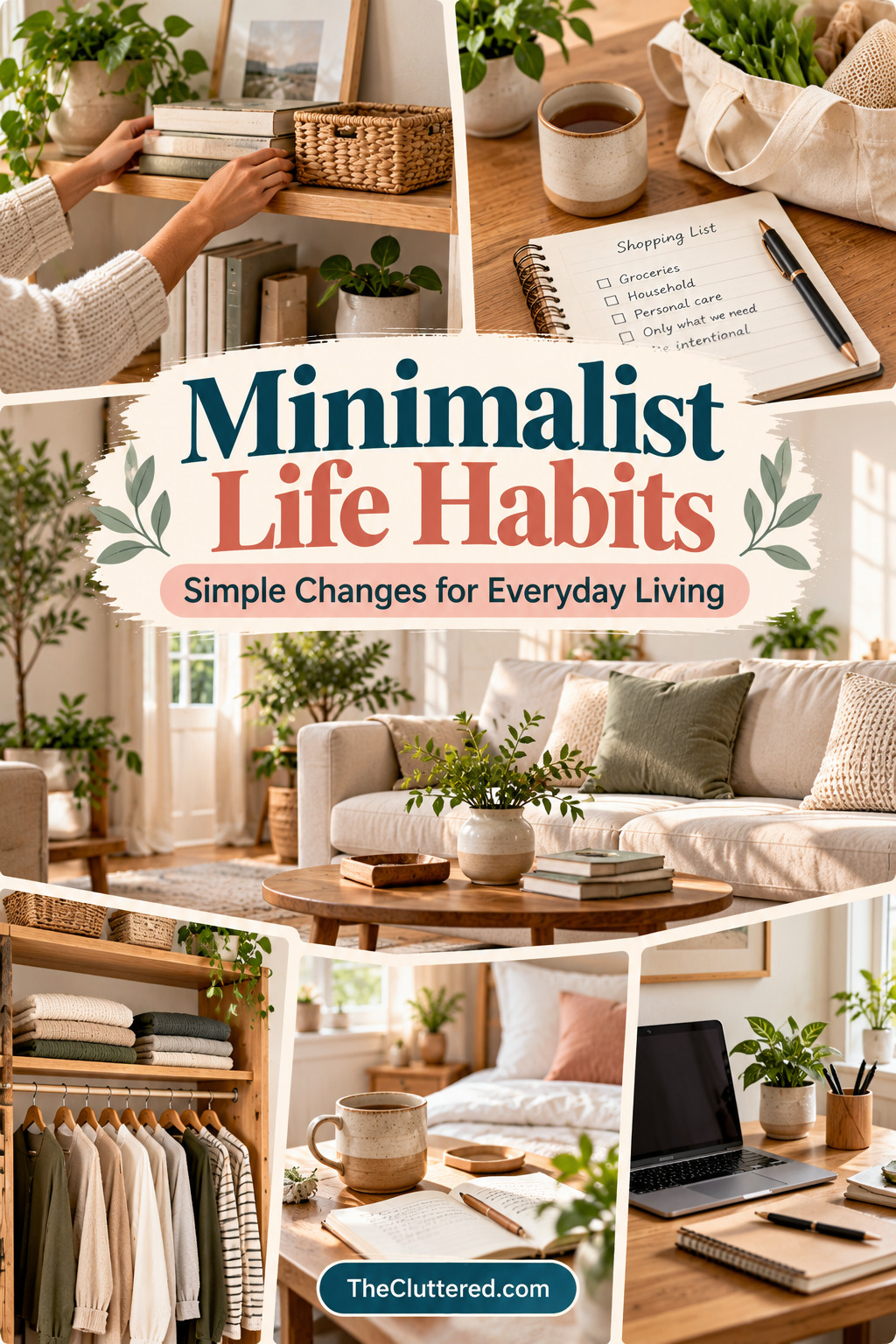


Starting a minimalist lifestyle does not mean throwing away everything you own or making your home look bare. For beginners, minimalist life habits are small, repeatable choices that help your belongings, routines, spending, and attention better reflect what matters to you. The easiest place to begin is with one source of everyday friction—not a dramatic whole-house makeover.
Use the ideas below as a menu, not a set of rules. Keep the habits that make life feel more workable, adapt the ones that do not fit your household, and add new ones only when the first few feel natural.
Quick Start: Pick One Habit for This Week
- For a calmer home: reset one surface each evening.
- For less clutter: keep a donation bag accessible.
- For mindful spending: pause before nonessential purchases.
- For fewer daily decisions: choose a simple morning starting point.
- For a lighter digital life: turn off unneeded notifications.
Choose just one. A habit that fits your real day is more useful than a long checklist you cannot maintain.
What Minimalism Looks Like in Everyday Life
Minimalism is a way of making intentional choices about what you keep, buy, do, and give your attention to. It can involve decluttering, but it is not limited to possessions. You might simplify a crowded closet, unsubscribe from shopping emails, protect an hour of free time, or stop keeping up with routines that no longer help.
There is no universal number of belongings a minimalist should own. A family with kids, a renter in a small apartment, a hobbyist, and someone who works from home will all need different things. The useful question is not “Do I own too much compared with someone else?” but “Does this support the life I want to live?”
Simple Minimalist Habits for Your Home
1. Start with one small area
Choose a drawer, shelf, bag, or countertop that bothers you. Take out what is there, return the useful items, and decide what to do with the rest. Finishing one contained area gives you a clear result and helps you learn what works before you tackle a larger space.
2. Give everyday items a home
Keys, bags, chargers, mail, and reusable water bottles tend to create repeat clutter when they have no obvious place to go. Assign them a practical home close to where you use or drop them. The goal is to make putting things away easier, not to buy more organizers.
3. Reset one surface before bed
Choose a surface that affects how the room feels or functions, such as the kitchen counter or coffee table. Put away what belongs elsewhere and leave the items you genuinely use. A short reset can help the next morning begin with less visual noise.
4. Declutter in small, regular sessions
Instead of waiting for a full free day, remove a few items during the week. Keep a donation bag in a convenient but out-of-the-way spot, and schedule a realistic drop-off so it does not become another pile. Dispose of electronics, batteries, and other special items through appropriate local channels.
5. Keep useful surfaces functional
An uncluttered home does not have to mean empty counters or shelves. Keep what supports cooking, working, resting, or family life accessible; move only what gets in the way. A space should serve the people who live in it.
Minimalist Habits for Spending and Shopping
6. Pause before buying something new
Give nonessential purchases a waiting period. Write down what you want and why, then revisit it after the initial excitement has passed. This simple pause can help you tell the difference between a genuine need and a passing urge.
7. Reduce shopping triggers
Promotional emails, sale notifications, and social feeds can keep new products on your mind. Unsubscribe from the ones that rarely help you make considered decisions. You do not need to remove every source of inspiration—just notice which ones regularly lead to purchases you later question.
8. Consider the full cost of an item
Before buying, ask where it will live, how often you will use it, and whether it needs maintenance or supplies. For occasional-use items, borrowing, renting, or sharing may be practical alternatives. Choose based on convenience, hygiene, access, and your actual circumstances.
9. Use a one-in, one-out guideline selectively
When a category is already full, consider letting a similar item go before adding another. This can be useful for clothes, mugs, or hobby supplies, but it is not a rule for every purchase or every category. Keep the approach flexible and avoid discarding something you still need.
Minimalist Daily Routine Ideas
10. Create a simple morning starting point
Pick two or three actions that help you begin the day, such as opening the curtains, making the bed, and identifying your main priority. Keep the routine short enough to work on busy mornings. It should support your day, not become another standard you feel you have failed.
11. Finish tiny tasks when it makes sense
Put a cup in the sink, return a book to its shelf, or file a paper when doing so is convenient. Small resets can stop everyday mess from accumulating. If switching tasks would interrupt focused work, make a note and batch the task later instead.
12. Protect unscheduled time
Look at your calendar as carefully as you look at your shelves. Leave breathing room between commitments when possible, and reconsider activities that no longer fit your priorities. A simpler schedule does not mean avoiding meaningful responsibilities; it means being more deliberate about what you take on.
13. Use a short weekly reset
Set aside a realistic window to review the week ahead, return misplaced items, check food you already have, and choose one thing to make easier. A brief reset can help you notice small problems before they become bigger projects.
Simple Habits for Digital Clutter and Mental Space
14. Reduce unnecessary notifications
Turn off alerts that do not need your immediate attention, especially shopping and social notifications. Keep essential messages and safety-related alerts that matter to you. Revisit the settings after a few days and restore anything you genuinely missed.
15. Simplify one digital space at a time
Choose a downloads folder, home screen, photo album, or unused app list. Remove what you recognize as unnecessary and organize the rest in a way you can maintain. Back up important files before deleting them and avoid turning digital decluttering into a perfection project.
16. Reflect on what feels useful
At the end of the day, ask what supported you, what created friction, and what can wait. A short note is enough. Reflection helps you build a version of simple living around your own experience rather than copying someone else’s aesthetic.
A Beginner-Friendly Minimalist Checklist
Use this checklist as a flexible reference. You do not need to complete every item or do them in order.
- Choose one small area to simplify.
- Give keys and everyday essentials a home.
- Reset one surface at the end of the day.
- Keep a donation bag ready for items you no longer need.
- Set a waiting period for nonessential purchases.
- Unsubscribe from a few shopping emails.
- Check what you already own before shopping.
- Try borrowing an occasional-use item before buying.
- Review one crowded clothing or household category.
- Turn off one unnecessary notification.
- Clean up one digital folder.
- Choose a short, realistic morning routine.
- Leave a little breathing room in your calendar.
- Plan a brief weekly reset.
- Write down what you want minimalism to make easier.
How to Make Minimalist Habits Stick
Make the first version almost too easy. If ten minutes feels like too much, start with two. If a daily reset is unrealistic, try it a few evenings a week. Small habits can grow after they fit comfortably into your routine.
Connect the habit to something you already do. Clear the counter after dinner, review your calendar with your morning coffee, or check your shopping list before opening a store app. Existing cues make a new action easier to remember.
Measure usefulness, not perfection. A room can be lived-in and still be organized. You can own sentimental objects, keep supplies for a hobby, and sometimes buy something simply because it brings you joy. Minimalism should help you make more intentional choices—not create guilt about ordinary life.
Adjust when your circumstances change. A new job, a move, caregiving, or a different season can change what you need. Revisit your routines occasionally and let them evolve.
Frequently Asked Questions
How do I start living a minimalist life as a beginner?
Start with one small, visible problem and choose one habit to address it. You might clear a drawer, pause before a purchase, or reset a countertop each evening. Build gradually instead of trying to change everything at once.
Do I have to get rid of most of my belongings?
No. Minimalism is personal and does not require a specific number of possessions. Keep items that serve a purpose, support your interests, or hold genuine meaning, while reconsidering things that add more work or clutter than value.
What is the easiest minimalist habit to maintain?
The easiest habit is the one that fits naturally into your day. For many beginners, a short evening reset, a designated home for everyday items, or a pause before buying can be a manageable starting point.
Can minimalism help me save money?
It can support more intentional spending when you pause before purchases, reduce shopping triggers, and check what you already own. Results depend on your circumstances and choices; minimalism is not a guarantee of savings.
How can I practice minimalism with a busy household?
Choose shared habits that reduce friction, such as a landing spot for bags, a short reset of one common area, or a weekly calendar check. Involve household members where practical and prioritize systems that are easy for everyone to use.
Minimalist living becomes more approachable when you treat it as a collection of small choices rather than a dramatic makeover. Start with one habit that makes your home, spending, or schedule work a little better, then keep adapting as you learn what matters most to you.
25 Visual Ideas for Minimalist Life Habits
Browse these Pinterest examples for visual inspiration, then adapt the habits to your space, budget, and daily routine. Each image links to its recorded Pinterest source.
how to STOP wanting new things

This Pinterest example is titled “how to STOP wanting new things.” It offers a visual entry point into mindful buying and wanting less, giving readers a concrete angle on a simpler way of living.
A small, finished space gives you a visible win without turning minimalism into an exhausting weekend project.
Set a 10-minute timer and stop when it rings. Repeat in another area only when you have the energy.
7 Easy Ways to Simplify Your Life

This Pinterest example is titled “7 Easy Ways to Simplify Your Life.” It offers a visual entry point into beginner-friendly simplification, giving readers a concrete angle on a simpler way of living.
A pause helps separate a real need from a passing urge, especially when ads or browsing make new things feel urgent.
Keep a note on your phone with the item, price, and reason you want it. Revisit the list later.
Habits To Routines

This Pinterest example is titled “Habits To Routines.” It offers a visual entry point into daily routines and habit building, giving readers a concrete angle on a simpler way of living.
Simple, consistent homes make tidying easier because you do not have to decide where every object belongs each day.
Start with keys, bags, chargers, mail, and other items that tend to land on counters.
5 Minimalist Lifestyle Tips | Simple Living Aesthetic

This Pinterest example is titled “5 Minimalist Lifestyle Tips | Simple Living Aesthetic.” It offers a visual entry point into minimalist lifestyle inspiration, giving readers a concrete angle on a simpler way of living.
This creates a gentle boundary for categories that easily expand, without requiring you to own as little as possible.
Apply it selectively to clothes, mugs, books, or hobby supplies—skip categories where it would be impractical.
Antonia Colins on Instagram: “A Minimalist lifestyle isn’t about a life of less, it’s about a fuller

This Pinterest example is titled “Antonia Colins on Instagram: “A Minimalist lifestyle isn’t about a life of less, it’s about a fuller.” It offers a visual entry point into simple living in practice, giving readers a concrete angle on a simpler way of living.
A calm landing spot can make a room feel more settled and gives tomorrow a clean starting point.
Pick the kitchen counter, coffee table, desk, or bedside table. Put away items rather than hiding them elsewhere.
Minimalist living inspiration

This Pinterest example is titled “Minimalist living inspiration.” It offers a visual entry point into intentional choices and ownership, giving readers a concrete angle on a simpler way of living.
Small, repeated decisions are often easier to maintain than occasional marathon decluttering sessions.
Keep a donation box in a convenient spot and review it before dropping items off.
Intentional living: tips for owning less

This Pinterest example is titled “Intentional living: tips for owning less.” It offers a visual entry point into decluttering and home reset, giving readers a concrete angle on a simpler way of living.
Minimalism is personal; a clear reason helps you make decisions without copying someone else's home or rules.
Try a sentence such as, “I want less visual clutter so I can cook, rest, and work more comfortably.”
21 Minimalist Practices You'll Wish You Learned Years Ago

This Pinterest example is titled “21 Minimalist Practices You'll Wish You Learned Years Ago.” It offers a visual entry point into everyday minimalist practices, giving readers a concrete angle on a simpler way of living.
A simpler life is not only about possessions. Fewer unnecessary commitments can make a routine feel more manageable.
Choose one low-priority obligation to shorten, decline, or move this week.
Minimalism: How to Stop Wanting Things

This Pinterest example is titled “Minimalism: How to Stop Wanting Things.” It offers a visual entry point into reducing shopping triggers, giving readers a concrete angle on a simpler way of living.
Fewer reminders can make it easier to focus on what you already own and what you genuinely value.
Start with three email lists or notifications. Keep useful updates and remove the rest.
30 Things Minimalists Never Keep: Declutter Your Home and Simplify Your Life

This Pinterest example is titled “30 Things Minimalists Never Keep: Declutter Your Home and Simplify Your Life.” It offers a visual entry point into beginner decluttering steps, giving readers a concrete angle on a simpler way of living.
A predictable routine can reduce early decision-making without needing a complicated schedule.
Try making the bed, opening the curtains, and checking your day's top priority—adapt it to your life.
10 Simple Steps For Beginner Minimalists (+ Free Declutter Checklist)

This Pinterest example is titled “10 Simple Steps For Beginner Minimalists (+ Free Declutter Checklist).” It offers a visual entry point into small habit changes, giving readers a concrete angle on a simpler way of living.
Tiny resets help prevent ordinary tasks from accumulating into a larger cleanup.
Use this for tasks that take a minute or two, but batch tasks when switching would interrupt important work.
27 Powerful Minimalist Habits That Will Change Your Life | Simple Life | Minimalist Lifestyle

This Pinterest example is titled “27 Powerful Minimalist Habits That Will Change Your Life | Simple Life | Minimalist Lifestyle.” It offers a visual entry point into living with less, giving readers a concrete angle on a simpler way of living.
A visible collection spot turns occasional decluttering into a low-friction habit.
Keep the bag out of walkways, and set a realistic reminder to donate it rather than letting it become permanent storage.
How To Live With Less? 13 Practical Ideas To Try Today | How To Live Minimalistically | Minimalism

This Pinterest example is titled “How To Live With Less? 13 Practical Ideas To Try Today | How To Live Minimalistically | Minimalism.” It offers a visual entry point into practical simple-living ideas, giving readers a concrete angle on a simpler way of living.
Digital clutter can compete for attention even when your physical space is tidy.
Choose one folder or app at a time. Back up important files before deleting anything.
Minimalist living inspiration

This Pinterest example is titled “Minimalist living inspiration.” It offers a visual entry point into minimalist checklist inspiration, giving readers a concrete angle on a simpler way of living.
A weekly check-in helps you notice clutter and overcommitment before they become overwhelming.
Review the calendar, return misplaced items, plan a few meals, and identify one thing to make easier.
What is Simple Living? A Guide to Choosing a Simple Life

This Pinterest example is titled “What is Simple Living? A Guide to Choosing a Simple Life.” It offers a visual entry point into simple living principles, giving readers a concrete angle on a simpler way of living.
Access can be more practical than ownership for specialty tools, party supplies, and occasional projects.
Check availability, transport, hygiene, and return expectations before deciding.
Minimalist Tips for Beginners

This Pinterest example is titled “Minimalist Tips for Beginners.” It offers a visual entry point into beginner tips, giving readers a concrete angle on a simpler way of living.
A workable wardrobe is about fit and function, not a strict number of pieces.
Notice what you actually reach for across a season. Repair, donate, or store items based on real use.
20 Extreme Minimalist Tips for Beginners (to Live a Simple Life with Less)

This Pinterest example is titled “20 Extreme Minimalist Tips for Beginners (to Live a Simple Life with Less).” It offers a visual entry point into less-is-more lifestyle, giving readers a concrete angle on a simpler way of living.
Using ingredients already at home can reduce duplicate purchases and make everyday decisions simpler.
Choose one or two ingredients to use first, then make a flexible grocery list around them.
14 Simple Daily Habits for a Clutter-Free Home – Life's Little Pleasures and Struggles

This Pinterest example is titled “14 Simple Daily Habits for a Clutter-Free Home – Life's Little Pleasures and Struggles.” It offers a visual entry point into clutter-free home routines, giving readers a concrete angle on a simpler way of living.
Paper is easier to manage when it has a clear next step instead of spreading across several surfaces.
Sort into action, file, recycle, and shred where appropriate; protect sensitive information.
Minimal Lifestyle Habits for a Simpler, Calmer Life

This Pinterest example is titled “Minimal Lifestyle Habits for a Simpler, Calmer Life.” It offers a visual entry point into calmer daily living, giving readers a concrete angle on a simpler way of living.
A few defaults can save decision energy while leaving room for spontaneity and personal taste.
Pick defaults that suit your actual needs, budget, culture, and household—not rules that feel restrictive.
25 Minimalist Habits You Need to Find What Really Matters – Hello Brownlow

This Pinterest example is titled “25 Minimalist Habits You Need to Find What Really Matters – Hello Brownlow.” It offers a visual entry point into meaningful habits, giving readers a concrete angle on a simpler way of living.
Reflection helps you simplify based on experience instead of chasing an idealized minimalist aesthetic.
Write one sentence or simply think it through while resetting your space.
10 Minimalist Habits to Adopt Today

This Pinterest example is titled “10 Minimalist Habits to Adopt Today.” It offers a visual entry point into daily minimalist routine, giving readers a concrete angle on a simpler way of living.
A practical surface is more useful than a perfectly bare one that makes daily work harder.
Keep everyday essentials accessible and relocate only the items that repeatedly get in the way.
Minimalist Lifestyle: Where to Start 🌿 Simple Living for a Calmer Life

This Pinterest example is titled “Minimalist Lifestyle: Where to Start 🌿 Simple Living for a Calmer Life.” It offers a visual entry point into starting a minimalist lifestyle, giving readers a concrete angle on a simpler way of living.
Fewer interruptions can make it easier to focus on one task at a time.
Start with social apps and shopping alerts, then adjust based on what you miss or still need.
Minimalist living inspiration

This Pinterest example is titled “Minimalist living inspiration.” It offers a visual entry point into simple living inspiration, giving readers a concrete angle on a simpler way of living.
Thinking beyond the purchase price helps prevent buying things that add work or take up space.
Ask: where will it live, how often will I use it, and what will care or upkeep involve?
8 Things Simple Living Actually Means (It's Not What Most People Think)

This Pinterest example is titled “8 Things Simple Living Actually Means (It's Not What Most People Think).” It offers a visual entry point into intentional everyday choices, giving readers a concrete angle on a simpler way of living.
Consistency matters more than a dramatic one-time purge; flexible habits are easier to return to after interruptions.
Pair a new habit with an existing cue, such as clearing the counter after dinner.
Minimalist Lifestyle Tips for a Simpler, Calmer Life

This Pinterest example is titled “Minimalist Lifestyle Tips for a Simpler, Calmer Life.” It offers a visual entry point into minimalist habits for beginners, giving readers a concrete angle on a simpler way of living.
Simplifying your calendar can create room for rest, relationships, and meaningful work.
Before adding something new, check what it will displace and whether you have the capacity.
Love these ideas? Follow @theclutteredblog on Pinterest for more cozy, practical gift inspiration!