









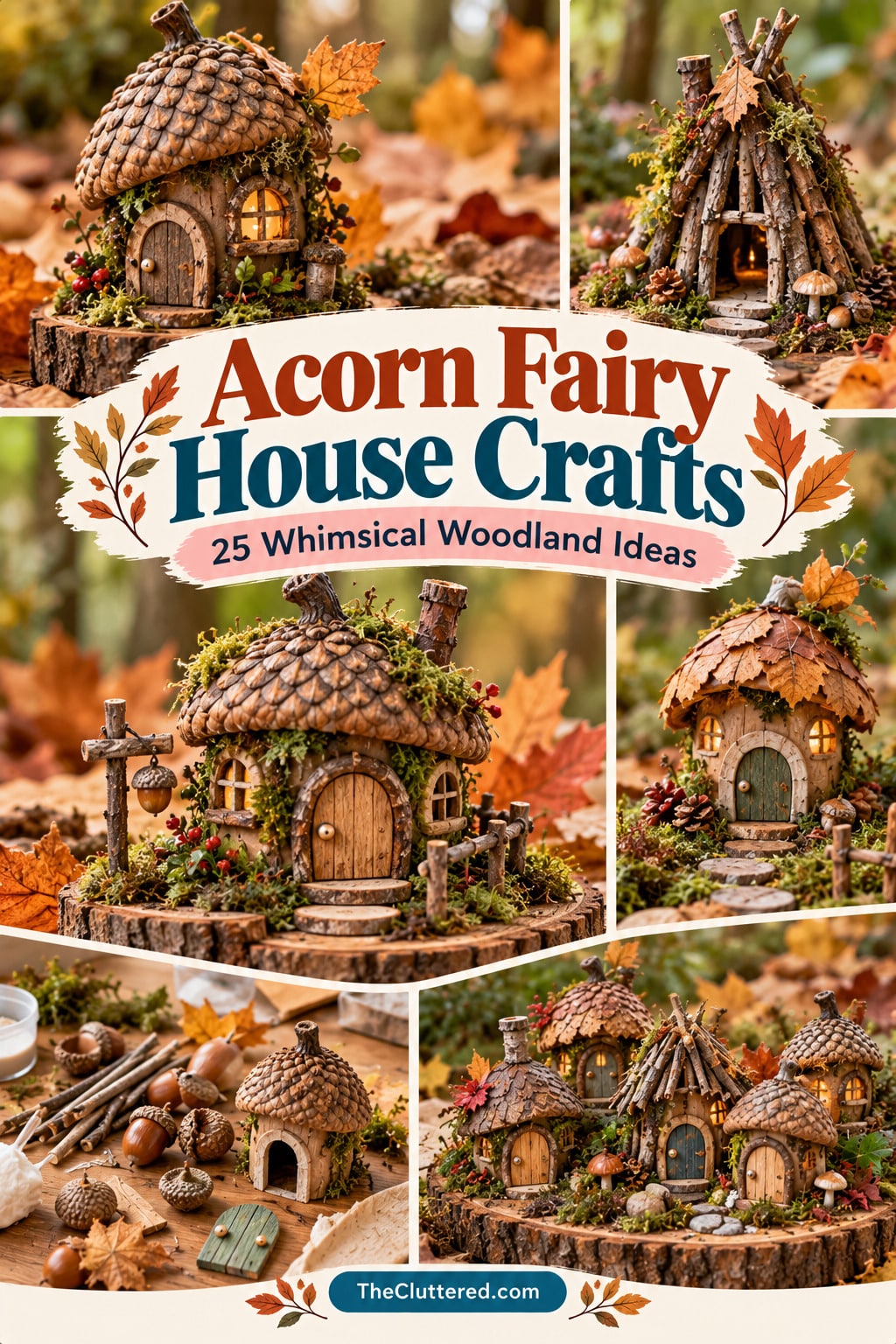


An acorn fairy house craft turns a small autumn find into a tiny woodland home. Acorn caps make natural-looking roofs, whole acorns can suggest rounded cottages, and twigs, bark, moss, and leaves add the details that make each miniature feel like it belongs in a storybook forest. The best part is that there is no single right design: a simple doorway and a few textured details can be just as charming as a more elaborate fairy cottage.
This guide walks through approachable ways to plan, build, decorate, and display acorn fairy houses, including kid-friendly adaptations and ideas for creating a little fairy village. Use the examples as inspiration, then tailor the materials and level of detail to the age of the maker and what you have on hand.
Quick start: choose a style that fits your project
- Fast and simple: use an acorn cap as a roof, a small piece of bark as a base, and draw or add a tiny door.
- Natural woodland: combine acorn caps, twigs, dry leaves, and a little moss for an earthy look.
- Whimsical cottage: add a rounded door, tiny windows, and a curved path made from pebbles or seed pods.
- Kid-friendly craft: have an adult prepare the materials and let children choose the house name, door color, and garden details.
- Display piece: mount the finished house on a shallow dish, wood slice, or sturdy cardboard base so it can be moved safely.
Materials for an acorn fairy house
Gather a small collection before starting. You do not need every item; choose a few that work together and leave room for imagination.
- Clean, dry acorns and acorn caps
- Small twigs, bark pieces, and dry leaves
- Moss or moss-like craft material for a base
- Air-dry clay, felt, or sturdy paper for doors and windows
- Craft glue appropriate for the materials and maker’s age
- Fine-tip markers or paint for simple details
- A shallow tray, wood slice, or thick cardboard for the base
- Tweezers or blunt craft tools for placing tiny details
Inspect collected acorns for damage, insects, or mold, and let them dry completely. Natural materials vary in shape, so build around the pieces you find rather than expecting every acorn to match a reference image. For younger children, an adult should handle sharp tools, hot glue, and any small parts that could be a choking hazard.
How to make a miniature acorn fairy house
- Plan the silhouette. Set the acorn or acorn cap on the base and decide whether it will become a cottage, a roof, a doorway, or a decorative feature.
- Stabilize the base. Choose a flat bark piece, wood slice, or firm cardboard. Check that the house sits securely before decorating.
- Create the entrance. Cut a tiny door from felt, paper, or clay, or paint a simple doorway directly onto a suitable surface. Keep the shape bold enough to read at miniature scale.
- Add a roof and walls. Use an acorn cap as a natural roof, or layer small bark pieces and twigs. Attach only what the base can support.
- Build texture. Add a little moss, dry leaf, or twig trim. A few carefully placed details usually look more believable than covering every surface.
- Finish with a story. Add a stepping-stone path, a tiny garden, a window, or a name for the fairy cottage. Let the story guide the final details.
- Let everything set. Follow the adhesive or clay package directions and allow the craft to dry fully before moving or displaying it.
Helpful rule: test the arrangement without glue first. Small pieces are easier to reposition before they are attached, and a quick dry fit helps keep the doorway visible.
Easy design ideas to try
1. Acorn-cap roof cottage
Use the cap as the most recognizable feature and keep the rest of the house simple. A small door, two windows, and a mossy base are enough to communicate the idea without overcrowding the miniature.
2. Twig-and-bark woodland hut
Arrange short twigs around a small form or use bark as a textured wall. Keep the pieces in a consistent direction so the tiny structure feels intentional. This style works well for makers who enjoy collecting and sorting natural textures.
3. Mushroom-inspired fairy home
Pair a rounded cap-like roof with an earthy base and a little leaf detail. Treat it as a storybook interpretation rather than a realistic building; a clear silhouette is what makes the design readable at small scale.
4. Fairy door on a tree-like base
If a whole house feels tricky, make a miniature door scene instead. A door attached to bark, a wood slice, or a sturdy base gives children a manageable project while preserving the magical woodland theme.
5. Tiny village display
Create two or three houses with different roof shapes and door colors, then group them on one tray. Vary the height and spacing so each cottage can be seen. A path, pebble border, or leaf cluster can visually connect the houses.
6. Seasonal shelf ornament
Keep the base compact and the materials dry for a fall display. Warm brown, muted green, cream, and a restrained accent color can make the piece feel autumnal without requiring glitter or lots of extra decoration.
Make it work for kids and preschoolers
For a preschool acorn fairy house activity, focus on choosing, arranging, and storytelling rather than precise construction. Adults can prepare the base, trim materials, and handle adhesive. Children can select the acorn cap, place larger decorations, choose a door color, and invent who lives in the house.
- Offer only a few materials at a time to make choices easier.
- Use larger prepared pieces for younger children and supervise all small natural objects.
- Swap tiny glued-on decorations for drawn details when small parts are unsuitable.
- Invite children to describe where the fairy sleeps, how it gets home, or what grows nearby.
- Celebrate differences between projects instead of aiming for identical results.
Build a fairy garden scene without overdoing it
A fairy house can stand alone, but a small setting helps it feel finished. Start with one anchor—the house—and add only a few supporting elements: a path, a patch of moss, a twig fence, or a leaf canopy. Leave open space around the cottage so the details remain visible in photographs and on a shelf.
If the display will sit outdoors, consider the durability of every material. Paper, felt, and some adhesives may not hold up to rain or damp soil. For a long-lasting indoor display, keep natural materials dry and dust the piece gently. Avoid placing untreated craft materials where pets or small children may mouth them.
Common mistakes to avoid
- Using damp acorns: moisture can affect how natural materials store and how glue holds. Dry them first.
- Adding too many tiny details: the doorway and roof can disappear visually. Choose a focal point.
- Skipping the base test: a top-heavy house may tip. Test stability before decorating.
- Mixing too many textures: select a few materials that complement one another.
- Expecting natural pieces to match: irregularity is part of the charm; adapt the design to each find.
- Forgetting the display location: a shelf ornament and an outdoor fairy-garden piece need different materials and care.
Acorn fairy house checklist
- Acorns and caps are clean, dry, and inspected.
- The base sits flat and is large enough for the design.
- The roof, door, or other focal point is easy to see.
- Materials are prepared for the maker’s age.
- Adhesive and tools are appropriate and supervised.
- The design uses a limited, coordinated set of textures.
- Loose parts are secured or omitted.
- The finished piece has time to dry completely.
- The display location suits the materials.
- The project leaves room for personal storytelling.
Frequently asked questions
Can I make a fairy house with only an acorn cap?
Yes. Use the cap as a roof or canopy and build a tiny scene beneath it with a simple door, bark base, or drawn details. A complete enclosed house is not necessary for the idea to read clearly.
What glue should I use?
Choose an adhesive suited to the materials and follow its label. An adult should handle hot glue, and projects for young children should use an age-appropriate supervised method.
How do I make the craft easier for preschoolers?
Prepare the base and larger pieces in advance, offer a small selection of materials, and let children focus on arranging and storytelling. Avoid accessible choking-sized pieces for children who may put objects in their mouths.
Can the fairy house go outside?
It depends on the materials. Many paper, felt, and natural-material constructions are best kept indoors or in a sheltered dry spot. If it will be outdoors, expect weathering and check that the display will not create a hazard for wildlife.
How can I make several houses look like a village?
Vary the roof shape, doorway, and height while repeating one or two materials across the display. A shared base, winding path, or small patch of moss can connect the houses without making them identical.
Acorn fairy houses are at their best when they balance a recognizable little doorway with the irregular textures of autumn nature. Start with one acorn cap, choose a few materials, and let the maker’s imagination determine the rest. Save your favorite details, then explore the visual examples below for more ways to shape a tiny woodland home.
25 Acorn Fairy House Craft Ideas to Explore
Browse these source images for natural textures, miniature doors, acorn-cap roofs, and woodland styling ideas. Each image links to its available source page so you can explore the original inspiration.
Diy Woodland Crafts

Source: Uploaded by user
This example highlights diy woodland crafts, using small-scale details that make a miniature woodland scene feel inviting. Look closely at the shape, texture, and natural-looking accents rather than trying to copy every detail.
The idea is useful inspiration for choosing a focal point for an acorn fairy house: a tiny doorway, a textured roof, a mossy base, or a storybook-style silhouette. It can help turn a handful of small natural materials into a craft with a clear visual theme.
Adapt the concept with a clean, dry acorn or acorn cap, twigs, bark, leaves, air-dry clay, or felt details that suit your supplies. For a children’s project, prepare small parts and any cutting or gluing in advance, and let each maker invent a different resident or story.
Acorn Fairy Lantern!

Source: etsy.com
This example highlights acorn fairy lantern!, using small-scale details that make a miniature woodland scene feel inviting. Look closely at the shape, texture, and natural-looking accents rather than trying to copy every detail.
The idea is useful inspiration for choosing a focal point for an acorn fairy house: a tiny doorway, a textured roof, a mossy base, or a storybook-style silhouette. It can help turn a handful of small natural materials into a craft with a clear visual theme.
Adapt the concept with a clean, dry acorn or acorn cap, twigs, bark, leaves, air-dry clay, or felt details that suit your supplies. For a children’s project, prepare small parts and any cutting or gluing in advance, and let each maker invent a different resident or story.
Tiny Fairy Village 🛖 | Whimsical Nature Craft 🌼

Source: Uploaded by user
This example highlights tiny fairy village 🛖 | whimsical nature craft 🌼, using small-scale details that make a miniature woodland scene feel inviting. Look closely at the shape, texture, and natural-looking accents rather than trying to copy every detail.
The idea is useful inspiration for choosing a focal point for an acorn fairy house: a tiny doorway, a textured roof, a mossy base, or a storybook-style silhouette. It can help turn a handful of small natural materials into a craft with a clear visual theme.
Adapt the concept with a clean, dry acorn or acorn cap, twigs, bark, leaves, air-dry clay, or felt details that suit your supplies. For a children’s project, prepare small parts and any cutting or gluing in advance, and let each maker invent a different resident or story.
Fairy Door Wood Blank – Acorn Fairy House Design

Source: etsy.com
This example highlights fairy door wood blank – acorn fairy house design, using small-scale details that make a miniature woodland scene feel inviting. Look closely at the shape, texture, and natural-looking accents rather than trying to copy every detail.
The idea is useful inspiration for choosing a focal point for an acorn fairy house: a tiny doorway, a textured roof, a mossy base, or a storybook-style silhouette. It can help turn a handful of small natural materials into a craft with a clear visual theme.
Adapt the concept with a clean, dry acorn or acorn cap, twigs, bark, leaves, air-dry clay, or felt details that suit your supplies. For a children’s project, prepare small parts and any cutting or gluing in advance, and let each maker invent a different resident or story.
Magical Acorn House for a cute little Harvest mouse Autumn play set activity download

Source: etsy.com
This example highlights magical acorn house for a cute little harvest mouse autumn play set activity download, using small-scale details that make a miniature woodland scene feel inviting. Look closely at the shape, texture, and natural-looking accents rather than trying to copy every detail.
The idea is useful inspiration for choosing a focal point for an acorn fairy house: a tiny doorway, a textured roof, a mossy base, or a storybook-style silhouette. It can help turn a handful of small natural materials into a craft with a clear visual theme.
Adapt the concept with a clean, dry acorn or acorn cap, twigs, bark, leaves, air-dry clay, or felt details that suit your supplies. For a children’s project, prepare small parts and any cutting or gluing in advance, and let each maker invent a different resident or story.
Wooden Acorn House

Source: happygoducky.com.au
This example highlights wooden acorn house, using small-scale details that make a miniature woodland scene feel inviting. Look closely at the shape, texture, and natural-looking accents rather than trying to copy every detail.
The idea is useful inspiration for choosing a focal point for an acorn fairy house: a tiny doorway, a textured roof, a mossy base, or a storybook-style silhouette. It can help turn a handful of small natural materials into a craft with a clear visual theme.
Adapt the concept with a clean, dry acorn or acorn cap, twigs, bark, leaves, air-dry clay, or felt details that suit your supplies. For a children’s project, prepare small parts and any cutting or gluing in advance, and let each maker invent a different resident or story.
Diy Fairy Garden Ideas

Source: Uploaded by user
This example highlights diy fairy garden ideas, using small-scale details that make a miniature woodland scene feel inviting. Look closely at the shape, texture, and natural-looking accents rather than trying to copy every detail.
The idea is useful inspiration for choosing a focal point for an acorn fairy house: a tiny doorway, a textured roof, a mossy base, or a storybook-style silhouette. It can help turn a handful of small natural materials into a craft with a clear visual theme.
Adapt the concept with a clean, dry acorn or acorn cap, twigs, bark, leaves, air-dry clay, or felt details that suit your supplies. For a children’s project, prepare small parts and any cutting or gluing in advance, and let each maker invent a different resident or story.
Miniature Acorn Craft

Source: Uploaded by user
This example highlights miniature acorn craft, using small-scale details that make a miniature woodland scene feel inviting. Look closely at the shape, texture, and natural-looking accents rather than trying to copy every detail.
The idea is useful inspiration for choosing a focal point for an acorn fairy house: a tiny doorway, a textured roof, a mossy base, or a storybook-style silhouette. It can help turn a handful of small natural materials into a craft with a clear visual theme.
Adapt the concept with a clean, dry acorn or acorn cap, twigs, bark, leaves, air-dry clay, or felt details that suit your supplies. For a children’s project, prepare small parts and any cutting or gluing in advance, and let each maker invent a different resident or story.
Acorn Fairy House Craft

Source: theidearoom.net
This example highlights acorn fairy house craft, using small-scale details that make a miniature woodland scene feel inviting. Look closely at the shape, texture, and natural-looking accents rather than trying to copy every detail.
The idea is useful inspiration for choosing a focal point for an acorn fairy house: a tiny doorway, a textured roof, a mossy base, or a storybook-style silhouette. It can help turn a handful of small natural materials into a craft with a clear visual theme.
Adapt the concept with a clean, dry acorn or acorn cap, twigs, bark, leaves, air-dry clay, or felt details that suit your supplies. For a children’s project, prepare small parts and any cutting or gluing in advance, and let each maker invent a different resident or story.
Miniature Wooden Fairy House: Acorn Cap

Source: etsy.com
This example highlights miniature wooden fairy house: acorn cap, using small-scale details that make a miniature woodland scene feel inviting. Look closely at the shape, texture, and natural-looking accents rather than trying to copy every detail.
The idea is useful inspiration for choosing a focal point for an acorn fairy house: a tiny doorway, a textured roof, a mossy base, or a storybook-style silhouette. It can help turn a handful of small natural materials into a craft with a clear visual theme.
Adapt the concept with a clean, dry acorn or acorn cap, twigs, bark, leaves, air-dry clay, or felt details that suit your supplies. For a children’s project, prepare small parts and any cutting or gluing in advance, and let each maker invent a different resident or story.
Acorn Mushrooms

Source: Uploaded by user
This example highlights acorn mushrooms, using small-scale details that make a miniature woodland scene feel inviting. Look closely at the shape, texture, and natural-looking accents rather than trying to copy every detail.
The idea is useful inspiration for choosing a focal point for an acorn fairy house: a tiny doorway, a textured roof, a mossy base, or a storybook-style silhouette. It can help turn a handful of small natural materials into a craft with a clear visual theme.
Adapt the concept with a clean, dry acorn or acorn cap, twigs, bark, leaves, air-dry clay, or felt details that suit your supplies. For a children’s project, prepare small parts and any cutting or gluing in advance, and let each maker invent a different resident or story.
Acorn Fairy Garden Teacups

Source: Uploaded by user
This example highlights acorn fairy garden teacups, using small-scale details that make a miniature woodland scene feel inviting. Look closely at the shape, texture, and natural-looking accents rather than trying to copy every detail.
The idea is useful inspiration for choosing a focal point for an acorn fairy house: a tiny doorway, a textured roof, a mossy base, or a storybook-style silhouette. It can help turn a handful of small natural materials into a craft with a clear visual theme.
Adapt the concept with a clean, dry acorn or acorn cap, twigs, bark, leaves, air-dry clay, or felt details that suit your supplies. For a children’s project, prepare small parts and any cutting or gluing in advance, and let each maker invent a different resident or story.
Поделка из природного материала

Source: Uploaded by user
This example highlights поделка из природного материала, using small-scale details that make a miniature woodland scene feel inviting. Look closely at the shape, texture, and natural-looking accents rather than trying to copy every detail.
The idea is useful inspiration for choosing a focal point for an acorn fairy house: a tiny doorway, a textured roof, a mossy base, or a storybook-style silhouette. It can help turn a handful of small natural materials into a craft with a clear visual theme.
Adapt the concept with a clean, dry acorn or acorn cap, twigs, bark, leaves, air-dry clay, or felt details that suit your supplies. For a children’s project, prepare small parts and any cutting or gluing in advance, and let each maker invent a different resident or story.
Glass Fairy Garden

Source: facebook.com
This example highlights glass fairy garden, using small-scale details that make a miniature woodland scene feel inviting. Look closely at the shape, texture, and natural-looking accents rather than trying to copy every detail.
The idea is useful inspiration for choosing a focal point for an acorn fairy house: a tiny doorway, a textured roof, a mossy base, or a storybook-style silhouette. It can help turn a handful of small natural materials into a craft with a clear visual theme.
Adapt the concept with a clean, dry acorn or acorn cap, twigs, bark, leaves, air-dry clay, or felt details that suit your supplies. For a children’s project, prepare small parts and any cutting or gluing in advance, and let each maker invent a different resident or story.
Acorn Cap Fairy Garden Ideas

Source: twigandtoadstool.blogspot.com
This example highlights acorn cap fairy garden ideas, using small-scale details that make a miniature woodland scene feel inviting. Look closely at the shape, texture, and natural-looking accents rather than trying to copy every detail.
The idea is useful inspiration for choosing a focal point for an acorn fairy house: a tiny doorway, a textured roof, a mossy base, or a storybook-style silhouette. It can help turn a handful of small natural materials into a craft with a clear visual theme.
Adapt the concept with a clean, dry acorn or acorn cap, twigs, bark, leaves, air-dry clay, or felt details that suit your supplies. For a children’s project, prepare small parts and any cutting or gluing in advance, and let each maker invent a different resident or story.
Fall Fairy House

Source: facebook.com
This example highlights fall fairy house, using small-scale details that make a miniature woodland scene feel inviting. Look closely at the shape, texture, and natural-looking accents rather than trying to copy every detail.
The idea is useful inspiration for choosing a focal point for an acorn fairy house: a tiny doorway, a textured roof, a mossy base, or a storybook-style silhouette. It can help turn a handful of small natural materials into a craft with a clear visual theme.
Adapt the concept with a clean, dry acorn or acorn cap, twigs, bark, leaves, air-dry clay, or felt details that suit your supplies. For a children’s project, prepare small parts and any cutting or gluing in advance, and let each maker invent a different resident or story.
Pinecone Fairy

Source: fb.watch
This example highlights pinecone fairy, using small-scale details that make a miniature woodland scene feel inviting. Look closely at the shape, texture, and natural-looking accents rather than trying to copy every detail.
The idea is useful inspiration for choosing a focal point for an acorn fairy house: a tiny doorway, a textured roof, a mossy base, or a storybook-style silhouette. It can help turn a handful of small natural materials into a craft with a clear visual theme.
Adapt the concept with a clean, dry acorn or acorn cap, twigs, bark, leaves, air-dry clay, or felt details that suit your supplies. For a children’s project, prepare small parts and any cutting or gluing in advance, and let each maker invent a different resident or story.
Acorn Fairy Homes Clipart Set

Source: etsy.com
This example highlights acorn fairy homes clipart set, using small-scale details that make a miniature woodland scene feel inviting. Look closely at the shape, texture, and natural-looking accents rather than trying to copy every detail.
The idea is useful inspiration for choosing a focal point for an acorn fairy house: a tiny doorway, a textured roof, a mossy base, or a storybook-style silhouette. It can help turn a handful of small natural materials into a craft with a clear visual theme.
Adapt the concept with a clean, dry acorn or acorn cap, twigs, bark, leaves, air-dry clay, or felt details that suit your supplies. For a children’s project, prepare small parts and any cutting or gluing in advance, and let each maker invent a different resident or story.
26 Fairy House Crafts: Step-by-Step Fairy DIY Projects

Source: postagemaster.com
This example highlights 26 fairy house crafts: step-by-step fairy diy projects, using small-scale details that make a miniature woodland scene feel inviting. Look closely at the shape, texture, and natural-looking accents rather than trying to copy every detail.
The idea is useful inspiration for choosing a focal point for an acorn fairy house: a tiny doorway, a textured roof, a mossy base, or a storybook-style silhouette. It can help turn a handful of small natural materials into a craft with a clear visual theme.
Adapt the concept with a clean, dry acorn or acorn cap, twigs, bark, leaves, air-dry clay, or felt details that suit your supplies. For a children’s project, prepare small parts and any cutting or gluing in advance, and let each maker invent a different resident or story.
Natural Acorn Nut Birdhouses

Source: centerofthewebb.ecrater.com
This example highlights natural acorn nut birdhouses, using small-scale details that make a miniature woodland scene feel inviting. Look closely at the shape, texture, and natural-looking accents rather than trying to copy every detail.
The idea is useful inspiration for choosing a focal point for an acorn fairy house: a tiny doorway, a textured roof, a mossy base, or a storybook-style silhouette. It can help turn a handful of small natural materials into a craft with a clear visual theme.
Adapt the concept with a clean, dry acorn or acorn cap, twigs, bark, leaves, air-dry clay, or felt details that suit your supplies. For a children’s project, prepare small parts and any cutting or gluing in advance, and let each maker invent a different resident or story.
This miniature fairy house is a blend of nature and imagination

Source: Uploaded by user
This example highlights this miniature fairy house is a blend of nature and imagination, using small-scale details that make a miniature woodland scene feel inviting. Look closely at the shape, texture, and natural-looking accents rather than trying to copy every detail.
The idea is useful inspiration for choosing a focal point for an acorn fairy house: a tiny doorway, a textured roof, a mossy base, or a storybook-style silhouette. It can help turn a handful of small natural materials into a craft with a clear visual theme.
Adapt the concept with a clean, dry acorn or acorn cap, twigs, bark, leaves, air-dry clay, or felt details that suit your supplies. For a children’s project, prepare small parts and any cutting or gluing in advance, and let each maker invent a different resident or story.
Acorn Tree House

Source: amazon.com
This example highlights acorn tree house, using small-scale details that make a miniature woodland scene feel inviting. Look closely at the shape, texture, and natural-looking accents rather than trying to copy every detail.
The idea is useful inspiration for choosing a focal point for an acorn fairy house: a tiny doorway, a textured roof, a mossy base, or a storybook-style silhouette. It can help turn a handful of small natural materials into a craft with a clear visual theme.
Adapt the concept with a clean, dry acorn or acorn cap, twigs, bark, leaves, air-dry clay, or felt details that suit your supplies. For a children’s project, prepare small parts and any cutting or gluing in advance, and let each maker invent a different resident or story.
Acorn Fairy House DIY — Cute Autumn Nature Craft Idea

Source: etsy.com
This example highlights acorn fairy house diy — cute autumn nature craft idea, using small-scale details that make a miniature woodland scene feel inviting. Look closely at the shape, texture, and natural-looking accents rather than trying to copy every detail.
The idea is useful inspiration for choosing a focal point for an acorn fairy house: a tiny doorway, a textured roof, a mossy base, or a storybook-style silhouette. It can help turn a handful of small natural materials into a craft with a clear visual theme.
Adapt the concept with a clean, dry acorn or acorn cap, twigs, bark, leaves, air-dry clay, or felt details that suit your supplies. For a children’s project, prepare small parts and any cutting or gluing in advance, and let each maker invent a different resident or story.
One Fairy Garden Lantern

Source: etsy.com
This example highlights one fairy garden lantern, using small-scale details that make a miniature woodland scene feel inviting. Look closely at the shape, texture, and natural-looking accents rather than trying to copy every detail.
The idea is useful inspiration for choosing a focal point for an acorn fairy house: a tiny doorway, a textured roof, a mossy base, or a storybook-style silhouette. It can help turn a handful of small natural materials into a craft with a clear visual theme.
Adapt the concept with a clean, dry acorn or acorn cap, twigs, bark, leaves, air-dry clay, or felt details that suit your supplies. For a children’s project, prepare small parts and any cutting or gluing in advance, and let each maker invent a different resident or story.
✨ Which Fairy Home Would You Choose? Quiz & Aesthetic Inspo 🍄☕

Source: Uploaded by user
This example highlights ✨ which fairy home would you choose? quiz & aesthetic inspo 🍄☕, using small-scale details that make a miniature woodland scene feel inviting. Look closely at the shape, texture, and natural-looking accents rather than trying to copy every detail.
The idea is useful inspiration for choosing a focal point for an acorn fairy house: a tiny doorway, a textured roof, a mossy base, or a storybook-style silhouette. It can help turn a handful of small natural materials into a craft with a clear visual theme.
Adapt the concept with a clean, dry acorn or acorn cap, twigs, bark, leaves, air-dry clay, or felt details that suit your supplies. For a children’s project, prepare small parts and any cutting or gluing in advance, and let each maker invent a different resident or story.
Love these ideas? Follow @theclutteredblog on Pinterest for more cozy, practical gift inspiration!