









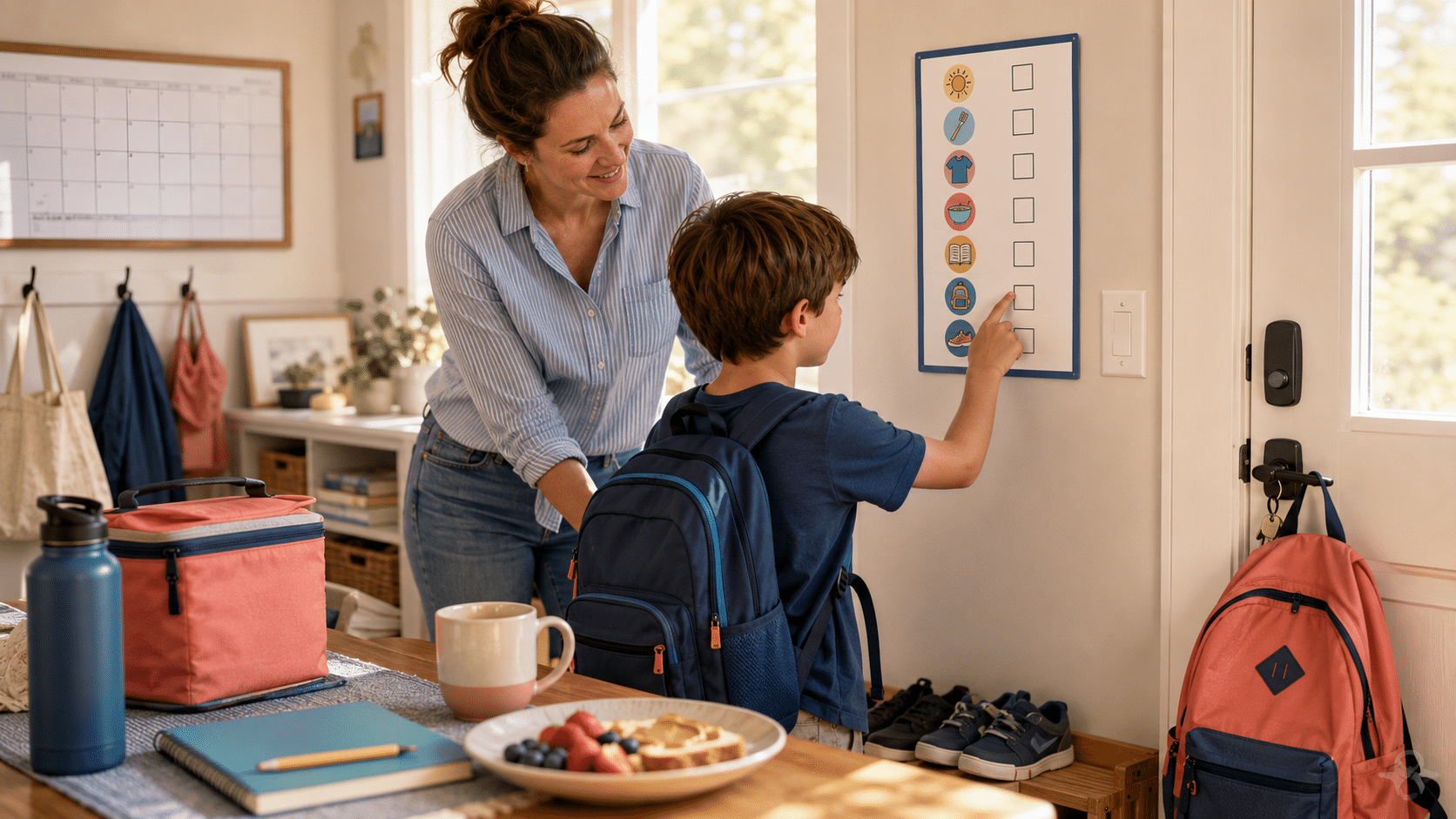
Does your family struggle to get out the door on time when summer ends? Late bedtimes, slow wake-ups, missing shoes, unfinished breakfast, and forgotten backpacks can make the first weeks of school feel more stressful than they need to be. An August morning routine for school year gives everyone a predictable sequence to follow, helping children become more independent while giving parents fewer decisions to make before breakfast.


A successful back-to-school morning routine does not need to be complicated. It usually begins the night before, uses a simple school morning routine checklist, and gives children clear visual cues for what happens next. With practical tools like a visual morning routine chart, a children’s alarm clock, and a school backpack organizer, families can build a calm and productive school morning routine without expecting everyone to move at the same speed.

Why August is the right time to reset
August gives families a transition period between relaxed summer days and the structure of the school year. Instead of waiting until the night before the first day, use the final one or two weeks to gradually move bedtime and wake-up times closer to the school schedule. Shifting by small increments is usually easier than making a sudden change, especially for children who have been staying up late.
A school year morning routine works best when the wake-up time, breakfast window, dressing time, and departure time stay reasonably consistent. Children do not need every minute planned, but they benefit from knowing what comes next. A family wall calendar can show important dates, while a magnetic chore chart can make daily responsibilities visible without repeated reminders.
Try to introduce one change at a time:
- Move bedtime earlier by 15–30 minutes every few nights.
- Wake children slightly earlier during the final week of summer.
- Reintroduce a regular breakfast time.
- Practice the school-day departure routine.
- Keep weekend wake-up times reasonably close to weekday times.
- Use morning daylight and daytime activity to support the new schedule.
The aim is not perfection. It is to make the first school morning feel familiar rather than shocking.
How to reset sleep before school
A back-to-school sleep schedule is the foundation of any realistic morning routine. If children are tired, even the best checklist may feel impossible. Start by bringing bedtime forward gradually and keeping the pre-bed sequence predictable: bath or shower, pajamas, brushing teeth, reading, and lights out.
A kids bedtime routine chart can help younger children understand the order without needing constant verbal instructions. For older children and teenagers, a bedside digital alarm clock or phone-free charging station can make wake-up and bedtime boundaries more consistent.
Screens and bright light can also make it harder for children to settle. Consider creating a screen-free period before bed and replacing devices with quiet activities such as reading, drawing, or preparing clothing for the next day. Morning light and daytime movement can help reinforce the new schedule, while keeping sleep and wake times relatively consistent on weekends may reduce the Monday-morning struggle.
A simple August bedtime routine for kids might look like this:
- Finish homework, packing, and clothing choices.
- Take a bath or shower.
- Put on pajamas.
- Brush teeth and wash face.
- Read or listen to a calm story.
- Turn off screens.
- Set the alarm.
- Go to bed at the planned time.
If your child resists the change, avoid trying to fix everything in one night. A slower reset is often more sustainable than a dramatic schedule change.
Night-before school routine
The easiest school morning is usually prepared the evening before. A night-before school routine reduces the number of decisions children and parents must make while everyone is still waking up. It also creates a natural place for children to practice responsibility.
Use a school night preparation checklist or write a short list on a small dry erase board. Keep the list focused on the actions that genuinely prevent morning delays:
- Check the next day’s schedule.
- Choose clothes and shoes.
- Pack homework and school supplies.
- Refill the water bottle.
- Prepare lunch or snacks.
- Place the backpack near the exit.
- Charge required devices.
- Set the alarm.
- Review transportation plans.
A kids lunch box and reusable snack containers can make lunch preparation faster, especially when they are stored together in one kitchen area. A backpack hook near the exit creates a simple launch pad organization system so backpacks do not disappear under furniture or behind doors.
For younger children, let them complete one or two tasks independently, such as choosing between two outfits or placing their folder inside the backpack. For teenagers, the night-before school routine can include checking transportation, reviewing deadlines, and setting a realistic wake-up time.
A simple school morning routine by age
Children need different levels of support at different ages. A morning routine for preschoolers should be short, visual, and flexible. An elementary student may be ready to complete several steps independently, while teenagers often need support with time management rather than basic hygiene.
Morning routine for preschoolers
Use pictures or icons for each step:
- Wake up.
- Use the bathroom.
- Get dressed.
- Eat breakfast.
- Brush teeth.
- Put on shoes.
- Pick up backpack.
- Leave home.
A picture routine chart can be easier for young children to follow than a chart filled with words. Keep clothing, shoes, and school items in the same place each day so the routine depends less on memory.
Morning routine for elementary students
Elementary students can usually follow a longer get ready for school checklist:
- Wake up when the alarm rings.
- Make the bed or straighten blankets.
- Use the bathroom and wash up.
- Get dressed.
- Eat breakfast.
- Brush teeth and hair.
- Check the backpack.
- Put on shoes and outerwear.
- Wait at the launch pad.
A kids visual checklist lets children mark progress themselves. Some families use magnets, clothespins, or dry-erase markers so the chart can be reused every day.
Morning routine for teenagers
Teenagers may need less supervision but more ownership. Their morning routine can include:
- Wake up independently.
- Check the day’s schedule.
- Get dressed and complete hygiene.
- Eat or pack breakfast.
- Check assignments and devices.
- Pack lunch and water.
- Leave with enough travel time.
A teen planner or student weekly planner can connect morning responsibilities with the wider school schedule. The goal is not to control every step but to help teenagers build a routine they can eventually manage without reminders.
School morning routine with breakfast
Breakfast does not need to be elaborate to be useful. The best kids breakfast before school is something your child will actually eat and that can be prepared consistently. Families can rotate a few familiar options such as oatmeal, yogurt, eggs, fruit, toast, or a simple smoothie.
A make-ahead breakfast container can simplify busy mornings, while a kid-friendly water bottle helps children leave with hydration already handled. If the morning is rushed, prepare part of breakfast the night before instead of trying to create a new menu every day.
Build a small breakfast decision system:
- Choose two or three weekday breakfast options.
- Keep frequently used items together.
- Prepare ingredients the night before.
- Give children limited choices.
- Set a breakfast end time.
- Have a backup option for very late mornings.
If a child is not hungry immediately after waking, offer a small option and pack something appropriate if the school allows it. Avoid turning breakfast into a daily argument; consistency matters more than variety on hectic school days.

School morning hygiene and departure checklist
A school morning hygiene checklist should cover the basics without becoming overwhelming. For younger children, use pictures. For older children, a short written list may be enough.
A practical routine can include:
- Use the bathroom.
- Wash hands and face.
- Get dressed.
- Brush teeth.
- Brush or style hair.
- Apply sunscreen if needed.
- Put on socks and shoes.
- Pick up backpack, lunch, and water bottle.
Keep frequently used supplies together in a bathroom organizer or assign each child a small basket. This reduces the time spent searching for toothbrushes, hair ties, or school-day essentials.
At the exit, create a launch pad with a shoe organizer, backpack hooks, and a basket for lunch containers. The launch pad does not need to look perfect; it simply needs to make the final five minutes predictable.
Family morning routine for busy parents
A family back-to-school routine works better when adults prepare their own essentials too. Parents often focus on children’s clothes and lunches while forgetting their own work bags, keys, coffee, or transportation needs. A shared checklist can prevent the morning from becoming a series of last-minute requests.
Working parents may find it helpful to create two preparation zones:
- A child launch pad near the exit.
- An adult work area for bags, keys, devices, and lunch.
A family command center can hold calendars, permission slips, reminders, and school notices. A key holder for entryway keeps essential keys in one visible location, while a lunch bag organizer keeps food containers from being forgotten.
Try to assign ownership instead of giving repeated instructions. Rather than saying “Where is your backpack?” ask, “What is the next step on your chart?” This shifts the routine from parent-managed to family-supported.
School morning routine checklist
Use this school morning routine checklist during the first weeks of school and adjust it to fit your family:
Night before:
- Check tomorrow’s schedule.
- Choose clothes and shoes.
- Pack backpack and homework.
- Prepare lunch and snacks.
- Fill water bottles.
- Charge devices.
- Place bags near the exit.
- Set alarms.
- Follow the planned bedtime routine.
Morning:
- Wake up and get out of bed.
- Use the bathroom.
- Wash face and hands.
- Get dressed.
- Eat breakfast.
- Brush teeth and hair.
- Apply sunscreen if needed.
- Check backpack and lunch.
- Put on shoes and outerwear.
- Leave at the planned time.
Parent or caregiver check:
- Confirm transportation.
- Check weather and clothing needs.
- Review urgent school messages.
- Take necessary medication according to existing instructions.
- Make sure keys, work bags, and personal essentials are ready.
A laminated routine chart is useful when you want children to check off tasks repeatedly. If you prefer a reusable system, use a dry erase marker set with a laminated chart or clear plastic sleeve.
How to make school mornings less stressful
A calm routine depends less on moving quickly and more on removing unnecessary choices. Prepare the environment so children can find what they need without asking for help at every step. Keep the number of morning decisions small, especially during the first week of school.
Use these stress-reducing strategies:
- Set out clothes in the same location each evening.
- Keep school supplies in labeled containers.
- Use one exit area for backpacks and shoes.
- Prepare repeatable breakfasts.
- Build a 10-minute buffer before departure.
- Avoid introducing complicated chores in the morning.
- Keep instructions short and specific.
- Use neutral reminders instead of repeated criticism.
- Practice the routine before the first school day.
For kids who wake up late, avoid trying to complete every optional task. Focus on bathroom, clothing, food, teeth, backpack, and leaving safely. A routine should help families prioritize rather than create another reason to feel behind.

Common mistakes to avoid
One common mistake is creating a routine with too many steps. Children may ignore a chart if it feels more like a long assignment than a helpful guide. Start with five to eight essential actions and add more only when the basic routine is stable.
Another mistake is changing the routine every day. A realistic morning routine for school days needs repetition before children can follow it automatically. Keep the order consistent even if the exact timing changes.
Some families also begin the reset too late. Trying to move bedtime several hours earlier on the final night of summer can create resistance and tiredness. Begin gradually and allow the schedule to adjust over several days.psychologytoday+1
Finally, avoid using the routine chart as a punishment system. Its purpose is to provide support and independence, not to shame children for moving slowly. Celebrate progress, notice effort, and revise the routine when it no longer fits your family.
An August morning routine for school year can be simple, flexible, and realistic. Start with the night-before routine, create one visible launch pad, and choose a short checklist that children can understand. Save this guide for the first week of school and follow @theclutteredblog on Pinterest for more family routines, printable checklists, and practical organization ideas.
FAQ
FAQs About August Morning Routine for School Year
How early should I start an August morning routine for school year?
Start one or two weeks before school begins if possible. Gradually move bedtime and wake-up time earlier instead of changing the entire schedule overnight. This gives children time to adjust while allowing parents to identify problems with breakfast, clothing, transportation, or backpack preparation. If school begins soon, start with the night-before routine and adjust the wake-up time in small steps.
What should a school morning routine checklist for kids include?
A basic checklist can include waking up, using the bathroom, getting dressed, eating breakfast, brushing teeth, checking the backpack, putting on shoes, and leaving on time. Younger children may benefit from pictures, while older children can use written steps. Keep the list short enough to follow without constant adult reminders. Add optional tasks only after the essential routine becomes consistent.
How can I create a calm routine for kids who wake up late?
Prepare as much as possible the night before, including clothing, breakfast components, backpack, lunch, and shoes. When a child wakes up late, focus only on essential steps instead of trying to complete every optional task. Keep your instructions brief and calm so the morning does not become more stressful. Afterward, review which part of the routine caused the delay and adjust bedtime, alarms, or preparation.
How do I create a morning routine for teenagers?
Invite teenagers to help design their own routine and choose realistic wake-up times. Give them responsibility for alarms, clothing, devices, breakfast, backpack checks, and transportation details. A student planner or visual schedule can help them connect morning tasks with homework and activities. Parents can provide reminders and structure without managing every individual step.
What can I do if my family has very little space?
Create a small launch pad using wall hooks, one basket, and a narrow shoe organizer near the door. Keep each child’s backpack, shoes, and outerwear in a defined area rather than spreading supplies throughout the home. A visual routine chart can be placed on a refrigerator, bedroom door, or inside a closet. Small spaces often work well when every item has a consistent home.
How can working parents reduce morning mental load?
Use a family morning routine checklist and complete the most important preparation before bedtime. Assign children age-appropriate responsibilities so adults are not responsible for every step. Keep breakfast choices simple, use a shared calendar, and build a short departure buffer. The goal is to reduce decisions and repeated reminders, not to create a perfectly controlled morning.
Small changes can make school mornings noticeably calmer, so begin with one evening habit and one morning checklist. Let the routine grow as your family becomes comfortable with it. Save this post and follow @theclutteredblog on Pinterest for more back-to-school planning ideas.