









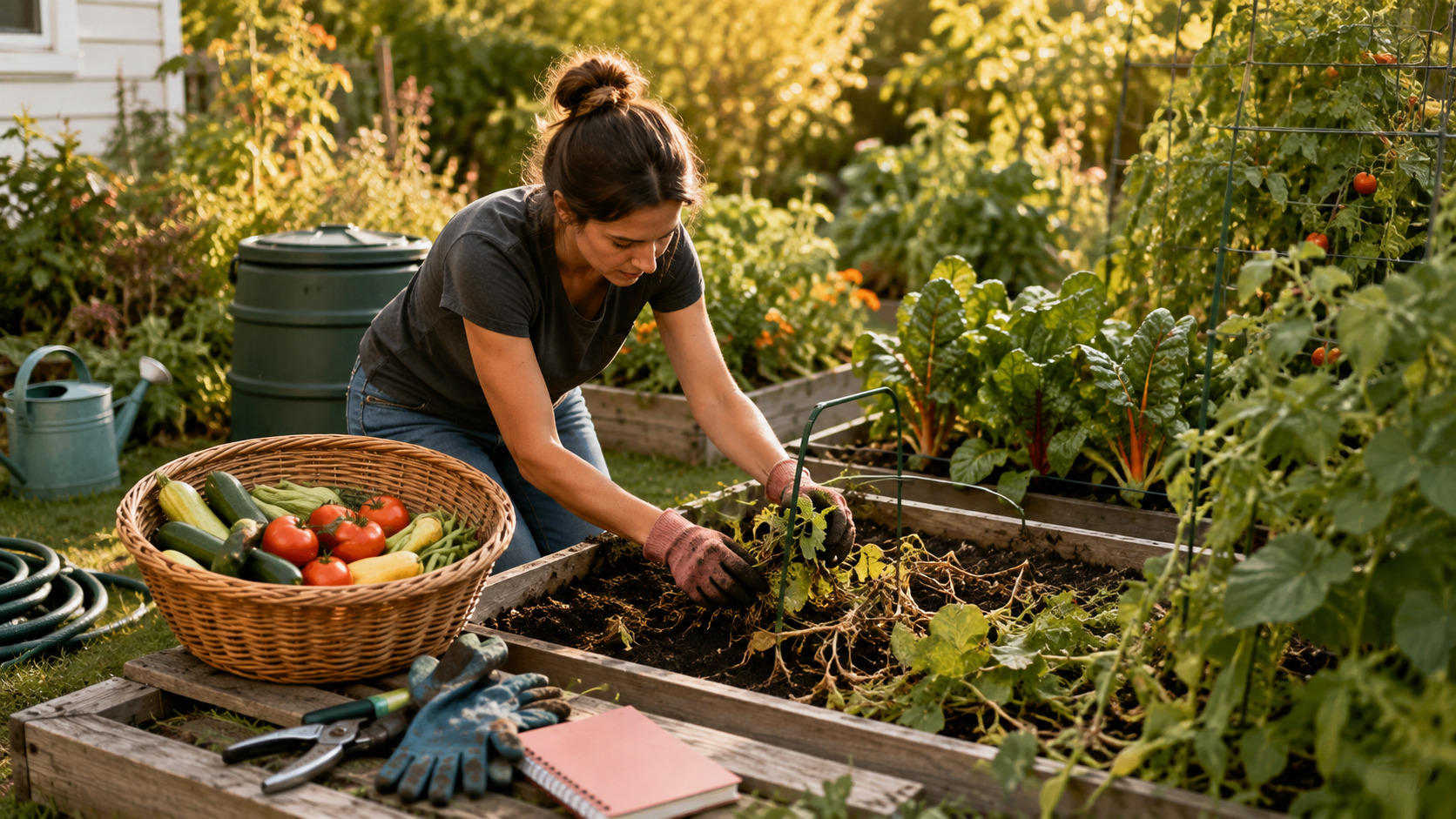
Does your garden look tired, crowded, or overgrown by the end of August? Summer harvests may be slowing down, weeds may be going to seed, and flower beds can become filled with spent blooms and damaged foliage. A late summer garden cleanup gives you a practical way to clear finished plants, protect healthy perennials, improve tired soil, organize garden tools, and prepare garden beds for fall without trying to do everything in one exhausting weekend.


The best end of summer garden cleanup is not about making every bed perfectly bare. It is about deciding what should be removed, what should stay, and what can support the next season. With a simple garden cleanup tool set, compost bin, and garden journal, you can turn late summer garden maintenance into a manageable routine. This guide explains how to clean up a garden in late summer, prepare raised beds for fall planting, preserve the final harvest, and complete an August garden cleanup checklist that also helps next spring’s garden.

Why late summer cleanup matters
Late summer is a transition point between active summer growth and fall preparation. Some plants are still producing, while others have finished or are showing signs of stress. Removing plants too early can reduce your harvest, but leaving diseased foliage, fallen fruit, or seed-forming weeds in place can create problems for the next growing season.
A careful end of summer vegetable garden cleanup helps you separate three categories:
- Plants that are still healthy and producing.
- Plants that are finished but safe to compost.
- Plants that are diseased or infested and should be removed from the garden.
Healthy plant material can often become compost, while suspicious or diseased material should be discarded according to local guidance rather than added to a home compost pile. This distinction is one of the most important parts of a late summer garden cleanup checklist because plant diseases can remain in debris and create future problems.lsuagcenter+1
Before you begin, take a slow walk through the garden. Look beneath leaves, inspect stems, check the soil surface, and notice which areas are crowded or empty. A garden inspection notebook can help you record what you see before you start pulling plants.
Remove spent and diseased plants
The first step in how to clean up a garden in late summer is harvesting everything that is ready before removing the plants. Check tomatoes, peppers, cucumbers, beans, squash, herbs, and fruiting plants for usable produce. Green tomatoes may continue ripening indoors, while herbs can be dried or frozen for later use.
After harvesting, remove annual vegetable plants that are no longer producing. Pulling finished plants opens space for fall planting and improves airflow between remaining crops. Use garden pruning shears for thick stems and garden gloves to protect your hands from rough vines, thorns, and irritated foliage.
Remove diseased plants from the garden as soon as you identify them. Signs may include unusual spots, soft or rotting stems, spreading mildew, severe wilting, or insects concentrated on one plant. Place questionable material in a yard-waste container or follow your local disposal recommendations. Avoid composting plants that are clearly diseased.
A garden waste tarp can make cleanup easier because you can place pulled vines, leaves, and weeds directly onto it instead of carrying several small loads. It is especially useful when cleaning an overgrown garden in late summer or working across several raised beds.
Weed and flower garden cleanup
Late summer weeds can grow quickly and produce seeds before you notice them. Removing weeds before they go to seed is one of the most valuable late summer gardening tasks because it prevents thousands of new weeds from appearing next season.
Pull weeds after light rain when the soil is softer, or use a garden weeding tool for taproots and compacted areas. Try to remove as much of the root as possible, especially for perennial weeds. Do not leave pulled weeds with mature seed heads on the soil surface or compost them unless your compost system reliably reaches appropriate temperatures.
Late summer flower garden cleanup requires a little more judgment. Deadheading flowers can encourage continued blooms, while cutting back every plant immediately may remove food and shelter for birds and beneficial insects. Remove clearly diseased leaves, broken stems, and spent annuals, but allow selected healthy seed heads to remain if they add winter interest or support wildlife.
Use garden snips for delicate stems and a leaf rake to clear loose debris from paths and bed edges. If a perennial is overcrowded, late summer may be a good time to mark it for division later, but avoid dividing plants during extreme heat or drought.

Prepare garden beds for fall
Once finished plants and weeds are removed, turn your attention to soil. Preparing garden soil for fall can improve the growing conditions for cool-season crops and help protect beds during the off-season.
Start by checking whether the soil is compacted, unusually dry, or depleted after a heavy summer harvest. If the soil is workable but not soggy, loosen the top layer gently with a garden hand cultivator. Avoid digging wet soil because it can damage soil structure and create hard clumps when it dries.
Add finished compost to garden beds that supported hungry crops such as tomatoes, squash, corn, and cucumbers. A thin, even layer of organic garden compost can replenish organic matter without requiring a complete soil replacement. Mix it lightly into the surface or leave it as a top dressing, depending on your bed and planting plans.
For raised beds, inspect the soil level and edges. Heavy rain and repeated watering can cause soil to settle or wash away. Add a suitable soil blend to low spots and avoid filling beds with untested material. A raised bed soil mix can be convenient when you need to restore volume before fall planting.
If a bed will remain empty for several weeks, consider using a cover crop suited to your area. Cover crops can protect bare soil and provide organic material when managed correctly. Another simple option is adding shredded leaves or mulch after fall crops are established.
Mulch and protect remaining plants
Late summer is a useful time to refresh mulch, especially where the original layer has thinned, blown away, or decomposed. Mulch garden beds in late summer with materials such as shredded leaves, straw, or suitable wood mulch, keeping it away from plant crowns and stems.
A shredded leaf mulch or straw mulch can help reduce weed growth and protect soil moisture as temperatures fluctuate. Use a moderate layer rather than piling mulch against stems, which can create damp conditions and shelter pests.
Continue watering plants that are still establishing or producing. Check the soil below the surface instead of judging moisture only by how dry the top looks. A soil moisture meter can make this easier in containers, raised beds, and areas with inconsistent rainfall.
If you plan fall planting, avoid covering the soil so heavily that seeds cannot emerge. Leave the planting rows clear and add mulch after seedlings are established. This small detail helps your late summer garden cleanup and fall planting work together instead of creating an extra obstacle.
Clean tools and organize supplies
Garden tool maintenance is easy to postpone, but late summer is a practical time to clean and sharpen garden tools before the busiest fall tasks begin. Remove soil from shovels, trowels, pruners, and hoes, then dry them thoroughly.
A garden tool cleaning brush can remove stuck soil from small crevices, while a garden tool sharpening kit helps restore clean cutting edges. Sharp pruners make cleaner cuts and are generally easier to use than dull tools.
Inspect hoses and irrigation lines for cracks, leaks, loose fittings, and clogged emitters. A garden hose repair kit can be useful for simple fixes, while drip irrigation connectors help repair or adjust small systems.
Clean empty pots and containers before storing them. Remove old soil, roots, and plant debris, then let containers dry. A plant pot cleaning brush can make this task faster, particularly when you have many small nursery pots.
Store tomato stakes, trellises, cages, and plant supports together. A garden storage rack or labeled storage bin can prevent you from buying replacements next spring simply because the existing supplies were difficult to find.
Harvest, preserve, and save seeds
A late summer garden harvest checklist helps you use what the garden has already produced before removing plants. Harvest ripe vegetables regularly and inspect overripe produce for signs of rot or pests.
Good end-of-season tasks include:
- Pick ripe tomatoes, peppers, beans, and squash.
- Harvest herbs before flowering if you want tender leaves.
- Remove damaged fruit from plants and soil.
- Dry or freeze excess herbs.
- Preserve vegetables that will not be eaten soon.
- Let selected seed crops mature fully.
- Label saved seeds with plant name and date.
- Store dry seeds in a cool, dark place.
To dry garden herbs, harvest them when foliage is clean and dry, tie small bundles, and hang them in a dry, well-ventilated area. A herb drying rack can help if you regularly preserve basil, oregano, thyme, mint, or rosemary.
If you save seeds from summer plants, choose healthy, true-to-type specimens and allow the seeds to mature fully before collecting. A seed storage organizer keeps labeled envelopes together, while small glass seed jars can work for thoroughly dried seeds.
Preserving excess garden harvest can include freezing, dehydrating, pickling, or canning, depending on your experience and food-safety practices. A food dehydrator is useful for herbs, fruit slices, and certain vegetables, while a vegetable freezer storage set helps organize prepared produce.
Late summer garden cleanup checklist
Use this late summer garden cleanup checklist as a practical guide:
Harvest and inspect:
- Harvest ripe vegetables, fruits, and herbs.
- Remove damaged or rotting produce.
- Check plant leaves and stems for pests or disease.
- Mark plants that are still productive.
- Collect seeds from healthy, mature plants.
Clean plant material:
- Remove finished vegetable plants.
- Remove diseased plants from the garden.
- Pull weeds before they produce seeds.
- Deadhead spent flowers where appropriate.
- Remove broken stems and fallen debris.
- Separate healthy compostable material from diseased waste.
Prepare garden beds:
- Loosen compacted soil gently.
- Add finished compost to depleted beds.
- Replenish soil in raised beds.
- Leave space for fall planting.
- Add mulch around established plants.
- Consider a cover crop for unused beds.
Maintain equipment:
- Clean and sharpen garden tools.
- Check hoses and irrigation lines.
- Repair leaks and clogged connections.
- Wash and dry empty pots.
- Store tomato stakes and plant supports.
- Organize seeds and garden supplies.
Plan ahead:
- Record what performed well.
- Note pest or disease problems.
- Write down crops to avoid or repeat.
- Plan next year’s garden layout.
- List seeds and supplies to order.
- Mark areas for fall or spring planting.
A waterproof garden checklist clipboard can keep your list readable while you work outdoors. If you prefer a digital system, take photos of each bed and add notes to your garden journal after cleanup.
Plan next year’s garden
Late summer garden cleanup tasks for next spring are often the most valuable because observations are still fresh. Write down which varieties produced well, which crops struggled in heat, where watering was inconsistent, and which areas attracted pests.
A garden journal end of season review might include:
- Best-performing crops.
- Crops that bolted or suffered from heat.
- Areas with poor drainage.
- Plants affected by disease.
- Successful companion plantings.
- Crops that required too much maintenance.
- Empty spaces that could support succession planting.
- Ideas for next year’s garden layout.
Take clear photos before beds become completely empty. These images can help you remember plant spacing, support structures, and areas that received too much or too little sunlight. A garden planning binder is useful for keeping photos, seed packets, maps, and notes in one place.
Planning next year’s garden in late summer also gives you time to order seeds before popular varieties sell out. You do not have to finalize the entire plan immediately. A short list of priorities is enough to guide winter planning.

Common mistakes to avoid
One common mistake is removing every plant at once. Healthy plants that are still producing may deserve another week or two, especially if the weather remains warm. Clean one finished area at a time and preserve anything that is still useful.
Another mistake is composting diseased plants. Healthy plant debris can be valuable, but suspicious material should be kept out of a home compost pile unless you have a properly managed system capable of handling it.lsuagcenter+1
Avoid working heavy, wet soil. If soil sticks to tools and forms dense clumps, wait for a better day. Lightly loosening workable soil and adding compost is usually more helpful than forcing a full bed renovation under poor conditions.
Finally, do not forget the irrigation system. A garden may look finished, but fall seedlings, containers, and perennials still need water. Check hoses and emitters before storing or adjusting them so small leaks do not become bigger problems.
Late summer garden cleanup becomes much easier when you treat it as a series of short decisions rather than one large project. Start with harvesting and diseased plants, then prepare one bed, clean a few tools, and write down what you learned. Save this guide for your August or September garden routine and follow @theclutteredblog on Pinterest for more seasonal gardening checklists and practical home organization ideas.
FAQ
FAQs About Late Summer Garden Cleanup
What should I remove from the garden at the end of summer?
Remove finished annual vegetables, diseased plants, rotting fruit, broken stems, and weeds that are close to producing seeds. Harvest usable produce before pulling healthy plants. Healthy plant material may be compostable, while diseased material should be disposed of separately according to local recommendations. Avoid removing healthy perennials simply because they look untidy if they still provide flowers, seeds, or winter habitat.
How do I clean up an overgrown garden in late summer?
Divide the work into sections instead of clearing the entire garden at once. Start by harvesting, then remove obvious weeds and finished plants, followed by trimming and soil preparation. Use a tarp or garden cart to move debris efficiently. A 15–20-minute routine repeated several times can make an overgrown garden manageable without creating excessive physical or mental strain.
Can I compost plants removed during late summer cleanup?
Healthy, non-diseased plant material can often be added to a properly managed compost pile. Do not compost plants with obvious disease, severe pest damage, or rotting problems unless your compost system is specifically managed for those materials. Chop healthy stems and mix them with a balance of green and brown materials. When in doubt, dispose of suspicious plants separately.
How should I prepare raised beds for fall planting?
Remove finished crops and weeds, check the soil level, gently loosen compacted areas, and add finished compost. Leave the bed surface level and clear enough for new seeds or transplants. Add mulch around established fall plants after they are growing. If a raised bed will remain empty, consider a suitable cover crop or protective organic mulch.
What should I do in the garden if I have low energy?
Prioritize the tasks that prevent future problems: harvest ripe produce, remove diseased plants, pull seed-forming weeds, and protect plants that are still productive. You can postpone tool organization, decorative pruning, and detailed planning until another day. Work in one small section for 10–15 minutes and stop before you become exhausted. Consistent small efforts are more sustainable than one demanding cleanup session.
When should I start preparing the garden for fall?
Begin as soon as summer crops finish producing, often in late August or early September depending on your region. Start with one empty bed or container and prepare it for fall crops, mulch, or a cover crop. Your local frost date and planting schedule should guide the timing of fall vegetables. Cleaning gradually also gives you time to preserve harvests and organize supplies.
Small steps can make the end of summer feel much more manageable, so begin with one bed or one cleanup category. You do not need to finish everything in a single day to make meaningful progress. Save this post and follow @theclutteredblog on Pinterest for more seasonal gardening routines, checklists, and practical home projects.