









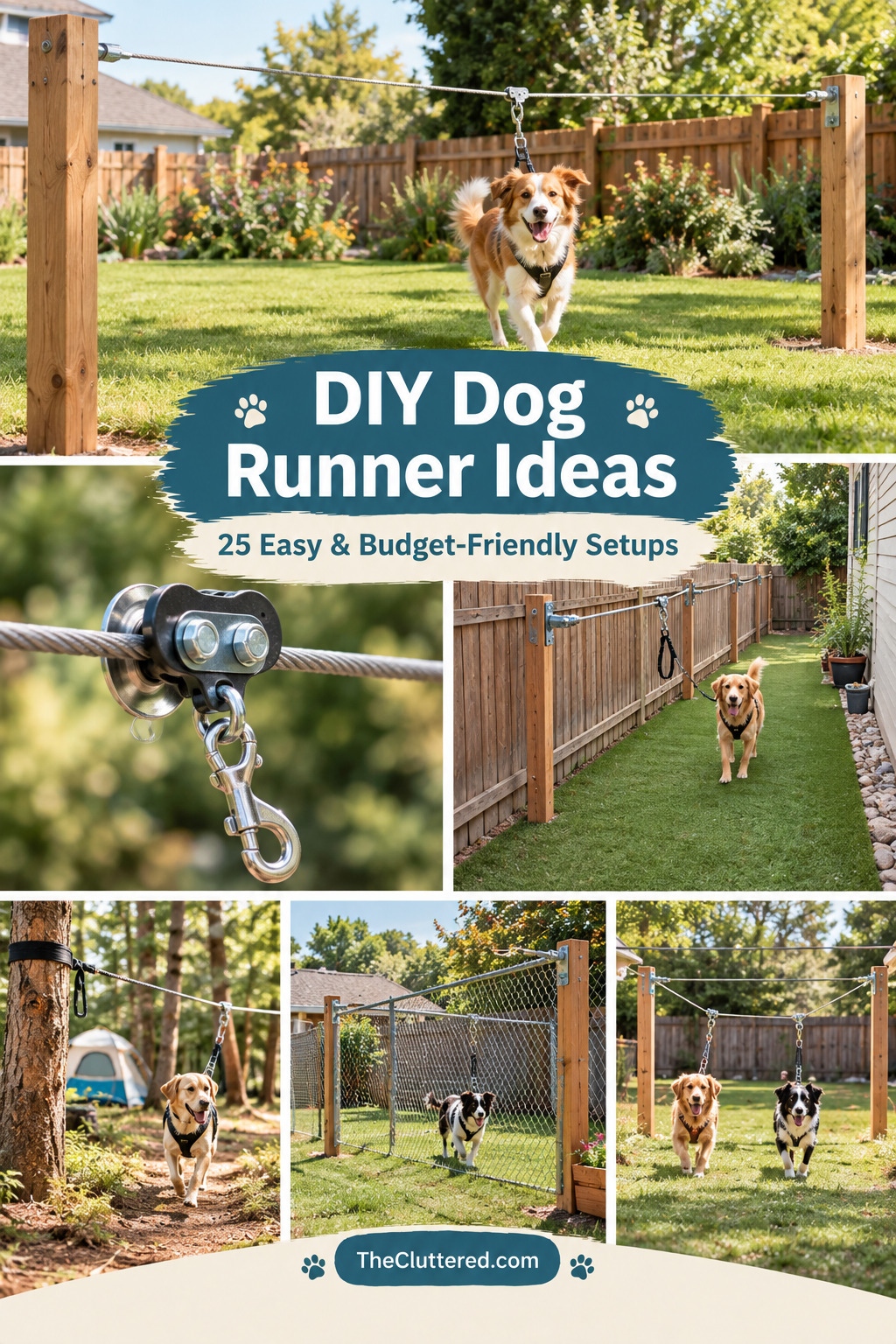


Creating a safe outdoor space for your dog doesn’t have to break the bank or require professional installation. Whether you have a sprawling backyard or a compact side yard, a DIY dog runner gives your pup the freedom to exercise and explore while staying secure. These systems range from simple cable trolleys to fully enclosed runs, and the best part is that most can be completed in a weekend with basic tools and materials.
In this guide, you’ll discover 25 practical DIY dog runner ideas that work for different yard sizes, budgets, and dog breeds. From budget-friendly rope systems to weatherproof cable setups, we’ll walk you through materials, installation tips, and safety considerations so you can build a runner that fits your specific needs.
Quick Start: Choose Your Dog Runner Type
Before diving into materials and measurements, it helps to know which type of runner works best for your situation:
- Cable Trolley System: Best for medium to large yards, allows dogs to run back and forth along a suspended cable
- Zip Line Runner: Perfect for narrow side yards or between two fixed points like trees or posts
- Enclosed Dog Run: Ideal for dogs who need more containment, uses fencing materials
- Portable Runner: Great for renters, camping, or temporary setups
- Budget Rope System: Simple and affordable for small dogs or short-term use
Essential Materials for DIY Dog Runners
Most dog runner systems share common components. Here’s what you’ll typically need:
Core Components
- Galvanized cable or rope: 1/8″ to 1/4″ thickness depending on dog size
- Heavy-duty swivel clips: Prevent tangling and allow 360-degree movement
- Pulleys: Enable smooth cable movement (for trolley systems)
- Anchor points: Wooden posts, existing fence, trees, or deck supports
- Turnbuckles: For tensioning and adjusting cable tightness
- Carabiners: Quick-connect hardware for attaching leash
Optional Upgrades
- Weather-resistant coating for cables
- Ground cover (artificial turf, pea gravel, or mulch)
- Shade structures or canopies
- Water bowl attachments
- Safety stops to prevent over-extension
Planning Your Dog Runner Layout
The success of your DIY dog runner depends on proper planning. Consider these factors before purchasing materials:
Measure Your Space
Determine the length and width of your available area. For cable systems, you’ll need at least 10-15 feet of clear space for dogs to run comfortably. Small yards can work with 8-10 foot setups, while large breeds benefit from 20+ feet of running space.
Identify Anchor Points
Look for sturdy structures that can handle tension:
- Existing fence posts (ensure they’re solid)
- Mature trees (use tree-safe straps to protect bark)
- Deck or porch supports
- New wooden posts (4×4 or 6×6 treated lumber)
Consider Your Dog’s Size and Energy
High-energy breeds like Huskies or Border Collies need longer runs with heavy-duty materials. Small dogs can use lighter rope systems. Multiple dogs require wider runs or separate parallel cables to prevent tangling.
Step-by-Step Installation Guide
For Cable Trolley Systems:
- Install anchor posts: Dig holes 24-30 inches deep, set 4×4 posts in concrete, allow 48 hours to cure
- Attach pulleys: Mount heavy-duty pulleys at the top of each post, 6-7 feet high
- Thread the cable: Run galvanized cable through both pulleys
- Add tension: Use turnbuckles to tighten cable (should have slight give but not sag)
- Install stops: Add cable stops 1-2 feet from each end to prevent trolley from hitting posts
- Attach trolley and leash clip: Connect swivel clip to trolley mechanism
- Test thoroughly: Run the system without your dog first, check all connections
For Simple Zip Line Setups:
- Secure anchor points: Use existing trees, posts, or fence
- Wrap cable or rope: Loop around anchors, leaving extra length for tensioning
- Add carabiner: Clip swivel hook directly to cable
- Adjust height: Keep cable 3-4 feet off ground for most dogs
- Test tension: Should be tight enough to support dog’s weight without excessive sag
Safety First: Critical Considerations
Never leave your dog unattended on a runner system for extended periods. These are exercise tools, not permanent containment solutions.
Weight Capacity
Always choose hardware rated for at least 2-3 times your dog’s weight. A 50-pound dog needs equipment rated for 100-150 pounds minimum.
Regular Inspections
Check your runner weekly for:
- Cable fraying or rust
- Loose anchor points
- Worn swivel mechanisms
- Ground hazards (rocks, sharp objects)
Weather Considerations
Remove or secure runners during severe weather. Metal cables can become extremely hot in summer sun and dangerously cold in winter. Consider adding shade covers for year-round use.
Collar Safety
Use a well-fitted harness instead of a collar when possible to prevent neck strain. Never use a runner with dogs prone to pulling aggressively or those with respiratory issues.
Budget Breakdown: What to Expect
| Runner Type | Estimated Cost | Difficulty | Time Required |
|---|---|---|---|
| Basic Rope System | $20-$40 | Easy | 30-60 minutes |
| Cable Zip Line | $50-$100 | Moderate | 2-3 hours |
| Trolley System with Posts | $100-$200 | Moderate-Hard | 1-2 days (includes concrete curing) |
| Enclosed Run with Fencing | $150-$400 | Moderate | 1 weekend |
| Professional-Grade Setup | $200-$500 | Hard | 2-3 days |
Maintenance and Longevity
A well-built DIY dog runner can last 3-5 years with proper care. Here’s how to extend its life:
- Lubricate pulleys: Apply silicone spray every 3-6 months
- Clean cables: Wipe down monthly to remove dirt and moisture
- Check tension: Adjust seasonally as temperature changes affect cable tension
- Replace worn parts: Swap out swivel clips and carabiners at first sign of wear
- Protect anchor points: Re-seal wooden posts annually
Common Mistakes to Avoid
1. Insufficient Tension
Cables that sag too much can tangle or allow dogs to jump over. Maintain proper tension with turnbuckles.
2. Weak Anchor Points
Don’t attach heavy-duty cables to weak fence posts or young trees. When in doubt, install dedicated posts.
3. Ignoring Height
Cables too low can trip dogs; too high reduces effectiveness. Aim for shoulder height on your dog.
4. Skipping Safety Stops
Without stops, trolleys can slam into posts, potentially injuring your dog or damaging equipment.
5. One-Size-Fits-All Approach
Customize your runner to your dog’s size, energy level, and behavior. What works for a Labrador won’t work for a Chihuahua.
FAQ
How long should a dog runner be?
For small dogs, 10-15 feet is sufficient. Medium dogs need 15-25 feet, and large breeds benefit from 25-50 feet. The longer the run, the more exercise value it provides.
Can I use a dog runner overnight?
No. Dog runners are designed for supervised exercise only. Never leave your dog tethered overnight or when you’re away from home. Use a secure kennel or indoor space for unsupervised periods.
What’s the difference between a dog runner and a dog run?
A dog runner (or trolley/zip line) is a cable system that allows movement along a line. A dog run is an enclosed fenced area. Runners are more affordable and space-efficient; runs provide more freedom but require more materials and space.
How do I prevent my dog from getting tangled?
Use swivel clips at both ends, avoid running multiple dogs on the same cable simultaneously, keep the area clear of obstacles, and choose a trolley system with smooth-gliding pulleys.
Can I install a dog runner on a slope?
Yes, but install the cable parallel to the slope (not across it) to prevent your dog from rolling downhill. Ensure anchor points are extra secure on uneven terrain.
Getting Started This Weekend
Building a DIY dog runner is one of the most rewarding weekend projects for pet owners. You’ll give your dog safe outdoor exercise, protect your landscaping from wear patterns, and save hundreds compared to professional installation. Start with a simple design, gather quality materials, and prioritize safety at every step.
Whether you choose a basic rope system for your apartment balcony or a professional-grade trolley for your acreage, the principles remain the same: sturdy anchors, quality hardware, proper tension, and regular maintenance. Your dog will thank you with happy zoomies and tired, contented naps.
Ready to see these ideas in action? Browse the 25 visual examples below to find the perfect setup for your space and pup!
DIY Dog Spring Jump

Source: Pinterest
This creative spring jump setup transforms any backyard into an engaging exercise zone for large dogs. The elevated platform with spring mechanism provides both physical workout and mental stimulation, perfect for high-energy breeds that need more than just running space.
What makes this idea stand out is its dual purpose as both a runner alternative and enrichment activity. Dogs get to burn energy through jumping and balancing, which works different muscle groups than traditional running. The DIY construction uses accessible materials and can be customized for different dog sizes.
Adapt this concept by adjusting the spring tension for your dog’s weight, adding non-slip surfaces for safety, or combining it with a cable runner system for variety. Consider weatherproofing if leaving outdoors year-round, and always supervise initial use to ensure your dog is comfortable with the movement.
DIY Dog Sensory Garden Runner

Source: MasterYourDog.com
This sensory garden approach combines a dog runner concept with interactive elements that engage all five senses. The setup includes various textures, scents, sounds, and visual elements that keep dogs mentally sharp while they move through the space.
The budget-friendly aspect makes this accessible for any pet owner. Under $50, you can create a stimulating environment that goes beyond simple exercise. This is particularly valuable for dogs who get bored easily or need mental challenges alongside physical activity.
Customize your sensory garden by incorporating your dog’s favorite textures and scents. Add elements like buried treats for digging zones, wind chimes for auditory stimulation, or different ground surfaces (grass, gravel, mulch) for paw variety. Rotate elements seasonally to maintain novelty.
Mud-Free Side Yard Dog Run

Source: MiddleKingdomRescue.com
This side yard solution maximizes narrow spaces that often go unused. The mud-free design uses strategic ground cover and proper drainage to keep both dogs and homes clean. Perfect for homeowners who want outdoor dog space without tracking dirt inside.
The enclosed design provides security while the side yard location keeps the main backyard pristine. This is ideal for renters or homeowners associations with landscaping requirements. The setup can include artificial turf, pea gravel, or concrete pavers for easy maintenance.
Adapt this for your space by measuring your side yard dimensions and choosing appropriate ground cover. Add shade structures for comfort, install gates for easy access, and consider adding a small shelter for weather protection. The narrow layout naturally creates a runner effect.
Homemade Dog Treadmill

Source: Pinterest
This homemade treadmill provides indoor exercise when outdoor runners aren’t practical due to weather, space, or safety concerns. The DIY construction makes it affordable compared to commercial dog treadmills while allowing customization for your dog’s size and stride.
Indoor treadmills are excellent for high-energy dogs in apartments, senior dogs needing controlled exercise, or rehabilitation after injury. They complement outdoor runners by providing consistent exercise regardless of conditions.
Build this using PVC pipe, wooden slats, or repurposed materials. Ensure the surface is non-slip and the speed is appropriate for your dog. Start with slow speeds and short sessions, gradually building endurance. Always supervise treadmill use and never force a reluctant dog.
Secret Dog Brain Training Runner

Source: Pinterest
This brain training approach combines physical runner exercise with mental challenges. Dogs navigate obstacles while moving through the space, engaging both body and mind for more complete enrichment than simple running.
The video format shows real-time implementation, making it easier to understand setup and training progression. This method is particularly effective for intelligent breeds that need mental stimulation alongside physical exercise.
Adapt by adding puzzle elements to your runner path, incorporating treat dispensers at intervals, or teaching tricks at different stations. The combination prevents boredom and creates a more engaged, tired dog. Start simple and gradually increase complexity as your dog masters each level.
DIY Adjustable Dog Jump

Source: TheMuttButt.wordpress.com
This adjustable jump can be integrated into a dog runner system or used as standalone training equipment. The DIY construction allows you to customize height as your dog progresses, making it suitable for puppies through adult dogs.
Jumps add vertical exercise to horizontal running, working different muscle groups and providing variety. They’re excellent for building confidence and coordination while burning energy. The adjustable feature means one piece grows with your dog.
Build using PVC pipe for lightweight portability or wood for stability. Start with the bar on the ground, gradually raising as your dog gains confidence. Always use breakaway bars that fall easily if hit. Place jumps strategically in your runner path for natural integration.
25+ DIY Dog Areas for Your Backyard

Source: PetNameSprout.com
This comprehensive collection showcases 25+ different approaches to creating dog-friendly backyard spaces. From simple cable runners to elaborate enclosed areas, there’s inspiration for every budget, skill level, and yard size.
The variety ensures you’ll find at least one idea that fits your specific situation. Whether you need a quick weekend project or a long-term landscaping investment, these ideas span the full spectrum of possibilities.
Use this as a brainstorming resource to combine elements from multiple ideas. Maybe you love the ground cover from one design and the fencing style from another. Mix and match to create your perfect custom dog runner setup.
DIY Dog Run for Large Breeds

Source: Pinterest
Large dogs need proportionally larger exercise spaces, and this setup delivers. The design accommodates breeds like German Shepherds, Labs, and Great Danes with room to run, turn, and play comfortably without feeling confined.
The construction uses heavy-duty materials rated for big dogs’ strength and energy. Proper anchoring and reinforced fencing prevent escape attempts common with powerful breeds. The generous size reduces boredom and destructive behavior.
Scale this design to your specific large breed’s needs. A 100-pound dog needs different dimensions than a 50-pound dog. Consider adding double gates for safety, reinforced corners for digging prevention, and extra shade for breeds prone to overheating.
Portable Cable Run for Dogs

Source: Instructables.com
This portable cable system is perfect for campers, RVers, and anyone who needs a temporary dog runner. The lightweight design packs easily but provides secure exercise space wherever you go. No permanent installation required.
The step-by-step instructions make assembly straightforward even at remote campsites. You can attach to trees, picnic tables, or portable stakes. This flexibility makes it invaluable for dog owners who travel frequently.
Build your own using the detailed guide, or adapt the concept with your preferred materials. Keep a portable runner in your vehicle for spontaneous adventures. Always check campsite rules about tethering and ensure trees can handle the tension.
Build a Dog Run for Under $100

Source: Pawquillo.com
Seven different methods prove you don’t need hundreds of dollars to create a functional dog run. Using chicken wire, repurposed wood, and creative problem-solving, you can build a safe exercise area on a tight budget.
This is ideal for renters, first-time dog owners, or anyone testing whether a permanent setup is right for their situation. The low investment means you can experiment with different configurations without financial stress.
Choose the method that matches your available materials and tools. Some approaches require basic carpentry skills while others use simple assembly. All prioritize safety and functionality over expensive aesthetics.
Kid and Dog Friendly Backyard

Source: Pinterest
This backyard design creates safe zones for both children and dogs to play. The dog runner area is separated but visible, allowing supervised interaction while preventing conflicts. Smart landscaping keeps everyone happy and safe.
Families with young children and energetic dogs need this kind of thoughtful planning. The setup prevents dogs from knocking over kids during play while still giving pets adequate exercise space. Everyone gets to enjoy the backyard.
Adapt by using fencing, plant barriers, or elevation changes to create distinct zones. Ensure the dog area has its own water source and shade. Teach children to respect the dog’s space, and always supervise mixed play sessions.
DIY Dog Ramp for Stairs or Bed

Source: DogLifeDailyHQ.com
While not a traditional runner, this ramp complements outdoor exercise by helping dogs access indoor spaces safely. Perfect for senior dogs, small breeds, or dogs with joint issues who struggle with stairs or jumping onto furniture.
The weekend project uses basic materials and simple construction techniques. You can customize the angle and length to fit your specific stairs, bed, or couch. The result is a sturdy, non-slip surface that builds confidence.
Integrate ramp access into your overall dog-friendly home design. Place ramps strategically near runner entry points for seamless indoor-outdoor flow. Use weather-resistant materials if placing near outdoor areas, and add side rails for extra security.
Dog-Friendly Backyard Landscaping

Source: FarmFoodFamily.com
This extensive collection shows how to integrate dog runners into beautiful landscaping rather than treating them as eyesores. The designs prove functionality and aesthetics can coexist in pet-friendly yards.
Thoughtful plant selection, strategic hardscaping, and creative layouts create spaces that look great while serving your dog’s needs. No more choosing between a pretty yard and a happy pup.
Choose dog-safe plants that can withstand traffic, install drainage to prevent muddy runner areas, and use materials that stay cool in summer heat. The landscaping should enhance the runner experience, not detract from it.
Homemade Dog Carpet Mill

Source: YouTube.com
Carpet mills (also called slat mills) are non-motorized treadmills powered by the dog’s movement. This homemade version provides intense exercise for high-energy breeds when outdoor running isn’t possible. The carpet surface is gentler on paws than traditional treadmills.
The video tutorial walks through construction step-by-step, making it accessible even for those with limited woodworking experience. The result is professional-quality equipment at a fraction of retail cost.
Use this as a complement to outdoor runners for year-round fitness. Carpet mills build muscle and endurance while being low-impact on joints. Start with short sessions and gradually increase duration as your dog builds stamina.
65 Simple DIY Dog Run Projects

Source: UnknownBrewing.com
Sixty-five simple projects mean there’s something for every skill level and situation. From basic rope setups to more elaborate fenced runs, this collection removes the intimidation factor from DIY dog exercise areas.
The emphasis on simplicity makes these accessible for weekend warriors without advanced carpentry skills. Most use common materials available at any home improvement store. Clear plans eliminate guesswork.
Start with the simplest project that meets your needs, then upgrade as your skills and confidence grow. The variety allows you to choose based on your specific yard layout, dog size, and budget constraints.
Aerial Dog Run System

Source: DogForums.com
Aerial dog runs suspend the cable overhead, keeping ground space completely clear. This is perfect for small yards where every square foot matters, or for keeping pathways unobstructed. Dogs run below the cable on a trolley system.
The discussion focuses on making these systems more enjoyable for dogs through proper setup, height adjustment, and enrichment additions. When done right, aerial runs are just as engaging as ground-level systems.
Install at appropriate height for your dog’s size—typically 6-8 feet high with a drop line. Use smooth-gliding trolleys and ensure the system can handle your dog’s weight plus movement forces. Add ground padding beneath for safety.
DIY Dog Zip Line Runner

Source: TheSimpleCraft.com
Zip line runners are among the most popular DIY dog exercise systems. The cable stretches between two points with a trolley that allows dogs to run the full length. It’s simple, effective, and gives dogs surprising freedom of movement.
The 22 ideas compilation shows various implementations from basic to elaborate. You’ll see different anchoring methods, cable types, and trolley mechanisms. This variety helps you choose the best approach for your situation.
Build yours using galvanized aircraft cable, heavy-duty pulleys, and swivel clips. Maintain proper tension—tight enough to prevent sagging but with slight give. Install at chest height for your dog and always use a breakaway connection for safety.
5+ Cheap Dog Run Ideas That Actually Work

Source: MiddleKingdomRescue.com
These aren’t just cheap—they actually work. Five proven budget ideas that deliver real results without expensive materials or professional installation. Perfect for dog owners who want functionality over fancy aesthetics.
Each idea addresses common concerns like safety, durability, and ease of use while keeping costs minimal. You’ll discover creative uses for recycled materials, repurposed items, and smart construction techniques that save money.
Choose based on your specific needs: temporary vs. permanent, small vs. large dogs, flat vs. sloped yards. The variety ensures you’ll find at least one solution that fits your budget and situation perfectly.
DIY Dog Run Video Tutorial

Source: YouTube.com
Sometimes you need to see it built to understand the process. This video tutorial walks through every step of constructing a dog run, from planning and materials to final assembly. Visual learners will appreciate the clear demonstrations.
Watching someone else build first helps you anticipate challenges and avoid common mistakes. You’ll see proper tool usage, material handling, and technique that written instructions can’t fully convey.
Pause and replay sections as needed while building your own. Take notes on measurements and techniques. The video format allows you to learn at your own pace and reference specific steps throughout your project.
10 DIY Dog Run Ideas for Fun & Safety

Source: MiddleKingdomRescue.com
Ten ideas that balance fun and safety—because the best dog runs are ones dogs actually enjoy using. These designs prioritize both security and engagement, creating spaces that prevent escapes while encouraging active play.
Whether you have acres or a tiny patio, there’s an idea that fits. The collection includes creative solutions for challenging spaces, budget constraints, and specific breed needs. No cookie-cutter approaches here.
Focus on the ideas that match your dog’s personality. High-energy dogs need different features than calm seniors. Escape artists require extra security measures. Match the design to your individual dog for best results.
How To Make A DIY Dog Run

Source: TopDogTips.com
This comprehensive guide covers everything from initial planning to final testing. You’ll learn about site selection, material choices, construction techniques, and safety checks. It’s a complete education in dog run building.
The step-by-step format eliminates confusion and builds confidence. Even first-time DIYers can successfully complete this project with clear instructions and proper preparation. No guesswork required.
Read through the entire guide before starting your project. Gather all materials and tools beforehand. Follow each step in order, and don’t skip safety checks. The thorough approach ensures a quality result that lasts.
DIY Treadmill for Siberian Husky

Source: YouTube.com
Siberian Huskies need serious exercise, and this DIY treadmill delivers. Built specifically for high-energy working breeds, it provides the intense workout Huskies crave when outdoor running isn’t enough or weather prevents outdoor activity.
The personal build story shows real-world application and results. You’ll see what works, what challenges arose, and how they were solved. This practical perspective is invaluable for planning your own high-energy dog solution.
Adapt the design for your specific breed’s needs. Huskies require more intense exercise than average dogs, so build accordingly with heavy-duty materials and generous dimensions. Consider adding cooling features for breeds prone to overheating.
23 Safe DIY Dog Run Ideas

Source: DIYCraftNest.com
Safety is the priority in these 23 ideas. Each design emphasizes secure construction, appropriate materials, and hazard prevention. You’ll learn how to build runs that keep dogs safely contained while preventing injuries.
The practical construction tips cover everything from choosing the right gauge wire to proper post depth and gate latches. These details matter when your dog’s safety depends on them. Don’t cut corners on critical elements.
Design for both small and large breeds by understanding their different needs. Small dogs need escape-proof designs; large dogs need strength-rated materials. Match the safety features to your dog’s size, strength, and behavior patterns.
10 DIY Dog Projects Including Runners

Source: DogCorner.net
Ten projects that go beyond just runners to create a complete DIY dog lifestyle. While exercise areas are featured, you’ll also find ideas for beds, toys, treats, and accessories. It’s a full weekend of pampering your pup.
The variety keeps things interesting and allows you to tackle multiple projects over time. Start with the runner, then add complementary items that enhance your dog’s overall comfort and happiness.
These projects make great gifts for dog-loving friends and family too. The skills you learn building your own dog’s runner can be applied to help others create safe exercise spaces for their pets.
10 DIY Dog Run Cheap Ideas

Source: RobertaKocht.de
Ten cheap ideas that prove affordability doesn’t mean sacrificing quality or safety. These budget-friendly approaches use smart material choices, creative problem-solving, and efficient construction to deliver real value.
Perfect for anyone who wants to give their dog a great exercise space without financial stress. Whether you’re saving for other priorities or simply prefer frugal solutions, these ideas respect your budget while meeting your dog’s needs.
Start with the simplest idea that works for your situation. You can always upgrade or expand later. The key is getting your dog a safe, functional space now rather than waiting for the perfect (expensive) solution.
Love these ideas? Follow @theclutteredblog on Pinterest for more cozy, practical gift inspiration!