












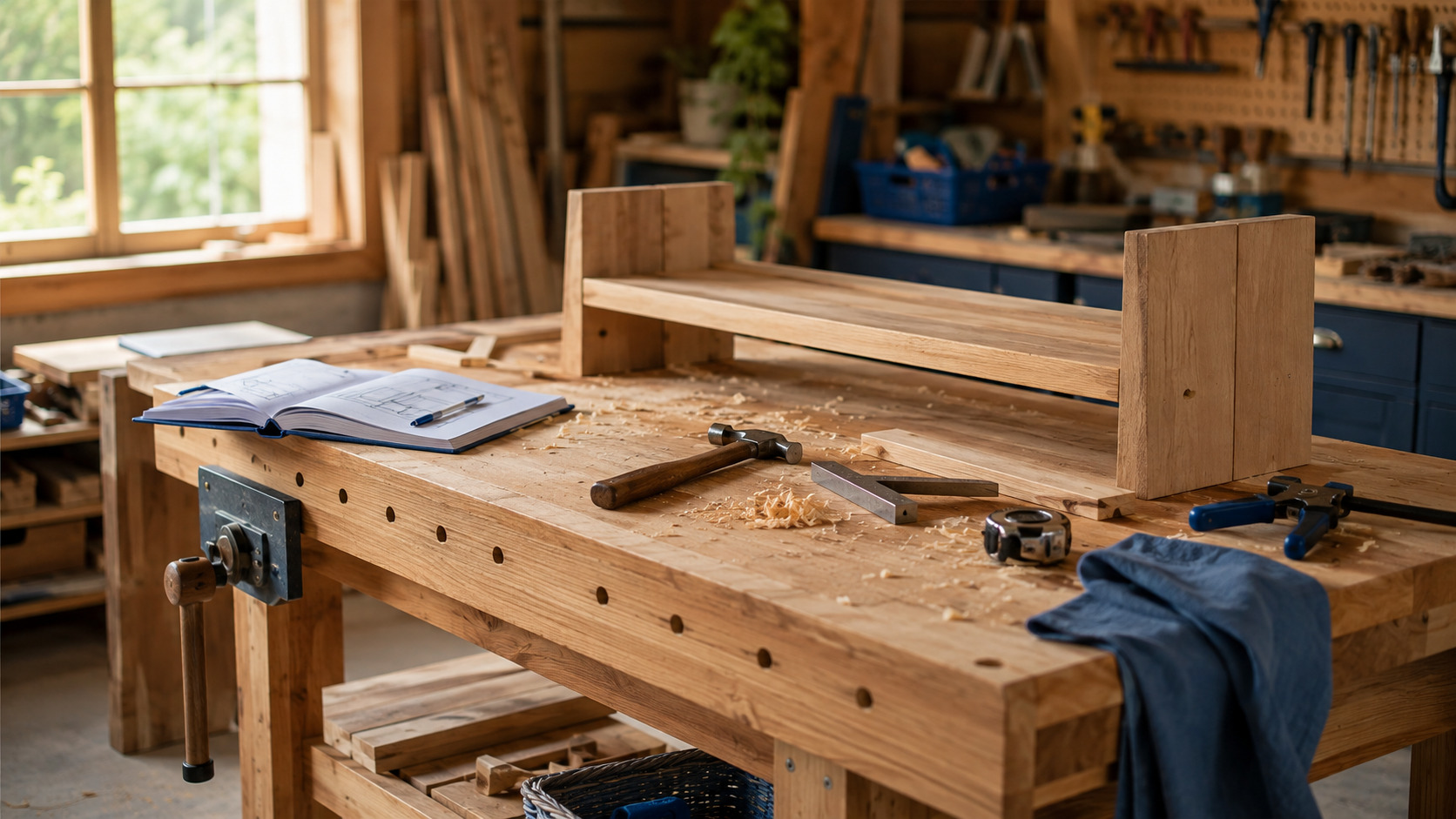


So you’re ready to build your dream workbench but feeling overwhelmed by all the options out there? You’re not alone. Whether you’re working with a tiny garage corner or a spacious workshop, finding the right woodworking bench plans can feel like searching for a needle in a haystack. But here’s the good news: building a workbench doesn’t have to break the bank or require advanced carpentry skills.
In this comprehensive guide, we’re breaking down everything you need to know about woodworking bench plans—from simple 2×4 designs that cost under $100 to mobile workbenches with built-in storage and tool holders. We’ll walk you through different styles (Roubo, English, hybrid, modern), sizes (compact 4×8 to full-size 72-inch benches), and skill levels (beginner-friendly weekend projects to advanced builds with twin screw vises).
You’ll discover free downloadable PDFs, step-by-step tutorials, material lists, and cut diagrams that make the building process actually enjoyable. Plus, we’ve curated 25+ real-life inspiration pins from Pinterest so you can see what’s possible before you pick up your saw.
Save this post now and follow @theclutteredblog on Pinterest for more workshop inspiration!

Who This Guide Is For (And What You’ll Get)
This guide is perfect for:
- Beginner woodworkers looking for easy workbench plans with clear instructions
- Small workshop owners needing compact, space-saving solutions
- Budget-conscious DIYers wanting to build under $100-200
- Weekend warriors who need quick, practical builds
- Advanced builders interested in traditional Roubo or English workbench designs
What’s inside:
- Overview of different workbench styles and when to use each
- Step-by-step guidance for choosing the right size and materials
- Budget breakdowns from cheap pallet benches to luxury hardwood builds
- Feature-specific plans (with vises, drawers, casters, dog holes, storage)
- A practical checklist to plan your build
- 25+ visual inspiration ideas from real Pinterest builders
- FAQs about time, tools, and common mistakes
Choosing Your Perfect Workbench Style
Not all workbenches are created equal, and the style you choose will dramatically impact your building experience and final result. Let’s break down the most popular options:
Traditional vs. Modern Designs
Roubo workbench plans are the gold standard for serious woodworkers. These French-style benches feature a thick hardwood top (often 4-6 inches), massive legs, and a leg vise for heavy-duty clamping. They’re incredibly stable but require more materials and intermediate-to-advanced skills.
English workbench plans offer a different approach with a tail vise, dog holes, and a slightly lower profile. They’re excellent for hand tool work and traditional joinery but take longer to build.
Hybrid workbench plans combine the best of both worlds—modern convenience with traditional stability. These often include plywood or MDF tops with hardwood edging, making them more budget-friendly.
Modern workbench plans prioritize clean lines, minimalism, and often incorporate metal frames or hairpin legs. They’re perfect for contemporary workshops and smaller spaces.
Portable and Space-Saving Options
If you’re working in a tight garage or shared space, portable workbench plans and folding workbench plans are game-changers. These knock-down designs can be assembled and disassembled quickly, or folded flat against a wall when not in use.
Mobile workbench plans with casters let you roll your bench wherever you need it—perfect for multi-purpose spaces. Just make sure to include locking wheels for stability during use.
Compact workbench plans (think 4×8 or smaller) maximize functionality in minimal square footage without sacrificing work surface.
Sizing Your Workbench: Finding the Right Dimensions
The size of your workbench directly impacts what projects you can tackle comfortably. Here’s what to consider:
Small Workbench Plans (Under 48 inches)
Perfect for apartments, small garages, or as a secondary bench. These typically use 2×4 workbench plans or 2×8 workbench plans and can be built for under $100. Ideal for light assembly, electronics work, or small woodworking projects.
Medium Workbench Plans (48-60 inches)
The sweet spot for most hobbyists. A 48 inch workbench or 60 inch workbench gives you enough space for furniture projects, cabinet building, and general workshop tasks without dominating your space.
Large Workbench Plans (72+ inches)
If you have the room and ambition, 72 inch workbench plans or full-size workbench plans provide maximum versatility. These often incorporate 4×8 workbench plans for the top, giving you serious real estate for large projects.
Pro tip: Standard workbench height is 34-36 inches, but customize based on your height. You should be able to rest your palms flat on the surface with your arms at your sides.
Material Selection: Building Within Your Budget
Your material choices will determine both cost and durability. Let’s explore your options:
Budget-Friendly Materials
Plywood workbench plans are incredibly popular for good reason. Sheet goods are affordable, stable, and easy to work with. Use 3/4-inch plywood for the top and frame, then add hardwood edging for a professional look.
2×4 workbench plans dominate the beginner space because dimensional lumber is readily available and inexpensive. A basic 2×4 frame with a plywood top can be built for $50-100.
Pallet workbench plans and reclaimed wood workbench plans are the ultimate budget option (often free!), though they require more prep work and may not be as dimensionally stable.
MDF workbench plans and particle board workbench plans offer a smooth, flat surface at low cost, but they’re heavy and don’t hold screws as well as plywood.
Premium Materials
Hardwood workbench plans (maple, oak, beech) create heirloom-quality benches that last generations. They’re expensive but incredibly durable and beautiful.
Softwood workbench plans (pine, fir) are more affordable than hardwoods but still offer good workability and appearance.
Steel frame workbench plans and metal leg workbench plans provide industrial strength and a modern aesthetic, though they require welding skills or pre-fabricated components.
Essential Features to Include
Once you’ve chosen your style, size, and materials, it’s time to decide on features. Here are the most popular additions:
Workholding and Vises
Workbench with vise plans are essential for serious woodworking. A twin screw vise provides exceptional clamping power but is complex to install. Simpler face vises or leg vises work well for most hobbyists.
Workbench with dog holes plans allow you to use bench dogs and holdfasts for securing workpieces anywhere on the surface.
Storage Solutions
Workbench with storage plans keep your tools organized and within reach. Consider:
- Workbench with drawers plans for small tools and accessories
- Workbench with shelf plans underneath for bulky items
- Workbench with tool holder plans on the sides or back
- Workbench with clamp storage built into the legs or apron
Mobility and Power
Workbench with casters plans let you move your bench easily. Always use locking casters rated for the weight of your bench plus projects.
Workbench with power strip integration keeps cords organized and outlets accessible.
Workbench with lighting plans ensure you can see your work clearly, especially in dim garages.
Step-by-Step Planning Checklist
Before you make your first cut, work through this comprehensive checklist:

- Determine your available space (measure twice!)
- Set your budget (include tools, not just materials)
- Choose your workbench style (Roubo, English, hybrid, modern, portable)
- Select dimensions (length, width, height based on your needs)
- Pick your primary material (plywood, 2x4s, hardwood, reclaimed)
- Decide on essential features (vise, storage, casters, dog holes)
- Download or purchase detailed plans with cut lists
- Create a materials shopping list with quantities
- Check your tool inventory (saw, drill, sander, clamps, square)
- Plan your build timeline (weekend project vs. multi-week)
- Prepare your workspace (clear area, good lighting, power access)
- Watch tutorial videos for your specific plan type
- Buy materials (add 10% extra for mistakes)
- Pre-cut all pieces before assembly
- Dry-fit the frame before gluing/screwing
- Assemble the base/legs first
- Attach the top securely (use glue AND screws)
- Add features (vise, drawers, shelves)
- Sand all surfaces smooth
- Apply finish (polyurethane, oil, or leave raw)
- Test stability and make adjustments
- Organize tools and accessories
- Celebrate your new workspace!
25+ Real-Life Workbench Ideas from Pinterest
Now that you understand the fundamentals, let’s get inspired! Below are 25+ real workbench builds from Pinterest that showcase different styles, budgets, and skill levels.

These ideas range from simple beginner workbench plans you can build in a weekend to elaborate advanced workbench plans with custom features. Pay attention to the details that resonate with your needs—maybe it’s the mobile base on one design, the clever storage on another, or the clean aesthetic of a modern build.
Remember: you don’t have to replicate these exactly. Mix and match features, adjust dimensions for your space, and make it uniquely yours. The best workbench is the one you’ll actually use!
Common Mistakes to Avoid
Even with the best woodworking bench plans, certain pitfalls can derail your project. Here’s what to watch out for:
Mistake #1: Building Too Big (or Too Small)
It’s tempting to max out your space, but an oversized bench can overwhelm a small workshop and limit your movement. Conversely, a bench that’s too small will frustrate you when working on larger projects. Measure your space realistically and leave room to walk around the bench.
Mistake #2: Skipping the Vise
You might think you can get by without a vise to save money or simplify the build, but you’ll regret it. Even a simple face vise dramatically expands what you can do on your bench. If budget is tight, start with a basic vise and upgrade later.
Mistake #3: Ignoring Height
A workbench that’s too high or too low will cause fatigue and poor work quality. The standard 34-36 inches works for most people, but customize based on your height. Stand with your arms at your sides—your bench should hit just below your elbow.
Mistake #4: Using Green or Warped Lumber
Cheap doesn’t always mean good. Warped boards will create an uneven work surface that’s frustrating to use. Inspect lumber carefully and pay a bit more for straight, dry stock. Your future self will thank you.
Mistake #5: Not Planning for Expansion
Your needs will change as you gain experience. Build in some flexibility—leave room to add vises later, design storage that can grow, or make the bench modular so you can extend it.
FAQs About Woodworking Bench Plans
How long does it take to build a workbench?
Easy workbench plans for beginners using 2x4s and plywood can be completed in a weekend (8-12 hours). Simple workbench plans DIY with basic features typically take 1-2 weekends. More complex builds like Roubo workbench plans or benches with custom vises and joinery can take 2-4 weeks of part-time work. Quick workbench plans using pre-cut lumber and minimal joinery can be done in 4-6 hours if you’re experienced.
Can I build a workbench on a low-energy day?
Absolutely! Break your build into small, manageable tasks. On low-energy days, focus on prep work like sanding, organizing materials, or watching tutorial videos. Save heavy lifting and precise cuts for when you have more energy. Weekend workbench plans are designed to be flexible—you don’t have to finish in one marathon session.
How do I stay consistent with my workshop projects?
Start with beginner workbench plans that match your current skill level. Overcommitting to an expert workbench plans project when you’re new leads to frustration. Set realistic timelines, celebrate small wins, and remember that imperfect action beats perfect inaction. Even 30 minutes of progress is progress!
What if I have a tiny space?
Small workbench plans and compact workbench plans are specifically designed for tight spaces. Look for folding workbench plans, portable workbench plans, or wall-mounted options. A 4×8 workbench might be too big, but a 2×4 or 3×6 bench could be perfect. Consider a mobile workbench with casters that you can roll into a closet when not in use.
How do I manage the mental load of a big build?
Break the project into phases and focus on one step at a time. Use step-by-step workbench plans with clear diagrams. Create a simple checklist and check off items as you go. Watch the process on YouTube before starting. Remember: every experienced woodworker started exactly where you are now. You’ve got this!
Final Thoughts: Start Building This Week
Look, I get it. Planning the perfect workbench can feel overwhelming, especially when you’re staring at dozens of woodworking bench plans and trying to decide which one is “right.” But here’s the truth: the best workbench is the one you actually build and use.
Don’t wait for the perfect tools, the perfect space, or the perfect plan. Start with easy workbench plans for beginners or simple workbench plans DIY that match your current situation. You can always upgrade later. A basic 2×4 bench with a plywood top is infinitely more valuable than a dream Roubo bench that exists only in your Pinterest board.
Pick one feature that matters most to you (maybe it’s mobility, maybe it’s a vise, maybe it’s just having a flat surface), and build around that. Keep it simple, keep it functional, and give yourself permission to learn as you go.
Save this post for reference, grab those free woodworking bench plans PDFs, and start your build this weekend. Your future self—standing at a workbench you built with your own hands—will thank you.
And don’t forget to follow @theclutteredblog on Pinterest for more workshop inspiration, tool reviews, and DIY projects that actually fit your real life!
Now that you’ve seen how the full woodworking bench planning process works, it’s time to peek inside some real-life ideas pulled straight from Pinterest.
Use this visual roundup as a menu: pick one or two ideas that feel doable this week, and save the Pins you love so you can come back to them later. Whether you’re working with a tiny apartment corner or a spacious garage, there’s a workbench design here that’ll fit your space, budget, and skill level.

25 Woodworking Bench Plans: Free DIY Ideas & Visual Inspiration
Ready to build your dream workbench but not sure where to start? This visual roundup features 25+ real woodworking bench plans pulled straight from Pinterest, showcasing everything from simple 2×4 builds under $100 to elaborate mobile workbenches with storage and vises.
Use this collection as your inspiration menu: browse through different styles (traditional Roubo, modern minimalist, space-saving folding designs), sizes (compact 4×8 to full-size 72-inch benches), and skill levels (beginner-friendly weekend projects to advanced builds). Each pin links to detailed plans, tutorials, or step-by-step guides.
Whether you’re working with a tiny garage corner or a spacious workshop, you’ll find ideas that match your space, budget, and woodworking experience. Save your favorites to your Pinterest boards, download the free PDFs, and start building the workbench you’ve been dreaming of!
DIY Mobile Workbench with Table Saw

This mobile workbench design integrates a table saw directly into the work surface, creating a multi-functional workstation that maximizes efficiency in small workshops. The rolling base with heavy-duty casters allows you to move the entire setup wherever you need it, then lock it in place for stability during use.
Perfect for woodworkers who need flexibility and don’t have space for separate stationary tools. The build includes storage compartments underneath for lumber, tools, and accessories, keeping everything organized and within reach.
What makes this design special: you get a full-featured workbench AND a mobile table saw station in one build. Great for weekend warriors who want professional results without the professional shop footprint.
Super Simple 2×4 Workbench

This straightforward 2×4 workbench proves you don’t need fancy materials or advanced skills to build a functional workspace. Using standard dimensional lumber and basic joinery, you can create a sturdy bench for under $100 that will handle everything from assembly work to power tool projects.
The design prioritizes simplicity and speed—perfect for beginners who want to get building quickly without getting bogged down in complex joinery or expensive hardwoods. The open frame design makes it easy to add shelves or storage later.
Ideal for your first workbench build or as a secondary bench in a larger shop. The straightforward construction means you’ll finish in a weekend and have money left over for tools and materials for your next project.
DIY Sturdy Garden Bench

Take your woodworking skills outdoors with this charming garden bench design. Built for durability and weather resistance, this bench features a classic slatted seat and backrest that provides comfortable outdoor seating for years to come.
The plans include guidance on selecting weather-resistant lumber (cedar, redwood, or pressure-treated pine) and finishing techniques to protect your bench from the elements. The timeless design complements any outdoor space, from rustic gardens to modern patios.
Perfect for weekend builders who want to create functional outdoor furniture. This project teaches valuable skills like angled cuts, proper spacing for drainage, and outdoor finishing techniques you can apply to future projects.
Mobile Workbench with Table & Miter Saw

This ultimate mobile workstation combines table saw and miter saw platforms into one rolling workbench, giving you maximum versatility in minimal space. The flip-top or sliding mechanisms allow you to use one tool at a time while keeping both readily accessible.
Designed for serious hobbyists who need professional-level functionality without dedicating an entire shop to stationary tools. The mobile base means you can roll it out when needed and tuck it away when you need floor space for other projects.
What sets this apart: integrated dust collection ports, built-in storage for blades and accessories, and outfeed support that extends your cutting capacity. A smart solution for small shops that refuse to compromise on capability.
Perfect Sawhorse Workbench

This sawhorse-style workbench combines portability with stability, creating a workspace you can set up anywhere and break down when done. The design focuses on optimal dimensions for comfort and strength, with detailed charts showing the best measurements for various heights and widths.
Perfect for woodworkers who work in shared spaces, garages with multiple uses, or those who like to take projects outdoors. The simple construction uses standard lumber and basic joinery, making it accessible for beginners.
The beauty of this design: you can build a pair for the price of one traditional workbench, giving you flexible workspace that adapts to different projects. Add a plywood top for a solid work surface, or use them as supports for sheet goods.
Easy 2×4 Wood Bench with Backrest

This beginner-friendly 2×4 bench design includes exact measurements and step-by-step instructions, making it perfect for first-time builders. The sturdy construction uses affordable dimensional lumber and creates a beautiful bench suitable for porches, patios, or outdoor dining areas.
The plans emphasize simplicity without sacrificing style—clean lines, comfortable proportions, and a design that looks far more expensive than the materials cost. Ideal for farmhouse decor enthusiasts and budget-conscious builders.
What you’ll love: the detailed cut list eliminates guesswork, and the straightforward assembly means you can complete this project in a weekend. Save these plans for your next outdoor furniture build and enjoy seating you built yourself.
Traditional Woodworking Bench with Dimensions

This traditional workbench design features comprehensive dimensional drawings and specifications, giving you everything needed to build a professional-grade bench. The plans include detailed views showing joinery, vise placement, and workholding options.
Perfect for intermediate to advanced woodworkers who want a bench that will last decades. The design incorporates time-tested features like a thick hardwood top, sturdy leg construction, and provisions for adding vises and dog holes.
What makes this special: the technical drawings show exact measurements and angles, eliminating the guesswork that often comes with traditional bench builds. Follow these plans to create a workbench that rivals commercial options at a fraction of the cost.
30 DIY Work Bench Ideas Compilation

This comprehensive roundup showcases 30 different workbench designs, from simple builds to elaborate workshop centers. Each idea offers unique features like tool storage, mobility options, space-saving designs, and specialized workholding solutions.
Perfect for builders who want to explore multiple options before committing to one design. Browse through different styles, sizes, and complexity levels to find the perfect match for your space, skills, and budget.
The variety ensures there’s something for everyone: compact benches for small apartments, heavy-duty builds for serious woodworkers, mobile options for shared spaces, and budget-friendly designs for first-time builders. Save this collection and reference it as your workshop evolves.
Super Simple $50 Wood Workbench

Prove that you don’t need to spend a fortune to get a functional workbench with this $50 build. Using basic lumber from the home center and simple construction techniques, you can create a sturdy workspace that handles everything from assembly to power tool work.
Perfect for beginners, renters, or anyone who needs a temporary or secondary bench without major investment. The design prioritizes function over form, giving you a practical workspace you can upgrade or replace as your needs change.
What’s impressive: despite the low cost, this bench doesn’t feel cheap. Smart material choices and efficient design maximize strength while minimizing waste. Build it in a weekend and have money left over for your next project.
Step-by-Step DIY Farmhouse Bench

Create rustic charm on a budget with this farmhouse-style bench that costs less than $50 to build. The step-by-step project uses basic tools and inexpensive materials to create a durable, beautiful bench perfect for entryways, dining areas, or outdoor spaces.
The design features classic farmhouse elements like chunky legs, simple joinery, and a distressed finish option that adds character. Whether you place it on your porch, in your kitchen, or in your garden, this bench delivers style and function.
Ideal for weekend builders who want furniture that looks custom-made without the custom price tag. The straightforward instructions make this accessible for beginners, while the timeless design ensures it will look great for years to come.
Workbench with Drawers – Easy to Build

This pony wall workbench design maximizes storage without sacrificing work surface. The built-in drawers keep tools organized and within reach, while the open design maintains a clean, uncluttered look in your workshop.
Perfect for woodworkers who struggle with tool organization and want everything at their fingertips. The plans show how to integrate storage seamlessly into the bench structure, creating a professional look without complex cabinetry.
What sets this apart: the easy-to-build approach means you don’t need advanced woodworking skills to create custom storage. Follow the plans to build a workbench that keeps your space organized and your projects moving smoothly.
9 Free DIY Woodworking Project Plans

This collection of 9 free downloadable woodworking plans includes workbench designs alongside furniture and storage projects. Each plan comes in PDF format with step-by-step instructions, cut lists, and diagrams suitable for beginners.
Perfect for woodworkers who want variety and flexibility in their projects. Download the entire collection and choose which build fits your current needs, skills, and available materials. The range ensures there’s something for every skill level.
What you get: professional-quality plans at no cost, covering everything from simple benches to more complex furniture pieces. Start with an easy project to build confidence, then work your way up to more challenging builds as your skills develop.
Modern Storage Bench with Cushions

Combine seating and storage with this modern bench design featuring hidden compartments and comfortable cushions. Perfect for entryways, mudrooms, or bedrooms where you need organized storage without sacrificing style.
The step-by-step woodworking plan guides beginners through creating custom cubbies, installing hinges for lift-top storage, and adding cushioned seating. The clean, contemporary design fits seamlessly into modern homes.
What makes this special: the dual functionality means one piece of furniture solves two problems. Build it to your exact dimensions, customize the storage configuration for your needs, and finish it to match your decor. A practical project with professional results.
Transforming Miter Saw Workbench

Maximize small workshop space with this clever transforming workbench that folds down from a wall shelf. When not in use, it tucks away neatly; when you need it, it provides a sturdy miter saw station with ample workspace.
Perfect for garage workshops, small shops, or multi-purpose spaces where floor space is at a premium. The smart design includes tool storage, a fold-down work surface, and heavy-duty hinges that support serious cutting work.
What’s brilliant: you get a full-featured workbench without permanently dedicating floor space. The step-by-step plans show how to build the wall-mounted frame, install quality hardware, and create a stable cutting platform. Ideal for small-space woodworkers who refuse to compromise.
Small Space Workbench Ideas

Don’t let limited space stop you from building a functional workbench. These compact designs prove that small doesn’t mean inadequate—thoughtful planning and smart features create fully capable benches that fit in apartments, small garages, or shared workshops.
Perfect for urban woodworkers, renters, or anyone working with square footage constraints. The designs incorporate fold-down surfaces, wall-mounted options, and multi-functional features that maximize every inch.
What you’ll discover: creative solutions like benches that double as tables, wall-mounted workstations that fold flat, and rolling carts that tuck into closets. Prove that great woodworking doesn’t require a massive shop—just smart design.
DIY Wooden Garden Bench Plans

Create a beautiful outdoor seating area with this wooden garden bench featuring detailed cut lists and measurements. The design balances comfort and durability, using weather-resistant materials and construction techniques that ensure years of enjoyment.
Perfect for weekend builders who want to enhance their outdoor space with handmade furniture. The plans include guidance on selecting appropriate lumber, applying protective finishes, and creating comfortable seating proportions.
What makes this appealing: the classic design complements any garden style, from formal to rustic. Build it in a weekend, and you’ll have a cozy spot for morning coffee or evening relaxation that you created with your own hands.
Ultimate Workbench with Rotating Tools

This ultimate workbench design features rotating miter saw and router stations, 5 drawers, roll paper holder, drill rack, and battery shelf—all in one comprehensive build. It’s the dream station for serious woodworkers who want everything integrated and accessible.
Perfect for dedicated shop spaces where you can invest time and materials into a centerpiece workbench. The detailed plans show how to create the rotating mechanisms, integrate multiple tool stations, and maximize storage without cluttering the work surface.
What sets this apart: the level of integration and functionality rivals commercial stations at a fraction of the cost. Build this and you’ll have a professional-grade workstation that makes every project easier and more enjoyable.
DIY Picnic Table with Benches

Transform your backyard with this complete picnic table and bench combination. The design is both practical and attractive, perfect for outdoor dining, family gatherings, or relaxing in the garden. Detailed instructions include exact dimensions for precision building.
Great for beginners and seasoned woodworkers alike, this project teaches valuable skills like angled cuts, proper spacing, and outdoor construction techniques. The space-saving design integrates benches with the table for a cohesive look.
What you’ll love: the complete woodworking guide walks you through every step, from material selection to final assembly. Build this and create lasting memories around a table you made yourself. Ideal for patios, gardens, and decks.
Simple Arts & Crafts Bench

Embrace the simplicity and beauty of Arts & Crafts design with this straightforward bench project. The clean lines, exposed joinery, and honest materials reflect the movement’s core principles while creating a functional piece for your home or workshop.
Perfect for woodworkers who appreciate traditional craftsmanship and want to practice fundamental skills like mortise-and-tenon joinery, proper grain orientation, and hand-cut details. The design is forgiving for beginners but satisfying for experienced builders.
What makes this special: the timeless aesthetic means this bench will never look dated. Build it with quality materials and proper techniques, and it will serve you for decades while teaching valuable woodworking principles.
Scandinavian-Style Wooden Bench

Create minimalist beauty with this Scandinavian-inspired bench featuring clean lines and simple construction. Using just a handful of 1x4s and screws, you can build this elegant piece that embodies the hygge aesthetic—cozy, functional, and beautifully understated.
Perfect for modern homes, entryways, or as additional seating in dining areas. The design prioritizes simplicity without sacrificing style, creating a bench that looks custom-made but requires only basic tools and skills.
What you’ll appreciate: the quick build time means you can complete this in an evening, yet the results look far more sophisticated than the effort required. A perfect weekend project that adds Scandinavian charm to any space.
DIY Double Chair Bench Build

Combine two chairs into one comfortable bench with this creative DIY project. The step-by-step guide shows how to build outdoor seating that’s both unique and functional, perfect for decks, patios, or garden spaces.
Perfect for woodworkers who want to create conversation-starting furniture while practicing intermediate building skills. The design requires careful measurement and joinery but rewards you with a stunning piece that looks professionally crafted.
What makes this fun: the unconventional approach to bench building creates something truly unique. Follow the YouTube tutorial for visual guidance, and build outdoor seating that’s as much art as it is furniture.
12 Practical DIY Workbench Ideas

Explore 12 practical workbench designs that prioritize function and buildability. This curated collection features sturdy constructions perfect for garages and workshops, with options ranging from simple builds to more elaborate setups with storage and tool integration.
Perfect for builders who want to compare multiple approaches before choosing their project. Each idea offers different advantages—some focus on mobility, others on storage, and some on maximizing work surface in minimal space.
What’s valuable: the variety ensures you’ll find a design that matches your specific needs, whether you’re working with limited space, a tight budget, or particular tool requirements. Save this collection and reference it as you plan your build.
14 Super-Simple Workbenches You Can Build

Don’t overcomplicate your workbench build. These 14 super-simple designs prove that functional doesn’t have to mean complex. Each bench uses straightforward construction, readily available materials, and basic tools to create workspaces that actually get used.
Perfect for beginners, budget builders, or anyone who wants to spend more time woodworking and less time building their bench. The designs range from sawhorse-style setups to basic frame benches with plywood tops.
What’s refreshing: the emphasis on simplicity without judgment. These aren’t “starter” benches to replace later—they’re smart, efficient designs that work beautifully for hobbyists and professionals alike. Pick one and build it this weekend.
21 DIY 2×4 Outdoor Furniture Projects

Transform affordable 2×4 lumber into stunning outdoor furniture with these 21 weekend projects. From benches and sofas to chairs and tables, this collection proves you don’t need expensive materials to create beautiful, durable outdoor seating.
Perfect for budget-conscious builders who want to furnish their entire outdoor space without breaking the bank. The projects use basic tools and straightforward construction, making them accessible for builders of all skill levels.
What’s impressive: despite the low material cost, these pieces look anything but cheap. Smart design choices and proper finishing create furniture that rivals store-bought options at a fraction of the price. Build your entire patio set for less than one store-bought sofa.
Heavy-Duty Plank Workbench

Build a professional-grade workbench that will last decades with this heavy-duty plank design from Woodsmith. The plans show how to create a stable, massive bench using thick lumber and traditional joinery techniques that prioritize strength and longevity.
Perfect for serious woodworkers who want a bench that can handle anything from hand tool work to heavy power tool use. The design includes provisions for vises, dog holes, and other workholding options that make precision work easier.
What makes this special: the ready-to-download plans include detailed diagrams, cut lists, and step-by-step instructions that take the guesswork out of building a professional bench. Invest the time and materials now, and you’ll have a workbench that serves you for a lifetime.
Love saving ideas like these? Follow us on Pinterest for more inspiration, templates, and easy-to-use resources.