












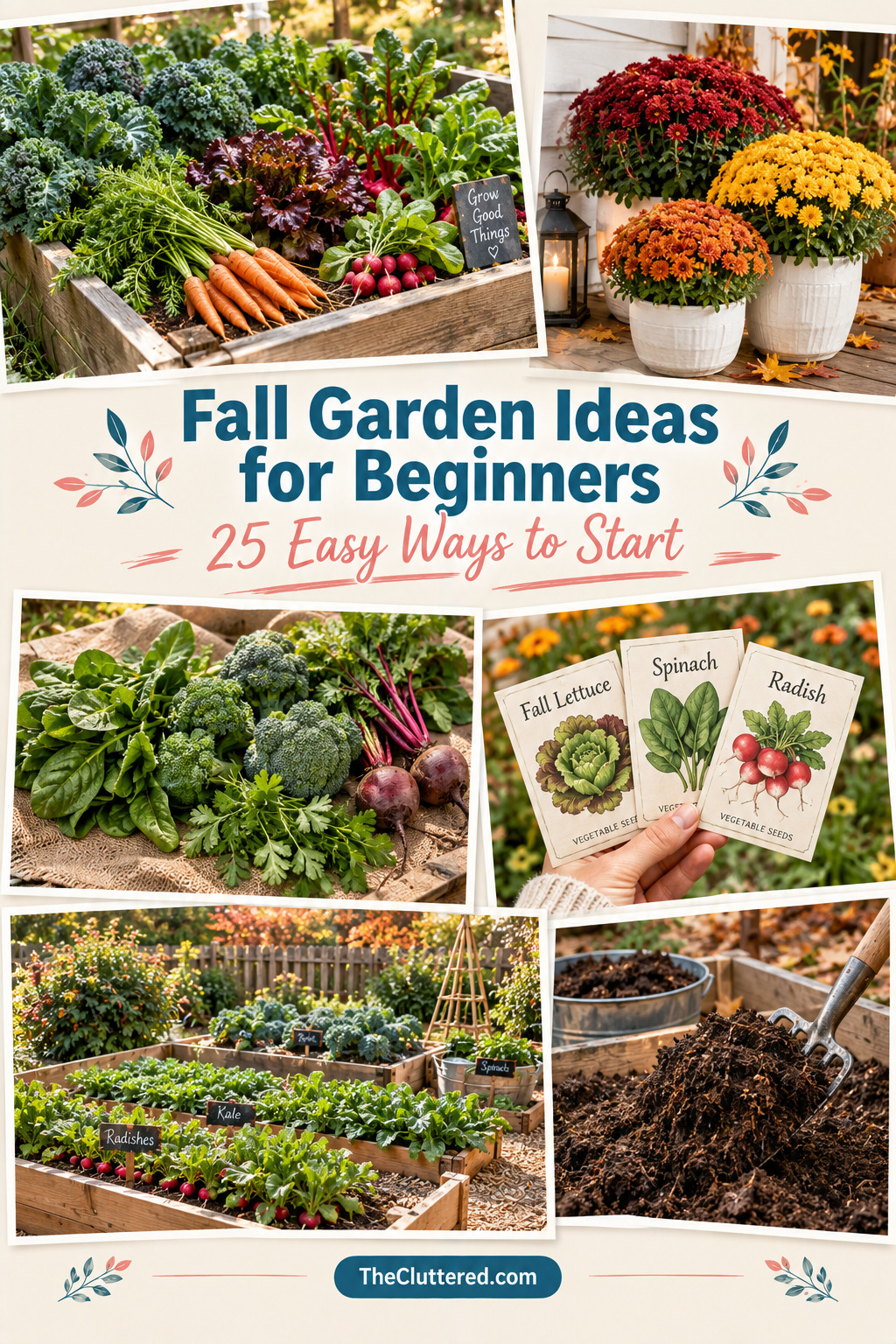


Planning a fall garden might feel intimidating if you’re just starting out, but here’s the truth: autumn is actually one of the easiest seasons to grow. The soil is still warm from summer, pests are less active, and cool-season crops practically thrive with minimal effort. Whether you have a sprawling backyard or just a small balcony, you can create a productive fall garden that extends your harvest well into the cooler months.
This guide walks you through 25 beginner-friendly fall garden ideas—from choosing the right vegetables and flowers to preparing your soil and maximizing small spaces. You’ll discover what to plant, when to plant it, and simple strategies that set you up for success. No fancy equipment or expert knowledge required. Just practical, approachable ideas that work.
Quick Start: Choose Your Fall Garden Path
Not sure where to begin? Pick the category that fits your situation:
Best for Absolute Beginners
- Leafy greens (lettuce, spinach, kale) – Ready in 30-50 days
- Radishes – Harvest in just 25-30 days
- Herbs (parsley, cilantro, chives) – Easy and useful
Best for Small Spaces
- Container gardens with compact vegetables
- Vertical planters for herbs and greens
- Balcony boxes with fall flowers and edibles
Best for Quick Harvest
- Arugula – 21-40 days
- Baby lettuce – 30 days
- Radishes – 25-30 days
- Spinach – 40-50 days
Why Fall Gardening Is Easier Than Spring
Many beginners assume spring is the best time to start gardening, but fall offers unique advantages that make it ideal for learning:
- Warm soil, cool air – The ground retains summer warmth while cooler air temperatures reduce plant stress and water needs
- Fewer pests – Insect populations decline as temperatures drop, meaning less damage to your crops
- Natural moisture – Fall typically brings more rainfall, reducing watering frequency
- Better flavor – Cool temperatures actually improve the taste of many vegetables, making them sweeter and more tender
- Extended harvest – Many cool-season crops continue producing even after light frosts
Essential Fall Vegetables for Beginners
These crops are forgiving, fast-growing, and perfect for first-time fall gardeners:
Leafy Greens (The Easiest Start)
Lettuce, spinach, kale, and Swiss chard are the most beginner-friendly fall crops. They grow quickly, tolerate light frosts, and you can harvest leaves continuously. Plant seeds directly in the garden 6-8 weeks before your first expected frost. For a continuous harvest, sow new seeds every 2 weeks.
Root Vegetables (Simple & Rewarding)
Carrots, radishes, and beets are satisfying to grow because you can see progress as they develop. Radishes are the fastest—ready in just 3-4 weeks. Carrots and beets take 6-8 weeks but store well. The key is loose, well-drained soil free of rocks and debris.
Brassicas (Nutrient Powerhouses)
Broccoli, cauliflower, and cabbage might sound advanced, but they’re actually quite easy in fall. Start these from transplants 8-10 weeks before your first frost for best results. They appreciate consistent moisture and benefit from a layer of mulch.
Peas & Beans (Cool-Season Legumes)
Sugar snap peas and bush beans thrive in cool weather. Plant them 8-10 weeks before your first frost. They fix nitrogen in the soil, improving it for future plantings. Plus, they’re incredibly productive for the space they occupy.
Fall Flowers That Add Color & Attract Pollinators
Don’t limit your fall garden to vegetables alone. These flowers bloom beautifully in cool weather and support beneficial insects:
- Chrysanthemums (Mums) – Classic fall color in endless varieties
- Pansies – Bloom through frost and even snow in mild climates
- Asters – Purple, pink, or white blooms that attract butterflies
- Snapdragons – Tall spikes of color that last for weeks
- Calendula – Edible orange and yellow flowers with medicinal properties
Container & Small-Space Fall Gardens
You don’t need a yard to grow a fall garden. Containers work beautifully for:
- Leafy greens – Use shallow containers 6-8 inches deep
- Herbs – Parsley, cilantro, and chives thrive in pots
- Radishes & carrots – Choose round or short varieties for containers
- Fall flowers – Mums, pansies, and ornamental kale
For balconies and patios, use containers at least 12 inches in diameter. Ensure good drainage and water regularly—containers dry out faster than in-ground gardens. Group plants with similar water needs together.
Raised Bed Fall Gardens
Raised beds are ideal for fall gardening because they drain well and warm up quickly. Key advantages:
- Better soil control—you create the perfect growing mix
- Easier access for planting and harvesting
- Extended growing season compared to ground-level beds
- Less weeding and maintenance
Fill raised beds with a mix of compost, garden soil, and organic matter. Plant intensively using square-foot gardening methods to maximize yield in small spaces.
Soil Preparation for Fall Planting
Good soil is the foundation of any successful garden. For fall:
- Clear summer crops – Remove spent plants and debris
- Add compost – Spread 2-3 inches of compost over beds
- Test soil pH – Most vegetables prefer 6.0-7.0
- Loosen compacted soil – Use a garden fork to aerate
- Apply mulch – Straw or shredded leaves retain moisture and regulate temperature
If you’re planting immediately after summer crops, cool the soil by shading it for a few days and watering thoroughly before sowing seeds.
Timing Your Fall Garden
Success depends on knowing your first frost date and working backward:
| Time Before Frost | What to Plant |
|---|---|
| 10-12 weeks | Broccoli, cabbage, cauliflower, Brussels sprouts |
| 8-10 weeks | Lettuce, spinach, kale, peas, Swiss chard |
| 6-8 weeks | Carrots, beets, radishes, turnips, arugula |
| 4-6 weeks | Mustard greens, mâche, claytonia |
Find your average first frost date using your zip code at your local extension office website, then count backward to determine planting dates.
Protecting Your Fall Garden
Extend your harvest with simple protection methods:
- Row covers – Lightweight fabric that protects from frost while letting in light and water
- Cold frames – Mini greenhouses that extend the season by weeks
- Cloches – Individual plant protectors made from plastic bottles or purchased
- Mulch – Thick layers insulate roots and protect against temperature swings
Common Beginner Mistakes to Avoid
Learn from these common pitfalls:
- Planting too late – Crops need time to mature before hard frost
- Overwatering – Fall soil stays moist longer; check before watering
- Ignoring frost dates – Always know your first frost date
- Skipping succession planting – Sow seeds every 2 weeks for continuous harvest
- Not using mulch – Mulch conserves moisture and protects roots
Fast-Growing Fall Crops (Ready in 60 Days or Less)
If you’re starting late or want quick results, focus on these speedy crops:
- Arugula – 21-40 days
- Radishes – 25-30 days
- Baby lettuce – 30 days
- Spinach – 40-50 days
- Kale – 50-55 days (baby leaves sooner)
- Mustard greens – 40-50 days
- Bush beans – 50-60 days
- Turnips – 40-60 days
Fall Garden Checklist for Beginners
- ✓ Determine your first frost date
- ✓ Choose 3-5 easy crops to start
- ✓ Clear and prepare garden beds
- ✓ Add compost and organic matter
- ✓ Purchase seeds or transplants
- ✓ Plan succession planting schedule
- ✓ Gather row covers or frost protection
- ✓ Set up watering system or schedule
- ✓ Apply mulch after planting
- ✓ Label all plantings clearly
- ✓ Monitor soil moisture regularly
- ✓ Harvest regularly to encourage production
- ✓ Protect from early frost as needed
- ✓ Keep garden journal for next year
- ✓ Enjoy your fresh fall harvest!
Frequently Asked Questions
What is the easiest vegetable to grow in fall?
Leafy greens like lettuce, spinach, and kale are the easiest fall vegetables for beginners. They grow quickly, tolerate cool temperatures, and you can harvest leaves continuously. Radishes are also extremely easy and ready in just 3-4 weeks.
Can I start a fall garden in August?
Yes! August is actually the perfect time to start many fall crops. Plant broccoli, cabbage, and cauliflower in early August. By mid to late August, sow lettuce, spinach, kale, and root vegetables. This gives them time to establish before frost.
How do I know when to plant my fall garden?
Find your average first frost date, then count backward based on each crop’s days to maturity. For example, if your first frost is October 15 and lettuce takes 50 days, plant it around August 25. Add a week or two as a buffer for slower fall growth.
Will my fall garden survive frost?
Many cool-season crops tolerate light frost and even taste better after a chill. Kale, spinach, lettuce, carrots, and Brussels sprouts actually improve with frost. However, hard freezes (below 28°F) will damage most plants. Use row covers or cold frames for protection.
Can I grow a fall garden in containers?
Absolutely! Containers are excellent for fall gardening. Choose pots at least 12 inches in diameter with good drainage. Leafy greens, herbs, radishes, and compact varieties of vegetables all thrive in containers. Water more frequently than in-ground gardens, as containers dry out faster.
Final Thoughts
Fall gardening is one of the most rewarding experiences for beginners. The combination of warm soil, cooler temperatures, and fewer pests creates ideal growing conditions. Start with just a few easy crops, focus on proper timing, and don’t be afraid to experiment. Even if you make mistakes, you’ll learn valuable lessons for next season. The satisfaction of harvesting fresh vegetables and flowers from your own garden in autumn is unmatched. Your fall garden doesn’t need to be perfect—it just needs to be started.
Leafy Greens: Your Easiest Fall Start

Source: Grow Your Yard
Fresh leafy greens like lettuce, kale, and spinach are the perfect entry point for fall gardening. These crops thrive in cool weather and can be harvested continuously, giving you weeks of fresh produce from a single planting.
What makes leafy greens so beginner-friendly is their forgiving nature. They grow quickly (30-50 days), tolerate light frosts, and don’t require perfect conditions. You can succession plant every 2 weeks for a continuous harvest throughout autumn.
Try mixing different varieties in the same bed for visual interest and varied flavors. Plant seeds 6-8 weeks before your first frost date, and watch them flourish as temperatures cool. These greens actually taste sweeter after a light frost!
13 Fastest-Growing Fall Crops for Quick Results

Source: Homestead and Chill
When you’re up against time with winter approaching, these fast-maturing crops deliver results in 60 days or less. Radishes lead the pack at just 25-30 days, while arugula, baby lettuce, and spinach all mature in under 50 days.
These quick growers are perfect for beginners because they provide rapid gratification and leave room for mistakes. If one planting doesn’t work out, you have time to try again. They’re also ideal for succession planting, ensuring continuous harvests.
Maximize your success by choosing varieties labeled “early” or “fast-maturing.” Protect young plants with row covers if an early frost threatens, and harvest regularly to encourage continued production. These crops prove you can have a productive fall garden even when starting late.
What to Plant in August for Fall Success

Source: Gardening Chores
August might feel like peak summer, but it’s actually the critical month for fall garden planning. This is when you plant broccoli, cabbage, cauliflower, and other brassicas that need 10-12 weeks to mature before frost.
The secret to August planting is soil preparation. Cool down hot soil by shading it for a few days and watering thoroughly before sowing seeds. This gives temperature-sensitive seeds the best chance to germinate successfully.
Don’t forget fall flowers like pansies and mums, which can be started in late August. These blooms will carry your garden’s color into autumn and attract beneficial pollinators. August planting sets the foundation for a bountiful fall harvest.
16 Essential Vegetables for Your Fall Garden

Source: The Novice Homestead
This comprehensive list includes everything from leafy greens and root vegetables to brassicas and legumes. Each crop has been chosen for its ability to thrive in cool temperatures and tolerate light frosts.
Beginners should start with 3-5 vegetables from this list rather than attempting all 16 at once. Choose crops that match your climate, available space, and personal taste preferences. Lettuce, radishes, and kale are excellent starting points.
The beauty of fall vegetables is their versatility. Many can be harvested at multiple stages—baby leaves, mature plants, or even after frost for sweeter flavor. This flexibility makes fall gardening more forgiving and rewarding for newcomers.
Arizona Fall Garden Plan for Raised Beds

Source: Sage and Linen
This detailed layout shows how to maximize raised beds with strategic plant placement. Broccoli, cauliflower, cabbage, spinach, peas, and herbs are arranged for optimal growth and easy harvesting throughout the season.
Raised beds offer distinct advantages for fall gardening: better drainage, easier access, warmer soil temperatures, and reduced weed pressure. They’re particularly valuable in hot climates where soil needs to cool down for fall planting.
Adapt this plan to your space by scaling it up or down. The key principles—grouping similar crops, planning for succession planting, and leaving room for access—apply to any size garden. Even small raised beds can produce impressive fall harvests.
15 Best Vegetables to Grow in Autumn

Source: Pinterest
This collection features spinach, radish, carrot, lettuce, turnip, cauliflower, cabbage, broccoli, peas, fenugreek, coriander, onion, garlic, bok choy, and beetroot. Each has been selected for reliable performance in cool autumn conditions.
These vegetables are perfect for home gardens, kitchen gardens, balcony gardens, and beginner gardeners. They don’t require extensive experience or equipment—just basic soil preparation and consistent watering.
Many of these crops can be grown together as companion plants, maximizing space and improving overall garden health. For example, planting carrots with lettuce or radishes with spinach creates efficient use of your garden beds while deterring pests naturally.
25 Best Fall Garden Plants to Start Now

Source: Our Inspired Roots
This extensive list covers vegetables, flowers, and herbs that thrive in fall conditions. From familiar favorites like kale and lettuce to less common options like mâche and claytonia, there’s something for every skill level and taste preference.
The diversity of plants means you can create a fall garden that’s both productive and beautiful. Mix edible crops with ornamental flowers for a garden that feeds you while attracting pollinators and beneficial insects.
Don’t feel overwhelmed by the number of options. Start with 5-7 plants that appeal to you most, then expand your repertoire in future seasons. Fall gardening is a learning process, and each year you’ll discover new favorites.
20 Fall Vegetables to Plant in August

Source: Oh Curiosity
August is prime time for fall vegetable planting, and this guide covers 20 excellent choices for homesteaders and backyard gardeners alike. These crops will thrive through autumn and provide fresh, healthy produce right up to the first hard frost.
Perfect for beginners, kids, and seasoned gardeners, these vegetables include both familiar staples and interesting varieties to try. The key is choosing crops with appropriate days-to-maturity for your climate and first frost date.
Whether you have a large backyard garden or a small homestead plot, these easy ideas will help you maximize your fall harvest. Start planning now, and you’ll enjoy the rewards of your efforts throughout the cooler months.
What to Plant in September: USA Fall Survival Garden

Source: Survival Garden Hub
September is a critical month for fall planting across the USA. This guide helps you discover cool-season crops like spinach, kale, lettuce, radishes, carrots, beets, turnips, broccoli, and cabbage that will thrive as temperatures cool.
Your USDA zone and first frost date are crucial factors in timing. Always check your local planting calendar before sowing to ensure crops have enough time to mature. This cheat sheet takes the guesswork out of September garden planning.
These crops are called “surival garden” plants because they’re reliable, nutritious, and relatively easy to grow. They provide essential vitamins and minerals during the transition from summer to winter, extending your harvest season significantly.
12 Beautiful Fall Flowers That Bloom All Season

Source: Pinterest
From cheerful chrysanthemums and vibrant dahlias to asters, snapdragons, and goldenrod, these autumn blooms are perfect for fall gardens. They provide rich color when many summer flowers are fading, keeping your garden beautiful through the season.
These flowers aren’t just pretty—they serve important functions. Many attract late-season pollinators, provide cut flowers for arrangements, and some even have edible or medicinal properties. They’re low-maintenance and reward you with weeks of blooms.
Plant these flowers alongside your vegetables for a productive and beautiful fall garden. The combination of edibles and ornamentals creates visual interest while supporting beneficial insects that help control pests naturally.
Plants to Grow in Your Garden This Fall

Source: Rooted Leaf Agritech
This highly-saved pin (over 5,000 saves!) showcases the most popular fall plants that gardeners are successfully growing. The visual demonstrates thriving fall crops with recommendations for using carbon-based fertilizer to maximize growth.
The popularity of this pin indicates these are tried-and-true fall garden choices that deliver results. When thousands of gardeners save and implement the same advice, you know it’s worth paying attention to for your own garden.
Use this as inspiration for what’s possible in your fall garden. These plants have proven successful for countless gardeners, making them excellent choices for beginners who want reliable results. The key is proper timing, soil preparation, and consistent care.
Fall Vegetables for Garden Planting – Complete Guide

Source: Little Yellow Wheelbarrow
This comprehensive guide teaches you the best cool-weather vegetables to plant and grow in a fall garden. It covers essential gardening tips and ideas to help you plan, plant, and grow successfully, including the best timing and care instructions.
Whether you’re a beginner or an avid gardener, understanding what grows well in cooler weather is essential for year-round harvests. This resource breaks down everything from soil preparation to harvest techniques specific to fall crops.
The guide emphasizes that fall gardening doesn’t have to end when summer does. With the right knowledge and crop selection, you can continue harvesting fresh vegetables well into autumn and even early winter in many climates.
How to Grow Pumpkins Vertically for Fall Harvest

Source: Instagram via Pinterest
This viral pin (over 4,000 saves!) shows a proven method for growing pumpkins vertically on an arch trellis. The gardener shares their third-year success using 5 plants on each side, sticking with the same Moranga variety for consistent yields.
Vertical pumpkin growing is perfect for small spaces and makes an impressive fall garden feature. The arch creates a natural tunnel that’s both functional and beautiful, producing pumpkins while maximizing limited garden real estate.
The key lesson here is consistency—using the same proven variety year after year rather than mixing types. This beginner-friendly approach ensures reliable results and helps you understand exactly what your chosen variety needs to thrive.
Things to Plant in the Fall – Companion Planting Guide

Source: Plumedra Blueprints
This popular pin focuses on companion planting strategies for fall gardens, particularly featuring garlic as a key crop. Companion planting maximizes space, improves plant health, and can naturally deter pests without chemicals.
Garlic is an excellent fall-planted crop that overwinters and produces bulbs the following summer. When planted with compatible companions, it can help protect other plants from pests while benefiting from their presence.
Use this guide to plan strategic plant combinations in your fall garden. The right pairings create a more resilient, productive garden ecosystem. This approach is especially valuable for beginners working with limited space who want to maximize every square foot.
What to Plant in the Fall – Visual Guide

Source: LS Design Store
This clear visual guide shows exactly what to plant in fall, making it easy for beginners to understand their options at a glance. The layout helps you quickly identify which crops are best suited for autumn growing conditions.
Having a visual reference is especially helpful when planning your first fall garden. You can see the variety of options available—from vegetables to flowers to herbs—and choose what appeals to you most based on your space and preferences.
Save this guide for quick reference throughout the fall planting season. It’s a practical tool to keep handy when you’re at the garden center or planning your next succession planting. Visual guides like this simplify the decision-making process for beginners.
Plant These Speedy Fall Vegetables for Last Harvest

Source: Garden Therapy
These fast-maturing crops give you one last harvest push before winter sets in. Perfect for late plantings or when you want to maximize every remaining week of growing season, these vegetables deliver results in minimal time.
The “last hurrah” approach is ideal for beginners who might have missed earlier planting windows. These speedy crops are forgiving and still provide the satisfaction of homegrown produce even when starting late in the season.
Focus on crops like arugula, radishes, baby lettuce, and spinach that mature in 30-45 days. They’ll reward your efforts with fresh harvests right up to the first hard frost. It’s never too late to plant something productive!
Best Companion Plants for Pumpkins

Source: Smart Garden Pairing
Corn, nasturtium, radish, marigold, sunflower, and oregano all grow well with pumpkins. These companion plants provide shade, attract pollinators, make better use of garden space, help deter pests, and support healthy pumpkin growth.
Companion planting is a natural, chemical-free way to improve your garden’s productivity and resilience. Each plant serves a specific function—marigolds repel pests, corn provides structure, nasturtiums attract beneficial insects, and radishes break up soil.
For beginners growing pumpkins in fall, companion planting maximizes your chances of success. The plants work together as a team, creating a healthier growing environment. This approach is especially valuable in small gardens where every plant needs to earn its space.
Fall Garden Planting Schedule by Zone

Source: Pinterest
This planting schedule shows what to plant in fall based on your specific USDA zone. Zones 5, 7, and 8 each have different timing and crop recommendations, ensuring you plant at the optimal time for your climate.
Knowing your zone is crucial for fall garden success. What works in zone 8 won’t necessarily work in zone 5, and vice versa. This visual guide takes the confusion out of timing, showing you exactly when to plant each crop.
Save this schedule as a reference for planning your fall garden. Refer to it when deciding what to plant and when. Zone-specific information is invaluable for beginners who are still learning how climate affects their gardening success.
10 Herbs to Plant in Fall for Gardens and Containers

Source: Savvy Gardening
These 10 herbs thrive in fall conditions and work beautifully in both garden beds and containers. Parsley, cilantro, chives, and other cool-season herbs actually prefer the cooler temperatures and produce better flavor than in summer heat.
Herbs are perfect for beginners because they’re forgiving, useful, and don’t require much space. You can grow them in small containers on a balcony or windowsill, making fall herb gardening accessible to everyone regardless of space constraints.
Fall-planted herbs often overwinter successfully, giving you a head start on spring harvests. They’re also excellent for succession planting—sow new seeds every few weeks for continuous fresh herbs throughout the season.
10 Things Smart Gardeners Do in November

Source: Gardening.org
Even in November, there are important gardening tasks that set you up for success. Smart gardeners use this time to prepare beds, plant bulbs, protect tender plants, and plan for next season. These activities ensure your garden thrives year after year.
November tasks might include cleaning up spent plants, adding compost to beds, planting spring bulbs, protecting perennials, and starting seeds indoors for early spring. These proactive steps make spring gardening easier and more productive.
For beginners, November is a valuable learning month. Observe what worked and what didn’t in your fall garden, take notes, and plan improvements. Gardening is a continuous learning process, and winter preparation is just as important as spring planting.
What to Plant in Your Fall Garden in September

Source: Piwakawaka Valley
Knowing what to plant in September is essential for fall garden planning in the Northern Hemisphere. This guide is also helpful for Southern Hemisphere gardeners planning their March gardens, making it a versatile resource for year-round gardening.
September is prime time for planting cool-season crops that will mature through autumn. The timing allows vegetables to establish strong root systems while soil is still warm, then flourish as air temperatures cool.
This comprehensive guide helps you plan strategically, ensuring you choose the right crops for your climate and timing. Whether you’re in the Northern or Southern Hemisphere, the principles of fall planting remain the same—work backward from your frost date and choose appropriate crops.
Zone 6 Fall Garden Plan and Planting Guide

Source: Pinterest
This zone 6 specific guide shows exactly what to plant in fall, when to plant it, and which varieties perform best. Zone 6 gardeners have a moderate growing season that allows for diverse fall crops with proper timing.
The plan includes fall seeds to plant, vegetables for zones 7-9, and strategies for maximizing your autumn harvest. Having zone-specific information removes guesswork and increases your chances of success as a beginner.
Use this as a template for planning your own zone 6 fall garden. Adapt it to your specific space, preferences, and local conditions. Zone-based planning is one of the most important tools for beginner gardeners to master.
Homestead Garden Plan – Autumn Garden Ideas

Source: Pinterest
This aesthetic garden plan combines practical homesteading with beautiful cottagecore gardening style. It shows what to plant in September while creating a visually appealing autumn garden that’s both productive and Instagram-worthy.
The plan demonstrates that fall gardens don’t have to be purely functional. You can create a beautiful, productive space that feeds your family while also satisfying your desire for a lovely outdoor environment. Aesthetic gardening makes the work more enjoyable.
Use this as inspiration for planning your own autumn garden layout. Consider both what you want to harvest and how you want your garden to look. The best fall gardens balance productivity with beauty, creating spaces you love to spend time in.
What to Plant in October – Fall Garden Guide

Source: Plant Share
October planting focuses on cool-weather favorites that thrive as temperatures drop. Lettuce, spinach, kale, carrots, onion, broccoli, parsley, cilantro, dill, Swiss chard, beets, and nappa cabbage all perform beautifully when planted in October.
These crops extend your growing season well into autumn and even early winter in mild climates. They’re perfect for beginners because they’re forgiving and actually improve in flavor after experiencing light frosts.
October is also a great time to plant garlic for next summer’s harvest. While other crops mature quickly, garlic overwinters and produces bulbs the following year. This strategic planting ensures continuous harvests throughout the year.
27 Fall Garden Ideas to Refresh Your Outdoor Space

Source: Homestead Gardener
These 27 ideas cover everything from planting and decorating to preparing for next year. Low temperatures in fall make working outdoors more pleasant, while the season’s unique colors and textures give your garden a warm, inviting glow.
Whether you’re focused on vegetables, flowers, or general garden maintenance, these ideas keep your landscape lively and productive. Fall gardening isn’t just about harvest—it’s about creating a beautiful, functional outdoor space you enjoy throughout the season.
Use these ideas as a checklist for your own fall garden transformation. Pick 3-5 that resonate with you and implement them gradually. A refreshed outdoor space enhances your entire autumn experience and sets the stage for next year’s success.
Love these ideas? Follow @theclutteredblog on Pinterest for more cozy, practical gift inspiration!