









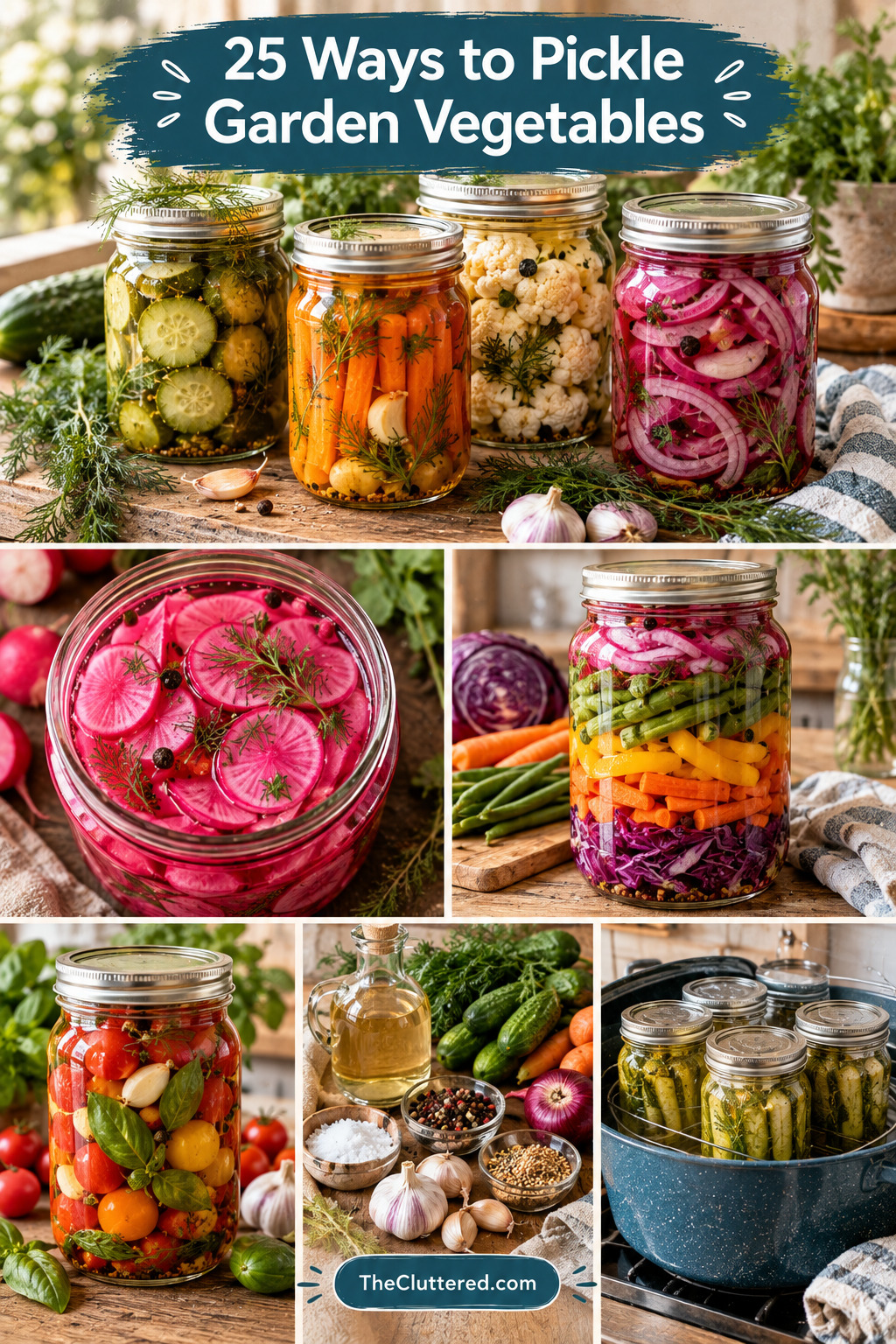


There’s something incredibly satisfying about transforming your garden’s bounty into jars of crisp, tangy pickled vegetables. Whether you’re dealing with an overflow of cucumbers, carrots, or cherry tomatoes, pickling offers a delicious way to preserve your harvest while creating flavorful condiments that elevate everyday meals.
This guide walks you through everything you need to know about pickling garden vegetables—from quick refrigerator pickles that are ready in 24 hours to traditional canning methods for long-term storage. You’ll discover which vegetables work best for pickling, essential brine recipes, and creative flavor combinations that go far beyond basic dill pickles.
🥒 Quick Start: Choose Your Pickling Method
Refrigerator Pickles (Quick Method): Perfect for beginners. No special equipment needed. Ready in 24 hours. Lasts 2-3 months refrigerated.
Water Bath Canning: For long-term shelf storage. Requires canning jars and basic equipment. Lasts 12-18 months.
Fermented Pickles: Traditional method using salt brine. Creates probiotic-rich pickles. Takes 1-4 weeks.
Best Vegetables for Pickling from Your Garden
Not all vegetables pickle equally well. The best candidates have firm textures that hold up in brine and maintain their crunch. Here are the top performers from your garden:
Top-Tier Pickling Vegetables
- Cucumbers: The classic choice. Use pickling varieties like Boston Pickling or Kirby cucumbers for the best crunch.
- Green Beans: Create dilly beans with garlic, dill, and red pepper flakes for a spicy kick.
- Carrots: Slice into coins, sticks, or leave baby carrots whole. They absorb flavors beautifully.
- Cauliflower: Break into florets for colorful, crunchy pickles that work great in mixed vegetable jars.
- Red Onions: Quick-pickled red onions add vibrant color and tang to tacos, salads, and sandwiches.
- Peppers: From mild bell peppers to spicy jalapeños, peppers pickle exceptionally well.
- Cherry Tomatoes: A surprising favorite that bursts with flavor when pickled.
- Radishes: Transform peppery radishes into tangy, colorful pickles in just hours.
- Beets: Sweet and earthy, pickled beets make a stunning addition to salads and grain bowls.
- Zucchini & Summer Squash: Slice thin for quick pickles or create bread-and-butter style chips.
Essential Pickling Brine Recipes
The brine is where the magic happens. These foundational recipes work for nearly any vegetable you want to pickle:
Basic Refrigerator Pickle Brine
- 1 cup white vinegar (5% acidity)
- 1 cup water
- 1 tablespoon pickling salt (or kosher salt)
- 1 tablespoon sugar (optional, balances acidity)
Combine ingredients in a saucepan, bring to a boil, and pour hot over vegetables in jars. Cool, cover, and refrigerate for at least 24 hours before eating.
Sweet Bread & Butter Brine
- 1½ cups white vinegar
- ½ cup water
- ¾ cup sugar
- 1 tablespoon pickling salt
- 1 teaspoon celery seed
- ½ teaspoon turmeric (for color)
Spicy Garlic Dill Brine
- 1½ cups white vinegar
- ½ cup water
- 1 tablespoon pickling salt
- 1 tablespoon sugar
- 3-4 cloves garlic, smashed
- 2-3 sprigs fresh dill
- ½ teaspoon red pepper flakes
- 1 teaspoon mustard seeds
Quick Pickling vs. Traditional Canning
| Method | Time Required | Equipment Needed | Shelf Life | Best For |
|---|---|---|---|---|
| Refrigerator Pickles | 15 min prep + 24 hrs | Jars, basic kitchen tools | 2-3 months (refrigerated) | Quick results, small batches |
| Water Bath Canning | 45-60 min | Canner, jars, lids, rack | 12-18 months (shelf-stable) | Large harvests, long storage |
| Fermentation | 15 min + 1-4 weeks | Crocks or jars, weights | 6+ months (refrigerated) | Probiotic benefits, traditional flavor |
Step-by-Step: Refrigerator Pickling Method
This is the easiest way to start pickling garden vegetables—no canning equipment required:
- Prepare your vegetables: Wash thoroughly and cut into uniform pieces. Smaller pieces pickle faster.
- Pack the jars: Fill clean jars with vegetables, leaving ½ inch headspace. Add aromatics like garlic, dill, mustard seeds, or peppercorns.
- Make the brine: Combine vinegar, water, salt, and sugar in a saucepan. Bring to a rolling boil.
- Pour and seal: Carefully pour hot brine over vegetables, maintaining ½ inch headspace. Remove air bubbles with a chopstick.
- Cool and refrigerate: Let jars cool to room temperature, then seal with lids and refrigerate.
- Wait: For best flavor, wait at least 24 hours before eating. Pickles improve over 3-7 days.
Flavor Combinations to Try
Once you master the basic brine, experiment with these flavor profiles:
Asian-Inspired Pickles
- Rice vinegar instead of white vinegar
- Fresh ginger slices
- Sesame seeds
- Soy sauce (reduce salt accordingly)
- Red pepper flakes or sliced fresh chilies
Mediterranean Giardiniera
- Mixed vegetables (cauliflower, carrots, celery, peppers)
- Oregano and basil
- Garlic cloves
- Red pepper flakes for heat
- Olive oil drizzle on top before sealing
Bread and Butter Style
- Extra sugar for sweetness
- Celery seed
- Turmeric for golden color
- Mustard seeds
- Thinly sliced onions
Common Pickling Mistakes to Avoid
Even experienced home preservers make these errors. Here’s how to avoid them:
- Using table salt: Table salt contains anti-caking agents that can cloud brine. Always use pickling salt, kosher salt, or sea salt without additives.
- Overpacking jars: Vegetables need room for brine circulation. Pack firmly but don’t crush.
- Skipping the wait: Pickles need time for flavors to develop. Resist eating them too soon!
- Wrong vinegar acidity: Always use vinegar with 5% acidity for safe pickling. Don’t dilute with too much water.
- Using old or waxy vegetables: Fresh, firm produce creates the best pickles. Avoid vegetables that have been stored for weeks.
- Not sterilizing jars for canning: For shelf-stable pickles, jars must be properly sterilized and processed.
✓ Pickling Success Checklist
- Fresh, firm vegetables at peak quality
- Clean jars with no chips or cracks
- Vinegar with 5% acidity
- Pickling salt or kosher salt (no additives)
- Fresh spices and aromatics
- Proper headspace (½ inch for refrigerator pickles)
- Hot brine poured over vegetables
- Air bubbles removed from jars
- Jars cooled before refrigerating
- Labels with date and contents
- At least 24 hours waiting time before eating
- Proper storage (refrigerator or cool, dark pantry)
- Regular checking for spoilage signs
- Clean utensils when removing pickles from jars
- Consumption within recommended timeframes
How Long Do Pickled Vegetables Last?
Storage time depends on your preservation method:
- Refrigerator pickles: 2-3 months when kept at 40°F or below. Quality gradually declines after this point.
- Properly canned pickles: 12-18 months in a cool, dark pantry. After opening, refrigerate and use within 2 months.
- Fermented pickles: 6+ months refrigerated. The probiotic culture continues to preserve them.
Always inspect pickles before eating. Discard if you notice mold, off-odors, slimy texture, or if the lid has lost its seal.
Creative Ways to Use Pickled Garden Vegetables
Don’t limit your pickles to sandwich toppings! Here are delicious ways to enjoy them:
- Grain bowls: Add tang and crunch to Buddha bowls, rice bowls, or quinoa salads.
- Tacos and wraps: Pickled onions, jalapeños, and carrots brighten up any taco.
- Charcuterie boards: Include colorful pickled vegetables alongside cheeses and cured meats.
- Salads: Chop pickles into potato salad, egg salad, or green salads.
- Sandwiches and burgers: The classic use—add crunch and acidity to balance rich flavors.
- Cocktail garnishes: Pickled green beans (dilly beans) make excellent Bloody Mary stirrers.
- Roasted vegetable finish: Top roasted veggies with a spoonful of pickles for brightness.
- Soups and stews: Stir in chopped pickles at the end for a tangy twist.
FAQ: Pickling Garden Vegetables
Can I pickle vegetables without canning?
Absolutely! Refrigerator pickles are the easiest method and require no special equipment. Simply pour hot brine over vegetables in jars, cool, and refrigerate. They’ll be ready in 24 hours and last 2-3 months.
What’s the difference between pickling and fermenting?
Pickling uses vinegar to create an acidic environment that preserves vegetables. Fermenting uses salt brine to encourage beneficial bacteria growth, which naturally preserves the vegetables and creates probiotics. Both methods create tangy, preserved vegetables but through different processes.
Why are my pickles soft instead of crunchy?
Several factors affect crispness: using overripe vegetables, insufficient acidity, high heat during processing, or enzymes in the vegetables. For crunchier pickles, use fresh produce, add tannin-rich leaves (grape, oak), or use pickling crisp (calcium chloride).
Can I reduce the salt in pickling recipes?
For refrigerator pickles, you can reduce salt slightly without safety issues, though flavor and texture may suffer. For canned pickles, don’t reduce salt as it’s crucial for safety and preservation. Never eliminate salt entirely.
Do I need special jars for pickling?
For refrigerator pickles, any clean glass jar with a tight-fitting lid works. For water bath canning, use proper canning jars (Ball, Kerr, etc.) with new lids to ensure a safe seal. Don’t reuse commercial food jars for canning.
Start Pickling Your Garden Harvest Today
Pickling garden vegetables is one of the most rewarding ways to preserve your harvest. Whether you choose quick refrigerator pickles for immediate enjoyment or traditional canning for long-term storage, you’ll create flavorful, crunchy vegetables that brighten meals throughout the year.
Start with simple recipes and basic vegetables like cucumbers, carrots, or green beans. As you gain confidence, experiment with mixed vegetable jars, international flavor profiles, and fermentation. Your future self will thank you when you’re enjoying the taste of summer in the middle of winter.
The beauty of pickling lies in its versatility and forgiving nature. Once you understand the basic brine ratio and safety principles, you can pickle nearly any firm vegetable from your garden. So grab those jars, fire up the stove, and transform your garden abundance into pantry treasures.
Crunchy Garden Pickle Medley

Source: NorthEast Nosh Recipes
This vibrant medley showcases the beauty of pickling multiple garden vegetables together. Jars filled with cucumbers, carrots, bell peppers, and onions create a rainbow of colors that’s as appealing to the eye as it is to the palate. The combination allows you to use up various garden produce in one batch.
Mixed vegetable pickles are incredibly versatile and perfect for beginners because you can adjust ratios based on what’s abundant in your garden. The different vegetables absorb the brine at slightly different rates, creating complex flavor layers in each jar. This approach maximizes your preservation efforts while creating visually stunning results.
Customize your medley by adding cauliflower florets, green beans, or cherry tomatoes. Experiment with herb combinations—try dill and garlic for classic flavors, or add red pepper flakes and mustard seeds for heat. These mixed pickles work beautifully on charcuterie boards, as sandwich toppings, or as a crunchy side dish.
Complete Guide to Quick Pickles

Source: Crowded Kitchen
This comprehensive guide demonstrates the fundamental technique for quick pickling any vegetable. The visual shows fresh vegetables alongside essential ingredients like vinegar, salt, spices, and clean jars—everything you need to start pickling immediately.
Quick pickling is the most accessible preservation method for home gardeners because it requires no special equipment or advanced techniques. The basic formula works universally: equal parts vinegar and water, salt, and your choice of aromatics. This flexibility makes it perfect for preserving unexpected garden surpluses.
Use this method for vegetables that won’t be canned, like zucchini, summer squash, or delicate herbs. The quick process preserves fresh flavors and crisp textures while adding tangy complexity. Keep the basic brine ratio in mind, then experiment with different spice combinations to create signature flavors.
Beginner’s Guide to Canning Pickles

Source: Grit
Water bath canning transforms your pickled vegetables into shelf-stable pantry staples that last over a year. This traditional method requires proper jars, lids, and a large pot, but rewards you with convenient storage and the satisfaction of true self-sufficiency.
Canning is ideal when you have large harvests to preserve or want to create gifts. The process involves filling sterilized jars with vegetables and hot brine, then processing in boiling water to create an airtight seal. While it requires more time and equipment than refrigerator pickles, the results justify the effort.
Start with simple recipes like dill pickles or bread-and-butter pickles before attempting complex combinations. Always follow tested recipes for safe acidity levels. The investment in basic canning equipment pays off through years of preserved harvests and reduced food waste.
Quick Pickled Radishes

Source: Pinterest
Radishes transform dramatically when pickled, turning from peppery white-and-red roots into stunning hot-pink slices with mellowed flavor and satisfying crunch. They’re one of the fastest vegetables to pickle, often ready in just a few hours.
These vibrant pickles are perfect for adding color and tang to tacos, grain bowls, and salads. The quick process means you can pickle radishes the same day you harvest them, making them ideal for last-minute meal enhancements. Their bright color makes any dish more visually appealing.
Slice radishes paper-thin for quick pickling, or leave them whole for a more dramatic presentation. Add sliced jalapeños for heat, or keep them simple with just vinegar, salt, and a touch of sugar. Use the brine for multiple batches to maximize flavor development.
Pickled Cherry Tomatoes

Source: Taste of Artisan
Cherry tomatoes create one of the most surprising and delicious pickles. The sweet tomatoes absorb the tangy brine while maintaining their shape, creating little flavor bombs that burst in your mouth. They’re perfect for using up abundant tomato harvests.
Add fresh basil, garlic cloves, and peppercorns for Mediterranean-inspired flavors, or experiment with dill and mustard seeds for a different profile. These pickled tomatoes elevate salads, antipasto platters, and pasta dishes. They also make impressive gifts.
Use firm, ripe cherry or grape tomatoes for best results. Pierce each tomato with a toothpick before pickling to help the brine penetrate. Wait at least 3-5 days for flavors to fully develop. Store refrigerated and use within 2-3 months.
Vietnamese Vegetable Pickle Mix

Source: Etsy
Vietnamese pickled vegetables, known as Đồ Chua, feature carrots and daikon radish in a sweet-and-sour brine. These pickles are essential toppings for bánh mì sandwiches but work equally well in rice bowls, salads, and as a palate-cleansing side dish.
The brine typically uses rice vinegar and sugar for a milder, sweeter profile than Western pickles. Julienned vegetables create maximum surface area for quick flavor absorption. These pickles are ready in just a few hours, making them perfect for same-day meal prep.
Add sliced jalapeños for heat, or keep them mild for family-friendly meals. The pickles improve over several days and last 2-3 weeks refrigerated. Use them to brighten rich dishes, add crunch to sandwiches, or enjoy as a healthy snack.
How to Make Quick Pickled Veggies

Source: Tasty Yummies
This visual guide shows four different pickled vegetable preparations side by side, demonstrating the versatility of the quick-pickling method. Each jar contains different vegetables and spice combinations, proving that one basic technique creates endless possibilities.
The tutorial approach helps beginners understand that pickling isn’t complicated—it’s simply vegetables plus brine plus time. Seeing multiple examples builds confidence to experiment with whatever vegetables are abundant in your garden or available at the market.
Follow the basic ratio (1:1 vinegar to water, 1 tablespoon salt per cup of liquid), then customize with your favorite spices. Try different vegetables in the same batch or create themed jars like “Italian” with oregano and red pepper, or “Asian” with ginger and sesame seeds.
Italian Giardiniera Pickles

Source: A Spicy Perspective
Giardiniera is Italy’s answer to mixed vegetable pickles, featuring cauliflower, carrots, celery, and peppers in a tangy, often spicy brine. This versatile condiment is a Chicago-style hot dog essential but works beautifully on sandwiches, in salads, or as part of an antipasto spread.
Make it mild or hot depending on your pepper choice. The vegetables are typically cut into bite-sized pieces and packed tightly in jars with oregano, garlic, and red pepper flakes. Some versions include a final drizzle of olive oil for richness.
Giardiniera improves with age, developing deeper flavors over 1-2 weeks. It keeps for months refrigerated and makes excellent gifts. Use it to add crunch and acidity to Italian beef sandwiches, pasta salads, or grilled meats.
Rainbow Refrigerator Pickles

Source: Pinterest
These stunning rainbow pickles layer different colored vegetables to create a visually striking jar that’s almost too pretty to eat. The combination typically includes purple cabbage, orange carrots, yellow peppers, green cucumbers, and red onions.
Beyond their beauty, these pickles maximize garden diversity by using small amounts of many different vegetables. They’re perfect for meal prep because they’re ready in 24 hours and add instant nutrition and flavor to lunches throughout the week.
Layer vegetables by color for maximum visual impact, or mix them randomly for a confetti effect. The different vegetables create varied textures and flavors in each bite. These pickles make impressive gifts and are sure to be the star of any charcuterie board.
Pickled Cauliflower and Carrots

Source: The Frozen Biscuit
Cauliflower and carrots are a classic pickling pair that creates beautiful contrast in both color and texture. The white cauliflower florets and orange carrot sticks absorb the brine beautifully while maintaining their satisfying crunch.
This combination is particularly popular because both vegetables are readily available, affordable, and hold up well in brine. Add dill, garlic, and mustard seeds for traditional flavors, or experiment with turmeric for golden color and anti-inflammatory benefits.
Cut vegetables into uniform sizes for even pickling. These pickles are excellent for entertaining because they appeal to various palates and dietary restrictions. Serve them alongside cheeses, cured meats, or as a healthy snack option.
6 Refrigerator Pickle Recipes

Source: Pinterest
This collection demonstrates the incredible variety possible with refrigerator pickling. From spicy carrots to tangy cabbage slaw to lemon herb cauliflower, each recipe uses simple ingredients but creates distinct flavor profiles.
Making pickles at home is significantly cheaper than buying specialty pickled vegetables from the store. A few dollars worth of fresh vegetables and pantry staples creates multiple jars of delicious pickles that last for months.
Experiment with one recipe at a time or make several varieties in one session. Keep notes on your favorites to refine your technique. These budget-friendly recipes prove that gourmet flavors don’t require gourmet prices.
Zesty Quick Pickled Radishes

Source: Pinterest
These zesty pickled radishes deliver maximum flavor in minimum time. The bright pink color and crisp texture make them irresistible, while the tangy brine cuts through rich foods beautifully.
Perfect for topping tacos, grain bowls, and sandwiches, these pickles add professional-level flavor to home cooking. The quick method means you can pickle radishes in the morning and enjoy them at dinner.
Combine radishes with other quick-pickling vegetables like cucumbers, carrots, or red onions for a mixed pickle medley. Adjust the spice level with red pepper flakes or fresh chilies. These versatile pickles keep for 2-3 weeks refrigerated.
Refrigerator Pickling Basics

Source: Camila Made
Refrigerator pickling is the most accessible preservation method for beginners. This non-fermented approach uses vinegar brine and refrigeration to preserve vegetables without special equipment or complex techniques.
The method is fast, safe, and forgiving. Simply pack vegetables in jars, pour hot brine over them, cool, and refrigerate. Within 24 hours, you’ll have delicious pickles. The process is nearly impossible to mess up, making it perfect for building confidence.
Use this method for vegetables you’ll consume within 2-3 months. It’s ideal for testing flavor combinations before committing to large-batch canning. Keep several jars in your refrigerator for instant flavor enhancement to any meal.
Pickled Tomatoes, Onions & Cucumbers

Source: Pinterest
This trio combines three garden favorites into one delicious pickle. Cherry tomatoes provide sweetness, red onions add sharp bite and vibrant color, and cucumbers contribute classic crunch. Together, they create a well-rounded condiment.
The combination is particularly good for using up partial harvests when you don’t have enough of one vegetable for a full batch. Mix and match based on what’s ready in your garden. The different vegetables complement each other beautifully.
Add fresh dill, oregano, or basil for herbal notes. These pickles are exceptional on burgers, in Greek salads, or as part of a mezze platter. The brine makes an excellent salad dressing when mixed with olive oil.
Asian Pickled Carrots

Source: Nurtured Homes
These Asian-inspired pickled carrots feature rice vinegar, fresh ginger, and a touch of sugar for a sweet-and-sour profile that complements so many dishes. They’re essential toppings for Vietnamese bánh mì and ramen bowls.
Julienned or thinly sliced carrots pickle quickly and absorb flavors rapidly. The ginger adds warmth and digestive benefits, while the mild acidity brightens rich, savory dishes. These pickles are equally at home on tacos, salads, or grain bowls.
Make a big batch at the start of the week for easy meal enhancement. The carrots stay crisp for 2-3 weeks refrigerated. Add sliced jalapeños for heat or keep them mild for family-friendly meals.
Easy Pickling for Garden Harvest

Source: An Off Grid Life
When your garden produces more vegetables than you can eat fresh, pickling becomes an essential preservation skill. This beginner-friendly approach helps you stretch your harvest and enjoy garden-fresh flavors throughout the year.
Start with vegetables you already love and work through your harvest systematically. Pickling allows you to preserve vegetables that might otherwise go to waste, maximizing your gardening investment and reducing food waste.
Keep a pickling station set up during peak harvest season for quick processing. The more you practice, the more intuitive the process becomes. Soon you’ll be creating custom blends and flavor combinations with confidence.
Easy Fermented Pickled Veggies

Source: Allrecipes
Fermented pickles use salt brine instead of vinegar, relying on beneficial bacteria to preserve vegetables and create tangy flavors. This ancient method produces probiotic-rich foods that support gut health while delivering complex, nuanced flavors.
The fermentation process takes longer than vinegar pickling—typically 1-4 weeks—but rewards you with deeper flavors and health benefits. The vegetables develop a characteristic tang and slight effervescence that’s distinctly different from vinegar pickles.
Start with simple recipes like sauerkraut or fermented green beans before attempting complex combinations. Keep vegetables submerged in brine using fermentation weights or a small jar. Store finished ferments in the refrigerator to slow the process.
Colorful Pickled Vegetables in Jars

Source: Zaroraterishta
These beautifully arranged jars showcase the natural colors of pickled vegetables—purple cabbage, orange carrots, green beans, yellow peppers, and red onions. The visual appeal makes them perfect for gifts or entertaining.
Beyond aesthetics, the variety ensures you’re getting diverse nutrients and flavors. Each vegetable contributes unique vitamins, minerals, and textures. The colorful presentation encourages you to eat more vegetables throughout the week.
Layer vegetables by color for maximum impact, or mix them randomly for a confetti effect. These pickles stay crisp and flavorful for 2-3 months refrigerated. They’re ideal for meal prep, adding instant nutrition and flavor to lunches.
How to Can Pickled Vegetables

Source: Homespun Seasonal Living
Water bath canning transforms your pickled vegetables into shelf-stable pantry staples. This method requires proper equipment and technique but rewards you with convenient storage and the satisfaction of true self-sufficiency.
The process involves filling sterilized jars with vegetables and hot brine, then processing in boiling water to create an airtight seal. Follow tested recipes to ensure safe acidity levels and processing times.
Invest in quality canning jars, a large pot or water bath canner, and a jar lifter. The initial investment pays off through years of preserved harvests. Properly canned pickles last 12-18 months in a cool, dark pantry.
Easy Refrigerator Quick Pickle Formula

Source: Pinterest
This simple formula works for nearly any firm vegetable: 1 cup vinegar, 1 cup water, 1 tablespoon salt, and 1 tablespoon sugar. Adjust spices and aromatics to create endless flavor variations while maintaining the safe, reliable base.
Once you memorize this ratio, you can pickle whatever vegetables are abundant without consulting recipes. This flexibility is invaluable during peak harvest season when you need to preserve produce quickly.
Use the formula for cucumbers, carrots, radishes, green beans, cauliflower, onions, and more. Keep the basic brine on hand and experiment with different spice combinations. This foundational skill opens the door to confident, creative pickling.
Farmhouse-Style Kitchen Canning

Source: Pinterest
This charming farmhouse scene captures the essence of traditional food preservation—jars of freshly canned tomatoes and pickles lining the counter, a large stockpot ready for processing, and handwritten labels marking the year’s harvest.
The image embodies the satisfaction of self-sufficiency and the timeless practice of preserving summer’s abundance for winter enjoyment. It’s a reminder that pickling connects us to generations of home preservers who kept their families fed year-round.
Let this aesthetic inspire your own pickling projects. You don’t need a farmhouse kitchen to preserve your harvest—just clean jars, fresh vegetables, and the willingness to try. The results will be equally rewarding.
10 Pickling Mistakes to Avoid

Source: Pinterest
Even experienced picklers make mistakes. This guide highlights the 10 most common errors—from using table salt instead of pickling salt to overpacking jars and skipping the resting time—so you can avoid them and achieve perfect results.
Understanding what can go wrong helps you troubleshoot problems and refine your technique. Soft pickles, cloudy brine, and off-flavors all have preventable causes. Learning these pitfalls saves time, money, and disappointment.
Keep this guide handy during pickling season. Reference it before each batch to ensure you’re following best practices. As you gain experience, these principles become second nature, leading to consistently excellent pickles.
Homemade Pickled Vegetables Recipe

Source: Pinterest
This recipe combines crisp cucumbers, carrots, cauliflower, and peppers into one delicious jar of homemade pickles. The simple ingredients and straightforward method make it accessible for beginners while delivering professional-level flavor.
The combination provides variety in both texture and taste, ensuring there’s something for everyone. These pickles work as snacks, side dishes, or thoughtful gifts for fellow gardeners and food lovers.
Customize the spice blend to match your preferences—add heat with red pepper flakes, warmth with mustard seeds, or freshness with dill and garlic. The basic technique remains the same, allowing endless creative possibilities.
20-Minute Refrigerator Pickled Vegetables

Source: Pinterest
When you need pickles fast, this 20-minute recipe delivers. The quick prep time makes it perfect for busy weeks when you still want homemade quality. Simply combine fresh vegetables with a simple brine and let the refrigerator do the work.
This method is ideal for beginners because it’s nearly impossible to mess up. There’s no canning, no fermentation monitoring, just vegetables, brine, and patience. The results are consistently crunchy and flavorful.
Keep the ingredients on hand for spontaneous pickling sessions. These quick pickles are perfect for using up leftover vegetables, adding crunch to meal prep, or creating last-minute condiments for gatherings.
Quick Pickled Garden Vegetables

Source: Dancing Bear Lodge
These quick-pickled garden vegetables celebrate the bounty of summer harvest. Fresh from the garden, vegetables like cucumbers, green beans, carrots, and peppers transform into tangy, crunchy pickles that capture the season’s flavors.
The quick method means you can process your harvest the same day you pick it, preserving peak freshness and nutrition. There’s no waiting for fermentation or complex canning procedures—just simple, reliable results.
Use this technique throughout the growing season as different vegetables reach maturity. The versatility allows you to preserve whatever is abundant, reducing waste and extending your garden’s productivity. Enjoy the taste of summer all year long.
Love these ideas? Follow @theclutteredblog on Pinterest for more cozy, practical gift inspiration!