








Start With the Kind of Evening You Want
Before comparing venues, decide what the masquerade should feel like. A formal ball needs different space priorities from a small dinner, a Halloween gathering, or a romantic adult celebration.
| Venue direction | Works well for | Design priority |
|---|---|---|
| Ballroom or banquet hall | Large formal gatherings | Dance floor, lighting, tables |
| Mansion or historic-style space | Gothic, vintage, or immersive parties | Architecture, entrances, atmosphere |
| Hotel or gala-style room | Polished adult celebrations | Arrival, lighting, guest flow |
| Garden, courtyard, or terrace | Romantic or outdoor evenings | Lighting, weather plan, defined zones |
| Private home or backyard | Smaller or budget-conscious parties | Layout, focal areas, atmosphere |
1. Ballroom Masquerade Party Ideas
A ballroom is an obvious fit when you want the event to feel like a traditional masked ball. High ceilings, an open floor, formal seating, and architectural details can provide the visual foundation before you add masks, drapery, table styling, or lighting.
When touring a ballroom, look beyond the room itself. Check where guests enter, where food service can happen, where a DJ or band could sit, and whether there is enough separation between dining, dancing, and photography. A beautiful room can become awkward if every activity competes for the same space.
2. Mansion and Historic-Style Venues
Mansion-style spaces are useful when the goal is a more immersive gothic, vintage, or old-world masquerade. Stairs, corridors, fireplaces, ornate rooms, and textured walls can become part of the decoration instead of something you need to cover.
This approach also works for a Halloween masquerade because the architecture can supply atmosphere without relying on novelty props. Use the venue’s strongest features as visual anchors, then repeat a restrained palette of black, deep red, antique gold, or warm neutrals.
3. Hotel and Gala-Style Venues
A hotel ballroom or gala-style event room can create a polished setting for an adult masquerade. These spaces often lend themselves to a clear arrival sequence, seated dining, formal portraits, and a central celebration area.
For this type of venue, concentrate your creative energy on the first impression and the main focal point. A dramatic entrance, coordinated lighting, a defined dance floor, and elegant table details can create a cohesive atmosphere without decorating every surface.
4. Outdoor Masquerade Party Venues
Courtyards, gardens, terraces, and private outdoor spaces can give a masquerade a romantic evening quality. The key is to create the feeling of a room outdoors by defining where guests will dine, gather, dance, and take photos.
Lighting becomes especially important. Use a deliberate lighting plan and make sure there is a practical weather alternative. An outdoor venue should be evaluated not only for how it looks in daylight, but also for how guests will move through it during the actual party.
5. Small and Intimate Masquerade Venues
A small masquerade does not need a grand ballroom. An intimate restaurant room, private dining space, loft, studio, or well-planned home can feel more intentional because the guest experience is concentrated.
In a smaller venue, choose one or two strong visual moments instead of trying to decorate everything. A styled entrance plus a memorable dining or photo area can give the party a complete visual identity while leaving enough room for comfortable movement.
6. Budget-Friendly Masquerade Venue Ideas
When the venue budget is limited, look for spaces that already have character. Community halls, private rooms, small banquet spaces, school or organization rooms, and backyards can become convincing masquerade settings when the layout is planned well.
Spend first on the elements guests experience most directly: lighting, the entrance, tables, and one photo-worthy focal area. Repeating a simple black-and-gold, red-and-black, or maroon palette will usually create more cohesion than buying many unrelated decorations.
7. Choose the Venue Around the Guest Experience
The most useful venue questions are practical. How will guests arrive? Where will they put coats or bags? Where will masks be distributed? Can people move easily between dinner and dancing? Is there a natural place for photos? Where will vendors load in and set up?
- Check the guest capacity against the actual floor plan, not just the advertised maximum.
- Identify the main entrance and the first visual moment guests will see.
- Map dining, dancing, food service, and photography as separate zones when possible.
- Look for existing architectural features that can replace extra decoration.
- Ask what lighting, furniture, and decor the venue already provides.
- Confirm the rules for candles, hanging decor, adhesives, outside vendors, and amplified music.
- For outdoor venues, identify a realistic weather backup.
- Walk the venue at the time of day your party will actually take place.
- Leave enough circulation space around tables, bars, entrances, and the dance floor.
- Choose a venue that supports the atmosphere you want before adding expensive decor.
8. Build the Masquerade Look Around Three Zones
You can make almost any suitable venue feel more intentional by giving three areas a clear job: the entrance, the main celebration zone, and the photo or detail zone.
The entrance
Use the entrance to introduce the theme with a mask display, dramatic lighting, a red-carpet moment, or a small welcome table. It should feel like a transition into a different atmosphere.
The main celebration zone
This is where the venue’s largest visual investment should go. Depending on the party, that might be the dance floor, dining tables, stage, or lounge area. Keep the layout functional first and decorative second.
The photo or detail zone
A backdrop, mask wall, statement table, or styled corner gives guests a place to interact with the theme. Choose one strong idea and connect it visually to the rest of the venue.
9. Color Directions That Change the Venue Mood
- Black and gold: formal, polished, and easy to adapt across ballrooms and hotels.
- Red and black: dramatic and especially useful for gothic or evening themes.
- Maroon and antique gold: deeper and more vintage without feeling overly bright.
- Purple and silver: softer and more theatrical for a ballroom setting.
- Black, cream, and metallic accents: restrained when you want the venue architecture to remain visible.
Choose one dominant palette before you start buying decor. A consistent color story can make a simple venue look more considered because the same visual language appears at the entrance, tables, backdrop, and smaller details.
10. How to Decorate a Masquerade Party Venue Without Overdoing It
Start with the venue’s existing visual strengths. If the room has chandeliers, tall windows, velvet curtains, dramatic stairs, or distinctive walls, let those features remain visible. Decoration should frame the architecture rather than compete with it.
Then choose a small set of repeating elements: masks, metallic accents, drapery, candles or soft lights, and one or two signature colors. Repetition creates the impression of a complete theme without requiring a different decoration for every corner.
FAQ
What type of venue works best for a masquerade party?
There is no single required venue. Ballrooms, hotels, mansions, private dining rooms, gardens, courtyards, terraces, and homes can all work when the layout supports the guest experience and the venue has at least one strong visual area.
How can I make a simple venue look like a masquerade ball?
Concentrate on lighting, the entrance, one strong backdrop, coordinated table styling, and a consistent color palette. You do not need to decorate every surface if the main visual moments are connected.
Are outdoor venues suitable for a masquerade party?
Yes, especially gardens, courtyards, terraces, and private outdoor spaces. Define clear guest zones, plan the lighting, and have a realistic weather backup before committing to the layout.
How can I plan a masquerade party venue on a budget?
Choose a space with existing character and spend selectively on the areas guests notice most. Repeating a simple palette and using one strong focal point can create a more cohesive result than spreading the budget across many small decorations.
What should I prioritize when touring a venue?
Look at guest flow, entrance impact, usable floor area, dining and dance zones, lighting, photo opportunities, venue rules, vendor access, and weather considerations if the event is outdoors.
The strongest masquerade party venue ideas start with the space rather than the decorations. Choose a venue that already supports the mood, then build the entrance, main celebration area, and photo moment around its natural strengths. That approach keeps the party practical while still giving guests the dramatic, memorable atmosphere a masquerade calls for.
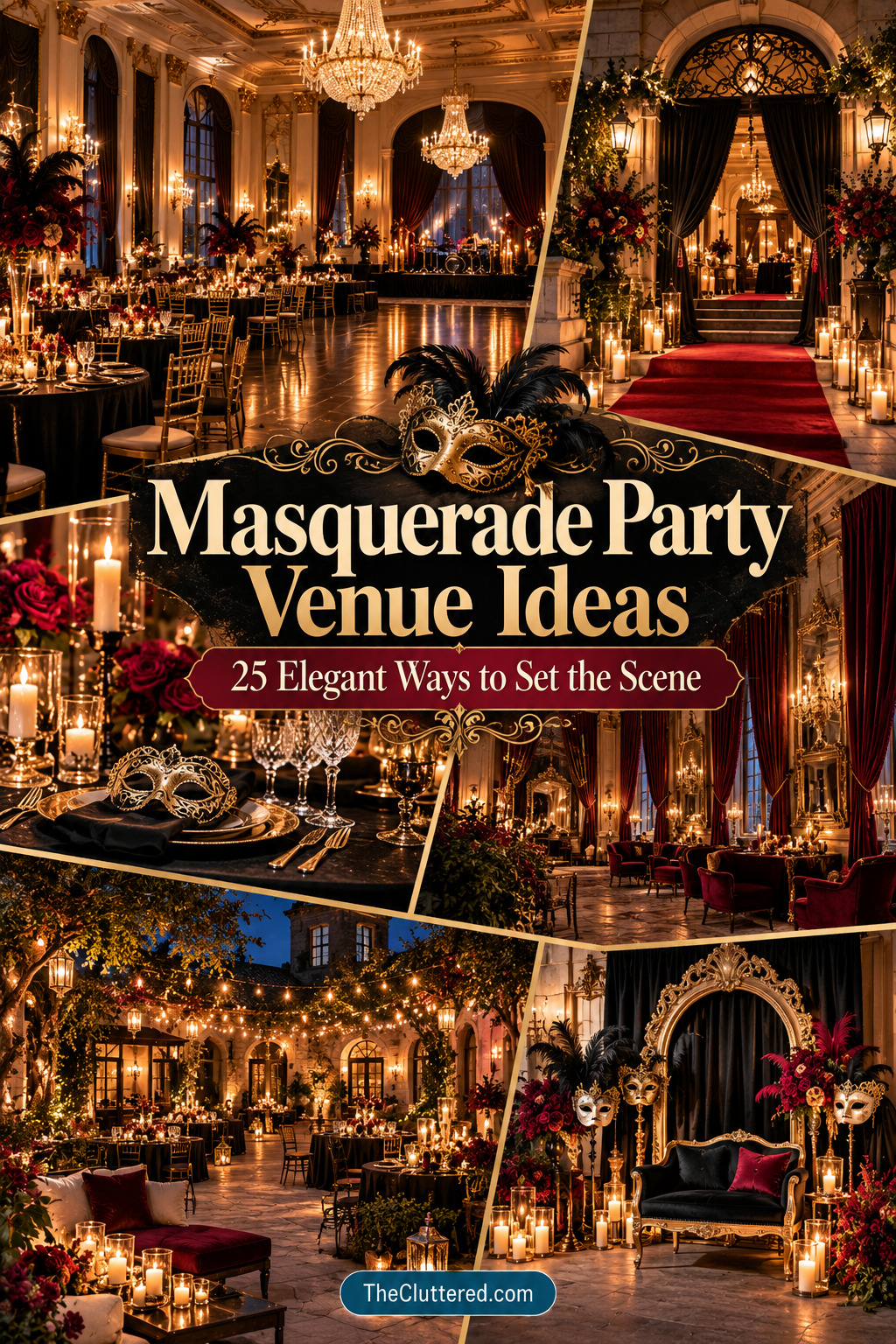
25 Masquerade Party Venue Ideas
Use these visual references to explore different ways a venue can support a masquerade theme—from formal ballrooms and gala entrances to intimate dinners, outdoor settings, photo moments, and dramatic color palettes.
Ballroom With Warm Metallic Lighting

Source: Pinterest
A ballroom works especially well when the room already has height, open floor area, or architectural detail. The reference visual leans into warm metallic lighting and a formal event atmosphere, making the venue itself part of the theme.
The biggest advantage is that the venue already supplies scale and formality, so you can focus your budget on lighting, table details, and the guest experience. It also gives you a natural place for dancing and larger group photos.
To adapt it for a smaller party, choose a ballroom with one visually strong wall or architectural feature rather than paying for the largest room. Let the open area handle dancing while the edges hold dining and lounge zones.
Black-and-Gold Table Centerpiece

Source: Pinterest
A dark table setting with metallic accents can turn a fairly simple event room into a more intentional masquerade environment. The visual emphasizes the table as a destination rather than treating it as an afterthought.
This works when you want the dining area to feel as considered as the dance floor. A restrained centerpiece can leave room for conversation while still giving guests a strong visual cue that the evening is intentionally themed.
For a budget-conscious version, prioritize the tables that guests will actually sit at instead of decorating every surface. Repeating one centerpiece formula across the room will usually look more cohesive than many unrelated pieces.
Venetian and Gatsby-Inspired Ballroom

Source: Pinterest
Venetian and Gatsby references naturally pair with a formal venue because both rely on atmosphere, pattern, metallic accents, and evening drama. Look for rooms where architectural character can carry part of the visual story.
The venue choice does not need to be historically authentic. What matters is finding a room that supports the visual language: dramatic height, elegant finishes, a useful dance area, and enough space for the decorative details you actually want.
If the venue is modern, bring in the Venetian feeling through masks, drapery, black-and-gold details, and lighting rather than trying to recreate historic architecture. The goal is a coherent mood, not a literal period set.
Red-Carpet Dance Floor

Source: Pinterest
A dedicated dance floor gives the party a clear center of activity. This concept combines a formal arrival feeling with a defined dance area, so the venue can support both the visual theme and the way guests move through the event.
Keeping the dance floor visually clear is more important than decorating every available surface. A few strong lighting moments, a defined backdrop, and an intentional perimeter can make the room feel finished while preserving usable space.
If your venue is small, use the dance floor as the visual center and keep the surrounding decor vertical. Wall backdrops, hanging details, and lighting can add drama without taking away valuable floor space.
Glamorous Entrance and Foyer

Source: Pinterest
An impressive entrance can make an ordinary venue feel more theatrical before guests even reach the main room. Think about doors, a foyer, stairs, or a short arrival corridor as part of the masquerade experience.
Guests remember transitions, so the entrance is worth planning separately from the main party room. A strong arrival moment also gives you an opportunity to introduce the palette before the larger decorative elements appear.
Walk the arrival route before the event and decide where guests will first see the theme. Even a short foyer can become memorable with one backdrop, a mask display, or a simple lighting transition.
Black-and-Gold Backdrop

Source: Pinterest
A backdrop gives the room one strong visual anchor. Black, gold, velvet-like textures, masks, and layered lighting can create depth without requiring every wall to be decorated.
Because the backdrop is concentrated in one area, it can be easier to create impact with fewer materials. It is also useful for portraits, group photos, and the moment when guests first enter the main room.
Make the backdrop do double duty as a photo area. Choose a design that looks polished from a distance and still has enough texture or detail for close-up portraits.
Red-and-Gold Masquerade Setting

Source: Pinterest
Red and gold create a warmer version of the classic masquerade palette. This approach is useful when you want the venue to feel romantic and festive rather than strictly black-and-white.
Red and gold can be adapted to many venue types, from banquet rooms to private homes. Keep one color dominant and use the second as an accent so the setting stays elegant rather than becoming visually crowded.
For a more affordable setup, use red in just two or three focal points and keep the rest of the room neutral. This creates contrast without requiring a large collection of matching decorations.
Velvet Cabaret Venue

Source: Pinterest
Velvet curtains and a stage-like focal point can make a venue feel like a cabaret, theater, or private gala. It is particularly useful when the room needs atmosphere more than elaborate structural decoration.
The cabaret direction adds personality without requiring a literal nightclub. Curtains, a stage, lounge seating, and focused lighting can create a theatrical environment while giving the venue distinct zones for conversation and entertainment.
Add lounge seating near the stage or curtain area if the venue allows it. That gives the dramatic focal point a practical purpose and creates a second zone for guests who are not dancing.
Purple-and-Silver Ballroom Entrance

Source: Pinterest
Purple and silver can soften the darker masquerade palette while keeping the room formal. A ballroom entrance becomes the ideal place to introduce these accents before guests enter the main celebration.
This palette is helpful when black-and-gold feels too expected. Use silver sparingly for reflective highlights, then let purple appear in upholstery, lighting, florals, or small decor details.
Use silver as a highlight rather than the main color. A few reflective details against purple and black can catch the light beautifully while keeping the venue sophisticated.
Gatsby-Inspired Night Venue

Source: Pinterest
A Gatsby-inspired venue works when you want the masquerade to feel polished, social, and distinctly evening-oriented. Dark neutrals, metallic highlights, and geometric details can carry the concept without overwhelming the room.
The benefit of a Gatsby-inspired setting is cohesion: geometric shapes, metallic accents, dark neutrals, and formal lighting can repeat across the room without looking random. Choose a few motifs and use them consistently.
Repeat one Art Deco-inspired shape or motif in the entrance, table details, and signage. Consistency will make the venue feel more designed than simply decorated.
Formal Prom-Style Ballroom

Source: Pinterest
A formal dance venue gives you built-in structure: an open floor, guest seating, lighting opportunities, and a clear place for the main event. The masquerade layer can then come from color, masks, and entry details.
A formal dance venue is a practical choice for a larger guest list because the layout already supports movement. Before booking, check where the DJ or band, food service, seating, and photo area can fit without competing for the same floor space.
If you are using a school, community, or banquet venue, focus on the entry and dance floor first. Those two zones usually have the strongest effect on how the entire event feels.
Old Ballroom With Deep Red Accents

Source: Pinterest
An older ballroom with deep red accents can create a naturally dramatic setting. Rich curtains, vintage architectural details, and warm lighting can do much of the visual work before you add smaller decorations.
Vintage character can reduce the amount of decoration you need. Rather than hiding the room’s details, use them as the backdrop and add only a few modern touches that connect the venue to the masquerade theme.
Keep the vintage architecture visible. A few masks, deep red textiles, and warm lighting may be enough to connect the room to the masquerade concept without covering its character.
Venetian Welcome Table

Source: Pinterest
A welcome table is a practical way to make the theme visible immediately. It can hold masks, guest cards, favors, or a simple sign while introducing the color palette before the party begins.
A welcome table also solves a practical problem: it creates a clear place for masks and small guest materials. Keep it near the entrance but outside the main traffic path so guests can stop without causing a bottleneck.
Add a small sign or menu card only if it helps guests understand the station. Otherwise, let the masks, colors, and styling communicate the theme visually.
Dark Masquerade Dinner Setting

Source: Pinterest
A dinner-focused masquerade works especially well in a room where tables can feel intimate and intentional. Dark colors, low visual clutter, and carefully placed masks can make the meal part of the experience.
For a dinner-centered event, seating layout matters as much as the decorations. Leave comfortable circulation around tables, then use the centerpieces and lighting to establish the mood rather than relying on wall decor.
Choose a room where the tables can be arranged with clear circulation. Then repeat the same lighting and centerpiece language across the room so the dinner area feels cohesive.
Romantic Wedding-Style Venue

Source: Pinterest
A wedding-style venue can translate easily to an adult masquerade because formal architecture, seating, lighting, and reception layouts already support an elevated celebration. The key is to let the mask theme remain visible without covering everything.
This type of venue is especially flexible for formal birthdays, weddings, anniversaries, or adult celebrations. You can make the same room feel very different by changing the palette, lighting, and mask display.
Borrow the venue’s existing strengths. If it already has elegant chairs, chandeliers, drapery, or a formal staircase, treat those elements as part of the masquerade design instead of adding competing decorations.
Outdoor Masquerade Setting

Source: Pinterest
An outdoor setting can work when the space has a strong focal point such as a terrace, courtyard, garden, or open lawn. Lighting and a defined guest area become especially important once the sun goes down.
Outdoor venues benefit from a defined ‘room’ even when there are no walls. Use a tent, lounge zone, dining arrangement, or lighting boundary to visually establish where the masquerade begins and where guests should gather.
Test the space at the time of day when the party will actually happen. An outdoor venue can look completely different after dark, so plan the lighting and guest flow around the real event conditions.
Venetian-Maroon Party Atmosphere

Source: Pinterest
A maroon and Venetian direction creates a richer, old-world mood. It works particularly well in spaces with dark furniture, warm lighting, stone-like textures, or other architectural details that already feel formal.
Maroon gives the theme a sophisticated alternative to bright red. Pair it with black, antique gold, or warm neutral surfaces to keep the atmosphere deep and polished rather than overly theatrical.
Pair maroon with warm metallic details rather than too many accent colors. This keeps the Venetian influence recognizable and gives the venue a more timeless look.
Statement Photo Booth Entrance

Source: Pinterest
A photo booth area gives guests a reason to interact with the theme. Place it where people naturally gather and use a strong backdrop, masks, or dramatic framing rather than filling the entire room with props.
Photo areas work best when they are integrated into the guest flow. Give the setup enough breathing room for groups, keep lighting flattering, and choose a backdrop that connects to the main venue rather than looking like a separate theme.
Choose one photo moment rather than several competing stations. A well-designed area is easier to photograph, easier to maintain, and more likely to feel connected to the rest of the venue.
Elegant Masked-Ball Tablescape

Source: Pinterest
Table styling can carry the theme when the venue itself is understated. Layered linens, masks, candles or small lights, and restrained metallic details can create a formal look without needing a full room transformation.
Tables become the strongest visual when the venue itself is quiet. This is a good strategy for banquet halls or private spaces where you want the decoration to feel elegant but still achievable.
If you are hosting a seated dinner, repeat the same mask or metallic detail at each table. That creates visual continuity without needing large decorations throughout the room.
Haunted Mansion Atmosphere

Source: Pinterest
A mansion-style setting gives a masquerade party an immersive backdrop through its rooms, hallways, stairs, or old-world details. This concept suits darker Halloween or gothic directions particularly well.
A mansion concept is less about owning a mansion and more about choosing a venue with character. Look for spaces where stairs, fireplaces, corridors, or period details can become natural photo and atmosphere points.
Use the architecture as your main decoration. Add lighting, masks, and a few thematic focal points so the mansion-like environment remains visible and the party feels immersive rather than staged.
Red-Carpet Gala Venue

Source: Pinterest
A red-carpet arrival gives the venue a clear sense of occasion. It can work in a hotel, ballroom, private hall, or even a simpler event space when the entrance is staged thoughtfully.
A red carpet creates a simple visual sequence: arrival, photo moment, welcome, then the main celebration. It can make a modest entrance feel intentional without requiring elaborate decoration throughout the building.
Use the carpet as a transition rather than the entire decoration. A clean entrance, a few strong lights, and one photo-worthy focal point can be enough to establish the mood.
Black-and-Red Reception Space

Source: Pinterest
Black and red create a dramatic palette that can work in both formal and gothic masquerade settings. Use the darker color for structure and the red for focal points so the room does not become visually flat.
Black and red are especially effective when one is used for the background and the other for small focal moments. This keeps the venue sophisticated and gives the eye clear places to land.
Keep the red concentrated in flowers, drapery, lighting, or table details. Leaving some black or neutral space around those accents gives the palette more depth.
Gatsby Gala Setting

Source: Pinterest
A gala-style venue supports a more polished masquerade concept with formal seating, dramatic lighting, and a strong evening mood. Gatsby-inspired details can be introduced through geometry, metallic accents, and restrained styling.
A gala venue can support a more adult, formal version of masquerade without relying on novelty decorations. The atmosphere can come from the room, lighting, dress code, music, and a few carefully chosen decorative details.
Let the venue carry the formality and use decor to reinforce it. This is a good place for subtle masks, metallic details, geometric accents, and a strong arrival moment.
Venetian Mask Display

Source: Pinterest
A dedicated mask display can become both decoration and guest interaction. Arrange masks at different heights or on a styled welcome surface so the theme is immediately visible without relying on large signs.
A mask display can double as a functional station. Instead of scattering masks across the room, create one organized moment where guests can choose or collect them, then repeat the mask motif subtly elsewhere.
Display masks at different heights or against a textured background. Keep the arrangement intentional so it reads as decor first and storage second.
Casino-Style Formal Entrance

Source: Pinterest
A casino-inspired formal entrance provides a theatrical arrival without requiring a literal casino. The useful idea is the polished foyer: strong lighting, dark surfaces, metallic accents, and a clear path into the main event.
The entrance does not have to be expensive to feel formal. A controlled color palette, good lighting, a clean pathway, and one dramatic focal detail can create the theatrical effect before guests reach the main room.
For a smaller venue, simplify the casino inspiration to the entrance only. Let the main room use a quieter version of the palette so the event feels sophisticated rather than themed from wall to wall.
Love these ideas? Follow @theclutteredblog on Pinterest for more cozy, practical gift inspiration!