












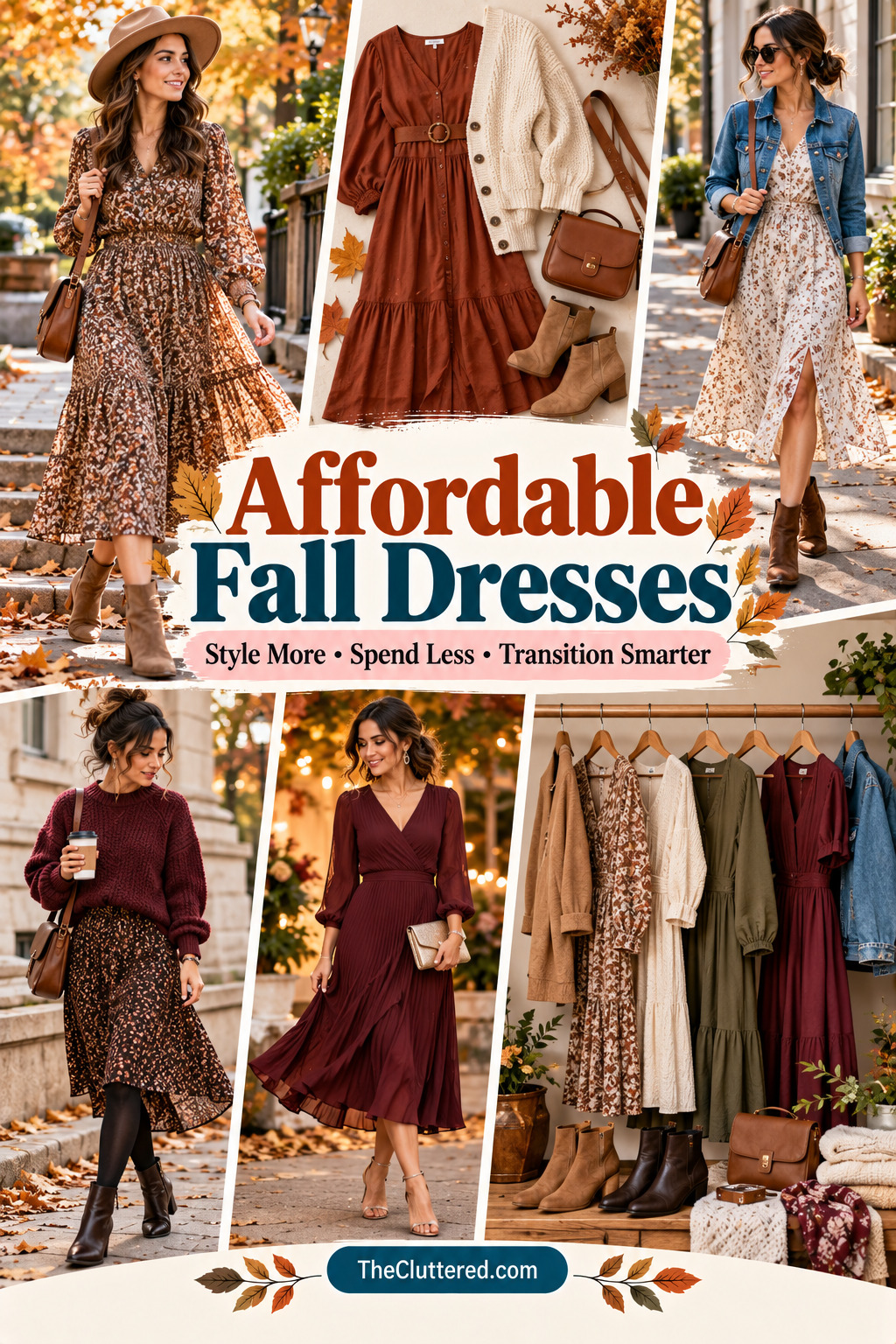


Fall dressing does not have to mean replacing your summer wardrobe or buying a completely new collection of clothes. With a few affordable fall dresses, smart layers, and accessories you already own, it is possible to make familiar pieces feel fresh for the season while keeping spending under control.
The most useful approach is to think beyond individual dresses. Instead, look at how each piece can work across everyday outfits, workdays, date nights, and special occasions. That makes your wardrobe more flexible and helps you decide when buying makes sense and when renting an occasion dress may be the more practical choice.
Start With the Dresses You Already Own
The easiest way to create fall outfits on a budget is to delay shopping and inspect your current closet first. Lightweight midi dresses, floral dresses, shirt dresses, and simple neutral styles can often move into fall with the right supporting pieces.
A cardigan can make a summer dress feel appropriate for a cool morning. A structured jacket can give the same dress a polished work direction, while ankle boots can shift a lightweight style into a distinctly autumn outfit.
Build a Small Fall Dress Capsule
A capsule approach does not require owning only a handful of clothes. It simply means choosing pieces that work together. For dresses, versatility matters more than having a different style for every occasion.
A practical fall dress capsule can include a neutral midi, a cozy sweater dress, an everyday printed dress, and one polished option for events. These four categories can cover a surprisingly broad range of situations when paired with different shoes and layers.
- Neutral midi: easy to dress up or down.
- Sweater dress: useful when temperatures drop.
- Printed everyday dress: adds personality without requiring complicated styling.
- Occasion dress: reserved for weddings, dinners, celebrations, or other events.
Choose Affordable Fall Dresses by Cost Per Wear
The lowest price is not always the most useful purchase. A dress that costs a little more but works for work, weekends, dinners, and multiple seasons may provide more value than a very inexpensive piece that only works for one occasion.
Before buying, consider how often you can realistically wear the dress. Neutral colors, comfortable silhouettes, washable fabrics, and styles that work with shoes you already own are often easier to repeat.
For everyday dressing, prioritize repeat wear. If you are shopping for an event that happens only once or twice, consider whether purchasing another special-occasion dress will leave you with a closet full of pieces that rarely leave the hanger.
Make Summer Dresses Work for Fall
Seasonal wardrobe changes do not need to happen all at once. A summer dress can become a transitional fall outfit by changing the pieces around it rather than changing the dress itself.
- Add a cardigan or lightweight jacket.
- Switch sandals for ankle boots or other closed-toe shoes.
- Add tights when temperatures become cooler.
- Introduce a fall-colored bag, belt, or scarf.
- Layer a structured outer piece over softer fabrics.
This approach is particularly useful during the weeks when mornings feel cool but afternoons are still mild. Instead of buying an entirely new seasonal wardrobe, adjust the outfit gradually as the weather changes.
Use Layering to Multiply Your Outfit Options
Layering is one of the easiest ways to make affordable fall dresses feel less repetitive. The same dress can look completely different with a cardigan one day, a blazer the next, and a jacket for an evening out.
Pay attention to proportion. A fitted dress can work with a roomier cardigan, while a loose midi may benefit from a more structured jacket or defined waist. Boots, tights, and textured accessories can also make a familiar summer silhouette feel more seasonal.
Plan Fall Dresses Around Real Life
| Need | Simple Dress Direction | Useful Supporting Pieces |
|---|---|---|
| Everyday | Comfortable midi or casual dress | Boots, cardigan, crossbody bag |
| Work | Simple structured dress | Blazer, loafers or boots, minimal jewelry |
| Date night | Feminine or polished dress | Jacket, refined bag, simple jewelry |
| Wedding guest | Elegant midi or maxi | Dress shoes, clutch, light wrap or jacket |
| Special event | Statement or formal dress | Occasion accessories and polished footwear |
When Renting a Fall Dress Makes Sense
Dress rental can be especially useful when the event is more formal than your everyday wardrobe but you do not expect to wear the dress frequently afterward. Weddings, milestone celebrations, formal dinners, and other one-off occasions are examples where rental can be considered alongside buying.
The goal is not to rent everything. Everyday dresses that you expect to wear repeatedly can make sense as purchases, particularly when they coordinate with clothes already in your closet. Rental is simply another option for managing occasional wardrobe needs.
When considering a rental, check the event requirements, delivery timing, fit information, return process, and total cost before committing. The best choice depends on how often you expect to use the dress and what you already have available.
Spend More Carefully on Special Occasions
Special-event dressing is where seasonal fashion spending can quickly get out of hand. A beautiful fall wedding guest dress may be tempting, but buying several versions for different events can create a wardrobe that is difficult to justify later.
Instead, create a small occasion strategy. Keep one or two versatile pieces that can be restyled with different accessories, and consider rental when the dress would otherwise become a rarely worn purchase.
A Simple Fall Dress Shopping Checklist
- Check your existing dresses before shopping.
- Identify the actual wardrobe gap.
- Choose colors that coordinate with your current shoes and layers.
- Look for dresses that can work in more than one setting.
- Consider whether the fabric works for your local fall weather.
- Try at least two layering combinations before deciding a dress is too summery.
- Consider cost per wear rather than sticker price alone.
- Decide whether the dress is an everyday piece or an occasion piece.
- For one-time events, compare buying with rental.
- Check fit and return policies before purchasing online.
- Choose accessories that can work with several outfits.
- Look for pieces that can move into colder months with additional layers.
- Avoid buying duplicates of silhouettes you already own.
- Leave room in the budget for practical supporting pieces.
- Only buy when the new piece solves a genuine wardrobe problem.
Common Budget Mistakes to Avoid
Buying for an Imaginary Lifestyle
A dress can look beautiful online but still be impractical if it does not match your actual routine. Think about where you really go during fall before buying something for a lifestyle you rarely live.
Buying a Complete Outfit Every Time
If every new dress requires new shoes, a new bag, and new accessories, the true cost rises quickly. Look for dresses that work with pieces already in your closet.
Ignoring Transitional Weather
Fall weather can change throughout the day. Lightweight dresses paired with adaptable layers can sometimes be more useful than buying only heavy cold-weather styles.
Collecting Too Many Occasion Dresses
Special-event clothing can accumulate quickly because each event feels like a reason to buy something different. A small rotation or occasional rental strategy can help keep the wardrobe more manageable.
FAQ
How can I make fall dresses more affordable?
Start with dresses you already own, then add inexpensive styling pieces such as cardigans, jackets, tights, or boots. When buying, prioritize pieces that can be worn in multiple settings.
Can summer dresses be worn in fall?
Yes. Many lightweight dresses can transition into fall with layers, closed-toe shoes, tights, jackets, or seasonal accessories. This is particularly useful during early fall when temperatures are still moderate.
Should I buy or rent a fall wedding guest dress?
Consider how often you expect to wear it. Buying may make sense for a versatile dress you can reuse, while rental can be worth considering for a highly specific formal style you are unlikely to wear regularly.
What dresses are easiest to style for fall?
Midi dresses, simple shirt dresses, sweater dresses, neutral styles, and uncomplicated printed dresses tend to work well with multiple layers and shoe options.
How many fall dresses do I need?
There is no universal number. Focus on having enough variety for your actual routine rather than a fixed quantity. A small group of versatile dresses can support many outfits when the layers and accessories change.
A thoughtful fall wardrobe is less about buying more dresses and more about making each piece work harder. Start with what you own, add affordable pieces only when they solve a real need, and use rental strategically for occasions that do not justify another permanent addition to your closet.
25 Affordable Fall Dress Inspiration Ideas
Affordable Fall Dress Finds Under a Budget

Source: Pinterest
This look demonstrates how a simple fall dress can create a polished seasonal outfit without relying on an elaborate wardrobe. The dress, boots, and warm accessories work together naturally.
The appeal is its practicality: a wearable dress can become an everyday foundation rather than a one-purpose purchase. That makes this kind of silhouette useful when building a fall wardrobe carefully.
Adapt the idea with shoes and accessories you already own. A belt, cardigan, crossbody bag, or jacket can change the overall look without requiring another dress.
Cozy Sweater Dress With Boots

Source: Pinterest
A sweater dress creates a strong seasonal impression through texture alone. The knit fabric gives the outfit a cozy quality while boots provide a practical finishing layer.
This type of dress can reduce the need for complicated styling because the main garment already carries much of the visual interest.
For a budget-friendly version, look for a neutral knit that works with multiple coats, boots, and accessories rather than a highly specific trend piece.
Simple Everyday Fall Dress

Source: Pinterest
An uncomplicated everyday dress is one of the most useful additions to a fall wardrobe because it can support many different styling directions.
Neutral or easy-to-coordinate colors make it simpler to reuse existing shoes, bags, jackets, and cardigans.
Personalize the outfit through accessories rather than buying another dress for every casual setting.
Refresh an Autumn Wardrobe With One Versatile Dress

Source: Pinterest
A wardrobe refresh does not have to mean a shopping spree. One versatile dress can introduce a different silhouette, color, or texture to clothes you already own.
This approach is especially useful when the closet feels repetitive but does not actually have a major clothing shortage.
Choose a dress that works with at least two existing pairs of shoes and multiple layers to get more styling possibilities from one purchase.
Classic Fall Dress With Ankle Boots

Source: Pinterest
Ankle boots are one of the easiest ways to shift a dress toward fall. The combination works across casual days and slightly dressier settings.
The footwear creates a stronger seasonal visual without requiring a new wardrobe of autumn-specific clothes.
Try the formula with a dress already in your closet before purchasing a dedicated fall style.
Floral Dress for Early Fall

Source: Pinterest
A floral dress can remain useful beyond summer when the styling becomes slightly more grounded and seasonal.
Boots, a jacket, or a richer-toned accessory can balance a lighter floral print and make it feel appropriate for early autumn.
This is a strong example of transitioning rather than replacing. Keep the dress and change the supporting pieces.
Flowy Fall Dress for a Cozy Autumn Look

Source: Pinterest
A flowy dress brings movement and softness to an autumn wardrobe while still feeling relaxed and comfortable.
The silhouette can work especially well with boots and structured outer layers that give the outfit more definition.
For a budget wardrobe, select one flowy dress that can move between casual outings and slightly dressier occasions.
Fall Dress Capsule Wardrobe

Source: Pinterest
A capsule-style approach focuses on coordination instead of quantity. The goal is to make several pieces work together naturally.
This can help prevent buying dresses that look appealing individually but create difficult-to-style outfits once they reach your closet.
Start with one neutral dress, one textured style, one print, and one occasion option, then expand only if your lifestyle requires it.
Fall Dresses for Different Occasions

Source: Pinterest
A useful fall wardrobe needs to reflect real life. Everyday dresses, work dresses, date-night styles, and event dresses can serve different purposes.
The key is avoiding unnecessary overlap. If two dresses perform exactly the same role, the second purchase may not add much value.
Map your actual calendar before shopping and focus your budget on the categories you genuinely use.
Neutral Fall Dress With Cozy Layers

Source: Pinterest
Neutral dresses are useful because they give accessories and layers more room to change the outfit.
A sweater, blazer, jacket, or scarf can create different levels of warmth and polish while keeping the base dress consistent.
Choose a neutral shade that works with your existing shoes and outerwear to maximize the number of combinations.
Summer-to-Fall Transitional Dress

Source: Pinterest
Transitional outfits are useful when temperatures are changing but a full cold-weather wardrobe is not yet necessary.
A midi dress paired with a lightweight knit or jacket can bridge the gap between summer and autumn.
Keep the base dress simple and let boots, layers, and seasonal accessories provide the fall direction.
Elegant Fall Wedding Guest Dress

Source: Pinterest
A wedding guest dress is a good example of a wardrobe decision that should be separated from everyday shopping.
Elegant colors and refined accessories can make a simple dress feel event-ready without requiring an excessive number of statement pieces.
If the style is highly specific or unlikely to be worn again, compare rental with purchase before spending your budget.
Easy Autumn Dress Outfit Formula

Source: Pinterest
This type of outfit demonstrates how several fall looks can be created from a familiar dress silhouette.
Instead of chasing every new trend, focus on the relationship between the dress, layer, footwear, and accessories.
Change one component at a time to discover which combinations make the dress feel new again.
Affordable Neutral Fall Dress Outfit

Source: Pinterest
Neutral outfits are particularly useful when the goal is to reduce the number of separate pieces needed in a wardrobe.
They create an easy base for seasonal accessories, textured layers, and different footwear.
For a budget-focused wardrobe, select one neutral dress that can move between casual, polished, and layered looks.
Versatile Fall Dress From Day to Night

Source: Pinterest
A dress that can move from daytime to evening offers more value than a piece that only works for one narrow setting.
Changing boots, accessories, or an outer layer can shift the overall mood without changing the base outfit.
Look for simple silhouettes that can be dressed up or down rather than highly occasion-specific designs.
Layered Fall Dress in Warm Autumn Tones

Source: Pinterest
Warm autumn colors can create a strong seasonal feeling without requiring complicated styling.
Layering also adds practical flexibility when temperatures change throughout the day.
Use one colorful layer or accessory with a neutral dress if you want the outfit to feel seasonal without buying multiple statement dresses.
Plaid Fall Dress for Casual Autumn Days

Source: Pinterest
Plaid naturally communicates autumn while remaining easy to style for casual plans.
A patterned dress can also reduce the need for many accessories because the print provides visual interest.
Keep the rest of the outfit simple with practical shoes and one warm layer for a balanced result.
Transition Summer Colors Into Fall

Source: Pinterest
You do not need to eliminate every summer color when autumn arrives. Styling can make lighter shades feel more seasonal.
A trench, cardigan, boots, or deeper-toned accessory can visually anchor a summer dress.
This is a useful strategy when you want to extend the life of existing clothing rather than replacing it immediately.
Casual Fall Dress With Boots

Source: Pinterest
A casual dress and boots combination works because both pieces can be repeated frequently.
The formula is simple enough for everyday wear while still giving the outfit a clear autumn identity.
Experiment with ankle, knee-high, or other practical boots depending on your existing wardrobe and comfort needs.
One Dress as a Seasonal Transition Piece

Source: Pinterest
A transition piece earns its place by working during more than one part of the season.
This type of dress can begin with lighter accessories and gradually become more layered as the weather cools.
When shopping, prioritize pieces that can change with the season rather than styles designed for only one narrow temperature range.
Dress-Only Wardrobe Styling Idea

Source: Pinterest
This visual highlights the broader idea that a dress does not have to belong to one season only.
Layers can change the warmth, proportions, and overall mood of the same base garment.
Use this principle to make a smaller wardrobe feel more varied before deciding that you need another shopping trip.
Fall Dress for Date Nights and Special Events

Source: Pinterest
A polished dress can cover more than one type of evening plan when the styling remains flexible.
Accessories are useful here because the same dress can feel casual with boots and a jacket or more refined with dressier shoes.
Choose an occasion dress with enough versatility to justify keeping it rather than buying a separate piece for every event.
Feminine Fall Dress With a Soft Autumn Mood

Source: Pinterest
A feminine fall outfit does not have to be formal. Flowing silhouettes and soft prints can work for casual autumn plans.
The important budget consideration is versatility: choose a romantic piece that can also be worn with practical layers and everyday shoes.
Balance a feminine dress with boots, a structured jacket, or a simple cardigan for a more wearable finish.
Fall Wedding Guest Dress for a Special Event

Source: Pinterest
Wedding guest dressing is one area where a beautiful dress may be needed for only a limited number of occasions.
A refined midi or maxi can create a polished event look with relatively few accessories.
If the dress is highly specific or unlikely to fit into your regular wardrobe afterward, this is a natural category to evaluate for rental.
Fall Wardrobe Reset Before Buying New Dresses

Source: Pinterest
A wardrobe reset is a useful final step before seasonal shopping. It helps reveal what you already own and what genuinely needs attention.
Review dresses by condition, fit, frequency of wear, and styling potential rather than simply deciding that everything needs to be replaced.
Once the closet is clear, build a short shopping list based on actual gaps. That makes it easier to keep fall dress spending intentional.
Love these ideas? Follow @theclutteredblog on Pinterest for more cozy, practical gift inspiration!