












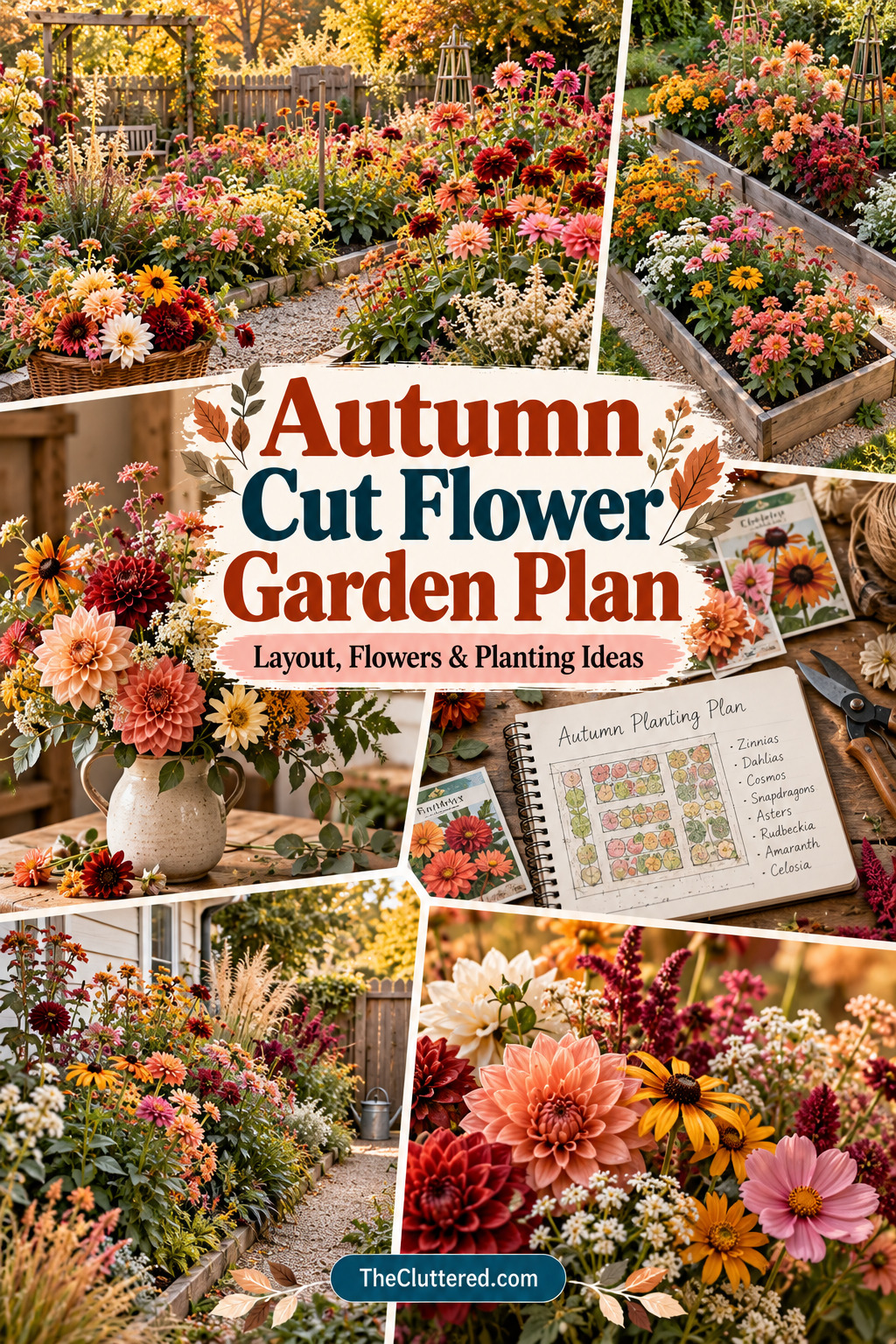
An autumn cut flower garden can be both productive and beautiful when the layout is planned around bloom timing, plant height, harvest access, and the space you actually have. Instead of filling every available bed with flowers, start by deciding which blooms you want for bouquets and then give each group a clear place in the garden.
This autumn cut flower garden plan brings together practical layout ideas, fall flower choices, small-space solutions, succession planting, raised-bed arrangements, and simple planning methods. The goal is a garden that looks intentional while making it easy to step outside and bring fresh flowers indoors.
Quick Start: Build Your Plan Around 5 Decisions
- Choose your space: decide between a dedicated bed, raised bed, border, container area, or mixed garden.
- Choose your flower roles: combine focal blooms, supporting flowers, and filler foliage or flowers.
- Plan by height: keep taller plants from blocking shorter varieties.
- Plan for succession: stagger planting where appropriate so the garden does not depend on one flush of blooms.
- Plan for harvesting: leave enough room to reach plants, cut stems, and move through the bed comfortably.
What Makes an Autumn Cut Flower Garden Different?
An autumn-focused cutting garden is less about creating a single spectacular planting moment and more about arranging flowers so the garden remains useful as the season changes. Late-season color, foliage, plant structure, and flowers suitable for bouquets all become part of the planning decision.
The most useful approach is to think in layers. A garden can contain tall statement flowers, medium-height seasonal color, lower edging plants, and filler flowers that make bouquets feel fuller. This also creates visual depth outdoors rather than producing a flat row of identical plants.
Choose the Right Layout for Your Space
You do not need a large flower farm to create a useful cutting garden. A small backyard bed, raised bed, narrow border, or container grouping can provide a manageable place to grow flowers for arrangements.
| Garden Space | Planning Approach | Best Use |
|---|---|---|
| Small bed | Concentrate on a few productive varieties. | Simple bouquets and beginner gardens. |
| Raised bed | Use rows or blocks with clear paths around the bed. | Easy access and organized harvesting. |
| Long border | Arrange plants by height and bloom sequence. | A decorative garden that also supplies flowers. |
| Containers | Group several containers according to sun and watering needs. | Patios, balconies, and very small spaces. |
| Larger backyard area | Divide flowers into dedicated growing zones. | More variety and repeated bouquet harvests. |
Plan Flowers by Their Role in a Bouquet
A useful cut flower garden does not have to contain dozens of varieties. What matters is having flowers that perform different visual jobs. Large blooms can become focal points, medium flowers add color and movement, while smaller flowers and foliage help connect everything together.
Focal Flowers
Use a few visually strong blooms as the stars of an arrangement. Dahlias are one example represented in the supplied Pinterest research, while other seasonal flowers can fill the same role depending on growing conditions.
Supporting Flowers
Medium-sized blooms help bridge the gap between large focal flowers and delicate fillers. Planting several compatible colors together can make harvesting and arranging much easier.
Fillers and Foliage
Small flowers and foliage add texture, movement, and volume. They can also make a modest harvest look much more abundant in a vase.
Use Blocks Instead of Scattering Every Variety
For a cutting garden, planting flowers in recognizable blocks or short rows can be easier to manage than scattering individual plants throughout a decorative border. Blocks make it simpler to see what is ready to harvest and what needs attention.
They also make the garden easier to plan on paper. A simple sketch can show where taller varieties belong, where shorter flowers fit, and where you need paths or access points.
Think About Succession Planting
Succession planting is especially useful when the goal is to keep harvesting rather than collect one large flush of flowers. The supplied Pinterest data includes several planning resources built around planting calendars and succession planting, showing that this is an important visual planning concept within the cut-flower niche.
Rather than treating the garden as one planting date, divide the season into smaller planting windows when appropriate for the flower and your growing conditions. Your final schedule should follow the needs of the individual plants and your local climate.
- Flower or flower group
- Planting date or window
- Expected bloom period
- Approximate garden location
- Harvest notes
- Next planting opportunity, if applicable
Build an Autumn Color Palette
Autumn gardens do not have to be limited to orange and yellow. A more layered palette can combine warm neutrals, dusty pinks, burgundy, cream, soft green, copper, and deeper jewel tones. The supplied Pinterest data also shows strong visual interest around fall flowers and warm seasonal garden colors.
When choosing colors, think about the bouquets you actually want to make. A garden planned around one cohesive palette can make arranging easier because the flowers naturally coordinate when harvested together.
Plan a Small Cut Flower Garden
A small garden benefits from restraint. Instead of trying to grow every flower that catches your eye, choose a compact group that covers different bouquet roles. This can create more usable flowers than a crowded assortment of unrelated plants.
- Choose a sunny location that suits the flowers you want to grow.
- Keep taller plants positioned so they do not shade shorter varieties unnecessarily.
- Group plants with similar care requirements.
- Leave enough access for harvesting.
- Use succession planting where it makes sense for the varieties selected.
- Reserve some space for filler flowers and foliage.
Raised Bed Cut Flower Garden Ideas
Raised beds are particularly useful when you want a defined growing area. The supplied Pinterest dataset contains multiple examples of raised-bed cut flower layouts, including dedicated layouts for beginners and dahlia-focused planting areas.
A simple raised-bed arrangement can use taller flowers toward the back, medium-height flowers through the middle, and lower-growing flowers along the accessible edges. If the bed can be reached from multiple sides, the arrangement can be more flexible.
Make the Garden Easy to Harvest
Harvest access is one of the easiest details to overlook. A garden may look beautiful from a distance but become difficult to use if flowers are packed too tightly or the tallest plants sit directly in front of everything else.
Before planting, imagine yourself carrying a basket or vase through the space. Decide where you will stand, where you will cut stems, and where you will place harvested flowers temporarily. This simple mental walkthrough can improve the layout before anything goes into the soil.
Autumn Cut Flower Garden Planning Checklist
- Choose the garden location.
- Check the available sunlight.
- Measure the usable planting area.
- Sketch the bed before planting.
- Mark access paths or harvesting areas.
- Group flowers by height.
- Group flowers with similar growing needs.
- Choose focal flowers.
- Add supporting flowers.
- Add filler flowers or foliage.
- Create a simple color palette.
- Note the intended planting windows.
- Consider succession planting.
- Keep harvesting access clear.
- Record planting and harvest dates.
Common Planning Mistakes to Avoid
Trying to Grow Too Many Varieties
More varieties do not automatically create better bouquets. A smaller collection with complementary colors, shapes, and heights can be much easier to manage.
Ignoring Access
Dense planting may look impressive initially, but harvesting becomes difficult when you cannot comfortably reach the stems.
Planning Only for One Bloom Moment
If every flower is expected to perform at the same time, the garden can become feast-or-famine. Consider planting timing and succession where appropriate.
Choosing Flowers Without Considering Their Bouquet Role
A garden full of large focal flowers may still produce arrangements that feel incomplete. Include flowers and foliage that provide different shapes and textures.
FAQ
Can a small backyard have a cut flower garden?
Yes. A small bed or a few containers can work when the planting is focused. Prioritize a manageable number of flowers that provide different bouquet roles.
What should go into an autumn cut flower garden plan?
Include the garden dimensions, flower groups, planting windows, approximate positions, height, color palette, access points, and harvesting notes. A simple calendar or spreadsheet can make the plan easier to maintain.
Should I use rows or blocks?
Either can work. Rows make spacing and harvesting straightforward, while blocks can create a more visually unified planting. Choose the arrangement that fits the garden shape and your maintenance style.
How can I keep a cutting garden looking attractive?
Combine flowers with different heights, colors, textures, and bloom forms. Keep the layout intentional and leave enough access to harvest without disturbing neighboring plants.
Is succession planting necessary?
It is not necessary for every garden, but it can be useful when you want to spread production over time. The appropriate schedule depends on the flowers and your local growing conditions.
The best autumn cut flower garden plan is one that matches the space you have, the flowers you genuinely want to bring indoors, and the amount of maintenance you are willing to give it. Start with a simple layout, build around complementary flower roles, and leave room for the garden to evolve through the season.
25 Autumn Cut Flower Garden Visual Ideas
20 Cut Flowers for an Autumn Garden

Source: The Garden Style
This visual focuses on choosing multiple cut flowers for an autumn-oriented garden, making it useful for gardeners who want more variety than a single-flower bed.
The value is in seeing flower selection as a collection rather than an isolated planting. A broader palette can support different bouquet shapes, textures, and colors.
Use the concept as a starting point, then narrow the list to varieties suited to your space, growing conditions, and preferred bouquet style.
Cut Flower Garden Layout for Spring, Summer, and Fall

Source: Pinterest
The visual presents a garden layout designed around seasonal flower production rather than one isolated bloom period.
This approach is helpful when your goal is to keep the cutting garden productive as the calendar changes.
Adapt it by dividing your own plan into seasonal zones or planting windows, keeping the autumn section focused on the flowers you want most.
Starting a Cut Flower Garden

Source: Gardening Latest
This image represents the basic idea of dedicating garden space specifically to flowers that will be harvested for indoor arrangements.
That distinction changes how you plan the bed because accessibility and repeat harvesting become important considerations.
Use the concept for a beginner garden by starting with a compact area and a short list of flowers with different bouquet roles.
Flowers That Keep a Fall Garden Colorful

Source: Pinterest
The visual highlights the idea of maintaining flower interest after the height of summer has passed.
For a cutting garden, late-season color gives you another opportunity to harvest flowers rather than ending the garden at midsummer.
Use this angle when choosing your autumn planting list, giving priority to flowers that contribute to the late-season bouquet palette you want.
Beginner Backyard Cut Flower Garden

Source: The Mummy Front
This idea shows that a productive cutting garden can be approached as a manageable backyard project rather than a large-scale flower farm.
Beginners benefit from limiting the number of varieties and learning how the space behaves before expanding it.
For autumn, start with a clearly defined bed and add flowers gradually as you become more comfortable with planting and harvesting.
Planting Calendar for a Steady Cut Flower Supply

Source: Pinterest
This visual emphasizes the planning side of a cutting garden, especially the relationship between planting dates and future harvests.
A calendar can prevent the garden from becoming a collection of disconnected planting decisions.
Create your own version with flower names, planting windows, expected bloom periods, and notes about when each crop should be harvested.
Three-Tier Cottage Cut Flower Garden

Source: The Garden Style
A tiered layout uses height as a design tool, creating a garden that feels full while keeping individual planting zones understandable.
The approach works particularly well for cottage-style gardens where a relaxed appearance is desired without losing structure.
For an autumn version, assign taller flowers to the rear or center and use shorter seasonal flowers toward accessible edges.
Sample Cut Flower Garden Plans

Source: Pinterest
Garden plans are useful because they turn an abstract idea into a visual map before planting begins.
A layout can reveal overcrowding, missing access paths, or poor height placement before those problems become difficult to fix.
Sketch your autumn bed from above and label each flower group instead of relying on memory once planting begins.
Budget-Friendly Cut Flower Garden

Source: The Garden Style
This visual connects cut-flower gardening with a smaller and more approachable starting point.
Budget planning is often less about buying the cheapest option and more about concentrating resources on flowers that will actually be harvested.
Adapt the idea by starting with a compact bed and expanding only after you know which flowers perform well for you.
Plan a Cut Flower Garden Step by Step

Source: Pinterest
The concept is useful for gardeners who feel overwhelmed by the number of decisions involved in creating a cutting garden.
Breaking the process into space, flowers, layout, timing, and harvesting makes the project easier to approach.
Use the same sequence for an autumn plan and keep each decision connected to the final bouquet goal.
Seven Flowers for a Fall Cutting Garden

Source: Pinterest
A smaller flower list can be easier to manage than trying to grow every attractive autumn bloom.
Choosing a handful of flowers with different shapes and heights gives the garden more visual and bouquet variety.
Build your own list around the colors, bouquet styles, and garden size you already know you want.
Perfect Cut Flower Garden Layout

Source: Pinterest
This layout concept demonstrates why the arrangement of flowers matters as much as the varieties themselves.
Clear organization can make maintenance and harvesting feel much less complicated.
Use the visual as inspiration, then redraw the layout according to the exact dimensions and orientation of your own autumn bed.
Bouquet-Inspired Cutting Garden

Source: Pinterest
This concept shifts garden planning toward the finished arrangement, which can make flower selection much more intentional.
Thinking about bouquet combinations helps you identify gaps such as missing filler flowers, foliage, or contrasting shapes.
Choose two or three bouquet palettes first, then select garden plants that can contribute to those combinations.
Plan for More Usable Blooms

Source: Pinterest
The idea behind this visual is to think about productivity rather than simply planting for appearance.
A cutting garden becomes more useful when flowers are selected and arranged around harvesting needs.
When planning your autumn bed, ask how each plant will contribute to a bouquet before assigning it valuable garden space.
Compact Cut Flower Garden Layout

Source: Pinterest
A compact layout can make a small garden feel intentional instead of limited.
Concentrating plants into a defined area also makes watering, observation, and harvesting easier to manage.
For autumn, use a short list of complementary flowers and reserve the edges for easy-to-reach plants.
Structured Cut Flower Farm Layout

Source: Pinterest
This visual introduces a more structured approach to flower growing, with distinct planting areas rather than a loose mixed border.
That structure can be valuable even in a small home garden because it simplifies planning and harvesting.
Scale the idea down into two or three compact blocks rather than trying to reproduce a full flower-farm layout.
Common Cut Flowers for Bouquet Building

Source: Storywood Press
The visual supports the idea of choosing flowers according to their role in an arrangement rather than choosing only by appearance in the garden.
A mixture of flower forms gives you more flexibility when putting together bouquets.
Use this framework to check your autumn plant list and make sure you have more than one visual layer represented.
Flower Garden Spreadsheet Planning

Source: Triple Wren Farms
A spreadsheet can turn a complicated flower plan into a simple reference you can update throughout the season.
This is particularly helpful when you are tracking multiple varieties and different planting windows.
Create columns for flower, location, planting window, bloom period, color, and harvest notes to build an autumn-specific planning system.
Plan and Design Your Own Cutting Garden

Source: Earth Soul Organics
This visual brings together several planning concepts: flower choice, garden design, and succession.
It is useful inspiration for gardeners who want the bed to feel designed rather than randomly planted.
Use the same principles for an autumn garden by deciding the flower hierarchy before purchasing or sowing plants.
Seven Layout Ideas for a Cut Flower Garden

Source: Bigger Garden
The infographic-style visual is useful because it presents layout as a choice rather than a single formula.
Different garden shapes call for different arrangements, so comparing several approaches can help you identify what will work in your space.
For autumn, adapt one layout to your preferred flower heights, colors, and harvesting route.
Fall Flowers That Bloom Through the Season

Source: Pinterest
This visual emphasizes sustained seasonal color, an important consideration when planning a garden specifically for autumn interest.
Different bloom periods can help prevent the garden from becoming visually empty when one flower finishes.
Use a seasonal flower list to build a planting plan that spreads visual interest across the period you want to harvest.
What to Plant in October

Source: Pinterest
This visual connects the cutting garden to a specific point in the seasonal calendar, which can make planning more actionable.
A calendar view helps gardeners understand what needs to happen now rather than treating the entire season as one task.
Adapt the idea to your local conditions and use an autumn checklist to record the flowers and garden tasks relevant to your plan.
Fall Bulb Planning

Source: Fairview Garden Center
This visual expands the autumn planning conversation beyond annual flowers and shows how seasonal planting can be organized with a chart.
Charts are especially useful when several flower groups have different timing requirements.
If bulbs are part of your wider garden plan, keep their schedule separate from the cutting crops while tracking both in the same seasonal calendar.
Raised Bed Dahlia Cutting Garden

Source: Suite 101
Dahlias can become a strong focal point in a cutting garden, and a dedicated bed makes the planting easier to organize.
A concentrated flower group can also make color planning simpler when you want bouquets with a strong seasonal identity.
Use a dahlia-focused area as one section of a larger autumn plan rather than allowing one flower type to dominate the entire garden.
Fall Flowers to Plant for Autumn Color

Source: Grow Your Yard
This visual provides a strong seasonal reference for gardeners looking to keep the garden colorful during fall.
For a cutting garden, seasonal color becomes even more useful when the flowers can be harvested and brought indoors.
Use the visual as inspiration for your palette, then combine those colors with the focal, supporting, and filler roles in your own plan.
Love these ideas? Follow @theclutteredblog on Pinterest for more cozy, practical gift inspiration!