












The line between professional and personal life has never been blurrier. When your office is also your living room, it is incredibly easy to let work hours bleed into your evenings, skip lunch breaks, and ignore the early warning signs of exhaustion. Without clear limits, remote work can quickly transform from a flexible dream into a relentless cycle of stress and burnout.


Implementing a remote overwork prevention checklist is not about working less; it is about working smarter and protecting your well-being. By establishing intentional habits, you can reclaim your time, boost your focus, and create a sustainable rhythm that supports both your career and your personal life.
This guide will walk you through practical, actionable steps to build healthy work from home habits, set firm digital boundaries, and manage your workload without sacrificing your peace of mind.

Recognizing the Signs of Remote Work Burnout
Before you can prevent overworking, you need to recognize when it is happening. Work from home burnout warning signs often creep in subtly. You might notice persistent fatigue, irritability, or a growing sense of dread when opening your laptop. Remote work signs of overworking also include working through lunch, checking emails late at night, and feeling like you are never truly “off the clock.” Acknowledging these red flags is the crucial first step toward implementing effective remote work stress management strategies.
Setting Healthy Work From Home Boundaries
Healthy boundaries for remote workers are the foundation of a balanced life. This starts with work from home workspace boundaries, such as designating a specific area for work and physically leaving it at the end of the day. Equally important are remote work digital boundaries. Establish remote work after-hours boundaries by silencing Slack notifications, setting email auto-responders, and communicating your availability clearly to your team. Learning how to disconnect from work at home is a skill that protects your mental space.
Building a Realistic Remote Work Daily Routine
A chaotic schedule invites overwork. Instead of reacting to demands as they arise, proactively design a remote work realistic daily schedule. Utilize a work from home time blocking checklist to allocate specific windows for deep work, meetings, and administrative tasks. Incorporate a structured work from home lunch break routine and schedule short, regular pauses. A predictable remote work schedule checklist helps train your brain to focus during work hours and fully detach during personal time.
Managing Workload and Preventing Meeting Overload
Knowing how to manage a heavy remote workload requires ruthless prioritization. Use a remote work priority checklist to identify your top three tasks each morning. To combat remote work meeting overload prevention, politely decline meetings without clear agendas or suggest an async update instead. Learning how to avoid working through lunch remotely is non-negotiable for maintaining your energy and work from home productivity without burnout.
The Ultimate Remote Overwork Prevention Checklist
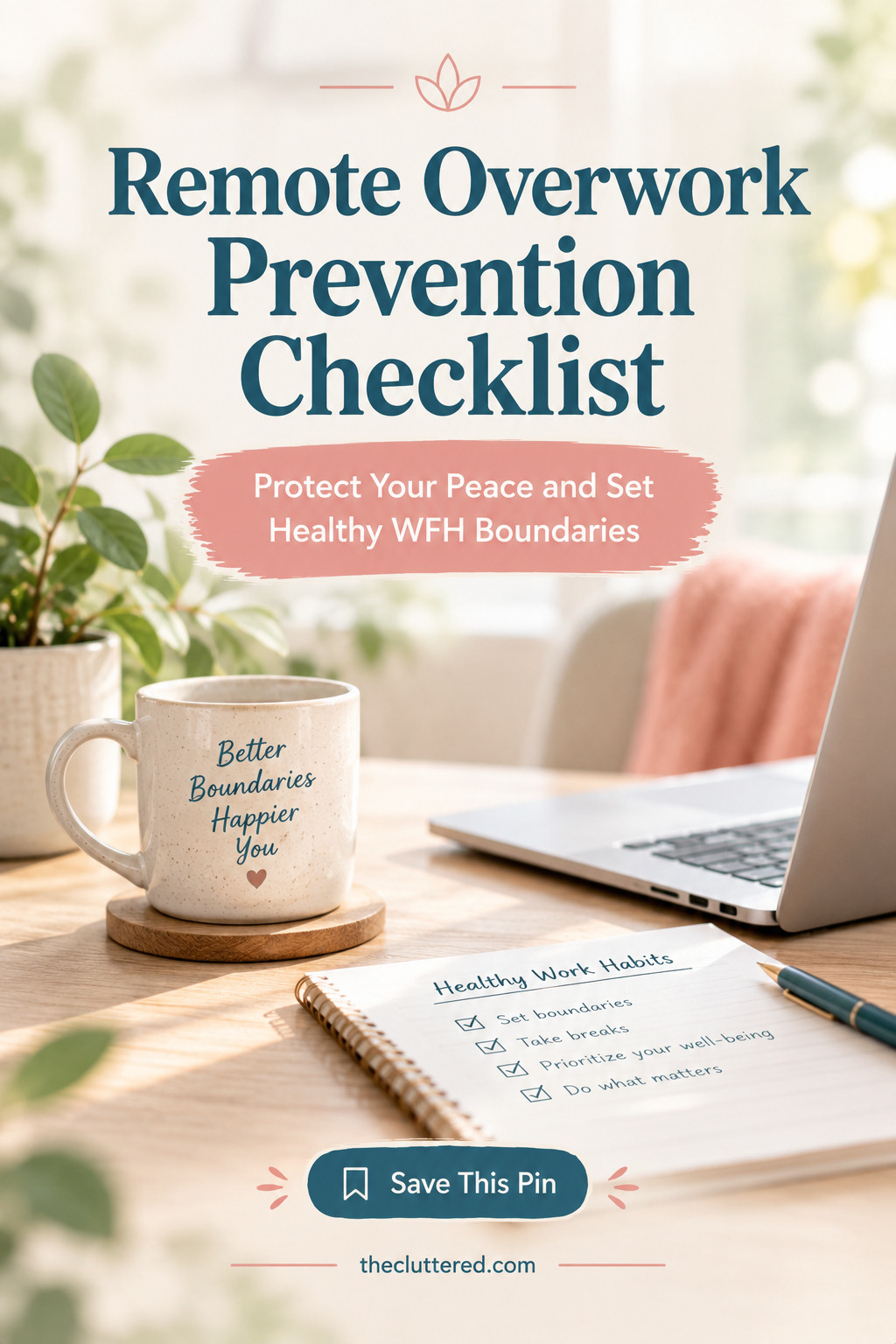
Use this practical, daily checklist to keep your remote work habits aligned with your well-being. Print it out or keep it in your digital planner to ensure you are consistently protecting your time and energy.
- Set a firm start and end time for your workday
- Create a dedicated workspace boundary, both physical and digital
- Schedule a proper lunch break away from your desk
- Turn off work notifications and email alerts after hours
- Use time blocking for deep work and administrative tasks
- Decline or reschedule non-essential meetings to prevent overload
- Take a five-minute screen break every hour
- Write down tomorrow’s top three priorities before logging off
- Perform a ten-minute end-of-day shutdown routine
- Engage in one non-work self-care activity daily
By consistently applying these remote work habits for better work-life balance, you transform your home office from a source of stress into a space of sustainable productivity. Start with just one or two items from this list today, and watch how quickly your sense of control and calm returns.
FAQ
FAQs About Remote Overwork Prevention Checklist
How do I stick to this checklist when I have low energy?
When your energy is depleted, trying to implement a comprehensive routine can feel overwhelming. Start by choosing just one or two items from the checklist, such as setting a firm end time or taking a proper lunch break. Lowering the barrier to entry makes it easier to maintain consistency without adding to your mental load. Remember that the goal is progress, not perfection, and small steps still create meaningful boundaries.
What if my small home space makes it hard to set workspace boundaries?
Living in a small space does not mean you cannot establish work from home workspace boundaries. You can create a “digital boundary” by using a specific laptop profile for work and closing it completely at the end of the day. Alternatively, use a physical cue, like covering your work monitor with a cloth or storing your laptop in a dedicated drawer, to signal to your brain that the workday is officially over.
How can I maintain consistency with this routine when my workload is heavy?
During peak periods, it is tempting to abandon your remote work schedule checklist, but that is when you need it most. Focus on remote work task management by ruthlessly prioritizing your top three daily goals and communicating realistic deadlines to your manager. Protecting your work from home lunch break routine and end-of-day shutdown ritual will actually sustain your energy, allowing you to handle a heavy remote workload more effectively over the long term.
Does this checklist help reduce the mental load of remote work?
Yes, a simple work from home burnout prevention plan significantly reduces decision fatigue and mental clutter. By externalizing your remote work priority checklist and end-of-day routines, you free up cognitive space that would otherwise be spent worrying about forgotten tasks. This structured approach to remote employee time management ensures your brain can fully relax during your off-hours, knowing everything is accounted for.
Remember that building new habits takes time, so normalize taking small steps and give yourself grace on the difficult days. You do not have to implement every single boundary overnight; starting tiny is still moving forward. Save this post for your next Sunday reset, and be sure to follow @theclutteredblog on Pinterest for more intentional living and productivity tips.