












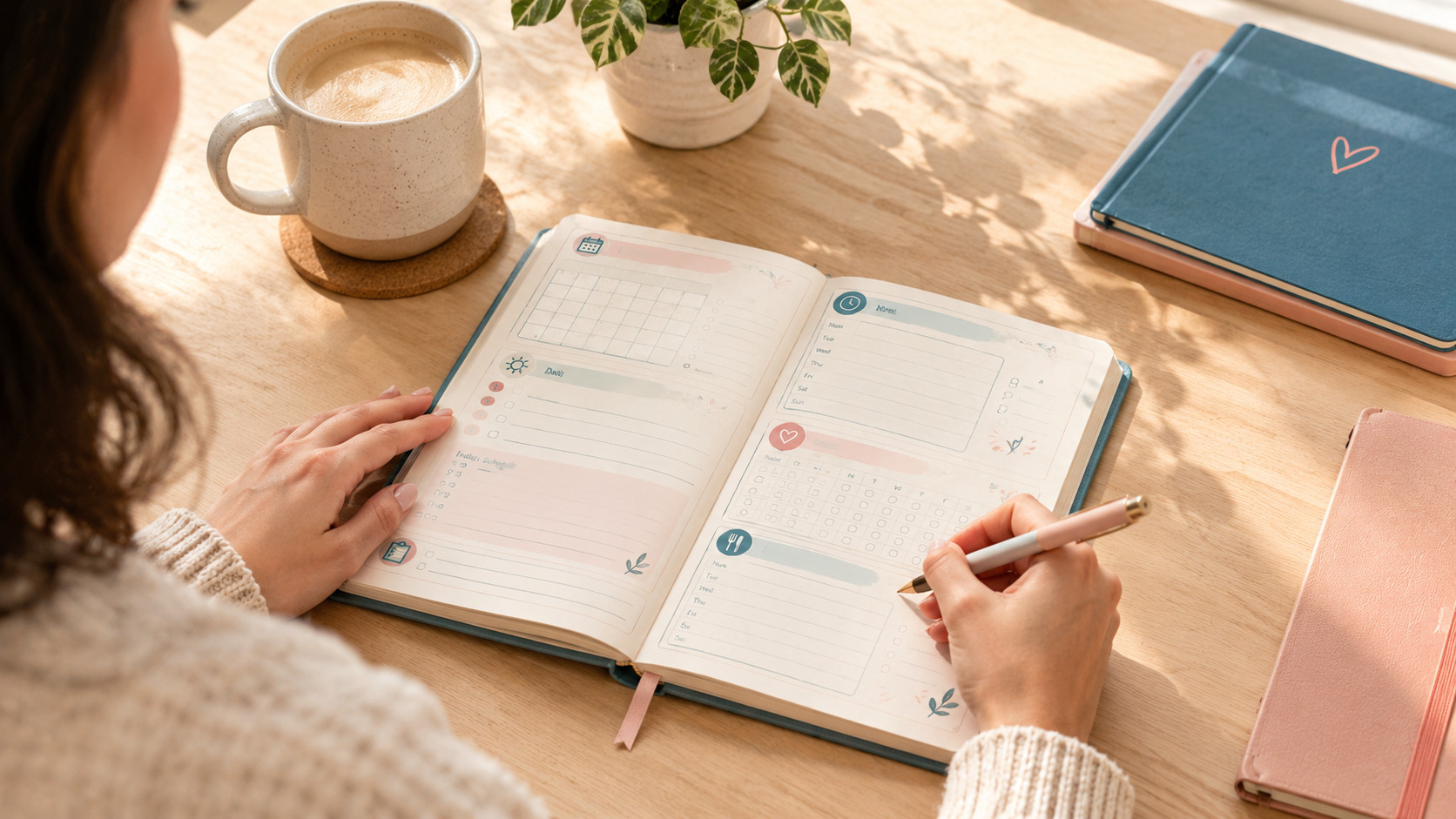
Feeling overwhelmed by a chaotic schedule? You are not alone. When life gets busy, traditional, overly detailed planners often become another source of stress rather than a solution. You open them, see blank pages demanding hours of decoration, and promptly abandon them. That is exactly where minimal aesthetic planner ideas for busy people come to the rescue.


By stripping away the clutter and focusing on functional, clean layouts, you can build a simple planner system for busy people that actually works. A minimalist approach does not mean boring; it means intentional. It is about creating stress-free planner ideas that help you capture what matters, reduce mental load, and give you back your time. Whether you are juggling a career, family, or studies, these clean planner layout ideas will help you stay organized without the burnout.

Why Minimalist Planner Ideas for Busy People Actually Work
The core philosophy behind minimalist productivity planner ideas is cognitive ease. When your planner is cluttered with excessive grids, tiny fonts, and overwhelming decoration, your brain has to work harder to process it. Simple planner ideas for busy people eliminate this friction. A minimalist weekly planner layout or a clean daily spread provides visual breathing room, making it easier to see your priorities at a glance. This is the secret to learning how to plan your week without feeling overwhelmed. By focusing on essential tasks and using planner layouts that reduce overwhelm, you transform your planner from a chore into a calming, functional tool.
Essential Minimalist Weekly Planner Layouts
A weekly spread is the backbone of any effective planning routine. For busy individuals, aesthetic weekly planner ideas should prioritize clarity over complexity. Consider a minimalist time blocking planner format where your day is divided into broad, flexible chunks rather than rigid minute-by-minute slots. Weekly time blocking planner ideas allow you to allocate specific blocks for deep work, family time, and rest.
To keep it functional, include a dedicated “weekly priority planner ideas” section at the top of the page. This ensures your top three goals for the week are always visible. Pair this with simple planner layout for staying organized, using plenty of white space and subtle dividers. If you enjoy a touch of personality, minimalist planner ideas with stickers can add a gentle, aesthetic touch without creating visual noise.

Simple Daily Planner Ideas to Reduce Overwhelm
When your schedule is packed, a minimalist daily planner layout is your best friend. Instead of listing twenty tasks, focus on a simple to-do list planner ideas format that highlights your “Top 3 Must-Dos.” Below that, include a small section for a “brain dump” to catch random thoughts, acting as a minimalist task management planner.
For those wondering how to organize a planner when you’re busy, the answer is consistency in simplicity. A simple daily planner layout with dedicated spaces for hydration, a quick mood check, and one daily intention is often more effective than a highly complex spread. These clutter-free planner ideas ensure you spend two minutes planning your day, not twenty.
Functional Aesthetic Planner Ideas for Specific Lifestyles
Different seasons of life require tailored approaches. Here is how to adapt your system:
- Planner ideas for working professionals: Focus on a minimalist task management planner with clear boundaries between meetings and deep work blocks.
- Planner ideas for busy moms: Incorporate simple meal planning page ideas and a minimalist meal planner layout to streamline grocery runs and reduce daily decision fatigue.
- Planner ideas for college students: Utilize simple bullet journal planner ideas and minimalist bullet journal layouts to track assignments, exams, and extracurriculars in one place.
- Planner ideas for work and personal life: Use a split-page minimalist monthly spread ideas layout to ensure personal appointments get the same visual weight as work deadlines.
Your Clutter-Free Planner Setup Checklist
Ready to build your easy planner setup for a busy life? Use this practical checklist to guide your next planner session:
- Choose a simple monthly planner layout for big-picture goals and important dates.
- Use a minimalist weekly planner layout with dedicated, flexible time blocking sections.
- Include a minimalist daily planner layout featuring only your top 3 daily priorities.
- Add a minimalist habit tracker layout to monitor consistency without visual clutter.
- Incorporate simple meal planning page ideas to streamline weekly grocery trips.
- Keep a minimalist task management planner section for quick brain dumps.
- Use aesthetic planner ideas with neutral colors to maintain visual calm and focus.
- Leave intentional blank space for spontaneous notes or gentle decoration.
- Review your planner ideas for managing a busy schedule every Sunday evening.
Adopting these strategies is about progress, not perfection. Start with just one simple layout this week, observe how it makes you feel, and adjust as needed. Your planner should serve you, not the other way around. Save this post for your next planning session and follow @theclutteredblog on Pinterest for more stress-free organization inspiration.

FAQs About Minimal Aesthetic Planner Ideas For Busy People
How much time does it take to set up a minimalist planner?
Setting up a minimalist planner should take no more than 10 to 15 minutes per week. Because you are avoiding elaborate decorations and complex grids, the focus is purely on writing down your priorities and time blocks. This easy planner setup for a busy life ensures that planning remains a quick, refreshing ritual rather than a time-consuming chore.
What if I have low energy and miss a few days of planning?
That is completely normal and perfectly okay. The beauty of simple planner ideas for busy people is their forgiveness. If you miss a few days, simply turn the page or draw a single line through the空白 space and start fresh today. There is no need to backfill or feel guilty; the goal is to reduce mental load, not add to it.
How do I maintain consistency with a new planner system?
Consistency comes from tying your planning habit to an existing routine, like your morning coffee or Sunday evening wind-down. Start tiny by committing to just writing down your top three priorities each day. Over time, this small action builds momentum, making it easier to learn how to create a minimalist planner system that sticks.
Can minimalist planners work for small spaces or limited desk areas?
Absolutely. In fact, clutter-free planner ideas are ideal for small spaces. A compact, minimalist daily planner layout requires minimal desk real estate. You can use a half-letter size notebook or a digital tablet, ensuring that your planning tools do not contribute to physical clutter in your home or workspace.
How does a minimalist layout help reduce mental load?
A minimalist layout reduces mental load by limiting choices and visual distractions. When your planner features aesthetic planner ideas with neutral colors and clear, simple sections, your brain does not have to work hard to decode the page. This creates a stress-free environment where you can focus entirely on executing your tasks with clarity.