












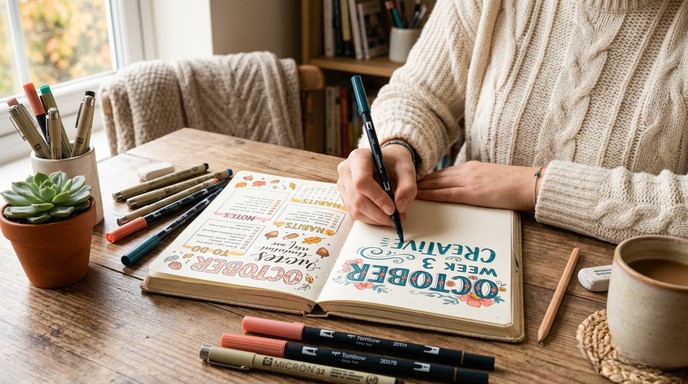
Does your journal feel a bit plain and uninspiring? You’re not alone. Many journal enthusiasts struggle to make their pages feel special and personalized. The good news? You don’t need to be a calligraphy expert to create stunning, eye-catching journal spreads.


Cute hand lettering journal ideas can completely transform your bullet journal, planner, or diary from ordinary to extraordinary. With just a few simple techniques and creative touches, you’ll be crafting beautiful headers, titles, and quotes that make you excited to open your journal every single day.
Whether you’re a complete beginner or someone who’s tried lettering before but felt discouraged, this guide will walk you through easy, achievable techniques that actually work. Let’s dive into the wonderful world of hand lettering and discover how you can make your journal pages truly yours.

Getting Started with Simple Hand Lettered Fonts for Beginners
Starting your hand lettering journey doesn’t require expensive supplies or natural artistic talent. The key is beginning with simple hand lettered fonts for beginners that build your confidence gradually. Start with basic block letters – these are straightforward, easy to practice, and look fantastic in any journal spread.
Grab a pencil and your favorite journal, then practice writing the alphabet in simple, clean block letters. Don’t worry about perfection; the charm of hand lettering comes from its human touch. Once you’re comfortable with block letters, try adding small embellishments like dots, lines, or tiny hearts between letters.
Another beginner-friendly option is bubble letters and block letters for journals. These playful styles are forgiving and fun to create. Simply draw your letters with rounded edges, then add a second outline around each letter to create that classic bubble effect. Fill them in with your favorite colors or leave them outlined for a minimalist look.
Creating Eye-Catching Bullet Journal Header Hand Lettering Ideas
Your bullet journal headers set the tone for each section, making them the perfect place to showcase your lettering skills. When brainstorming bullet journal header hand lettering ideas, think about the mood and purpose of each section. A monthly calendar might benefit from elegant, flowing letters, while a habit tracker could use bold, energetic styles.
One popular technique is simple drop shadow journal headers. This adds dimension and makes your titles pop off the page. After writing your header in your chosen style, add a shadow on one side (usually the bottom right) using a darker shade or gray pen. Keep the shadow consistent – same distance and angle for each letter – for a professional look.
For bullet journal hand lettering inspiration, look at your favorite quotes, song lyrics, or even your to-do list titles. Turn mundane headers like “Weekly Goals” or “Books to Read” into artistic statements. Use different letter heights, add flourishes to capital letters, or incorporate small doodles that relate to the section’s theme.
Adding Playful Doodles and Kawaii Accents to Your Lettering
Take your hand lettering to the next level with doodle style hand lettering for bujo that reflects your personality. This approach combines letters with simple illustrations, creating whimsical, personalized titles that are uniquely yours. Start by identifying which letters in your word could naturally incorporate doodles – maybe the “O” becomes a flower, or the “I” transforms into a cute pencil.
Kawaii hand lettering ideas for planners are all about cuteness and simplicity. Think hearts, stars, clouds, and smiling faces. Add heart and star accent lettering ideas around your titles or use them to dot your “i’s” and cross your “t’s.” These small touches create visual interest without overwhelming your page.
Floral hand lettered titles and quotes bring a soft, feminine touch to any journal spread. Draw simple flowers, leaves, or vines weaving through or around your letters. You don’t need to be a botanical artist – even basic five-petal flowers and curved stems look beautiful. Try creating a floral frame around your monthly cover or wrapping vines around your weekly headers.
Mastering Easy Techniques for Stunning Journal Pages
You don’t need years of practice to create gorgeous lettering. Faux calligraphy step by step for journals is one of the easiest techniques to master. Here’s how it works: write your word in cursive or script, then go back and thicken the downstrokes (the parts where your pen moves downward). This creates the illusion of real calligraphy without requiring special pens or advanced skills.
Monoline script lettering bullet journal is another accessible style that looks elegant and modern. Using a pen with consistent line width (like a fineliner or gel pen), practice writing in a flowing, connected script. The key is consistency – keep your letters at similar heights and maintain even spacing. This style works beautifully for quotes, headers, and even daily entries.
Don’t underestimate the power of highlight and underline hand lettering tricks. Sometimes, simple is best. Write your title in clean, straightforward letters, then add a colorful highlight behind it or draw decorative underlines with patterns like waves, dots, or dashes. This technique is quick, effective, and perfect for days when you’re short on time but still want your pages to look special.
For a more artistic flair, experiment with marker splash and watercolor splash lettering. Create loose, expressive letters, then add splashes of color around them using watercolor paints or brush markers. This creates a dynamic, energetic look that’s perfect for creative journals, travel logs, or mood boards.
Practical Hand Lettering Prompts for Every Journal Section
Stuck on what to letter? Hand lettered quotes for journal pages are always a safe bet. Choose quotes that resonate with you – inspirational sayings, song lyrics, movie lines, or even affirmations you want to remind yourself of daily. These make beautiful focal points on your pages and add personal meaning to your journal.
Create dedicated hand lettering practice pages in journal to hone your skills without pressure. Fill pages with alphabet practice, different lettering styles, or color combinations you want to try. These pages become valuable references and help you track your progress over time.
Different journal sections call for different lettering approaches. For travel journal hand lettering prompts, think about destination names, travel quotes, or section headers like “Places I’ve Been” and “Dream Destinations.” Use styles that evoke wanderlust – maybe script letters with airplane doodles or bold block letters with map-inspired decorations.
Mood tracker headings hand lettered ideas should reflect the emotional tone of tracking your feelings. Try soft, flowing scripts for gentle self-reflection, or bold, colorful letters if your mood tracker is vibrant and energetic. Add small icons like suns, clouds, or hearts to reinforce the theme.
When creating aesthetic monthly cover hand lettering, go all out. This is your chance to set the tone for the entire month. Use your best lettering skills, incorporate the month’s theme or season, and don’t be afraid to experiment with layouts, colors, and decorative elements.

Your Essential Hand Lettering Checklist for Beautiful Journals
Ready to start creating? Use this practical checklist to guide your hand lettering journey:
- Gather basic supplies: pencils, eraser, fineliners, and colored pens or markers
- Practice basic letter forms: block letters, bubble letters, and simple scripts
- Learn faux calligraphy technique by thickening downstrokes
- Create a lettering practice page with alphabet variations
- Design your first bullet journal header with drop shadow effect
- Add simple doodle accents (hearts, stars, dots) to your titles
- Try one floral element weaving through or around your letters
- Experiment with highlight and underline decoration techniques
- Write one hand lettered quote that inspires you
- Create a monthly cover with your best lettering style
- Practice monoline script for elegant, flowing text
- Design mood tracker headings with appropriate emotional tone
- Incorporate kawaii elements for playful, cute accents
- Try marker or watercolor splash for artistic flair
- Set aside 10-15 minutes daily for lettering practice
Remember, the goal isn’t perfection – it’s progress and enjoyment. Your hand lettering will naturally improve with consistent practice, and along the way, you’ll develop your own unique style that makes your journal truly special.
Start small, be patient with yourself, and most importantly, have fun with the process. Every journal page is an opportunity to express yourself creatively, and there’s no right or wrong way to do it. Your cute hand lettering journal ideas will evolve as you experiment, practice, and discover what resonates with your personal aesthetic.

FAQs About Cute Hand Lettering Journal Ideas
How much time do I need to practice hand lettering daily?
You don’t need hours of practice to see improvement. Even 10-15 minutes daily can make a significant difference in your hand lettering skills. Consistency matters more than duration. If you’re busy, try incorporating lettering into your actual journaling time rather than treating it as separate practice. Many people find that lettering their daily headers or quotes serves as both journaling and skill-building. Start with short sessions to avoid burnout and gradually increase as you enjoy the process more.
What if I have low energy or feel too tired to create elaborate lettering?
On low-energy days, simplify your approach. Use basic block letters with just one decorative element, like a simple underline or single-color highlight. You can also prep lettering templates when you have energy – create a page of headers or titles you can trace or reference on tired days. Remember, your journal serves you, not the other way around. Some of the most beautiful journals mix elaborate spreads with simple, minimal pages. Give yourself permission to do less when needed.
How do I stay consistent with hand lettering practice?
Consistency comes from making lettering enjoyable, not burdensome. Integrate practice into activities you already do, like lettering your shopping list, calendar, or daily journal headers. Join online lettering communities for inspiration and accountability. Set realistic goals, like “one new style per week” rather than “perfect calligraphy in a month.” Track your progress by dating your practice pages – seeing improvement over time is incredibly motivating. Most importantly, focus on the meditative, creative joy of lettering rather than treating it as another task on your to-do list.
Can I do hand lettering in a small journal or limited space?
Absolutely! Small journals actually encourage creativity within constraints. Use smaller letter sizes, focus on single words or short phrases, and embrace minimalism. Try lettering just the first letter of each word in a larger, decorative style while keeping the rest simple. Use the margins for small lettering practice or tiny quotes. Vertical journals work great for writing letters up the side of the page. Remember, hand lettering doesn’t have to dominate the page to be effective – sometimes a small, beautifully lettered date or header is all you need to elevate your spread.
Does hand lettering add mental load to my journaling routine?
It shouldn’t! If hand lettering feels like pressure, you’re approaching it wrong. Think of it as play, not performance. Keep a “quick lettering” toolkit of 2-3 easy styles you can do without thinking. On busy days, use pencil first so you can erase and redo without stress. Remember that imperfect, hand-done lettering has charm that perfect digital fonts can’t replicate. If lettering genuinely adds stress rather than joy, scale back to only lettering special pages or quotes that truly matter to you. Your journal is your safe space – it should reduce mental load, not increase it.
Start with tiny steps – maybe just lettering one header this week. Save this post for inspiration and follow @theclutteredblog on Pinterest for more journaling ideas that make organization feel creative and fun.