












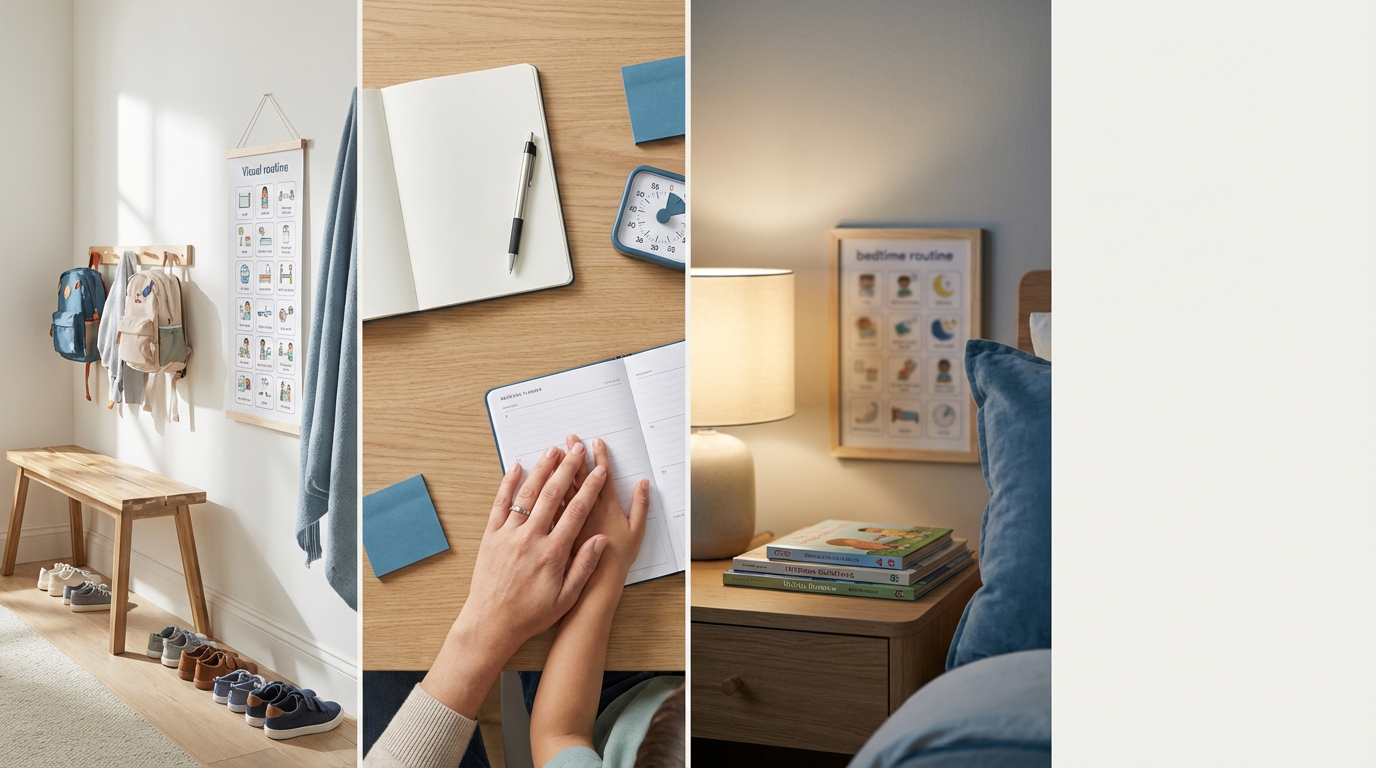
If your child falls apart every time it’s time to leave the house, turn off screens, or get ready for bed, you are so not alone. A simple visual routine chart for kids who struggle with transitions can ease a lot of that stress, especially for ADHD kids, autistic kids, and anxious little ones. Instead of nagging, you’re giving their brain a clear, calm map of “what’s next.” In this post we’ll walk through what a visual routine chart is, how to set it up, ideas for mornings, bedtime, homeschool, and preschool, plus how to make it stick for neurodivergent kids. Save this guide to come back to, and come hang out with @theclutteredblog on Pinterest for cozy routine ideas.

Quick Overview: Who This Visual Routine Chart Helps
A visual routine chart is perfect for kids who lose it when it’s time to stop a preferred activity, leave the house, or switch gears. It’s especially helpful as an ADHD kids daily visual schedule, an autism visual routine support, or a picture schedule for kids with anxiety who need to see what’s coming. You can use it with toddlers, preschoolers, and big kids at home, in homeschool, or as a simple behavior management visual chart that keeps everyone on the same page. Think of it as your daily routine chart for children’s transitions, so you’re not repeating yourself 40 times a day.
What Is a Visual Routine Chart (and Why It Helps Kids Transition)
A visual routine chart is a set of pictures (with or without words) that shows the steps of a routine or the flow of your child’s day. Instead of relying on your voice, the chart becomes an external “boss” that explains what’s happening now and what happens next. For kids with ADHD, autism, anxiety, sensory processing differences, or lagging executive function skills, visual aids for child routines reduce the mental load of remembering everything. Research and professional practice around visual schedules show that many children with autism and other neurodivergent profiles process information more easily when it’s visual, which reduces anxiety and supports smoother transitions. Over time, a visual routine chart can reduce power struggles, support behavior management, and build real independence.
Key Elements of a Calm Visual Routine Chart
A strong visual routine chart for kids has a few simple pillars that make it work in real life:
- Clear start and finish
Each routine has a clear first step and a clear “all done” visual so kids know when the transition is complete. This is especially important in kids transition struggles routine moments like leaving the playground or turning off a game. - Simple, concrete pictures
Use real photos, simple icons, or picture cards that clearly show what’s happening: brushing teeth, putting on shoes, getting into the car. For a printable visual schedule for toddlers or a morning routine visual for kids, keep it super literal and uncluttered. - Consistent routine chunks
Break the day into chunks (morning, school/activities, after‑school, bedtime) and make a small chart for each instead of one huge overwhelming one. This helps with behavior management visual charts that stay usable for both you and your child. - Kid interaction
Let your child move the pieces, flip cards, slide a marker, or check boxes as they complete each step. This builds buy‑in and acts like a kids executive function routine chart they can physically manage. - Predictable but flexible
Use the same structure most days, but show when something is different (doctor, grandparent visit, sports) with a simple visual change. This is crucial for routine charts for neurodivergent kids who crave predictability but still need to learn that plans sometimes change.
What You Need to Get Started (Simple Starter Kit)
You don’t need a fancy laminator and a classroom‑sized board to support easy transitions for resistant kids. Start with a small “starter kit” and build from there. Many families use a laminated visual schedule for kids so they can reuse it daily with dry‑erase markers, magnets, or Velcro dots. Others prefer a printable bedtime routine chart printable or morning routine visual for kids they can tape to the bathroom mirror or bedroom door. If you homeschool, a homeschool visual routine planner with blocks like “morning basket,” “independent work,” and “outdoor time” can structure your day without feeling rigid.
Here are simple pieces for your toolkit:
- Sturdy paper or cardstock (or a whiteboard).
- Picture cards (printed, hand‑drawn, or photos from your phone).
- Tape, magnets, Velcro dots, or clips to make it interactive.
- Optional laminating sheets or self‑adhesive pockets for durability.
- A visual timer for child transitions (app, sand timer, or physical visual timer).
- A small basket or envelope labeled “Done” so kids can move completed steps.
Step‑by‑Step: How to Build a Visual Routine Chart That Actually Gets Used
Here’s a simple flow to create your child’s visual routine chart without overwhelm:
- Pick one problem transition
Don’t start with the whole day. Choose one hot spot: morning rush, bedtime, leaving the park, turning off screens, or preschool drop‑off. This is where your visual routine chart for kids will have the biggest payoff first. - Brain‑dump the steps (kid level, not adult level)
Write down the routine from your child’s point of view: “wake up, go potty, get dressed, breakfast, shoes on, backpack, out the door.” For toddlers and kids with anxiety, keep the picture schedule for kids with anxiety to 3–6 steps max.
- Match each step with a picture
Use icons, quick doodles, or photos from your actual home (your bathroom sink, your front door, your child’s bed). This helps sensory processing routine visuals feel connected to your child’s real environment instead of generic clip art. - Build the chart at kid height
Arrange the pictures in order on a strip, board, or pocket chart and hang it where your child can see and touch it. For a printable visual schedule for toddlers, keep it low enough that they can reach and move the pieces. - Practice when everyone is calm
Walk through the chart together at a low‑pressure time, saying, “First we do this… then we do this,” and letting your child move each step as you go. This is especially helpful as a transition strategy for preschoolers with big feelings. - Layer in a visual timer
When you’re ready, add a visual timer for child transitions at the start of tricky switches like “5 more minutes of play, then bath.” This answers both “what happens next?” (chart) and “how long do I have?” (timer). - Adjust based on your child’s behavior
If your kids transition struggles routine still feels rocky, shrink the number of steps, add more visuals, or give more buffer time. Watch what helps your specific child and tweak slowly.
Real‑Life Routine Ideas for Different Ages and Needs
Once you’ve tried one routine, it’s fun to brainstorm more. Here are practical visual routine chart ideas you can borrow and tweak:
- Morning routine visual for kids who dawdle: wake up, bathroom, get dressed, breakfast, brush teeth, shoes, backpack by the door.
- Bedtime routine chart printable for anxious kids: bath/shower, pajamas, brush teeth, story time, cuddle/affirmations, lights out.
- Printable visual schedule toddlers version: snack, play, clean‑up, outside time, lunch, nap, quiet play.
- ADHD kids daily visual schedule: chunk the day into “Get Ready,” “School/Activities,” “Recharge,” and “Evening Routine,” with clear breaks and movement‑based transitions.
- Autism visual routine support for after‑school: snack, sensory break, homework, play, dinner, screen time, bedtime routine.
- Sensory processing routine visuals: include cards for “deep pressure break,” “swing time,” “quiet corner,” or “headphones on.”
- Homeschool visual routine planner: morning basket, reading, math, movement, project time, outdoor time, tidy‑up.
- Special needs kids transition tools: first/then boards, choice cards, and simple behavior management visual charts for “safe hands,” “inside voice,” and “take a break.”
- Kids executive function routine chart: add icons for “pack backpack,” “check tomorrow’s schedule,” “put clothes in hamper,” and “charge device.”
- Daily routine chart children transitions for weekends: breakfast, family outing, quiet time, screen block, chore time, cozy evening routine.

Life Before vs After a Visual Routine Chart
Before a visual routine chart, mornings might look like this: you’re calling out directions from the kitchen while your child melts down over socks, loses their backpack, and refuses to leave the house. Bedtime might drag on forever, with one more drink, one more hug, and a child who “can’t” turn off their brain. Transitions feel like ambushes, especially for kids with ADHD, autism, or anxiety whose nervous systems already work overtime.
After a few weeks of using a visual routine chart for kids, things usually shift in small but powerful ways. Your child can point to the chart instead of arguing, you can say “Check what’s next,” and you both know when the routine is done. A daily routine chart for children’s transitions helps them prepare mentally, so leaving the playground or turning off the tablet feels less like a surprise and more like the next expected step. It won’t be perfect, but the overall tone starts to move from frantic to “We’ve got this.”
Mindset Shifts That Make Your Visual Routine Work
The hardest part of using routine charts for neurodivergent kids is often our own expectations. We secretly hope that one laminated visual schedule kids chart will “fix” everything overnight. Instead, think of your visual routine chart as a gentle support that you’re going to practice together, not a magic behavior button. It’s normal if your child still resists or forgets—especially at the beginning.
A few mindset tips:
- Expect progress, not perfection.
- Treat the chart as a shared tool, not a punishment.
- Adjust the visuals as your child grows instead of clinging to the first version.
- Remember that kids with anxiety, autism, ADHD, or sensory processing differences genuinely need more prep time and support, not harsher consequences.
Try this simple affirmation for yourself and your child: “We are learning this routine together, one small step at a time.”
How to Use Your Charts and Planner Day‑to‑Day
Once your charts are built, the next step is using them in real life. In the morning, stand with your child at the chart and preview the day: “Here’s our morning routine, then school, then playground, then dinner and bedtime.” For a daily homeschool visual routine planner, walk through the blocks at breakfast so your child sees exactly how their day is shaped. For preschoolers, point to each picture and use short phrases like “Now snack, then playground.”
During transitions, refer to the chart instead of repeating yourself: “The chart says bath is next—let’s move our ‘play’ card to the done basket.” Picture schedules for kids with anxiety are especially powerful when paired with reassurance like “Your body likes to know what’s next.” Visual aids for child routines can also live in backpacks, on clipboards, or on a small ring for kids who move between two homes, therapies, or classrooms.
Tools, Visual Timers, and Favorite Supports
You absolutely don’t have to buy anything to start, but some tools do make life easier. A visual timer for child transitions is one of the most powerful helpers; it lets kids literally see time shrinking instead of being surprised when you say “two more minutes.” Many families like simple sand timers for toddlers and more precise countdown timers or apps for older kids.
Other favorites:
- Laminated visual schedule kids cards that can handle sticky fingers and backpacks.
- First/Then boards to bridge non‑preferred tasks (tooth brushing) with preferred ones (story time).
- Behavior management visual charts for recurring expectations like “kind hands,” “indoor voice,” and “clean up toys.”
- Sensory tools like noise‑reducing headphones, fidgets, or a cozy reading corner pictured right on the chart for sensory processing routine visuals.
- Simple checklists for kids executive function routine chart support (backpack packed, clothes ready, lunch box emptied).
Free Printable Visual Routine Toolkit (Next Steps)
If you’re ready to try this, start with just one routine: morning, after‑school, or bedtime. Sketch out your steps, match them with quick pictures, and hang your chart at kid height where your child can see and touch it every day. On thecluttered.com, you can pair this post with a simple printable bundle: a bedtime routine chart printable, a morning routine visual for kids, a homeschool visual routine planner page, and a few blank visual aids for child routines so you can customize your own.
Use the toolkit like this: pick one page, print it, fill in 3–7 steps, and walk through it together for one week before adding anything else. Over time, you can build a mini set of special needs kids transition tools that feels like it was designed for your actual family, not a Pinterest‑perfect classroom.
Common Mistakes to Avoid with Visual Routine Charts
Even the best charts can flop if a few common pitfalls sneak in. One big mistake is starting with a huge all‑day schedule that overwhelms both you and your child; start tiny instead. Another is changing the chart constantly—routine charts for neurodivergent kids work best when the core structure stays the same and only special events change.
Other mistakes:
- Expecting the chart to work without teaching it step‑by‑step.
- Using too many words and not enough pictures for toddlers and early readers.
- Treating the chart as a punishment (“Go look at the chart!”) instead of a shared support.
- Ignoring your child’s sensory needs or anxiety triggers and just focusing on “obedience.”
- Forgetting to celebrate small wins when your child uses the chart or transitions a little more smoothly.
FAQs About Visual Routine Chart for Kids Who Struggle With Transitions
How do I use a visual routine chart when I’m short on time in the mornings?
On rushed mornings, keep your morning routine visual for kids to 3–5 essential steps: get dressed, breakfast, brush teeth, shoes/backpack. You can point and say, “Do the next thing on your chart,” instead of delivering a whole speech. A visual timer for child transitions can help kids see how much time is left without you nagging every minute. If it’s really chaotic, practice the routine on a weekend so the steps feel familiar when school days are busy.
Will a visual routine chart still work if my child has ADHD or autism?
Yes—ADHD kids daily visual schedules and autism visual routine supports are some of the most researched and recommended uses for visual schedules. Kids with ADHD often benefit from external structure and visual prompts when their brain is jumping around. Many autistic children process visual information more easily than verbal, so a picture schedule can lower anxiety and reduce resistance to transitions. The key is to individualize: shorter routines, more concrete visuals, and lots of repetition.
What if my child refuses to look at or use the chart?
This is really common at first, especially for kids who are used to power struggles around transitions. Start by using the chart yourself: narrate the steps, move the cards, and celebrate your own “check‑offs.” Invite, don’t force: “Do you want to move the next card?” Kids often warm up once they realize the chart is not a punishment. You can also let them help design or decorate the chart to increase buy‑in—it becomes a kids executive function routine chart they feel ownership over instead of something done to them.
Can I use visual routine charts in a small home or tiny apartment?
Absolutely. You don’t need huge wall space to make daily routine chart children transitions work. Try smaller strips on the fridge, the bathroom mirror, or the inside of a closet door. A printable visual schedule toddlers strip near the changing area or a mini bedtime routine chart printable clipped to a lamp works just as well as a big board. For families in tight spaces or shared rooms, a portable ring of picture cards or a clipboard acts as a mini homeschool visual routine planner, behavior chart, and transition tool all in one.
How do I stay consistent without burning out?
Consistency with visual aids for child routines doesn’t mean perfection. Aim for “most days” rather than “every single transition.” Build in tiny habits: always review the chart at breakfast and before bedtime, for example. If you miss a day or a week, just pick one routine and restart—no guilt needed. Remember, routine charts for neurodivergent kids are supposed to support you too, not become another overwhelming project.
Start Small This Week
You don’t need a Pinterest‑perfect board to help your child with transitions—you just need one simple visual routine chart for kids who struggle with transitions in one tricky part of your day. Start with 3–6 steps, practice when everyone is relatively calm, and let the chart grow with your child. Tiny, consistent steps beat big, intense overhauls every time. Save this post so you can come back when you’re ready to add a new routine, and follow @theclutteredblog on Pinterest for more cozy, realistic routine ideas.