









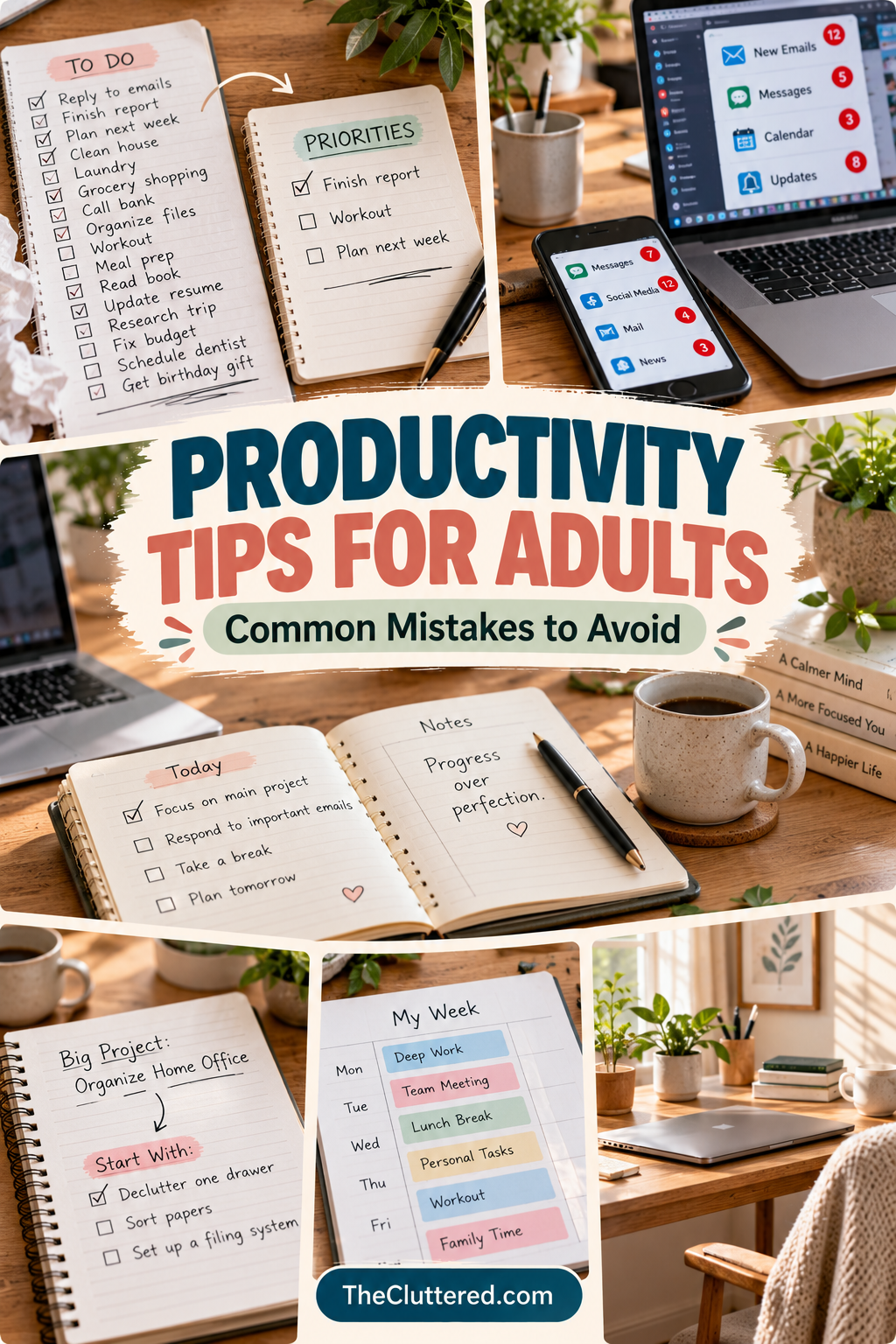


When your days are full but important tasks keep slipping, the problem may not be a lack of discipline. Many adults fall into productivity mistakes that make work harder: planning every minute, switching between tasks, reacting to notifications, or building routines that are too complicated to maintain. The good news is that small, practical changes can make your day feel clearer without turning your life into one giant optimization project.
These productivity tips for adults focus on the habits that commonly waste time and the realistic alternatives that help you prioritize, concentrate, and finish work without running yourself into the ground.
Start Here: Five Changes That Make Work Easier
- Choose one main priority. Decide what would make today feel meaningfully productive before opening your inbox.
- Turn vague tasks into actions. Replace “work on project” with a step you can begin, such as “outline the first three sections.”
- Protect a focus window. Silence optional alerts and keep unrelated tabs closed for a realistic block of time.
- Leave room in your schedule. Add transition time and a buffer for the unexpected.
- Review instead of restarting. At the end of the day, move unfinished work intentionally rather than rebuilding your entire plan.
1. Planning Too Much and Doing Too Little
Planning can create a welcome sense of control, but it becomes a productivity mistake when organizing the work replaces doing it. Rewriting lists, color-coding every task, and searching for the perfect planner may feel useful while the difficult task remains untouched.
Try this instead
- Write down everything that is competing for your attention, then choose one to three priorities for the day.
- Give each priority a concrete next action. “Prepare presentation” is broad; “draft the opening slide” is actionable.
- Use one trusted task list and one calendar for appointments or time-specific commitments.
- Set a short planning limit. When the plan is clear enough to start, begin.
Helpful reminder: A plan is a support system, not a second job. If maintaining it takes more energy than using it, simplify it.
2. Treating Every Task as Equally Important
A long to-do list can hide the difference between urgent, important, and optional work. When every item looks equally pressing, easy tasks often win simply because they offer a quick feeling of completion.
Try this instead
Before starting a task, ask what happens if it waits until tomorrow. Consider deadlines, consequences, dependencies, and the people who are waiting on your work. Choose the most consequential task you can reasonably move forward, not necessarily the smallest one.
- Must do: time-sensitive work with meaningful consequences.
- Should do: important progress that can be scheduled.
- Could do: optional improvements and low-impact extras.
Keep the categories flexible. A small administrative task may be urgent, but it should not automatically displace a major project every day.
3. Multitasking and Constant Task Switching
Answering messages while writing, checking updates during meetings, and bouncing between projects can make a day feel fast-paced. Yet frequent switching creates extra mental setup: you have to remember where you were, what matters, and what to do next.
Try this instead
- Group similar tasks, such as email replies, scheduling, and small administrative work.
- Keep a quick “later” note for unrelated thoughts that pop up during focused work.
- Finish a small, defined section before moving to another project whenever possible.
- Tell collaborators when you will check messages if your role allows it.
Some jobs require rapid responses. The goal is not to avoid every interruption; it is to reduce unnecessary switching when sustained attention would help.
4. Letting Notifications Decide the Day
Messages, app alerts, news, and quick questions can pull attention away from planned work. Even when each interruption is brief, returning to a demanding task can take effort. A phone or browser does not know which commitment matters most to you.
Try this instead
Turn off nonessential notifications, close distracting tabs, and place your phone out of reach during a focus session. If you need to remain reachable, allow priority contacts or work tools while muting everything else. Make the boundary fit your responsibilities rather than copying someone else’s routine.
When an interruption is unavoidable, write down the next step before switching away. That small note makes it easier to resume without reconstructing your train of thought.
5. Procrastinating Because the Task Feels Too Big
Procrastination is not always laziness. A task may feel unclear, tedious, emotionally uncomfortable, or too large to start. Waiting for motivation can leave you stuck, especially when the first step is not obvious.
Try the smallest useful start
- Describe the task in one sentence.
- Choose an action that can be started in a few minutes.
- Prepare what you need before the work session begins.
- Work for a short, defined interval, then decide whether to continue.
For example, “finish the report” can become “open the document and list the three points the report must cover.” The point is not to finish everything in two minutes; it is to make starting less intimidating.
6. Overestimating What Fits Into a Day
Schedules often look perfect on paper because they leave out context switching, travel, breaks, delays, and the time it takes to think. When a plan is packed from morning to evening, one surprise can make the whole day feel like a failure.
Try this instead
- Estimate task duration based on past experience, not best-case hopes.
- Leave buffer time between demanding commitments.
- Plan around your actual energy and obligations.
- Decide in advance which task can move if the day changes.
A realistic plan is not a low-ambition plan. It gives important work enough room to happen and makes it easier to recover when circumstances change.
7. Using a Productivity System That Is Too Complicated
It is easy to collect methods, apps, trackers, notebooks, and rules until the system itself becomes another source of work. If you spend more time updating your dashboard than taking the next action, the process needs fewer steps.
Keep the system lightweight
- Use one place to capture tasks so you are not searching across several lists.
- Keep appointments and time-specific commitments on a calendar.
- Review the list once a day and once a week, rather than constantly rebuilding it.
- Add a new tool only when it solves a recurring problem that your current setup cannot handle.
Test one method at a time. A simple system you actually use is more valuable than an elaborate system you abandon after a few days.
8. Confusing Busywork With Progress
Inbox cleanup, formatting, research, and small errands can be legitimate work. They become a problem when they repeatedly crowd out the task that would make the biggest difference. A full calendar is not a reliable measure of progress by itself.
Try a progress check
At the end of the day, ask: What moved forward? What is still blocked? What is the next meaningful step? If you were busy but made little progress, look for a pattern without judging yourself. Perhaps the priority was unclear, the task was too large, or other people needed to provide information first.
9. Skipping Breaks and Ignoring Your Limits
Trying to be productive every minute can backfire. Adults have responsibilities outside work, and concentration is not constant throughout the day. Skipping meals, avoiding breaks, or extending work indefinitely can leave you with less capacity to focus tomorrow.
Try this instead
Use a work-and-break rhythm that suits the task and your needs. Step away from the screen, stretch, get water, or take a brief walk when possible. Set a reasonable stopping point and make tomorrow’s first step clear before you finish. If workload demands consistently exceed available time, the answer may require renegotiating scope or deadlines—not another productivity hack.
10. Expecting a Perfect Morning Routine
Productivity advice often presents a long morning routine as the foundation for a successful day. But a routine that depends on waking early, completing many steps, and having uninterrupted time may not suit shift work, caregiving, health needs, or changing schedules.
Build a flexible start
Choose a few repeatable actions that help you begin: check your calendar, identify a priority, prepare what you need, or spend a few minutes on a task before opening optional feeds. Keep a shorter version for busy mornings. Consistency comes from making the routine realistic, not from making it elaborate.
A Simple Daily Productivity Reset
- Capture: put loose tasks and reminders in one trusted place.
- Choose: select one main priority and a small number of supporting tasks.
- Clarify: define the next physical or visible action for the priority.
- Protect: set aside a realistic focus window and reduce avoidable interruptions.
- Adjust: if something changes, reschedule intentionally instead of abandoning the whole plan.
- Close: note what moved forward and identify tomorrow’s first step.
This reset should take only as long as it needs to make the day clearer. If it starts becoming a complicated ritual, remove steps until it feels useful again.
Productivity Mistakes Checklist
- I choose a main priority before reacting to messages.
- I turn vague projects into clear next actions.
- I keep my daily task list realistic.
- I distinguish urgent work from important work.
- I reduce unnecessary multitasking.
- I silence optional notifications during focus time.
- I leave buffer time in my schedule.
- I start difficult tasks with a small action.
- I batch similar low-effort tasks when it makes sense.
- I use one trusted place to capture tasks.
- I avoid switching productivity apps without a clear reason.
- I measure progress by meaningful outcomes, not just activity.
- I take breaks when they help me reset.
- I adapt routines to my real responsibilities.
- I review unfinished tasks and reschedule them deliberately.
- I notice recurring obstacles without turning them into self-criticism.
- I protect a reasonable stopping point when possible.
Frequently Asked Questions
What is the most common productivity mistake adults make?
One frequent mistake is treating every task as equally important. Without clear priorities, easy or urgent-feeling tasks can consume the time needed for meaningful work. Choosing a main priority helps create direction.
How can I be more productive when I have a busy schedule?
Start with a realistic plan: choose one main outcome, define its next action, and leave room for interruptions. Group similar tasks and avoid filling every available minute with commitments.
How do I stop procrastinating on a task I keep avoiding?
Identify why it feels difficult, then make the first step smaller and more specific. Preparing materials and working for a short interval can help you begin without waiting for perfect motivation.
Do productivity apps actually help?
They can help when they solve a real problem, such as remembering commitments or seeing deadlines. They are less useful when maintaining the app becomes more work than the tasks themselves. Start with the simplest system that meets your needs.
How can I stay productive without burning out?
Set realistic expectations, take breaks when possible, protect time away from work, and speak up when the workload consistently exceeds available capacity. Productivity should support a sustainable life, not require constant output.
The most useful productivity improvement is usually not doing more at any cost. It is noticing which habits create friction, choosing one practical change, and giving it enough time to become familiar. Start with the mistake that costs you the most attention today, then build a simpler routine around the work and life you actually have.
Productivity Mistakes and Better Habits: Visual Inspiration
Explore these visual references for practical ways to plan more clearly, protect your focus, and make everyday work more manageable.
Start with one clear outcome

A planning graphic about turning intentions into actionable work.
A simple task-to-action framework can make a crowded day feel more manageable by clarifying what needs to happen next.
Try choosing one meaningful outcome, then list the next visible action and a realistic time to begin.
Make your to-do list usable

A productivity infographic about common to-do list errors and practical fixes.
A list helps only when it guides decisions. Vague tasks, overloading the day, and never reviewing priorities can make it harder to start.
Rewrite broad items as specific actions, keep the daily list short, and move unfinished tasks deliberately instead of carrying everything forward.
Avoid common time-management traps

A time-management graphic focused on mistakes that make a schedule less effective.
A schedule can fail when it ignores transition time, interruptions, task size, or the energy needed for demanding work.
Build in buffers, estimate tasks honestly, and leave room for unexpected requests rather than planning every minute.
Choose methods that fit real life

A list-style productivity graphic presenting actionable ways to work with more focus.
Productivity methods are tools, not rules. A system is useful when it makes the next step clearer and is easy enough to repeat.
Test one technique at a time—such as time blocking or a short focus session—and keep it only if it helps your actual routine.
Notice activities that drain momentum

A productivity-themed pin about activities that can consume time without meaningful progress.
Some tasks feel productive because they are easy to complete, but they may not move an important project forward.
Before starting, ask whether the activity is necessary now, can be shortened, delegated, or postponed.
Protect your attention

A focus-oriented graphic about reducing distractions and improving concentration.
Frequent interruptions make it harder to stay with complex work and can turn a short task into a stop-start process.
Silence nonessential alerts, close unrelated tabs, and set a visible focus window that colleagues or household members can understand.
Make the first step smaller

A practical graphic about reducing delay and getting started on tasks.
Procrastination often grows when a task feels unclear, uncomfortable, or too large to begin all at once.
Define a first step that takes only a few minutes, prepare the materials, and give yourself permission to continue after starting.
Question advice that adds pressure

An editorial-style productivity graphic about lessons learned from common productivity advice.
A routine that works for someone else may not match your responsibilities, energy, or working environment.
Keep the advice that reduces friction and discard rules that add tracking, guilt, or complexity without improving results.
Measure progress, not busyness

A graphic about signs of staying busy without making meaningful progress.
A full calendar and a long checklist do not automatically mean the most important work is moving forward.
At the end of the day, identify what actually changed, what remains blocked, and the one priority that deserves attention tomorrow.
Use a gentle anti-procrastination routine

A pin about repeatable habits that help people begin tasks sooner.
Reliable starting cues can reduce the need to wait for motivation and make difficult tasks less intimidating.
Pair a task with a clear cue, remove one obstacle before you begin, and make the starting action small enough to repeat.
Build a realistic productivity toolkit

A broad productivity tips graphic with practical ideas for daily work.
A small set of dependable habits is often easier to maintain than a large collection of hacks.
Choose one planning habit, one focus habit, and one shutdown habit; practice them before adding anything else.
Make focus easier to sustain

A productivity graphic about focus strategies for people who struggle with distractions.
Focus is influenced by the environment as well as willpower. Reducing decisions and interruptions can make concentration easier.
Keep only the materials needed for the current task nearby and decide in advance what you will do when your attention drifts.
Try a two-minute starting action

A pin explaining a short starting rule for tasks that are easy to delay.
A tiny first action can lower the barrier to beginning, especially when the task feels bigger in your head than it does in practice.
Use the rule to start or finish genuinely small tasks, but do not let tiny tasks crowd out important work that needs protected time.
Simplify your daily workflow

A productivity graphic offering ideas for making everyday work more efficient.
A routine becomes more useful when it reduces repeated decisions instead of adding another layer of administration.
Batch similar errands, prepare tomorrow's first task, and keep frequently used tools easy to reach.
Start with beginner-friendly methods

A beginner-oriented productivity tips graphic covering several simple approaches.
Beginners can lose time trying to choose the perfect system before they have learned what their days actually require.
Begin with a short daily priority list and a realistic calendar, then adjust based on what repeatedly gets in the way.
Identify time-wasting mistakes

A graphic about productivity mistakes that quietly consume time.
Small recurring habits—such as checking messages too often or rewriting plans—can take attention away from meaningful tasks.
Track where your time goes for a few ordinary days and choose one repeatable source of friction to change first.
Recognize everyday productivity killers

A list-style pin about common habits that reduce daily productivity.
Naming a recurring blocker makes it easier to change the surrounding system rather than blaming yourself for having a difficult day.
Pick the most frequent obstacle, decide on one boundary or workaround, and review whether it helped at the end of the week.
Replace delay with a simple start

A productivity graphic focused on practical ways to stop postponing work.
Waiting until you feel completely ready can keep a task stuck. A clear starting ritual gives you something concrete to do instead.
Open the document, write a rough first sentence, or work for a short timed interval before evaluating the result.
Watch for habits that undermine the day

A graphic about everyday habits that can interfere with productive work.
The first minutes of the day can be lost to reactive checking, unclear priorities, or jumping between unrelated tasks.
Before opening messages, decide on the day's most important task and prepare the first action you can complete.
Break patterns that repeatedly derail focus

A habit-focused pin about patterns that can undermine concentration and follow-through.
A habit becomes costly when it repeats automatically and pushes important work aside, even if each instance seems small.
Notice the cue that triggers the habit, then make a replacement behavior easier to perform than the old one.
Stop doing low-value work by default

A productivity graphic about behaviors to stop in order to work more intentionally.
Removing unnecessary activity can create more room for priorities without demanding that every hour become more intense.
Review recurring commitments and routines; simplify, decline, batch, or remove one item that no longer serves a clear purpose.
Separate distraction from personal failure

A graphic reframing focus difficulties as a problem to solve rather than a personal flaw.
When attention is fragmented, self-criticism rarely provides a practical plan. A specific environmental adjustment is easier to test.
Identify whether the distraction comes from notifications, unclear instructions, noise, or fatigue, then address the cause you can control.
Reduce the biggest productivity blockers

A productivity pin about identifying and removing common obstacles to effective work.
The best improvement is often not another app or a longer routine, but removing one repeated obstacle from the workday.
Choose a blocker with a clear fix, such as batching messages or preparing materials, and keep the change simple enough to maintain.
Use a system that stays simple

A graphic about why an overly complicated productivity system can stop working.
If maintaining the system takes more effort than doing the work, the system needs fewer steps—not more rules.
Keep one trusted place for tasks, one calendar for time-specific commitments, and a brief review to decide what matters next.
Audit the mistakes you repeat

A productivity infographic about common mistakes and ways to improve everyday work.
A short audit can reveal patterns that are easy to miss when every day feels busy, including overplanning, multitasking, and avoiding difficult tasks.
Choose one mistake that appears repeatedly, write down its trigger, and test a specific replacement for one week before changing anything else.
Love these ideas? Follow @theclutteredblog on Pinterest for more cozy, practical gift inspiration!