












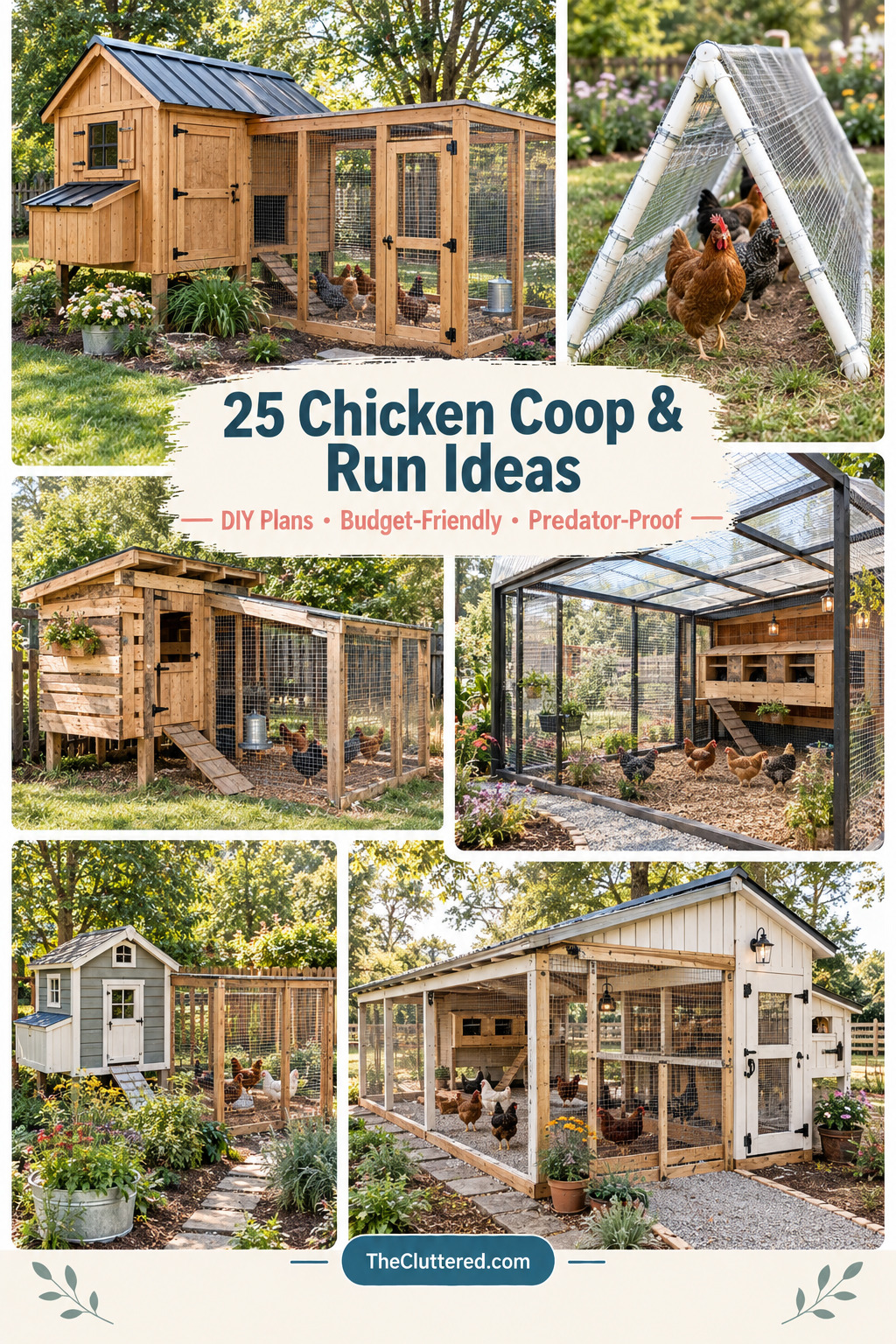


Building a chicken coop and run doesn’t have to be overwhelming. Whether you’re raising your first backyard flock or upgrading your current setup, finding the right design makes all the difference in keeping your chickens safe, healthy, and happy. This guide walks you through 25 practical chicken coop and run ideas that balance functionality, budget, and aesthetics—so you can create a space that works for both you and your feathered friends.
Quick Start: Find What Fits Your Situation
Small backyard? Focus on compact designs with vertical space and attached runs.
First-time chicken keeper? Start with simple, walk-in coops that make daily care easier.
Tight budget? Pallet coops and DIY builds can cost under $300.
Predator concerns? Prioritize hardware cloth, covered runs, and buried barriers.
Understanding Chicken Coop and Run Basics
Before diving into specific designs, it’s important to understand what makes a successful chicken setup. Your coop provides shelter, nesting space, and roosting areas, while the run gives your flock safe outdoor access for exercise and foraging.
The best chicken coop and run combinations share several key features: adequate ventilation to prevent moisture buildup, predator-proof construction with secure latches and hardware cloth, easy access for cleaning and egg collection, and enough space for your flock to move comfortably.
Space Requirements by Flock Size
One of the most common questions is how much space chickens actually need. The general rule is 4 square feet per chicken inside the coop and 10 square feet per chicken in the run. However, more space is always better—especially if your chickens will spend significant time confined.
| Flock Size | Minimum Coop Size | Minimum Run Size | Ideal For |
|---|---|---|---|
| 4 chickens | 4′ × 4′ (16 sq ft) | 8′ × 10′ (80 sq ft) | Small backyards, beginners |
| 6 chickens | 6′ × 6′ (36 sq ft) | 10′ × 12′ (120 sq ft) | Average suburban yards |
| 10 chickens | 8′ × 10′ (80 sq ft) | 12′ × 16′ (192 sq ft) | Larger flocks, serious egg production |
| 12+ chickens | 10′ × 12′ (120 sq ft) | 16′ × 20′ (320 sq ft) | Homesteads, small farms |
Essential Features Every Coop Needs
Regardless of your design choice, certain elements are non-negotiable for a functional chicken coop and run:
- Nesting boxes: One box for every 3-4 hens, positioned lower than roosting bars
- Roosting bars: 2-4 inches wide, allowing 8-12 inches per chicken
- Ventilation: Windows, vents, or gaps near the roofline for air circulation
- Predator-proofing: Hardware cloth (not chicken wire), secure latches, and buried barriers
- Easy-clean flooring: Deep litter method or removable droppings trays
- Weather protection: Proper roofing, windbreaks, and shade options
- Access doors: Human-sized door for cleaning, chicken pop door for run access
Choosing Your Build Approach
Your budget, skill level, and timeline will influence which type of chicken coop and run makes sense for your situation.
Budget-Friendly Options ($100-$300)
Pallet coops, repurposed materials, and simple A-frame designs keep costs low while still providing safe housing. These work well for small flocks and beginners testing the waters of chicken keeping.
Mid-Range Builds ($300-$800)
Quality lumber, proper hardware cloth, and thoughtful design features create coops that last for years. This range allows for walk-in designs, better ventilation, and more attractive aesthetics.
Premium Setups ($800+)
Custom builds with premium materials, automatic doors, integrated runs, and landscaping considerations create showpiece coops that blend function with beauty.
Chicken Coop and Run Planning Checklist
- Determine flock size and choose appropriate dimensions
- Check local zoning laws and HOA requirements
- Select level building site with good drainage
- Calculate materials and create shopping list
- Gather tools: saw, drill, level, tape measure, hardware
- Purchase hardware cloth (1/2 inch or 1/4 inch)
- Plan for predator-proof foundation or buried barriers
- Design ventilation system with adjustable vents
- Include nesting boxes (1 per 3-4 hens)
- Install roosting bars at proper height
- Add secure latches on all doors
- Plan for easy egg collection access
- Consider automatic door opener for convenience
- Add run with adequate space and shade
- Install feeders and waterers in accessible locations
Practical Application Tips
Building your chicken coop and run is just the beginning. Here’s how to make your setup work long-term:
Location matters. Place your coop on high ground to prevent flooding, ensure morning sun reaches the run, and position it conveniently for daily access. Consider prevailing winds when placing ventilation openings.
Think about maintenance. A walk-in coop makes cleaning infinitely easier than crawling through a small door. Removable droppings trays, accessible nesting boxes, and wide doors save time and frustration.
Plan for all seasons. Summer requires shade and ventilation; winter needs wind protection and dry conditions. Covered runs extend outdoor time in rain or snow.
Start simple, expand later. It’s easier to add features than rebuild entirely. Begin with essentials, then add automatic doors, rainwater collection, or expanded runs as you learn what works for your flock.
Frequently Asked Questions
How much does it cost to build a chicken coop and run?
A basic DIY chicken coop and run for 4-6 chickens typically costs $200-$500 using new lumber and hardware. Pallet or repurposed material builds can run $100-$300. Premium custom coops with high-end materials and features range from $800-$2,000+. The key is matching your budget to your flock size and long-term chicken-keeping goals.
Should I build a walk-in chicken coop?
Walk-in coops are worth it if you have more than 6 chickens or plan to keep chickens long-term. Being able to stand inside makes cleaning, feeding, and health checks much easier. For small flocks (2-4 chickens) or temporary setups, a smaller reach-in coop may suffice.
What’s the best flooring for a chicken run?
The best run flooring depends on your climate and goals. Grass provides natural foraging but wears out quickly. Sand drains well and is easy to rake but needs regular replenishment. Wood chips or mulch work well in covered runs. Many keepers use a combination—grass in sunny areas, wood chips in shaded spots, and gravel in high-traffic zones near doors.
How do I predator-proof my chicken run?
Use 1/2 inch or 1/4 inch hardware cloth (not chicken wire) on all openings. Bury it 12 inches deep around the perimeter or lay an 18-inch apron outward from the base. Install secure latches that raccoons can’t manipulate. Cover the run top to protect from hawks. Add motion-sensor lights for nighttime deterrence.
Can I move a chicken coop and run after building it?
Permanent coops are difficult to relocate, but mobile chicken tractors and portable coops on skids can be moved relatively easily. If you think you might want to relocate your setup, build on skids from the start and keep the structure lightweight. Otherwise, plan your location carefully before construction.
Ready to see these concepts in action? Scroll through the 25 chicken coop and run ideas below for visual inspiration, specific design details, and real-world examples that will help you create the perfect home for your backyard flock.
Modern Walk-In Chicken Coop with Attached Run

Source: Craft-Mart via Pinterest
This spacious walk-in chicken coop design features a 20′ × 9′ footprint that gives you room to stand comfortably while caring for your flock. The modern construction uses natural wood with black hardware cloth for a clean, contemporary look that blends well with most backyard aesthetics.
What makes this design stand out is the predator-proof construction throughout. The attached run provides ample outdoor space while keeping chickens completely secure. The walk-in height eliminates the back strain of bending down for daily chores, making this ideal for anyone planning long-term chicken keeping.
You can adapt this design by adjusting the dimensions to fit your specific space. Consider adding automatic door openers, enhanced ventilation near the roofline, or integrating rainwater collection systems. The modular design also allows you to expand the run later if you increase your flock size.
40-Foot Pallet Chicken Run Under $120

Source: Medium via Pinterest
This impressive 40-foot chicken run demonstrates that budget-friendly doesn’t mean low-quality. Built primarily from free pallets and basic hardware, this design proves you can create a spacious, functional run for under $120—perfect for beginners or anyone watching their homesteading budget.
The pallet construction provides sturdy framing while keeping costs minimal. The long run gives chickens plenty of room to forage, scratch, and exercise, which leads to happier, healthier birds and better egg production. The simple design also means you don’t need advanced carpentry skills to build it.
To recreate this on your property, source free pallets from local businesses, invest in quality hardware cloth for predator protection, and plan your run dimensions based on available space. You can modify the length, add a covered section for weather protection, or integrate it with an existing coop. Consider adding a gate for easy access and rotation if you plan multiple runs.
Modern A-Frame Chicken Runway Tunnels

Source: Home Scovet via Pinterest
These sleek A-frame chicken runway tunnels offer a modern solution for connecting your coop to different areas of your yard. Constructed with PVC arches and wire mesh, they create predator-safe pathways that allow chickens to explore while staying completely protected.
The lightweight, movable design means you can reposition the tunnels as needed to give chickens access to fresh grass or garden areas. The arched structure sheds rain efficiently and the transparent mesh allows natural light while maintaining security. This design works particularly well for urban backyards where space is limited but you still want to provide variety for your flock.
Build your own using PVC pipes cut to your desired width, heavy-duty wire mesh or hardware cloth, and zip ties or wire for assembly. Add ground anchors for stability in windy areas. You can create multiple tunnel sections to form longer pathways or connect different zones in your yard. Consider adding a removable cover for extreme weather protection.
Rustic Chicken Coop with Natural Herbs and Straw

Source: Amazon via Pinterest
This charming rustic chicken coop creates a warm, inviting space that prioritizes chicken comfort and natural behaviors. The interior features soft straw bedding, natural herbs for aromatherapy and pest control, and thoughtful elements like ramps, roosting areas, and a dedicated dust bath zone.
The warm lighting and natural wood construction create an aesthetically pleasing environment that looks as good as it functions. This design recognizes that happy, comfortable chickens lay better and stay healthier. The dust bath area is particularly important—it’s a natural behavior that helps chickens maintain feather health and control parasites.
Recreate this cozy atmosphere by using natural materials throughout, adding fresh herbs like lavender, mint, or rosemary to nesting boxes, providing multiple roosting heights, and ensuring adequate ventilation while maintaining warmth. The deep litter method with straw works well here. Add a dedicated dust bath area filled with dry dirt and diatomaceous earth for optimal chicken health.
Chicken Coop and Run Integrated with Garden

Source: Pinterest
This comprehensive farm layout demonstrates how to successfully integrate a chicken coop and run with your garden space. The design shows thoughtful placement that maximizes both chicken welfare and garden productivity, creating a symbiotic relationship between your flock and growing areas.
The strategic positioning allows chickens to access different zones while protecting sensitive plants. The run design incorporates natural barriers and fencing that keeps chickens contained without creating an eyesore. This approach works especially well for homesteaders who want chickens to contribute to garden health through pest control and fertilization.
When planning your integrated setup, consider creating rotation zones where chickens can access different garden areas seasonally. Use sturdy fencing that’s at least 6 feet tall to prevent escape and deter predators. Add covered sections for weather protection and ensure easy access paths for both you and your chickens. Plant chicken-friendly herbs and vegetables near the run for easy foraging.
Luxury Modern Black Chicken Coop

Source: Pinterest
This stunning luxury chicken coop proves that functional doesn’t mean sacrificing style. The modern black exterior creates a sophisticated look that complements contemporary homes while providing top-tier housing for your flock. Premium materials and thoughtful design details elevate this beyond a basic coop.
The sleek black finish is not just aesthetically pleasing—it’s also practical, as darker colors show less dirt and wear over time. The contemporary design likely includes features like automatic doors, enhanced ventilation systems, and predator-proof construction throughout. This is the kind of coop that makes neighbors stop and ask questions.
To achieve this look, use high-quality exterior paint or stain in black or charcoal, invest in premium hardware and latches, and consider adding modern touches like solar-powered lighting or automatic waterers. The design works best with clean lines, minimal ornamentation, and attention to detail. While the initial investment is higher, the durability and visual appeal make it worthwhile for serious chicken keepers.
Paint Chicken Wire Black for Invisible Fencing

Source: Jardinova Plantas via Pinterest
This simple yet brilliant trick transforms standard chicken wire from an eyesore into a nearly invisible barrier. Painting your fencing black makes it blend into the background, creating a clean, natural look in your garden without the visual clutter of traditional silver or galvanized wire.
The dark color recedes visually against most garden backgrounds, allowing your plants and landscape design to take center stage while still providing complete predator protection for your chickens. This is particularly effective for runs that border flower gardens or areas where you want to maintain an attractive aesthetic.
To implement this, use outdoor-rated spray paint or brush-on paint specifically designed for metal. Apply 2-3 thin coats for even coverage and durability. Black or dark green work best for blending into natural settings. The paint also helps protect the wire from rust, extending the life of your fencing. This small investment of time and money makes a huge visual difference.
Homestead Garden with Chickens and Vegetables

Source: Pinterest
This gorgeous homestead setup showcases the perfect marriage of chicken keeping and vegetable gardening. The chicken coop sits harmoniously among lush vegetable beds, creating a productive ecosystem where chickens and plants support each other.
The design demonstrates thoughtful placement that allows chickens to contribute to garden health through pest control and natural fertilization while keeping them contained and protected. The surrounding gardens provide shade, wind protection, and even supplemental forage for the flock. This is sustainable homesteading at its most beautiful and functional.
Create your own integrated homestead by planning chicken access to garden areas after harvest, using chickens to prepare beds for planting, and positioning the coop for easy access to both chickens and gardens. Plant chicken-safe vegetables and herbs near the run for dual-purpose growing. Consider succession planting so chickens can rotate through different areas throughout the growing season.
DIY Chicken Coop Plans with Detailed Blueprints

Source: Etsy via Pinterest
These detailed DIY chicken coop plans provide everything you need to build a professional-quality coop from scratch. The illustrated blueprints include step-by-step instructions, measurements, material lists, and clear diagrams that make the building process accessible even for beginners.
The plans are based on a functional, real-life chicken coop design that’s been proven to work well for backyard flocks. You get guidance on both the coop structure and the attached run, ensuring your chickens have safe, comfortable housing. The hand-drawn DIY style makes the plans easy to follow without overwhelming technical jargon.
When using these plans, gather all materials before starting, double-check measurements before cutting, and don’t rush the construction process. The plans work well for various skill levels and can be customized to your specific needs. Consider building during dry weather and having a helper for larger assemblies. The investment in quality plans saves time, money, and frustration compared to figuring everything out as you go.
Mud-Free Paths from Coop to Run

Source: Types of Chicken via Pinterest
These 15 mud-free path solutions solve one of the most common chicken-keeping frustrations: the muddy mess between coop and run. Whether you use gravel, wood chips, pavers, or other materials, creating a solid path keeps chickens clean, makes your job easier, and prevents the unsightly mud pits that form in high-traffic areas.
A well-designed path protects chicken foot health by providing stable footing, reduces the amount of dirt and mud tracked into the coop, and makes daily chores infinitely more pleasant. The right solution depends on your climate, budget, and aesthetic preferences, but all options share the goal of keeping things clean and dry.
Popular options include crushed gravel for drainage, wood chips for a natural look, concrete pavers for durability, or a combination approach. Install proper drainage underneath, use edging to contain materials, and plan for a width that allows easy access—typically 18-24 inches minimum. Consider adding a covered section for extra weather protection in rainy climates.
Easy-to-Manage Chicken Runway for Functional Backyards

Source: TheSnugHome Decor via Pinterest
This easy-to-manage chicken runway design prioritizes functionality without sacrificing aesthetics. The setup uses durable materials and simple layouts that stand the test of time, making it perfect for small farms, cozy gardens, or anyone looking to balance practicality with style in their backyard chicken operation.
The timeless design approach means you’re not chasing trends—you’re building something that will work well for years to come. Durable materials reduce maintenance, simple layouts make cleaning and care straightforward, and the overall setup integrates seamlessly into a functional backyard space.
Focus on quality hardware cloth, sturdy framing, and weather-resistant materials from the start. Choose a layout that gives you easy access for daily chores and allows for simple expansion if needed. The design works well with various coop styles and can be adapted to different yard sizes. Remember that the best chicken setup is one you’ll actually enjoy maintaining.
Large Chicken Run with Pallet Construction

Source: Medium via Pinterest
This large chicken run demonstrates how pallet construction can create spacious, durable housing without breaking the bank. The design combines affordability with functionality, showing that budget-friendly doesn’t mean compromising on space or security for your flock.
The pallet framework provides sturdy support while keeping material costs minimal. The generous run size gives chickens plenty of room to move, forage, and exhibit natural behaviors—key factors in maintaining healthy, productive birds. The simple construction methods mean you don’t need advanced carpentry skills to build it yourself.
To build your own, source free or inexpensive pallets, invest in quality hardware cloth for predator protection, and plan your dimensions based on flock size. Reinforce the structure at stress points, add a gate for easy access, and consider a covered section for weather protection. This approach works especially well for growing flocks or when you want to maximize run space on a limited budget.
Walk-In Chicken Coop Plans for 10-12 Chickens

Source: Shop via Pinterest
These walk-in chicken coop plans are specifically designed for flocks of 10-12 chickens, providing the perfect balance of space and manageability for medium-sized backyard operations. The walk-in height makes daily care comfortable and efficient, while the thoughtful layout maximizes usable space.
The plans include detailed specifications for coop dimensions, nesting box placement, roosting bar configuration, and run attachment. This size is ideal for families wanting a steady egg supply without the complexity of a large-scale operation. The design prioritizes ease of cleaning, predator protection, and chicken comfort.
When building from these plans, ensure you have adequate backyard space (typically 8’×10′ minimum for the coop plus run area), gather all materials before starting, and follow the step-by-step instructions carefully. The walk-in design is worth the extra material cost if you’re committed to long-term chicken keeping. Consider adding ventilation upgrades and automatic features for enhanced convenience.
Easy Access Walk-In Coop with Egg Collection Door

Source: Home Scovet via Pinterest
This thoughtfully designed walk-in chicken coop eliminates daily frustrations with features like an external egg collection door, predator-proof latches, and a deep litter system that reduces cleaning frequency. The design saves you time and back strain while keeping your flock secure and comfortable.
The external egg collection door means you can gather fresh eggs without entering the coop—a small convenience that adds up over time. The deep litter system minimizes mucking out, and the walk-in height makes all chores more comfortable. This is the kind of design that makes chicken keeping sustainable for years to come.
Build this with standard lumber, install quality predator-proof latches on all access points, and create the external egg door at a comfortable height. Use the deep litter method with carbon-rich materials like pine shavings or straw. The walk-in design requires more initial space and materials but pays dividends in daily usability. Perfect for beginners upgrading from a basic hutch or experienced keepers who value efficiency.
Simple Raised Chicken Coop with Run

Source: Facebook via Pinterest
This simple raised chicken coop design demonstrates that effective doesn’t have to mean complicated. The elevated construction provides natural ventilation underneath, deters predators, and makes cleaning easier. The attached run gives chickens safe outdoor access while maintaining a compact footprint.
Raising the coop off the ground offers multiple benefits: improved air circulation keeps the interior drier, rodents have harder time accessing the structure, and you gain usable space underneath for storage or shade. The simple design is accessible for DIY builders of all skill levels.
Build this with sturdy framing to support the elevated structure, use quality hardware cloth for the run, and ensure the ramp is gentle enough for chickens to navigate comfortably. Add nesting boxes on the side for easy egg collection and include adequate ventilation near the roofline. This design works well for small to medium flocks and fits nicely in suburban backyards.
8 Simple Steps to Build a Chicken Run

Source: Fowl Family via Pinterest
This straightforward 8-step guide breaks down chicken run construction into manageable tasks that even beginners can handle. The process keeps your chickens safe and happy while making the building process stress-free for you. No advanced carpentry skills required—just follow the steps and you’ll have a functional run.
The guide covers everything from planning and materials selection to final assembly and predator-proofing. By simplifying the process, it removes the intimidation factor that keeps many people from building their own chicken setups. The result is a secure, functional run that protects your flock.
Key steps typically include: planning your dimensions, gathering materials, building the frame, attaching hardware cloth, adding a gate, securing the base, installing a roof or cover, and final predator-proofing checks. Take your time with each step, double-check measurements, and don’t skip the predator-proofing details. The upfront effort creates years of secure chicken keeping.
Compact 5’×8′ Chicken Coop with Integrated Run

Source: Etsy via Pinterest
This compact 5’×8′ chicken coop with integrated run is perfect for small flocks and limited spaces. The modern wooden design features thoughtfully planned joinery details and comes with comprehensive construction instructions in both imperial and metric measurements, making it accessible to builders everywhere.
The design was created specifically for a small flock of pet chickens, balancing comfort and practicality without wasting space or materials. The integrated run maximizes the usable area while keeping the overall footprint manageable for suburban backyards. The construction guide includes detailed drawings and a complete material list.
Build this using quality lumber, follow the step-by-step instructions carefully, and pay attention to the joinery details for a sturdy final product. The compact size makes it ideal for first-time builders or those with space constraints. Consider adding insulation if you live in an area with temperature extremes, and customize the finish to match your home’s aesthetic.
Modern Chicken Run Ideas for Stylish Backyards

Source: TheSnugHome Decor via Pinterest
These modern chicken run ideas prove that functional predator-safe setups can also enhance your backyard aesthetics. Creative wire enclosures, covered runs, and landscape-friendly designs create spaces that work for both your flock and your overall outdoor living area.
The contemporary approach uses clean lines, quality materials, and thoughtful integration with existing landscaping. Instead of hiding the chicken run as an eyesore, these designs make it a cohesive part of the backyard. This is perfect for urban farming enthusiasts who want productivity without sacrificing style.
Achieve this look by using black or dark-colored hardware cloth, creating clean geometric shapes, adding architectural elements like arched roofs or modern gates, and integrating plantings around the perimeter. The key is treating the chicken run as part of your overall landscape design rather than an afterthought. Use quality materials that will look good for years.
Amish-Made Chicken Coops with Run Areas

Source: Backyard Escapes via Pinterest
These Amish-made chicken coops bring traditional craftsmanship to modern chicken keeping. Fully assembled and ready to use, they feature quality construction with integrated run areas that provide immediate housing for your flock without the hassle of DIY building.
Amish builders are known for their attention to detail, quality materials, and sturdy construction that lasts for years. These coops typically feature solid wood construction, proper ventilation, secure hardware, and thoughtful design elements that come from generations of practical building knowledge.
While the initial investment is higher than DIY options, you’re paying for expert craftsmanship, time savings, and a product that will last. The coops arrive ready to place and use, making them ideal for those who want quality housing but lack the time, tools, or skills to build. Consider this option if you value convenience and long-term durability.
Chicken Run That Blends Beautifully into Your Backyard

Source: Middle Kingdom Rescue via Pinterest
These clever backyard chicken run designs transform what could be an eyesore into an attractive part of your outdoor space. Using natural borders, house-adjacent layouts, and thoughtful landscaping, these setups keep chickens functional and decorative simultaneously.
The key is treating the run as a garden feature rather than a necessary evil. Natural materials, strategic plantings, and design choices that complement your existing landscape create a cohesive look. This approach works especially well for chicken keepers who take pride in their overall yard aesthetics.
Blend your run by using natural wood instead of metal framing, planting screening vegetation around the perimeter, choosing hardware cloth painted to match surroundings, adding decorative gates or arbors, and positioning the structure to complement existing garden features. The result is a chicken setup you’ll be proud to show guests.
Large Chicken Coop Layouts for Growing Flocks

Source: Middle Kingdom Rescue via Pinterest
These seven big chicken coop layouts are designed specifically for backyard farmers with growing flocks. The spacious designs accommodate expansion and provide the room serious chicken keepers need for healthy, productive birds.
Large-scale layouts require different planning than small coops. You’ll need to consider traffic flow, multiple access points, efficient cleaning systems, and adequate ventilation throughout the structure. These designs address those challenges while maintaining practicality for daily management.
When planning a large coop, think about future flock size, divide the space into manageable zones, install multiple nesting areas to prevent competition, ensure adequate roosting space, and plan for efficient feed and water distribution. The upfront planning prevents headaches as your operation grows. These layouts work well for homesteaders, serious egg producers, or anyone who’s caught the chicken-keeping bug.
Walk-In Chicken Coop Ideas and Layout Plans

Source: Middle Kingdom Rescue via Pinterest
This comprehensive guide to walk-in chicken coops provides simple DIY plans and layout ideas that make daily chicken care significantly easier. The walk-in design transforms egg collecting, cleaning, and feeding from chores into manageable tasks.
The guide covers both small and large flock setups, offering practical advice that works in real gardens with real constraints. The budget-friendly approach means you don’t need to spend a fortune to get the benefits of a walk-in design. Interior layout inspiration helps you maximize usable space.
Key considerations include choosing the right height for comfortable standing, planning interior zones for different functions, ensuring adequate ventilation at human and chicken levels, installing good lighting for early morning or evening chores, and creating smooth transitions between coop and run. The investment in a walk-in design pays off every single day you care for your flock.
Large Chicken Run Ideas for Backyard Flocks

Source: Backyard Chicken Ideas via Pinterest
These large chicken run ideas address the common need for more space as flocks grow or when you realize your chickens need more room to thrive. The designs combine sturdy fencing, covered areas, and practical layouts to create safe spaces where chickens can roam freely.
A spacious run reduces boredom, decreases aggressive behaviors, improves egg production, and gives chickens room to exhibit natural foraging and dust-bathing behaviors. The covered sections protect from weather and aerial predators while still allowing sunlight and fresh air.
When building a large run, use heavy-duty hardware cloth throughout, reinforce corners and gates, add multiple access points for easy management, create shaded areas for hot weather, and consider a rotation system to prevent ground wear. The extra space and thoughtful design create a healthier, happier flock.
DIY Plans for 6-8 Hen Chicken Coop

Source: Etsy via Pinterest
These detailed DIY plans guide you through building a chicken coop perfectly sized for 6-8 hens. The step-by-step woodworking project includes everything needed to create a sturdy, functional backyard poultry enclosure with professional results.
The plans are designed for intermediate DIY builders who want quality results without excessive complexity. The 6-8 hen capacity is ideal for families wanting a steady egg supply without overwhelming maintenance. The woodworking approach ensures durability and allows for customization.
Follow the PDF instructions carefully, use quality lumber and hardware, take your time with measurements and cuts, and don’t skip the predator-proofing details. The plans typically include coop dimensions, nesting box placement, roosting bar specifications, and run attachment details. This size is perfect for growing your chicken-keeping skills while providing excellent housing for your flock.
Dreamy DIY Chicken Coops That Complete Your Backyard

Source: Country Living via Pinterest
These dreamy DIY chicken coops prove that functional chicken housing can also be beautiful backyard features. The large coop and run plans create spaces that enhance your outdoor living area while providing excellent care for your flock.
The designs featured in this collection range from rustic farmhouse styles to modern minimalist builds, showing that chicken coops can complement any aesthetic. Each design balances practicality with visual appeal, creating structures you’ll be proud to display.
Choose a design that matches your home’s architecture, your skill level, and your flock’s needs. Consider features like automatic doors, enhanced ventilation, and easy-clean floors. The best coop is one that works well for your chickens and brings you joy every time you see it. These inspiring designs show what’s possible when you combine good planning with quality construction.
Love these ideas? Follow @theclutteredblog on Pinterest for more cozy, practical gift inspiration!