












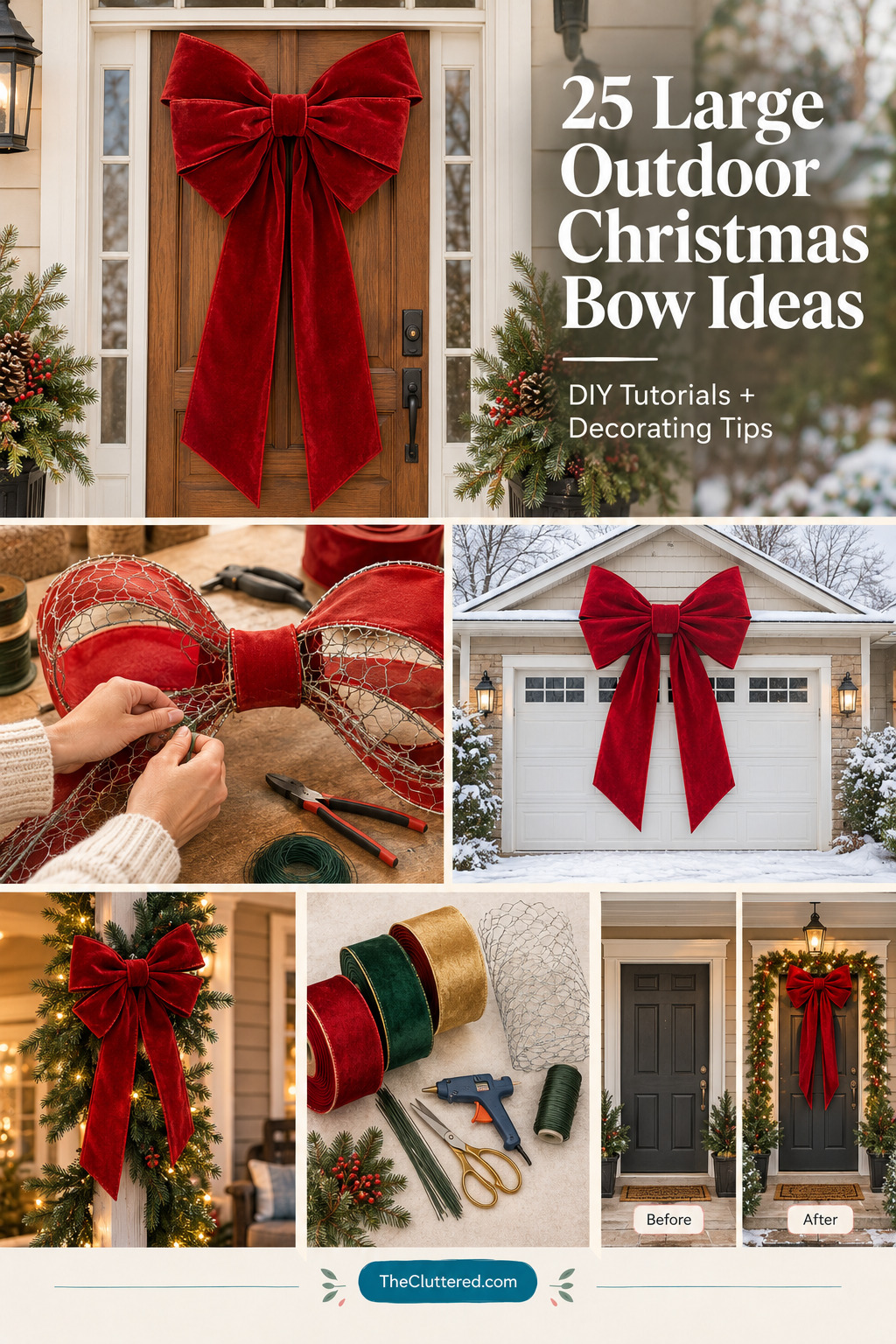


There’s something undeniably magical about walking up to a home adorned with a stunning oversized Christmas bow. These dramatic decorations instantly transform ordinary entryways, porches, and outdoor spaces into festive showstoppers that welcome guests with holiday cheer. Whether you’re dreaming of a classic red velvet bow for your front door or an elegant oversized accent for your garage, large outdoor Christmas bows have become one of the most popular ways to make a bold seasonal statement.
The best part? Creating these eye-catching decorations doesn’t require a professional decorator’s budget or skills. With the right materials, weatherproof techniques, and a bit of creativity, you can craft gorgeous giant bows that withstand winter weather and look professionally made. From DIY tutorials using chicken wire and ribbon to budget-friendly ideas with plastic tablecloths, there’s a perfect large bow solution for every home and skill level.
In this comprehensive guide, you’ll discover 25 inspiring ideas for large outdoor Christmas bows, complete with practical DIY tutorials, material recommendations, and placement strategies. You’ll learn how to choose the right size bow for different locations, which ribbons hold up best outdoors, and creative ways to secure your decorations against wind and weather. Let’s explore how to make your home the most festive on the block this holiday season!
Quick Start: Find Your Perfect Bow Style
Choose Based on Your Space
- Front Door: 18-30 inches wide for standard doors; 30-48 inches for double doors
- Garage Door: 48-96 inches for maximum impact
- Porch Columns: 24-36 inches works beautifully
- Fence or Gate: 30-60 inches depending on scale
- Outdoor Trees: 24-48 inches for visible presence
Budget-Friendly Options
- Under $20: Use plastic tablecloths, pool noodles, or foam sheets
- $20-$50: Quality wired ribbon with chicken wire base
- $50-$100: Premium velvet or outdoor-grade fabric with professional finishing
Time Investment
- Quick (15-30 min): Pre-made bows or simple fabric wraps
- Moderate (1-2 hours): DIY ribbon bows with wire framework
- Advanced (3-4 hours): Custom foam or fabric construction with weatherproofing
Why Large Outdoor Christmas Bows Are Worth It
Oversized Christmas bows have exploded in popularity for good reason. They create instant curb appeal, photograph beautifully for holiday cards, and make your home feel extra special during the most wonderful time of year. Unlike smaller decorations that can get lost in outdoor spaces, a giant bow commands attention and creates that “wow” factor neighbors will remember.
These dramatic accents work with virtually any decorating style. Traditional red velvet bows complement classic Christmas aesthetics, while plaid or buffalo check patterns suit farmhouse decor. Modern black and white striped bows offer contemporary elegance, and metallic gold or silver options bring sophisticated glamour to your outdoor spaces.
“A well-placed large bow can transform an ordinary entryway into a magical holiday welcome that sets the tone for your entire home’s Christmas decor.”
Essential Materials for Weatherproof Outdoor Bows
Creating bows that withstand winter weather requires choosing the right materials. Not all ribbons are created equal when it comes to outdoor durability, and using weatherproof construction methods ensures your beautiful bow lasts throughout the entire holiday season.
Best Ribbon Types for Outdoor Use
Wired Velvet Ribbon remains the gold standard for outdoor Christmas bows. The wire edges help the bow maintain its shape in wind and cold, while quality velvet resists moisture better than you might expect. Look for ribbons labeled as “outdoor” or “commercial grade” for best results [[11]].
Polyester and Synthetic Blends offer excellent weather resistance at budget-friendly prices. These materials dry quickly after rain, resist fading from UV exposure, and hold their shape well throughout the season. Many successful DIYers use polyester tablecloths or fabric remnants to create stunning giant bows [[8]].
Burlap and Mesh Ribbons provide rustic charm while naturally resisting water damage. The open weave allows moisture to pass through rather than pooling, making these excellent choices for damp climates. Combine burlap with wired ribbon for added structure and visual interest.
Structural Support Materials
Chicken Wire is the secret weapon behind many professional-looking giant bows. This flexible metal mesh creates a framework that holds your bow’s shape, supports heavy ribbon, and allows you to manipulate loops and tails into perfect positions. A simple chicken wire base transforms flimsy ribbon into a structured, polished decoration [[7]].
Foam Sheets offer an alternative construction method for ultra-lightweight bows. One-inch poly foam sheets can be cut, shaped, and covered with fabric or plastic to create weatherproof bows that won’t sag or lose shape. This technique is particularly popular for creating massive 4-8 foot bows [[8]].
Floral Wire and Pipe Cleaners provide the binding power that holds everything together. Use heavy-gauge floral wire (20-22 gauge) for securing ribbon to chicken wire frames, and keep extra wire on hand for attaching your finished bow to doors, railings, or columns.
How to Make a Large Outdoor Christmas Bow: Step-by-Step
Ready to create your own show-stopping bow? This proven method works for bows ranging from 18 inches to 6 feet or larger. Adjust measurements based on your desired size.
Materials You’ll Need:
- Wired ribbon (6-10 yards for medium bows, 15-25 yards for large bows)
- Chicken wire (cut to approximately 24″ x 36″ for medium, larger for big bows)
- Wire cutters
- Hot glue gun and glue sticks
- Heavy-duty floral wire or zip ties
- Scissors
- Measuring tape
Construction Steps:
- Create Your Base: Cut chicken wire to your desired bow size. For a traditional bow shape, cut a rectangle approximately twice as long as it is wide. Fold the wire in half to create two loops that meet in the center [[7]].
- Form the Loops: Shape the chicken wire into two large loops with tails extending from the bottom. The loops should be symmetrical and full. Twist the wire in the center to secure the shape.
- Apply Ribbon: Starting at the center back, hot glue your ribbon to the chicken wire. Work from the center outward, wrapping ribbon around each loop. Overlap each wrap slightly for full coverage. Use generous amounts of hot glue every 3-4 inches.
- Create the Center Knot: Cut a separate piece of ribbon (about 12-18 inches) to wrap around the center where the loops meet. This creates the classic bow “knot” look. Secure with hot glue and floral wire.
- Add Tails: Cut 2-4 long pieces of ribbon for tails (3-6 feet each, depending on desired drama). Layer them and attach to the back center of the bow with wire. Angle them downward for an elegant cascade.
- Fluff and Shape: Once all ribbon is attached, fluff the loops and arrange the tails. The wire edges allow you to create beautiful curves and dimension. Step back frequently to check symmetry.
- Weatherproof (Optional): For extra protection, spray with outdoor fabric protector or clear waterproofing spray. This adds an extra layer of moisture resistance.
- Install: Use heavy-duty outdoor Command hooks, screw hooks, or wrap wire around railings/columns. For doors, use over-the-door hooks or adhesive hooks rated for outdoor use and the bow’s weight.
Placement Ideas for Maximum Impact
Where you place your large outdoor Christmas bow dramatically affects its visual impact. Consider these strategic locations:
Front Door Statements
The classic choice! A large bow on your front door creates an immediate welcoming focal point. For standard single doors, aim for 18-30 inch bows. Double doors can handle 30-48 inch bows. Position the bow centered at the top of the door or slightly off-center for a modern twist.
Garage Door Drama
Don’t overlook your garage! An oversized bow (48-96 inches) centered on the garage door creates neighborhood-wow factor. This placement works especially well for homes where the garage faces the street. The larger scale ensures visibility from a distance [[10]].
Porch Columns and Pillars
Wrap bows around porch columns at eye level or attach them to the top of pillars. This works beautifully when you have matching bows on multiple columns for a symmetrical, elegant look. Size: 24-36 inches typically works best.
Fence and Gate Accents
Transform your yard’s perimeter with large bows on fence posts or gates. This creates a cohesive outdoor decorating theme and guides guests toward your entrance. Consider alternating bows with wreaths or lanterns for variety.
Outdoor Trees and Mailboxes
Don’t forget smaller structures! A medium bow (18-24 inches) on your mailbox post or a large bow nestled in an outdoor tree adds unexpected delight. These smaller touches complement your main bow displays.
Budget-Friendly DIY Alternatives
Creating large outdoor Christmas bows doesn’t have to break the bank. Here are proven money-saving strategies:
Plastic Tablecloth Method
Yes, really! Dollar store plastic tablecloths (especially the red, green, or plaid holiday designs) can create stunning weatherproof bows. Simply layer 4-6 tablecloths, cut into strips, and attach to a chicken wire or foam base. The plastic is naturally waterproof and costs a fraction of premium ribbon [[8]].
Fabric Remnants and Thrift Store Finds
Check fabric stores for clearance remnants, or visit thrift stores for old curtains, tablecloths, or bedsheets in festive colors. Cut these into strips and layer for a full, luxurious look. Velvet curtains from the thrift store make particularly elegant bows.
Pool Noodle Framework
Instead of chicken wire, use pool noodles cut lengthwise and shaped into bow loops. Wrap with ribbon or fabric for a lightweight, weather-resistant structure. This method is particularly good for very large bows (4+ feet) where weight becomes a concern.
Duck Tape Construction
For a modern, ultra-weatherproof option, construct bows from decorative duct tape. Layer different patterns and colors, then shape into bow form. This creates a completely waterproof bow that withstands any weather condition [[10]].
Size Guide: What Size Bow for What Space?
| Location | Recommended Bow Size | Ribbon Needed | Visual Impact |
|---|---|---|---|
| Standard Front Door | 18-24 inches | 6-8 yards | Classic, proportional |
| Double Front Door | 30-48 inches | 12-18 yards | Grand entrance |
| Garage Door | 48-96 inches | 20-40 yards | Neighborhood statement |
| Porch Column | 24-36 inches | 10-15 yards | Elegant accent |
| Fence Post/Gate | 24-48 inches | 10-20 yards | Festive boundary marker |
| Mailbox | 12-18 inches | 4-6 yards | Charming detail |
| Outdoor Tree | 24-48 inches | 10-20 yards | Natural focal point |
Color and Style Combinations That Work
Choosing the right colors and styles ensures your large outdoor Christmas bow complements your home’s architecture and your overall holiday decor theme.
Traditional Christmas
Red and Green: The timeless combination never fails. Use deep red velvet with forest green accents, or try red and green plaid for farmhouse charm. Add gold or cream ribbon as a third accent color for extra elegance.
Classic Elegance
Red and Gold: Rich burgundy or true red paired with metallic gold creates sophisticated holiday glamour. This combination photographs beautifully and looks expensive even on a budget.
Winter Wonderland
White, Silver, and Blue: Icy tones create a frosty, elegant aesthetic. Mix white velvet with silver metallic and pale blue accents for a cohesive winter theme.
Farmhouse Rustic
Burlap and Buffalo Check: Natural burlap combined with black and white or red and white buffalo check ribbon creates that popular farmhouse aesthetic. Add pinecones or eucalyptus for extra rustic charm.
Modern Minimalist
Black and White: Striped or solid black and white bows offer contemporary elegance that works year-round. This sophisticated palette complements modern architecture beautifully.
Natural and Organic
Green, Cream, and Natural: Use evergreen ribbon with cream velvet and natural burlap accents. Incorporate real or faux greenery for an organic, garden-inspired look.
Installation and Security Tips
A beautiful bow is useless if it falls down in the first windstorm. Proper installation ensures your decoration stays put all season long.
Attachment Methods by Surface
Wooden Doors: Use over-the-door wreath hangers rated for heavy weight, or install a decorative hook with a screw. For rental properties, use outdoor-rated Command hooks (check weight rating carefully).
Metal Doors/Garage: Strong magnetic hooks work well for metal surfaces. For permanent installation, use screw hooks. Test the magnet strength before relying on it in windy conditions.
Brick or Stone: Use brick clips or masonry hooks. Avoid adhesive products on textured surfaces as they won’t hold securely. For mortar joints, specialized mortar hooks work well.
Railings and Columns: Wrap heavy-gauge floral wire or use outdoor zip ties around the railing/column, then attach your bow. Conceal the wire with a small piece of matching ribbon for a polished look.
Fences: Use fence clips, wire, or zip ties. For wooden fences, small screw hooks work well. Ensure attachment points are secure and won’t damage the fence.
Wind Resistance Strategies
- Position bows in sheltered locations when possible (under porch overhangs)
- Use multiple attachment points rather than relying on a single hook
- Add weight to the bottom of tails with fishing weights or washers hidden in ribbon
- Secure tails to the wall/railing with clear fishing line to prevent excessive swinging
- Check and tighten attachments after the first few windy days
Maintenance and Storage
Protect your investment with proper care throughout the season and smart storage for next year.
During the Season
- Check weekly for loose ribbon or wire
- Gently shake off snow accumulation to prevent stretching
- If ribbon gets wet, allow it to air dry completely
- Re-fluff loops as needed to maintain shape
- Touch up any loose glue spots with outdoor-rated adhesive
End-of-Season Storage
- Clean gently with a soft brush or vacuum on low setting
- Remove from outdoor location before severe winter storms
- Store in a large plastic bin with lid to prevent dust and pests
- Stuff loops with tissue paper to maintain shape
- Label storage container with bow size and location for easy setup next year
- Store in a cool, dry place away from direct sunlight
With proper care, a well-made large outdoor Christmas bow can last 5-10 seasons or more, making it an excellent long-term investment in your holiday decor.
Common Mistakes to Avoid
Learn from others’ experiences and skip these common pitfalls:
Size Mistakes
Going Too Small: A bow that’s too small for the space looks lost and underwhelming. When in doubt, go bigger. Remember: what looks large indoors often appears small outdoors.
Ignoring Proportions: Consider the scale of your door, columns, or garage. A bow should be proportional to the space—typically 1/3 to 1/2 the width of the surface it’s decorating.
Material Mistakes
Using Indoor-Only Ribbon: Satin and some decorative ribbons fade, mildew, or disintegrate outdoors. Always choose outdoor-rated or weather-resistant materials.
Skipping the Framework: Trying to make a large bow without chicken wire or other support results in a floppy, unprofessional appearance. Structure is essential for bows over 18 inches.
Installation Mistakes
Weak Attachment: Don’t rely on lightweight hooks or adhesive products for heavy bows. Calculate the weight and use hardware rated for at least double that weight.
Ignoring Wind Direction: Install bows considering prevailing wind patterns. A bow that swings wildly in the wind looks messy and won’t last long.
Design Mistakes
Too Many Colors: Stick to 2-3 complementary colors maximum. More than that looks chaotic rather than festive.
Poor Tail Length: Tails that are too short look awkward; too long and they drag on the ground. Aim for tails that extend 1.5-2 times the length of the bow loops.
Quick Reference Checklist
- Measure your installation space before choosing bow size
- Select weatherproof, outdoor-rated ribbon or fabric
- Gather chicken wire or foam for structural support
- Use wired ribbon for best shape retention
- Cut ribbon with extra length for adjustments
- Hot glue every 3-4 inches for secure attachment
- Create symmetrical loops for professional appearance
- Layer 2-4 tail pieces for fullness
- Wrap center knot tightly to hide mechanics
- Fluff and shape after construction is complete
- Use heavy-duty hooks rated for outdoor use
- Install with multiple attachment points for security
- Consider wind direction when positioning
- Add waterproofing spray for extra protection
- Check and maintain weekly throughout the season
- Store properly in dry location after holidays
- Label storage for easy setup next year
- Take photos of installation for reference next season
Frequently Asked Questions
How long does it take to make a large outdoor Christmas bow?
For a medium-sized bow (24-36 inches), expect to spend 1-2 hours including setup and construction. Large bows (48+ inches) typically take 2-4 hours. First-time makers should allow extra time for learning the technique. The actual hands-on work is straightforward, but allowing time for glue to set and careful shaping makes a big difference in the final result.
What’s the most weatherproof bow construction method?
Plastic tablecloths or synthetic fabric over a foam or chicken wire base offers the best weather resistance. These materials are completely waterproof, dry quickly, and resist UV damage. For ribbon bows, use outdoor-rated polyester or vinyl ribbon with a chicken wire framework, then spray with outdoor fabric protector for maximum durability [[8]].
Can I leave my outdoor Christmas bow up all winter?
Yes, if you use weatherproof materials! Many people create bows in late November and keep them up through February for winter decor. Just avoid leaving them up during severe ice storms or heavy snow, as the weight can damage the bow. Check regularly and remove snow accumulation to prevent stretching.
How do I make my bow look fuller?
Layer multiple pieces of ribbon rather than using a single strip. For the loops, use 2-3 layers of ribbon. For tails, layer 3-4 pieces of varying lengths. Fluff and separate the layers after construction to create dimension. Using ribbon with wire edges also helps maintain volume.
What size bow do I need for a double garage door?
For a standard double garage door (16 feet wide), aim for a bow that’s 48-72 inches wide. This creates a dramatic statement visible from the street. For extra-large or triple garage doors, consider bows up to 96 inches. Remember: outdoor spaces require larger decorations than you might initially think!
Final Thoughts
Large outdoor Christmas bows offer one of the highest-impact, most cost-effective ways to decorate your home for the holidays. Whether you choose to splurge on premium velvet ribbon or get creative with dollar store materials, the result is a show-stopping decoration that spreads holiday cheer to everyone who sees it.
The techniques and ideas you’ve discovered here prove that creating professional-looking giant bows is absolutely achievable for DIYers of all skill levels. Start with a manageable size if you’re new to bow-making, or dive into a dramatic garage-door statement piece if you’re feeling ambitious. Either way, you’ll create something beautiful that makes your home feel extra special this holiday season.
Remember: the best bow is the one that fits your space, matches your style, and brings you joy. Don’t be afraid to experiment with colors, sizes, and placement. Your large outdoor Christmas bow might just become the decoration your neighborhood looks forward to seeing year after year!
25 Stunning Large Outdoor Christmas Bow Ideas
Explore these 25 inspiring examples of large outdoor Christmas bows. Each image includes Pinterest metadata to help you save your favorites and find more detailed tutorials.
DIY Christmas Bow for Front Door

Source: Instagram via Pinterest
Create a stunning large Christmas bow that welcomes guests with holiday cheer! This step-by-step tutorial shows you exactly how to construct a professional-looking bow using ribbon and simple techniques. The video format makes it easy to follow along, even if you’ve never made a bow before.
What makes this bow special is its perfect size for standard front doors—large enough to make an impact but proportional to the space. The rich red velvet ribbon creates that classic Christmas look that never goes out of style. The tutorial includes tips for securing the bow and ensuring it stays beautiful throughout the season.
You can adapt this technique for different sizes and locations. Try making matching bows for garage doors, porch columns, or even your mailbox. The same construction method scales up or down beautifully, making this a versatile skill for all your holiday decorating needs.
Massive Outdoor Christmas Bow Inspiration

Source: Pinterest
This incredibly popular pin demonstrates the wow factor of truly massive outdoor bows. With over 113,000 saves, it’s clear that people are inspired by bold, oversized Christmas decorations that make a dramatic statement. The sheer size of this bow transforms an ordinary outdoor space into something magical.
The bow’s construction likely uses a chicken wire or foam framework to support such a large scale. Notice how the proportions create perfect symmetry despite the massive size. The long, flowing tails add elegance and movement to the overall design.
While this bow is quite large, you can scale the concept to fit your space. Even a 36-48 inch bow creates significant impact on most homes. The key is choosing a size that’s proportional to your architectural features while still being large enough to command attention.
Elegant Christmas Window Display Bow

Source: Pinterest
This sophisticated bow demonstrates how large outdoor Christmas bows work beautifully for commercial and institutional spaces, not just homes. The elegant placement on a church window creates a welcoming, festive atmosphere that draws people in during the holiday season.
The bow’s rich red color contrasts beautifully with the architectural details, showing how traditional Christmas colors work with various building styles. Notice the professional finish and perfect symmetry—this level of polish comes from careful construction and quality materials.
Consider using similar techniques for storefronts, office buildings, or community spaces. A well-placed large bow creates instant holiday spirit and shows that you care about creating a festive environment for visitors and customers.
Luxury Christmas Tree with Oversized Bow

Source: Pinterest
This image showcases how large bows work as tree toppers or accents for outdoor Christmas trees. The bow’s elegant styling complements the tree’s sophisticated design, creating a cohesive, high-end look that elevates the entire outdoor space.
The luxurious appearance comes from using quality velvet ribbon and taking time to create perfectly shaped loops and tails. This isn’t a rushed decoration—it’s a carefully crafted statement piece that reflects attention to detail and design sensibility.
You can recreate this elegant look by choosing premium ribbon, taking your time with construction, and placing the bow strategically. Whether on a tree, door, or column, a well-made large bow instantly elevates your holiday decor from ordinary to extraordinary.
Cozy Christmas Porch with Giant Bow

Source: Pinterest
This charming porch display shows how a large bow creates a cozy, welcoming atmosphere. The bow works as part of a larger decorating scheme, complementing other seasonal elements while serving as the focal point that draws the eye.
The warm tones and traditional styling create that “home for the holidays” feeling everyone loves. This is the kind of decoration that makes neighbors smile and guests feel instantly welcome. It’s festive without being overwhelming, elegant yet approachable.
Recreate this look by choosing warm-toned ribbon (reds, golds, creams) and pairing your bow with other cozy elements like lanterns, greenery, or seasonal planters. The key is creating a complete vignette rather than just placing a bow in isolation.
How to Make a Giant Christmas Bow

Source: Pinterest
This tutorial demonstrates that creating giant bows is absolutely achievable with the right techniques. The image shows the construction process, giving you a behind-the-scenes look at how professionals create these stunning decorations.
Notice the framework and structure that supports such a large bow. This is where chicken wire or similar materials come in—they provide the skeleton that allows the bow to maintain its shape at a massive scale. Without proper support, large bows would sag and lose their beauty.
The tutorial aspect makes this particularly valuable. By studying the construction method, you can learn to create bows in various sizes for different applications. Once you master the technique, you’ll be able to tackle any size project with confidence.
Giant Car Bow for Holiday Gifts

Source: Pinterest
While not strictly an outdoor home decoration, this giant car bow demonstrates techniques that translate perfectly to home decor. The construction method—using wired ribbon and creating dramatic loops—works for any large-scale bow project.
The bow’s size creates that “wow” moment perfect for special occasions like Christmas morning car gifts. But the same impact works beautifully on garage doors, front doors, or outdoor spaces where you want to create excitement.
Notice how the bow is secured to the vehicle—similar attachment methods work for outdoor installations. The key is using strong, weather-resistant fasteners that won’t damage the surface you’re decorating.
Foam Sheet Christmas Bow with Bells

Source: Pinterest
This clever construction method uses foam sheets as the base, covered with red velvet fabric for a luxurious look at a budget-friendly price. The foam provides excellent structure and weather resistance, making it ideal for outdoor use.
The addition of decorative bells adds festive charm and visual interest. This is a great example of how you can customize your bow with embellishments that reflect your personal style or complement your overall holiday theme.
Foam sheet construction is particularly good for very large bows because it’s lightweight yet sturdy. The material won’t sag or lose shape, and it’s naturally weatherproof. Cover it with any fabric or ribbon you like for endless customization possibilities.
Jumbo Outdoor Christmas Decoration Bow

Source: Pinterest
This jumbo-sized bow demonstrates the dramatic impact of truly oversized outdoor decorations. When you go big, you create a neighborhood landmark that people remember and talk about. It’s the kind of decoration that becomes a local holiday tradition.
The bow’s placement on the house exterior shows how large bows work as architectural accents. They draw the eye upward and create visual interest on otherwise plain surfaces. This is particularly effective for homes with minimal architectural detail.
While this bow is quite large, you can achieve similar impact on a smaller scale. The principle remains the same: choose a size that’s proportional to your space but large enough to make a statement. Even a 36-inch bow creates significant visual interest.
Big Red Bow Tutorial with Chicken Wire

Source: YouTube via Pinterest
This detailed tutorial from Julie’s Wreath Boutique breaks down the bow-making process into manageable steps. Using chicken wire as a framework, you can create professional-looking bows that hold their shape beautifully throughout the season.
The tutorial emphasizes that this project is easier than it looks and comes together quickly once you understand the technique. This is encouraging for beginners who might feel intimidated by creating such a large decoration.
The mention of Hobby Lobby supplies makes this accessible—most craft stores carry similar materials. You don’t need specialty items or expensive supplies to create a stunning big red bow. The technique matters more than the materials.
Luxury Outdoor Christmas Bow Display

Source: Pinterest
This elegant bow demonstrates how large outdoor decorations can create a sophisticated, upscale appearance. The bow’s placement and styling show attention to detail and design principles that elevate it beyond simple holiday decoration.
The luxurious appearance comes from quality materials, perfect proportions, and strategic placement. This isn’t just a bow—it’s a carefully considered design element that enhances the building’s architecture while celebrating the season.
You can achieve similar elegance by focusing on quality over quantity. Choose premium ribbon, take time with construction, and place your bow where it complements architectural features. The result will look expensive even on a moderate budget.
Giant Bow on Outdoor Christmas Tree

Source: Pinterest
This image shows how large bows work beautifully as tree toppers or accents for outdoor Christmas trees. The bow’s size is proportional to the tree, creating balance and visual harmony in the overall design.
Using a bow as a tree topper is an alternative to traditional stars or angels. It creates a softer, more romantic look that works particularly well with traditional or vintage-inspired decorating themes.
You can use this concept for trees of any size. Just ensure the bow is proportional—a small tree needs a smaller bow, while a large tree can support a more dramatic statement. The principle of scale and proportion applies to all outdoor decorating.
Giant Light-Up Christmas Bow Arch

Source: Pinterest
This spectacular lighted bow takes outdoor Christmas decorating to the next level. The illumination creates magical nighttime appeal, ensuring your decoration looks stunning day and night. It’s the kind of feature that becomes a neighborhood attraction.
While this appears to be a commercial or pre-lit product, you can create similar effects by adding battery-operated LED lights to a DIY bow. Weave fairy lights through the ribbon loops or use lighted garland as part of your bow construction.
The archway placement creates a dramatic entrance that guests walk through. Consider this for covered porches, entryways, or garden gates. The combination of size, light, and strategic placement creates maximum impact.
Festive Christmas Street Display with Bow

Source: Pinterest
This festive street display shows how large bows work in commercial and community settings. The bow adds holiday cheer to the urban environment, creating a welcoming atmosphere for shoppers and visitors during the holiday season.
The outdoor tree display demonstrates how bows complement other Christmas decorations. Rather than competing, the bow and tree work together to create a cohesive, festive scene that enhances the entire streetscape.
Consider using similar concepts for business storefronts, community centers, or neighborhood entrances. A well-placed large bow shows community spirit and creates a sense of place during the holidays.
Front Door Christmas Bow DIY Project

Source: Instagram via Pinterest
This fun DIY project shows that creating a beautiful front door bow is accessible to everyone. The creator emphasizes how enjoyable the process is, making it feel like a festive activity rather than a chore.
The bow’s glamorous styling creates an elegant first impression. Notice how the size is perfect for a standard front door—large enough to make an impact but not so large that it overwhelms the entrance.
The mention of tutorial materials and links in Instagram highlights shows the value of saving this pin for reference. When you find a bow style you love, save it and follow the creator’s instructions to recreate the look at home.
Holiday Spirits Christmas Front Door Bow

Source: Pinterest
This charming front door bow embodies the spirit of the holidays. The warm, inviting appearance creates that “home for Christmas” feeling that makes the season so special. It’s the kind of decoration that makes you smile every time you come home.
The bow’s placement and styling show thoughtful consideration of the overall entrance design. It works with the door’s architecture and complements other seasonal elements to create a cohesive, welcoming vignette.
Recreate this welcoming look by choosing colors and styles that reflect your personal taste while maintaining traditional Christmas appeal. The goal is creating a decoration that brings you joy throughout the entire season.
Storefront Christmas Bow Decoration

Source: The Garden Style
This elegant storefront display demonstrates how large bows work beautifully for commercial properties. The red and gold color scheme creates sophisticated holiday appeal that attracts customers and enhances the shopping experience.
The bow’s placement on the window creates a focal point that draws attention to the storefront. This is smart visual merchandising—using holiday decor to increase foot traffic and create a welcoming atmosphere.
You can adapt this concept for home use by thinking of your front door as your “storefront.” Create a display that welcomes guests and showcases your holiday decorating skills. The principles of visual appeal and strategic placement apply to both commercial and residential settings.
Black and White Striped Modern Bow

Source: Etsy
This modern black and white striped bow offers a contemporary alternative to traditional red and green. The bold pattern creates visual interest while the monochromatic palette keeps it sophisticated and elegant.
At 37 inches wide with 2-meter tails, this bow makes a serious statement. The size is perfect for front doors, gates, or event backdrops. The striped pattern adds a graphic element that works beautifully with modern architecture.
Consider this style if traditional Christmas colors don’t match your home’s aesthetic. Black and white works year-round and transitions easily from Christmas to winter decor. It’s a versatile choice for those who prefer contemporary styling.
Illuminated Garland Archway with Velvet Bows

Source: Comfy Dwell
This spectacular archway combines multiple decorating elements—garland, lights, and velvet bows—to create a truly magical entrance. The combination of textures and the warm glow of lights creates an enchanting welcome.
The velvet bows add luxury and traditional Christmas charm to the greenery. Their rich color and soft texture contrast beautifully with the natural garland, creating visual depth and interest.
While this is an elaborate installation, you can create a simplified version using pre-lit garland and adding a few well-placed bows. The key is layering different elements to create a cohesive, dimensional display.
Ticking Fabric Christmas Bows

Source: Instagram via Pinterest
These ticking fabric bows offer a charming, rustic alternative to traditional velvet or satin. The classic striped pattern creates farmhouse appeal that’s perfect for country-style homes or those who love vintage-inspired decor.
Ticking fabric is durable and weather-resistant, making it excellent for outdoor use. The natural fiber holds up well in various conditions while maintaining its rustic aesthetic throughout the season.
You can create similar bows using ticking fabric from craft stores or even repurposing old grain sacks or feed sacks for authentic vintage appeal. The simple striped pattern is timeless and works with many decorating styles.
Big Christmas Bow Trend for Front Porch

Source: Pinterest
The big bow trend has taken holiday decorating by storm, and it’s easy to see why. These oversized accents create instant impact and make your home feel extra special during the holidays. This image showcases the trend perfectly.
The front porch placement is ideal—visible from the street yet protected from the worst weather. The bow’s size and styling create that “wow” factor that makes neighbors stop and admire your festive display.
Don’t be afraid to join this trend! Whether you go traditional, modern, or somewhere in between, a big bow is one of the easiest ways to elevate your outdoor Christmas decor. Start with a manageable size and work your way up as you gain confidence.
Christmas Front Door with Large Red Bow Arch

Source: TikTok via Pinterest
This classic red bow creates an elegant archway effect on the front door. The rich color and perfect proportions make it an instant focal point that welcomes guests with traditional Christmas charm.
The bow’s placement creates a frame around the door, drawing attention to your entrance and creating a sense of occasion. This is the kind of decoration that makes coming home feel special throughout the holiday season.
Red remains the most popular color for outdoor Christmas bows for good reason—it’s festive, traditional, and works with virtually any home style. You can’t go wrong with a classic red bow as your statement piece.
Pre-Lit Gift Box Arch with Bows

Source: Sam’s Club
This pre-lit gift box arch combines multiple holiday elements—bows, lights, and gift box styling—to create a spectacular outdoor display. At 10 feet, it’s a serious statement piece that transforms your yard into a winter wonderland.
The pre-lit feature ensures beautiful nighttime appeal without the hassle of adding lights yourself. This is perfect for those who want maximum impact with minimal setup time.
While this is a commercial product, you can create a similar effect by combining a large bow with other lighted elements. The principle of layering different decorative features creates depth and visual interest in any outdoor display.
Creative Outdoor Christmas Bow Ideas

Source: Pinterest
This creative display shows that outdoor Christmas bows don’t have to follow traditional rules. The innovative placement and styling demonstrate how you can think outside the box when decorating your home for the holidays.
The bow’s integration with other outdoor elements creates a cohesive design rather than a standalone decoration. This holistic approach to holiday decorating creates more impact than isolated decorative pieces.
Let this inspire you to be creative with your own bow placement and styling. Whether you choose traditional or unconventional approaches, the goal is creating a display that reflects your personality and brings you joy.
DIY Giant Bow – Easy Budget-Friendly Tutorial

Source: Totally the Bomb
This budget-friendly tutorial proves that creating a giant outdoor bow doesn’t require expensive materials or professional skills. The easy-to-follow instructions make this accessible to DIYers of all experience levels.
The emphasis on budget-friendly materials makes this particularly appealing. You can create a stunning display without breaking the bank by using creative construction methods and affordable supplies.
This is the perfect pin to save if you’re new to bow-making or working with limited resources. The tutorial approach gives you confidence to tackle this project, knowing that beautiful results are achievable regardless of budget.
Love these ideas? Follow @theclutteredblog on Pinterest for more cozy, practical gift inspiration!