









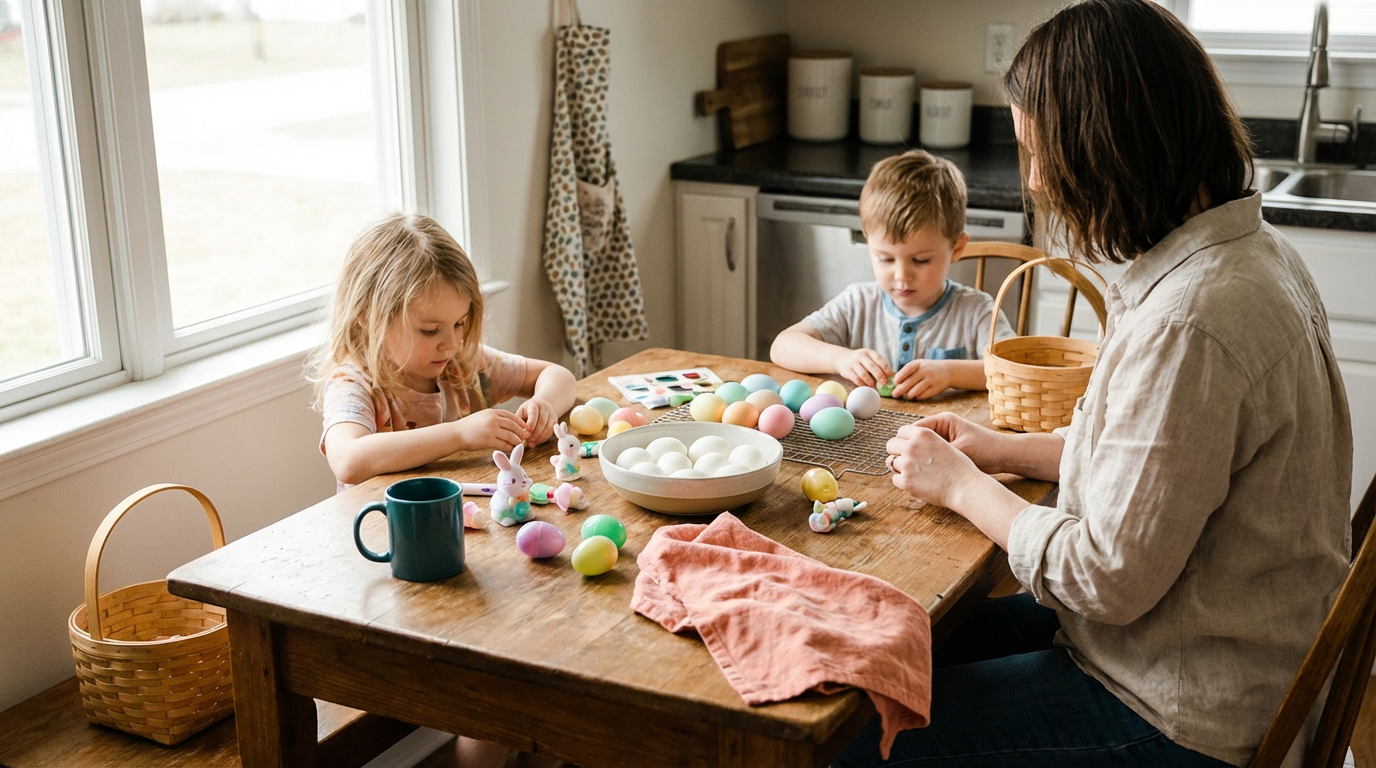
Easter is magical for kids, but for parents it can feel like logistics, mess, and a sprint against the clock. A little intentional Easter egg prep for parents turns the weekend from chaotic to calm. With a simple Easter egg prep checklist for parents, you can handle eggs, baskets, and the hunt itself without overwhelm.


In this guide, you’ll find an Easter egg hunt prep guide that covers everything from how to prep eggs for Easter, how many eggs per child, to age-appropriate egg hunt zones and safety rules. We’ll walk through the night before routine, Easter morning prep for parents, and plenty of non-candy Easter egg fillers so you can keep things fun, safe, and budget friendly.
Whether you’re planning an indoor vs outdoor egg hunt plan or need a last-minute Easter egg hunt prep, this step-by-step approach will help you stay organized and present with your kids.

Start With Safe Egg Handling And Dye Prep
Before you think about baskets or hiding spots, make sure the eggs themselves are handled safely. When buying eggs, open the carton and skip any with cracks, since bacteria can get in more easily through damaged shells. Once home, keep them refrigerated at 40°F or below until you’re ready to cook.
For hard-boiled Easter egg prep (night before), cook the eggs, cool them quickly, and refrigerate within two hours so they stay safe. If you’re wondering whether to refrigerate eggs before dyeing, the answer is yes: store cooked eggs in the fridge until it’s time to color so they stay at a safe temperature. When you boil and dye Easter eggs safely, you can relax knowing the kids’ snacks are as safe as they are cute.
If you plan to eat the eggs, use only food-safe or food-grade dyes and avoid leaving them out of the fridge for more than a total of two hours during coloring and display. You can even make two batches: one for hunting and decorations, and one that stays refrigerated for eating later.
How To Prep Eggs For Easter (Step-By-Step)
A clear, repeatable routine makes how to prep eggs for Easter much easier each year. Start by washing your hands before and after handling eggs, since clean hands lower the risk of contamination. Gently check eggshells for cracks before boiling; discard any broken ones or use them only for craft projects, not for eating.
Next, hard-boil the eggs, cool them in cold water, then dry them thoroughly before coloring. This helps dye stick better and prevents condensation, which can invite bacteria if eggs sit out too long. Once colored, refrigerate eggs within two hours, and plan to eat refrigerated hard-boiled eggs within one week.
If you’re short on time or worried about mess, consider using plastic eggs for the hunt and keeping real eggs as a quiet decorating activity. Non-candy Easter egg fillers go perfectly with plastic eggs and can reduce sugar overload while still feeling special. This simple split also lowers the mental load because you’re not trying to make one egg do all the jobs: decoration, game piece, and snack.
Plan Your Easter Egg Hunt: Numbers, Zones, And Layout
A smooth Easter egg hunt planning checklist starts with the basics: how many eggs per child, where the hunt will happen, and how you’ll separate ages. Many family and community hunts find that around 10–15 plastic eggs per child is enough for a fun experience without going overboard. You can aim closer to 5–10 per child if you’re on a tight budget or supplement with a special Easter basket.
Next, design age-appropriate egg hunt zones so toddlers aren’t competing with older kids. For younger children, choose open, flat areas with eggs in plain sight and at eye level. Older kids can have eggs hidden higher, in trickier spots, or in a separate section of the yard or home. Clear zones keep everyone safer and help prevent tears and frustration.
Consider your indoor vs outdoor egg hunt plan based on weather, space, and accessibility. Indoors, be mindful of stairs, sharp corners, electrical outlets, and fragile items when deciding where to hide eggs. Outdoors, walk the area first and watch for uneven ground, holes, thorny bushes, and spots near traffic or bodies of water before hiding eggs. This quick walk-through is one of the simplest Easter egg safety tips that dramatically reduces risks.
Safety Rules For A Calm, Happy Egg Hunt
A few simple safety rules for egg hunt events make it easier to relax and enjoy watching your kids. Before the hunt, set clear boundaries so children know exactly where they can and can’t go, and mark off any areas you don’t want them to enter. Explain the rules in age-appropriate language, including “no running near streets,” “no pushing,” and “stay where adults can see you.”
When hiding eggs, keep them away from areas treated with pesticides, from pet waste, and from spaces where wild animals or birds might have been. For very young children, avoid small, hard candies or mini solid chocolate eggs that can pose a choking hazard; larger hollow eggs that can be broken into pieces are safer. If you’re using real eggs that you plan to eat later, don’t leave them hidden outside or at room temperature for more than two hours and discard any that stayed out too long.
During the hunt, have at least one or two adults supervising closely and encouraging kids to walk instead of sprinting, especially on uneven ground. Keep a basic first-aid kit nearby and agree on a meeting spot for older children at the end of the hunt. These Easter egg safety tips help keep the day light and prevent avoidable emergencies.
What To Put Inside Easter Eggs (Beyond Candy)
Filling eggs is often where decision fatigue hits, but a simple candy and toy mix for eggs can keep things balanced. Classic candy works for many families, but you can also focus on non-candy Easter egg fillers like stickers, small erasers, mini figures, or activity coupons to reduce the sugar spike. For kids with allergies, prioritize non-food fillers so everyone can join the fun.
Think about budget Easter egg fillers you can buy in bulk or break apart: mini crayons, hair ties, temporary tattoos, bouncy balls, or small puzzle pieces that combine into a bigger prize. For toddlers, choose larger items with no choking risk; for older kids, you can include coins, folded notes with experiences (like “choose tonight’s movie”), or simple craft supplies. Tailoring fillers to age groups makes the hunt feel thoughtful without needing a huge budget.
You can also color-code eggs by child or age group to match fillers to each kid’s needs. Some parents use one color for each child and swap contents to avoid duplicates or to accommodate preferences and dietary restrictions. This little system keeps the hunt fair, reduces sibling arguments, and lightens your mental load during the event.
Easter Basket Prep Checklist For Parents
Your Easter basket prep checklist can be short and intentional instead of overflowing. Decide on a simple structure such as “something to read, something to wear, something to do, and a treat,” then stick to it so you don’t overspend. This naturally creates a mix of candy and non-candy items that complements your Easter egg hunt prep guide.
Consider aligning basket contents with your non-candy Easter egg fillers to build a cohesive experience: a little craft kit in the basket plus related stickers in the eggs, or a new book in the basket plus a bookmark hidden in an egg. This makes even a modest budget feel abundant and intentional. An Easter egg hunt RSVP checklist can also help you adjust basket extras if you’re hosting multiple kids, so no one is left out if extra guests arrive.
Keep Easter morning prep for parents as light as possible by assembling baskets the night before, labeling them clearly, and placing them out of sight until you’re ready. In the morning, you’ll focus on soaking in the joy instead of scrambling for tape and scissors.

Practical Easter Egg Prep Checklist (Night Before + Day-Of)
Use this practical Easter egg prep checklist for parents as your quick-reference guide:
- Night before: hard-boil eggs, cool quickly, and refrigerate within two hours.
- Night before: refrigerate eggs before dyeing if you’re coloring in the morning or later in the evening.
- Night before: check eggshells for cracks; discard any cracked eggs intended for eating.
- Night before: fill plastic eggs with a candy and toy mix for eggs, including non-candy Easter egg fillers like stickers or small toys.
- Night before: finalize how many eggs per child and separate eggs by age-appropriate egg hunt zones (e.g., color-coding for each age).
- Night before: prepare an indoor vs outdoor egg hunt plan plus a backup plan for rain so you can pivot easily.
- Night before: assemble Easter baskets using your Easter basket prep checklist, label each basket, and store out of sight.
- Morning: review your Easter egg hunt planning checklist and walk the area to check for hazards like holes, sharp objects, or chemicals.
- Morning: hide eggs in safe spots, avoiding treated lawns, water, or places pets frequent.
- Just before hunt: gather kids, explain safety rules for egg hunt, boundaries, and walking vs running expectations.
- During hunt: supervise kids closely, especially near steps, uneven ground, or driveways.
- After hunt: refrigerate any real eggs you plan to eat within two hours of being out, and discard any left out longer.
Doing a little Easter egg prep for parents the night before and following this checklist day-of keeps things simple and calm. You’ll feel more present, less rushed, and better able to enjoy the moments that matter.
FAQ
FAQs About Easter Egg Prep For Parent
How can I prep Easter eggs if I have almost no time?
If you’re short on time, lean on plastic eggs and keep real egg decorating minimal or skip it entirely this year. You can boil eggs in one batch the night before, cool them quickly, refrigerate, and color only a few for the table. For the hunt, focus on a simple candy and toy mix for eggs using easy non-candy Easter egg fillers like stickers, mini toys, or coins. A last-minute Easter egg hunt prep can be as simple as hiding 5–10 eggs per child in one room and reading the safety rules for egg hunt activities in under two minutes. Done is better than perfect, and your kids will remember the fun more than the amount of prep.
What are the easiest safety steps to take when I’m already overwhelmed?
When you’re exhausted, focus on the highest-impact, low-effort Easter egg safety tips. First, choose a small, clearly defined hunt area and quickly remove obvious hazards like sharp objects, cords, or tripping risks. Second, explain simple boundaries and rules—like staying where adults can see you and walking instead of running—before anyone starts hunting. Third, keep real eggs refrigerated when they’re not being decorated or hunted and don’t eat any that have sat out more than two hours. These three steps cover most of the risk without a huge mental load.
How do I keep things consistent each year without feeling stuck in a rut?
Create a basic Easter egg hunt planning checklist and reuse it year after year, changing only small details. Keep staples like “how many eggs per child,” “age-appropriate egg hunt zones,” and “backup plan for rain” the same so you’re not reinventing the wheel. Then switch up easy pieces like non-candy Easter egg fillers, themes, or prize eggs for variety. You can also save your checklist in a notes app or planner so next year’s Easter morning prep for parents is mostly copy-paste instead of starting from zero. Consistent structure lowers your mental load while still leaving room for creativity.
How can I plan an egg hunt in a small space or apartment?
In small spaces, scale down how many eggs per child and use clear, layered hiding spots instead of spreading across multiple rooms. An indoor vs outdoor egg hunt plan may simply mean using your living room plus hallway, or a balcony if available, with safety rules for egg hunt activities like no running near stairs or glass. Use color-coded eggs and age-appropriate egg hunt zones within the same room: easy spots at eye level for little kids and trickier nooks for older ones. You can also lean more on Easter basket prep checklist items—like books, crafts, and small toys—to make the day feel full even if the hunt is compact.
How do I manage the mental load of hosting other families too?
When you’re hosting others, let your Easter egg hunt RSVP checklist do some of the work for you. Ask parents to confirm ages, allergies, and whether they can contribute filled plastic eggs so you’re not handling everything alone. Use that info to plan age-appropriate egg hunt zones, non-candy Easter egg fillers for kids with dietary restrictions, and how many eggs per child you can realistically handle. Share simple safety rules for egg hunt fun in your invite so expectations are clear before people arrive. The more you put on paper or in a shared message ahead of time, the less you’ll carry in your head on Easter morning.
Even tiny steps—like boiling eggs tonight or drafting a quick Easter egg prep checklist—can make the holiday feel lighter. Start with one small task, let it be “good enough,” and add more only if you have the energy. Save this post so you have the plan ready for next year, and follow @theclutteredblog on Pinterest for more calm, realistic routines for busy parents.