









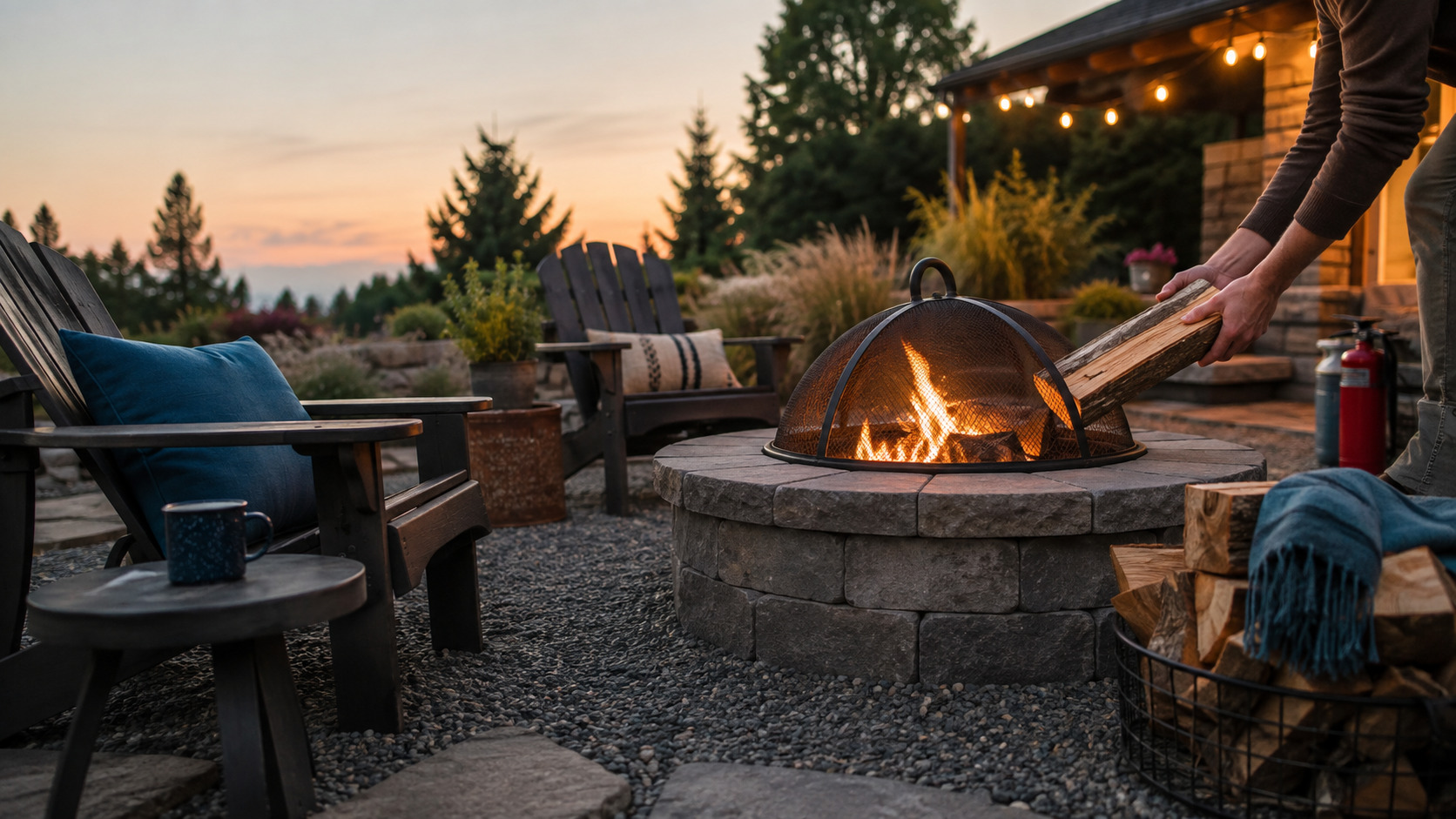


A DIY fire pit can turn an ordinary backyard into the place everyone wants to hang out. But before you start stacking bricks, there are a few important choices to make: wood-burning or gas, in-ground or above-ground, stone or pavers, and how much space you need around it.
This guide explains how to build a fire pit safely, choose materials, plan a gravel base, create seating, and avoid common beginner mistakes. You’ll find budget backyard fire pit ideas, small patio layouts, DIY stone and brick designs, smokeless options, and practical safety tips.
Fire is beautiful, but it needs respect and planning. Check local fire pit regulations before building, then save this guide and follow @theclutteredblog on Pinterest for more backyard inspiration.

What This DIY Fire Pit Guide Covers
This guide is for homeowners who want:
- A simple fire pit for beginners.
- A cheap DIY fire pit for a backyard or patio.
- A small backyard fire pit for a limited outdoor area.
- A DIY fire pit on gravel with a stable base.
- A fire pit seating area for entertaining.
- A wood-burning, propane, gas, or smokeless setup.
- A project that feels attractive, durable, and intentional.
You’ll also learn about:
- Stone, brick, paver, concrete, metal, and retaining-wall-block options.
- Drainage and base preparation.
- Fire-rated bricks and steel fire ring inserts.
- Seating and landscaping.
- Fire pit cover ideas.
- A practical DIY fire pit safety checklist.
A fire pit project can be simple, but it should never be rushed.
Choose the Right Fire Pit Design
Start with the type of pit before buying materials.
Above-ground fire pit
An above-ground fire pit sits on a prepared surface. It is usually easier for beginners because you do not need to excavate deeply. A round paver or stone ring works well for a simple weekend project.
In-ground fire pit
An in-ground fire pit DIY project requires excavation and careful drainage. It can look natural and blend into the landscape. However, water buildup and safe depth need extra attention.
Round fire pit
A round DIY fire pit creates a classic gathering shape. It works well with curved seating and allows people to face the center comfortably.
Square or rectangular fire pit
A square DIY fire pit feels more modern. A rectangular fire pit can work well beside a patio or outdoor sofa. Keep the shape consistent with your seating plan.
Portable fire pit
A portable DIY fire pit can be useful for renters or small patios. Choose a stable, heat-safe container designed for fire use. Do not improvise with thin metal containers, painted barrels, or unsafe materials.
Choose Safe Materials
The outer structure and inner fire area have different needs.
Stone
A DIY stone fire pit creates a natural, rustic finish. Use properly rated materials and avoid stones that may crack or explode when heated. A DIY fire pit using natural stone should include a heat-resistant inner liner or fire-rated bricks.
Brick
A DIY brick fire pit is classic and easy to customize. Use fire-rated bricks inside the burn area. Standard decorative bricks may not tolerate repeated high heat.
Pavers
A DIY paver fire pit can be affordable and beginner-friendly. Choose landscape pavers for the outer ring, then use a steel fire ring insert or fire-rated inner layer.
Concrete
A DIY concrete fire pit offers a clean, modern appearance. Concrete can crack under intense heat unless the design uses proper heat-resistant components. Avoid placing ordinary concrete directly in the hottest part of the fire.
Metal
A DIY metal fire pit can use a steel fire ring insert, recycled metal drum, or purpose-built bowl. Check the metal’s condition and avoid galvanized or coated materials that may release harmful fumes when heated.
How to Build a DIY Fire Pit
These general steps explain how to build a DIY fire pit in the backyard. Always compare them with your local regulations and the instructions for your selected materials.
1. Check local rules first
Look up local fire pit regulations, burn restrictions, and permit requirements. Some areas limit open fires during dry or windy weather.
2. Choose a safe location
Select level ground away from buildings, fences, trees, decks, power lines, and overhanging branches. Confirm fire pit clearance requirements before construction.
Do not guess how far a fire pit should be from a house. Local rules vary, and manufactured gas or propane units may have different requirements. When in doubt, ask your fire department or local authority.
3. Mark the shape
Use stakes, string, spray chalk, or a garden hose to mark a round, square, or rectangular layout. Include space for the seating area and walking paths.
4. Prepare the base
For an above-ground pit, clear grass and loose soil. Add a compacted layer of gravel or crushed stone. A fire pit gravel base improves stability and helps with drainage.
For an in-ground fire pit, excavate according to your plan. Add a drainage layer before installing the inner ring. Ask a professional if your soil stays wet or your yard slopes toward the pit.
5. Install the inner fire area
Add fire-rated bricks, a steel fire ring insert, or a listed burner system. The inner area should be designed for the type of fuel you plan to use.
6. Build the outer ring
Stack pavers, bricks, retaining wall blocks, or suitable stones. Stagger the seams between layers for strength. Use fire pit construction adhesive only where appropriate and follow its heat limitations.
7. Add finishing materials
Level the surrounding gravel, add a paver border, and create a clear walkway. Keep decorative mulch, dry grass, and fabric seating away from the heat zone.
8. Test the area before lighting
Check that the structure is stable. Confirm that seating leaves enough room for movement. Keep water, a hose, or a fire extinguisher accessible.
Fuel Options to Consider
Wood-burning fire pit
A DIY wood-burning fire pit creates the classic campfire atmosphere. It also produces smoke, sparks, and ash. Use dry, seasoned firewood and a spark screen.
Propane or gas fire pit
A DIY propane fire pit or gas fire pit can offer cleaner, adjustable flames. Gas connections and burner systems require careful installation. Hire a qualified professional for gas-line work.
Smokeless wood fire pit
A DIY smokeless wood fire pit uses airflow and double-wall principles to reduce smoke. The design must provide proper ventilation. Do not block air inlets or modify a manufactured unit without expert guidance.
Portable fire pit
A portable wood fire pit works for flexible layouts. Keep it on a stable, noncombustible surface and follow the manufacturer’s clearances.
Create a Comfortable Seating Area
The fire pit is only part of the backyard experience.
Try these outdoor fire pit seating ideas:
- Arrange four chairs around a round pit.
- Build a curved bench outside the heat zone.
- Use Adirondack chairs on a gravel patio.
- Add a low retaining wall for built-in seating.
- Create a square arrangement around a square pit.
- Place a small side table away from the flames.
- Use outdoor cushions that can be moved quickly.
- Add low-voltage pathway lighting.
- Keep blankets in a covered outdoor bin.
A DIY fire pit with seating wall can look beautiful, but it needs thoughtful spacing. Leave enough room for people to sit, stand, and move safely.
18 Homemade Fire Pit Ideas
Use this idea bank to choose a design that fits your space and budget.

- Budget paver ring: Build a round ring with landscape pavers and a steel fire ring insert.
- Natural stone circle: Use carefully selected stone around a gravel base for a rustic backyard look.
- Brick fire pit: Stack fire-rated bricks inside a classic red-brick outer ring.
- Retaining wall block pit: Use matching blocks to create a sturdy above-ground design.
- Small gravel fire pit: Make a compact pit on a noncombustible gravel pad.
- In-ground stone pit: Excavate a shallow circle, add drainage, and finish with stone.
- Square paver pit: Create a modern square shape beside a patio.
- Concrete bowl pit: Build a sculptural bowl with a properly protected fire area.
- Metal fire bowl: Use a purpose-built steel bowl for a simple contemporary look.
- Smokeless wood pit: Choose a ventilated design that supports improved airflow.
- Propane fire pit table: Build a safe table surround around a listed propane insert.
- Fire pit with cooking grate: Add a removable grate designed for cooking over the fire.
- Fire pit patio: Define the area with pavers, gravel, and clear walking space.
- Fire pit with curved bench: Add a bench outside the heat zone for group seating.
- Small patio fire pit: Use a compact portable unit for a limited outdoor area.
- Rustic rock pit: Combine natural stone, gravel, and simple outdoor chairs.
- Covered fire pit area: Add a weather-resistant cover for the pit when it is not in use.
- Entertaining fire pit zone: Include seating, side tables, lighting, and a clear serving path.
These homemade fire pit ideas range from low-cost weekend projects to more involved backyard upgrades. Choose the design that matches your experience, not just the most dramatic photo.
DIY Fire Pit Safety Checklist
Use this checklist before, during, and after every fire.

- Check local fire pit regulations.
- Confirm current burn restrictions.
- Choose level, stable ground.
- Measure safe clearance from structures.
- Keep away from fences and decks.
- Clear overhead branches.
- Check wind direction before lighting.
- Use a noncombustible base.
- Add a proper drainage layer.
- Choose fire-rated bricks or a listed insert.
- Avoid ordinary concrete in the hottest zone.
- Keep children away from active flames.
- Keep pets supervised.
- Keep water or a hose nearby.
- Keep a fire extinguisher accessible.
- Use a spark screen for wood fires.
- Burn only approved, dry firewood.
- Never leave the fire unattended.
- Do not use gasoline or accelerants.
- Extinguish the fire completely.
- Stir ashes and check for heat.
- Wait until ashes are cool before disposal.
- Use a weather-resistant fire pit cover.
- Stop using the pit if it cracks or becomes unstable.
Fire pit safety for children and pets matters even when the flames look small. Set a clear boundary and keep tools, pokers, and hot surfaces out of reach.
Common DIY Fire Pit Mistakes
Ignoring local regulations
Rules can change by location and season. Check before you dig or light a fire.
Building too close to the house
A cozy layout should not compromise safe fire pit placement. Leave generous space from structures, trees, and combustible materials.
Using the wrong materials
Decorative stone, ordinary bricks, and unprotected concrete may fail under repeated heat. Use fire-rated components where heat is concentrated.
Skipping drainage
Water trapped under an in-ground pit can create stability problems. A proper fire pit drainage layer helps protect the base.
Forgetting wind
Wind can carry sparks into dry grass, fences, roofs, or neighboring yards. Avoid lighting a fire during strong or unpredictable wind.
Making the pit too large
A bigger pit requires more fuel and creates more heat. A small DIY fire pit may be safer, cheaper, and easier to manage.
FAQs About DIY Fire Pit
How long does a DIY fire pit project take?
A simple above-ground paver or brick pit may take a weekend. Larger in-ground designs, seating walls, or patios can take longer. Allow extra time for measuring, base preparation, curing, and cleanup. Do not rush the safety checks.
What can I do on a low-energy day?
Start with planning instead of construction. Measure the yard, check local regulations, compare fuel types, or sketch the seating area. You can also clean an existing patio and mark the proposed footprint. Small preparation steps still move the project forward.
How do I maintain a fire pit over time?
Remove ash only when it is completely cool. Inspect bricks, stones, metal, inserts, and surrounding surfaces regularly. Keep the pit covered when appropriate, but allow moisture to escape according to the cover design. Replace cracked or unstable components before lighting another fire.
Can I build a DIY fire pit in a small backyard?
Yes, but keep the design compact and prioritize clearance. A portable pit, small round fire pit, or narrow patio layout may work better than a large in-ground structure. Use smaller seating and keep walking paths clear. Always follow local requirements.
What if the project feels overwhelming?
Choose a simpler design or consult a professional. Gas systems, electrical lighting, retaining walls, and difficult excavation deserve extra care. There is no prize for doing every step alone. A safe, modest fire pit is better than an ambitious unsafe one.
Start With Safety, Then Add Cozy
A DIY fire pit can become a wonderful backyard gathering spot when the design, materials, placement, and safety plan work together. Start with local rules, choose a manageable project, and build around the way you actually use your outdoor space. Save this guide for your weekend planning session and follow @theclutteredblog on Pinterest for more outdoor living inspiration.
Now that you’ve seen the planning basics, here’s a curated visual roundup pulled from Pinterest for DIY fire pit projects. Use it like a menu: choose a design that fits your space, budget, fuel type, and comfort level.
Save the Pins that match your backyard, then compare the base, seating, materials, and safety details before starting. Inspiration is helpful, but the final build should follow local rules and proper fire-rated construction.

25 DIY fire pit ideas for a cozy backyard
This visual roundup brings together DIY fire pit inspiration from Pinterest, including stone, brick, paver, smokeless, portable, and budget-friendly designs.
Choose ideas that fit your space and skill level, then save the Pins you love before planning your backyard project.
Start with a budget fire pit plan

This budget fire pit shows how a simple outdoor feature can create a cozy backyard gathering spot.
It is a helpful reference for a cheap DIY fire pit with a straightforward layout.
Plan the base and clearance before choosing decorative details.
Try a raised outdoor fire pit

A raised design can define the fire area without requiring a deep excavation.
It works well for outdoor spaces that need a strong visual centerpiece.
Use heat-rated inner components rather than relying on decorative blocks alone.
Plan a sunken fire pit with drainage

This sunken concept blends into the yard and creates a naturally contained gathering area.
It is useful inspiration for an in-ground fire pit DIY project.
Pay close attention to the drainage layer and local excavation rules.
Explore a DIY smokeless fire pit

A smokeless design focuses on airflow to reduce smoke during a wood fire.
It is a useful direction for homeowners who want a cleaner outdoor experience.
Follow a tested plan and never block the ventilation openings.
Create a complete fire pit gathering area

This finished space shows how the pit, ground cover, and seating work together.
It is a strong reference for an outdoor fire pit area DIY project.
Plan the entire footprint instead of building the pit without considering circulation.
Compare different DIY fire pit styles

A roundup helps you compare round, square, stone, brick, portable, and in-ground options.
Use it before choosing your backyard fire pit plans.
Save the designs that match your yard size and maintenance preferences.
Build a fire pit coffee table

A fire pit table combines outdoor furniture with a central flame feature.
It can work well for patios where a traditional fire ring would take too much space.
Use a listed burner and follow all fuel-system instructions.
Make a compact fire pit area

This compact layout is useful for a small backyard fire pit or narrow patio.
It keeps the design simple while still creating a dedicated gathering zone.
Measure chairs and walkways before setting the final pit size.
Try a fast $50-style fire pit project

This project shows how a simple design can keep the material list manageable.
It is useful inspiration for a DIY fire pit under $100.
Budget for the safety components first, then add decorative upgrades.
Build a simple paver fire pit

This paver design is approachable for beginners who want a classic circular pit.
It is a good reference for an easy DIY fire pit using pavers.
Add a proper inner ring or fire-rated liner for the burn area.
Plan a fire pit with backyard landscaping

This design shows how landscaping can make a fire pit feel integrated into the yard.
Use it to plan gravel, planting zones, paths, and seating together.
Keep dry mulch and flammable plants outside the heat area.
Build a smokeless wood fire pit

This design focuses on a more efficient airflow pattern for a wood-burning fire.
It suits homeowners looking for a DIY smokeless wood fire pit concept.
Use a tested plan and leave ventilation openings clear.
Build a backyard fire pit step by step

This backyard setup pairs a finished pit with comfortable chairs for relaxed evenings.
It is a helpful visual reference for how to build a fire pit area, not just the pit itself.
Plan seating, lighting, and clear walking space before construction.
Create a boho fire pit gathering spot

This boho-inspired area uses relaxed seating and natural textures around the fire.
It is a welcoming direction for a DIY fire pit design for entertaining.
Add washable outdoor textiles only where they remain safely away from sparks.
Explore more outdoor fire pit layouts

This collection helps you compare different shapes, materials, and backyard arrangements.
Use it when you are still deciding between above-ground and in-ground options.
Save only the layouts that match your available clearance.
Add a practical fire pit cover

A cover protects the pit from rain, leaves, and seasonal debris when it is not in use.
It is one of the most practical fire pit cover ideas for long-term care.
Choose a cover that fits without trapping moisture underneath.
Make a round stone wood-burning pit

This round stone pit creates a classic campfire shape with a natural finish.
It works well for a DIY wood-burning fire pit in a spacious yard.
Include a spark screen and keep firewood stored away from the flames.
Try an easy one-hour-style pit project

This compact design is approachable for a simple fire pit for beginners.
It is a useful visual reminder that a project can be small and still inviting.
Do not skip location checks just because the build looks quick.
Consider a no-dig fire pit layout

A no-dig design can suit temporary layouts or yards where excavation is not practical.
It is useful inspiration for a DIY fire pit without concrete.
Use a stable, noncombustible surface and confirm the setup is permitted locally.
Build a modern smokeless fire pit

This modern design keeps the focus on a clean silhouette and controlled airflow.
It suits outdoor spaces with a contemporary look.
Follow a proven plan rather than improvising ventilation.
Build a traditional brick fire pit

A brick pit creates a timeless focal point for a backyard.
It is a good reference for DIY brick fire pit plans.
Use fire-rated bricks in the inner heat zone and suitable outer masonry.
Use natural stone for a rustic pit

This natural stone pit blends into a garden or rustic backyard landscape.
It is a useful direction for a DIY stone fire pit with a relaxed finish.
Confirm that the selected stones are suitable for heat exposure.
Add a built-in fire pit bench

A built-in bench can make the fire pit area feel intentional and social.
It is helpful inspiration for a DIY fire pit with seating wall.
Keep the bench outside the heat zone and use weather-resistant materials.
Repurpose metal into a fire pit

This metal concept shows how a sturdy steel component can become a compact outdoor fire feature.
It fits a DIY metal fire pit or portable fire pit direction.
Inspect the metal carefully and avoid painted, coated, or unsafe materials.
Try a modern concrete fire pit

A concrete fire pit can bring a clean, modern look to a patio or outdoor room.
It is a strong visual reference for DIY concrete fire pit ideas.
Use proper heat protection and follow the construction method carefully.
Love saving ideas like these? Follow us on Pinterest for more inspiration, templates, and easy-to-use resources.