









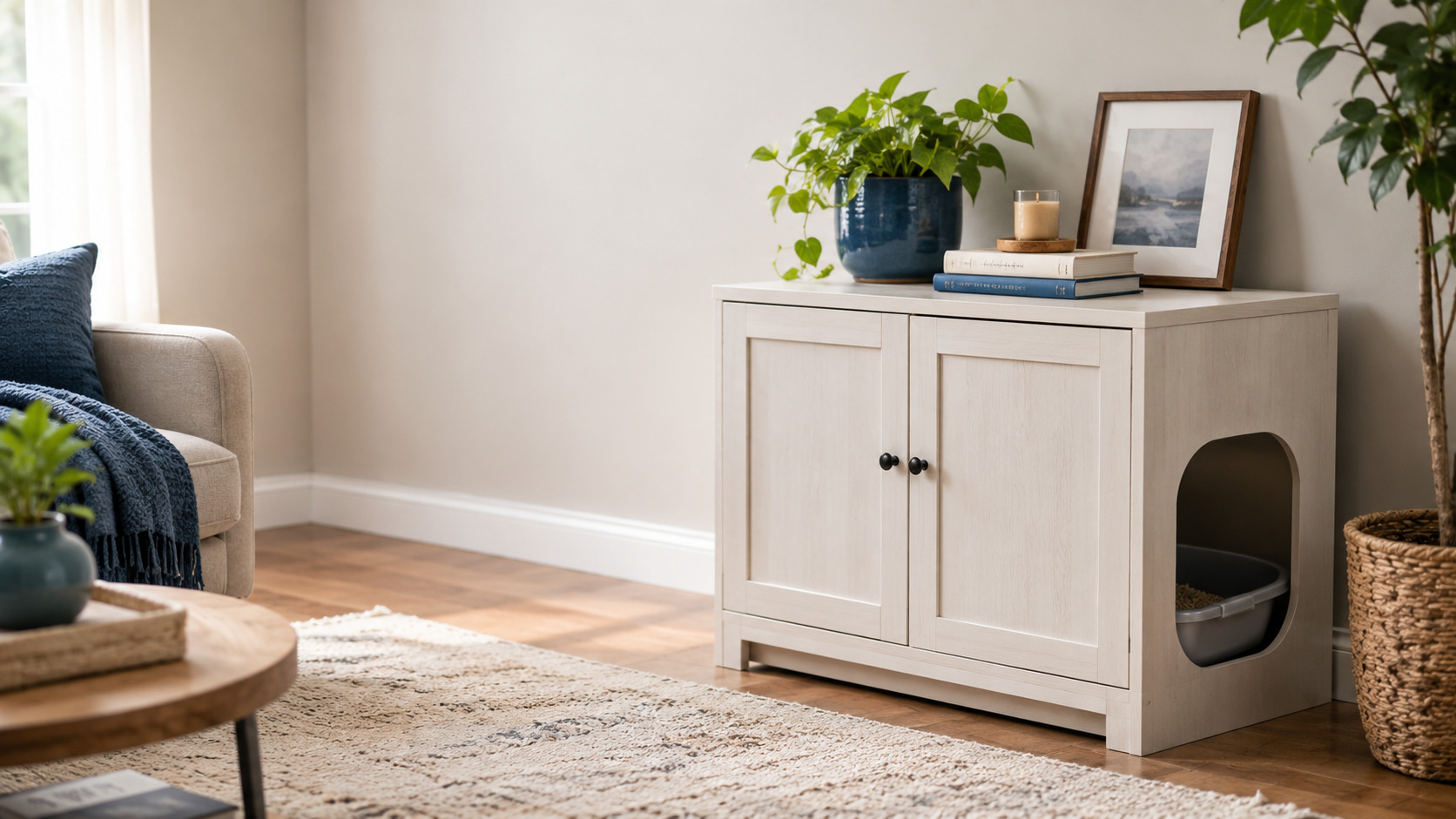


If you’re over staring at an open litter tray in the middle of your living room, you’re not alone. Your cat needs their bathroom, but you’d also love a calm, clutter‑free space that doesn’t scream “litter corner.” This guide will walk you through diy litter box furniture that actually looks like real furniture: cabinets, benches, end tables, even IKEA hack litter box cabinets that blend right into your style. We’ll talk hidden litter box furniture ideas, how to add ventilation holes, how to convert a dresser into a hidden litter box, plus odor control tips so things stay fresh. Save this post to your “Cat Home” board and don’t forget to follow @theclutteredblog on Pinterest for more cozy, practical ideas.

Who This Guide Is For (and What You’ll Get)
This diy litter box cabinet guide is made for cat parents in small apartments, rented homes, or busy family houses who want their place to feel calm and intentional, not like a pet supply aisle. You love your cat, but you also love your mid‑century sideboard, your IKEA Besta, and your tiny entryway bench.
In this guide, you’ll find:
- The basic anatomy of a diy cat litter box enclosure (and what to avoid).
- Undercover furniture ideas: benches, end tables, cabinets, and desks that double as litter box furniture.
- IKEA hack litter box cabinet projects using Kallax, Besta, and more.
- Thrifted cabinet makeovers, double cat litter cabinet tips, and small‑space layouts.
- Ventilation, odor control, and cleaning tricks so your stylish hidden litter box stays practical.
The Basics of DIY Litter Box Furniture
Before you start cutting holes in anything, it helps to understand what makes diy litter box furniture actually work day‑to‑day. A good diy litter box cabinet needs to fit your litter tray (or Litter‑Robot), give your cat a clear path in and out, handle odor, and be easy for you to clean. A stock 30‑inch cabinet or thrifted dresser usually has enough depth to hold a standard box, and many diy litter box cabinet plans are built around this size so they can even fit an automatic box inside.
For the entry, you’ll usually mark a doorway on the side or front, drill pilot holes in each corner, then cut the opening with a jigsaw. Many makers add a 1 1/2‑inch trim frame around the cutout to hide imperfect cuts and make the opening look intentional. In addition, it helps to sand the edges smooth so sensitive cat paws and whiskers don’t snag every time they go in. Finally, most diy cat litter box enclosures include a removable top or front door for scooping, plus a litter mat just inside to catch scatter and keep your floors cleaner.
Odor and airflow are huge, especially in small spaces. That’s why many diy litter box cabinet plans call for drilling ventilation holes in the back panel or along the top, or even adding decorative cane webbing or mesh doors that look stylish while letting smells escape before they get trapped.
Undercover Furniture: Benches, End Tables, and Desks
One of the easiest ways to hide a litter box is to tuck it inside furniture you already have or can thrift for cheap. Undercover furniture options like entryway benches, sideboards, and end tables can be turned into stylish hidden litter box cabinets with a few thoughtful tweaks.
Entryway benches are great for small homes because they add seating and shoe storage, while a hidden cat litter box lives behind a side panel door. You’ll cut the cat entry on the short side or front, then keep the main lid or doors for human access. A bench‑style litter box with storage on top can also hold scoops, liners, and baking soda so everything you need is in one place.
End tables and nightstands are perfect for studio apartments where every piece has to multitask. A small door cutout on the side, a removable back panel, and a litter mat inside turns a basic cube into a discreet litter station. Some people even build a double cat litter cabinet under a desk by adding an MDF or plywood top to an existing base cabinet so the whole setup becomes a work‑from‑home corner with a hidden cat bathroom tucked underneath.
IKEA Hack Litter Box Cabinet Ideas
If you live on Pinterest, you’ve probably seen at least one stylish litter box furniture IKEA hack. The idea is simple: grab an affordable unit like Besta, Kallax, Hol, or Ivar, then modify it with a pet door or cut‑out entry so the inside becomes a diy litter box cabinet while the outside looks like your regular storage.
A classic ikea hack litter box cabinet uses a Besta or Kallax unit with doors. You’ll measure your litter tray, then remove the back panel if you need extra depth. Cut an opening in one side panel, add trim, and line the bottom with a waterproof mat. Many cat parents also drill ventilation holes in the back or swap one door for cane webbing so air can move through. Another popular hack is cutting a round entry hole in an IKEA Hol or similar cabinet front, turning it into a litter box cover that looks like a solid wood piece.
For renters, these stylish hidden litter box IKEA hacks are amazing because you can take them with you when you move. Plus, if you ever retire the cabinet from litter box duty, you can replace the panel or repurpose it as regular storage. Just keep in mind that particleboard is less forgiving than solid wood, so plan your cuts carefully and seal raw edges to prevent chipping over time.
Thrifted Cabinet Makeovers and Dressers
Thrift stores and Facebook Marketplace are full of potential diy litter box cabinet projects waiting for a second life. Look for cabinets, buffets, and dressers with solid doors, a bit of depth, and sturdy frames you can cut into without the whole thing collapsing.
To convert a dresser into a hidden litter box, you can keep the top drawers for storage and remove the bottom drawers entirely. Build a simple interior box or platform where the litter tray will sit, then add a side entry cut‑out so your cat can slip in from the end while the front still looks like a regular dresser. Some diy litter box cabinet plans even hinge the front drawer fronts so they open as a single door, giving you full access for cleaning.
Thrifted cabinet litter box makeovers are also perfect for creating a double cat litter cabinet if you have multiple cats. You can build a divider inside so each side holds its own tray, or use one side for litter and the other for storage. A coat of paint, new hardware, and a clean cutout with trim will make the whole piece look custom and intentional instead of “we hid a litter box in here five minutes ago.”
Built‑In and Small‑Space Layout Ideas
If you’re tight on square footage, built‑in‑style solutions are your best friend. Think under‑stairs nooks, hallway cabinets, or the empty space at the end of a laundry counter. With a little planning, these awkward spots can become a cat litter box cabinet with storage on top, giving your cat privacy while you reclaim floor space.
In small apartments, lots of people tuck diy litter box furniture into the bathroom, laundry, or entryway so smells are easier to manage and the box isn’t in the center of the living room. A built‑in style entryway bench with a side cut‑out creates a little “cat hallway” that keeps litter tracking off the main path. For even tighter layouts, you can nest a cheap diy hidden litter box inside a storage bin and then slide that bin into a larger cabinet with a side opening.
The key to litter box furniture ideas for small spaces is circulation and access. Your cat needs a clear runway to the opening, and you need enough space to scoop without contorting your spine. Test the path by setting the box in place first, watching how your cat uses it, and then building the enclosure around what actually works instead of forcing them into a cramped spot.
Ventilation, Odor Control, and Cleaning Tips
Litter boxes will never smell like nothing, but diy litter box furniture can make a huge difference if you design for airflow from the start. Drilling ventilation holes along the top back edge or adding a decorative grille panel lets odors escape instead of getting trapped inside the cabinet. Some diy cat litter box enclosures use cane webbing doors or mesh inserts so air can move while the litter stays hidden.
Odor control tips for litter box furniture are mostly about routine. Scoop daily, do a full litter change on a set schedule, and wipe down the interior walls with a mild cleaner so clumps and dust don’t build up. Many cat parents sprinkle baking soda under the litter liner or use a covered trash can with a lid and liner nearby so waste doesn’t sit out.
For cleaning access, make sure at least one panel is easy to open: a hinged lid, wide front doors, or a removable top. If you’re building from scratch, consider adding soft‑close hinges, magnetic catches, or even drawers that slide out with the box on top so you can pull the whole litter station toward you instead of reaching into a dark cabinet every day.

Practical DIY Litter Box Furniture Checklist
Here’s a simple checklist you can use while planning or building your stylish hidden litter box:
- Measure your litter box (length, width, height) and add at least 2–3 inches of clearance on all sides.
- Confirm the cabinet depth can fit your box or Litter‑Robot without the back panel bowing out.
- Decide where the cat entry will be (side, front, or top) and sketch the cut‑out shape.
- Mark the entry on painter’s tape first, then drill pilot holes before cutting with a jigsaw.
- Add 1 1/2‑inch trim around the opening to hide imperfect cuts and protect the edges.
- Sand every cut edge until it’s smooth to the touch (no splinters or sharp corners).
- Drill ventilation holes or plan mesh/cane areas so air and odor can escape.
- Line the bottom with a waterproof mat or vinyl to protect the cabinet floor.
- Place a litter trap mat right inside the entrance to catch scatter.
- Choose hardware (hinges, handles, latches) that makes daily cleaning easy.
- Store scoop, liners, and deodorizer in a basket on the shelf or top of the cabinet.
- Test that doors and lids can fully open without hitting walls or other furniture.
- Make sure your cat can easily step in—no huge jumps or awkward angles.
- Introduce the new litter box furniture slowly, keeping the old box nearby at first.
- Watch your cat’s behavior for a few days and adjust the layout if they seem hesitant.
Practical DIY Litter Box Furniture Ideas for Real Life
Now let’s turn all those concepts into real‑life diy litter box furniture ideas you can actually copy, tweak, or blend together.

- Convert a low IKEA Besta into a hidden litter box cabinet in the living room, with cane webbing door fronts for ventilation and a side cut‑out for your cat’s entry.
- Turn a standard entryway bench into a bench‑style litter box with storage by cutting a side opening and using the top for baskets, leashes, and mail.
- Transform a thrifted dresser into a dresser‑style hidden litter box by removing the bottom drawers and turning the front into a hinged door.
- Build a diy cat litter box enclosure under your desk by adding an MDF or plywood top to a base cabinet so the whole thing doubles as a compact workspace.
- Use a stock 30‑inch kitchen cabinet as a diy litter box cabinet, adding ventilation holes in the back and a pull‑out platform for easy scooping.
- Create a bathroom sink cabinet litter box by cutting an opening in a vanity side panel and adding a de‑littering ramp inside to catch stray grains.
- Hide a cheap diy hidden litter box inside an outdoor‑grade deck box on a balcony or in a mudroom, with a small access door cut into one end.
- Build a cat litter box cabinet with storage on top in your laundry room so detergents and cleaning supplies live above the hidden litter area.
- Try a bench‑style litter box with a plant tray on top, turning your cat’s bathroom into a faux “indoor garden” corner with cat grass and herbs.
- Upcycle a vintage TV cabinet into a diy litter box enclosure with double doors, interior shelves, and a side entry cut‑out hidden behind a leg.
- Use an IKEA Hol or similar cabinet as a stylish litter box furniture IKEA hack by cutting a circular entry hole and lining the interior with a washable mat.
- Build a double cat litter cabinet for multi‑cat households, with two trays separated by a center divider and one shared entry tunnel.
- Create a hidden litter box end table next to your sofa, using a cube cabinet with a front door and a side portal for your cat.
- Design a built‑in litter box furniture nook under the stairs, framing it with trim so it looks like a custom pet door leading to a private bathroom.
- Try a diy litter box cabinet with pet door installed in a hallway closet, so you can close the main door but still give your cat easy access.
- Add a small shelving unit above your diy cat litter box enclosure to store extra litter, liners, and cleaning supplies in baskets.
- Build a narrow litter box enclosure bench for a tiny studio, placing it at the foot of the bed so it doubles as seating and a hidden cat space.
- Turn a cube storage unit into a diy litter box furniture setup by hiding the box in one cube with a side cut‑out and using the others for books and decor.
- For small apartments, tuck a litter box cabinet beside the washer/dryer, letting the machine noise help mask bathroom sounds.
- Create a custom diy litter box cabinet plans folder and sketch your measurements before cutting anything, so you can reuse the same design in future homes.
FAQs About DIY Litter Box Furniture
How long does it take to build diy litter box furniture?
Most simple diy litter box cabinet projects take a single afternoon once you have the materials. Cutting the entry, sanding, painting, and adding trim will add a few extra hours if you’re going for a really polished look. For more complex builds like bench‑style litter box furniture with storage, you might want to spread the work over a weekend so paint and sealant can fully dry. In addition, always factor in a day or two for your cat to adjust to the new setup before you retire the old box.
Can I do this on a low‑energy weekend?
Yes, you absolutely can. On low‑energy days, stick to the easier projects: lining a basic cabinet with a mat, cutting a simple opening, or setting up a cheap diy hidden litter box in a storage bin inside a closet. You can always come back later to add trim, paint, or fancy hardware. Focus first on function—clear entry, enough space, and good ventilation—then layer in the aesthetic upgrades when you have more energy.
How do I stay consistent with cleaning and odor control?
Make cleaning part of an existing routine instead of a separate task. For example, scoop the hidden litter box furniture every night when you brush your teeth, and do a quick wipe‑down of the interior once a week when you’re already cleaning the bathroom. Using litter box furniture ideas that make access easy—like a hinged lid or pull‑out tray—reduces resistance, because you’re not fighting with the cabinet every time you scoop. Odor control tips like baking soda, clumping litter, and lined trash cans also make consistency feel less overwhelming.
Will this work in a really tiny apartment?
Yes, litter box furniture ideas for small spaces are kind of the whole point of this guide. Think vertical: an end table, a slim bench, or a small ikea hack litter box cabinet can give your cat a private bathroom without eating up precious floor area. Built‑in style spots like under a desk, under a window, or in the corner of a hallway can all work as long as your cat has a clear path and enough room to turn around comfortably. Just be sure to leave a little breathing room so the cabinet doesn’t feel too cramped.
What if I feel mentally overloaded by one more project?
That’s so normal, especially if you already have a lot on your plate. Start with the smallest possible step: maybe that’s just measuring your current litter box and saving a few diy cat litter box enclosure pins to a dedicated board. You can also start with a super simple solution like a storage bin litter box tucked into a quiet corner, then upgrade to full diy litter box furniture when you feel ready. This doesn’t have to be a perfect Pinterest‑level project on day one.
Ready to Try Your First DIY Litter Box Cabinet?
You don’t need a full workshop or a huge budget to build stylish hidden litter box furniture that works in real life. Start with what you have—a thrifted cabinet, an IKEA shelf, or a basic bench—and focus on giving your cat a cozy, easy‑to‑reach space that also lets your home feel calm and put‑together. Pick one idea from this guide, sketch your plan, and take it one tiny step at a time.
Save this post to your “Cat Home” or “Small Apartment” board so you can come back when you’re ready to build, and follow @theclutteredblog on Pinterest for more cozy, practical home ideas for you and your pets.
Now that you’ve got the big picture of diy litter box furniture, let’s scroll through some real‑life examples. Below is a curated visual roundup pulled straight from Pinterest so you can see how different cat parents turned cabinets, benches, and IKEA pieces into stylish hidden litter box setups. Use this list like a menu: pick one or two ideas that feel doable in your space, adjust them to your layout, and save your favorite Pins to your own boards so you can come back when you’re ready to DIY.

Cozy DIY Litter Box Furniture Ideas from Pinterest
This visual roundup pulls together real diy litter box furniture ideas from Pinterest so you can see what’s possible in tiny apartments, laundry rooms, and cozy living spaces.
Browse through, notice which styles feel like your home, then save the Pins you love to your own boards so you can tweak and recreate them in your space.
Turn a classic cabinet into a hidden litter box

This idea turns a simple cabinet into diy cat box furniture with a side entry cut-out and plenty of storage on top.
The white paint and wood top keep it looking like regular living room furniture, not a litter setup.
Try this if you want something that blends into farmhouse or cottage decor while still being easy to clean inside.
Go modern with a plywood litter box enclosure

This diy modern plywood kitty litter box uses clean lines and a side opening to create a sleek, furniture-like enclosure.
It’s perfect for contemporary apartments where you want the box to disappear into your living room or office.
Use this as inspiration if you’re comfortable with basic tools and love that Scandinavian plywood look.
DIY litter box cabinet with cane detail

This diy litter box cabinet hides the box behind white doors and cane fabric, adding both style and ventilation in one move.
The slim footprint makes it ideal for hallways or laundry rooms where every inch matters.
Copy this look if you want pet-friendly home decor that still feels bright, airy, and modern.
Cat kennel storage cabinet with hidden litter zone

This Pai Pai Pets kennel cabinet doubles as enclosed litter box storage and general pet gear organization.
Closed doors keep things visually calm while still giving cats a roomy interior and easy access.
Use this as inspo if you need one central “cat station” for litter, food, and supplies in a busy home.
Modern plywood cat toilet cabinet

This modern plywood litter box cabinet proves that cat furniture can look like high-end design instead of a plastic bin.
Soft edges, warm wood, and a simple entry hole help it blend into minimal or Japandi-style rooms.
Pin this if you’re aiming for stylish hidden litter box furniture that could seriously pass as a designer sideboard.
Turn an old dresser into a litter box house

This dresser-to-litter-house makeover removes lower drawers to hide the box while keeping the top drawers for storage.
From the front, it still reads like a normal bedroom dresser, perfect for tiny apartments or guest rooms.
It’s a great example of how to convert a dresser into hidden litter box furniture without buying anything new.
Entryway bench with enclosed litter box

This diy litter box enclosure bench hides the tray under a seating surface, turning cat space into multiuse furniture.
The long top works for baskets, bags, or a cushion while the interior stays dedicated to litter.
It’s extra handy for narrow entryways that need both storage and a spot to sit while you put on shoes.
Simple cabinet-style litter box furniture

This easy diy cat litter box furniture project uses a stock cabinet with a side opening to quickly hide the tray.
It’s proof that you don’t need a full custom build to make a big visual difference in your laundry room.
Great for low-energy weekends when you want a fast win with minimal tools and effort.
Indoor cat enclosure with litter, rest, and feeding

This indoor cat enclosure plan combines a hidden litter box, resting area, and feeding station in one tall cabinet.
It’s ideal if you want an all‑in‑one cat hub that keeps floors clear and clutter down.
Use the idea to inspire a multi-function litter box cabinet that works in small laundry rooms or spare corners.
Bench-style litter box with mini cat garden

This idea hides the litter box inside a bench while turning the top into a small indoor cat garden with grass and herbs.
It softens the look of pet furniture and makes an awkward corner feel intentional and cozy.
Try something similar if you want to blend litter duty with calming greenery in your living room.
Bathroom sink cabinet litter box with ramp

This clever build tucks the litter box under the bathroom sink and adds a de-littering ramp to catch stray grains.
It’s a space-saving option that keeps the box close to plumbing and tile floors that are easy to clean.
Perfect if your bathroom is the only spot that makes sense for your cat’s litter setup.
Deck box turned hidden litter station

This budget-friendly build hides the litter box inside a plastic deck box with a simple side entry hole.
It’s under $100 and works well in mudrooms, balconies, or garages where durability matters.
Use this approach if you want a cheap diy hidden litter box that’s quick to wipe down and hard to damage.
IKEA Hol hack for a discreet litter box

This ikea cat litter box hack cuts an opening into an IKEA Hol cabinet so the litter box disappears behind a wood front.
The perforated pattern helps with airflow while still hiding the tray from view.
It’s a go‑to idea if you’re already an IKEA fan and want cat furniture that matches your existing pieces.
Discrete corner cabinet litter box

This discrete litter box cabinet tucks neatly into a corner, making it great for small living rooms or bedrooms.
It looks like a standard end table but hides a full litter setup inside.
Pin this if you’re trying to keep your cat’s bathroom close by without sacrificing floor space.
Planter-style hidden litter box furniture

This design disguises the litter box as a planter-style cabinet, complete with greenery on top.
It adds a decorative moment while quietly hiding your cat’s bathroom below.
It’s a smart option for living rooms where you want the box completely out of sight but still accessible.
Mudroom storage cabinet with hidden litter box

This mudroom setup hides a litter box or Litter‑Robot in a tall cabinet that matches surrounding storage.
It keeps pet mess near the door where shoes and gear already live, so cleanup feels contained.
Use the layout idea if you’re planning a future mudroom remodel and want to include pet zones from the start.
Budget-friendly hidden litter box sideboard

This budget sideboard hides the litter box while still looking like a regular media or console cabinet.
It’s a strong option if you want covered cat litter furniture that works in open-plan living spaces.
Look at how the styling on top distracts from the fact that it’s secretly a pet zone underneath.
Litter box cabinet in the laundry room

This laundry room makeover hides the litter box in a lower cabinet while keeping detergents and baskets up top.
Tile floors and nearby sinks make this a very practical spot for scooping and cleaning.
It’s a great template if you’re already thinking about reorganizing your laundry space for pets.
Compact cabinet for small-space litter box

This compact enclosure is proof that even small cabinets can house a functional litter box setup.
The clean design makes it easy to tuck into a corner without drawing attention.
Use it as inspo if you’re working with a tiny apartment or studio layout.
Vintage TV cabinet turned “glitter box”

This playful upcycle transforms a vintage TV cabinet into an enclosed litter box with tons of personality.
Bright paint and fun decor inside make it feel more like an art piece than a pet project.
It’s a fun choice if your style leans bold, colorful, and a little bit quirky.
15 IKEA cat litter box hack ideas

This pin collects multiple ways to hide litter boxes using IKEA pieces like cabinets and benches.
It’s a great jumping-off point if you’re not sure which ikea hack litter box cabinet suits your home yet.
Save it as a master inspiration board and mix elements from different builds into your own project.
Classic litter box furniture cabinet

This ready-made litter box furniture cabinet shows what a polished, store-bought option can look like.
It’s helpful reference if you want your diy litter box cabinet to feel similarly classic and polished.
Use it to reverse‑engineer details like molding, handle placement, and opening size.
Minimal white hidden litter box enclosure

This minimal enclosure reads like a simple white storage cube while hiding the litter box inside.
It works in almost any decor style because it’s so clean and neutral.
Pair it with a plant or lamp on top and it just becomes another small table in your space.
DIY litter box bench with seating

This pine-and-poplar bench hides a litter box inside and offers real seating on top.
The hinged lid makes cleaning super straightforward so you’re more likely to stay on top of scooping.
It’s perfect for hallways, bedrooms, or under windows where a bench already makes sense.
Simple diy litter box enclosure for any room

This straightforward diy litter box enclosure shows how a basic cabinet and a neat opening can instantly upgrade your litter corner.
It’s easy to paint or style to match any room, from mudroom to office.
Start here if you’re brand-new to power tools and want a confidence-building first project.
Love saving ideas like these? Follow us on Pinterest for more inspiration, templates, and easy-to-use resources.