








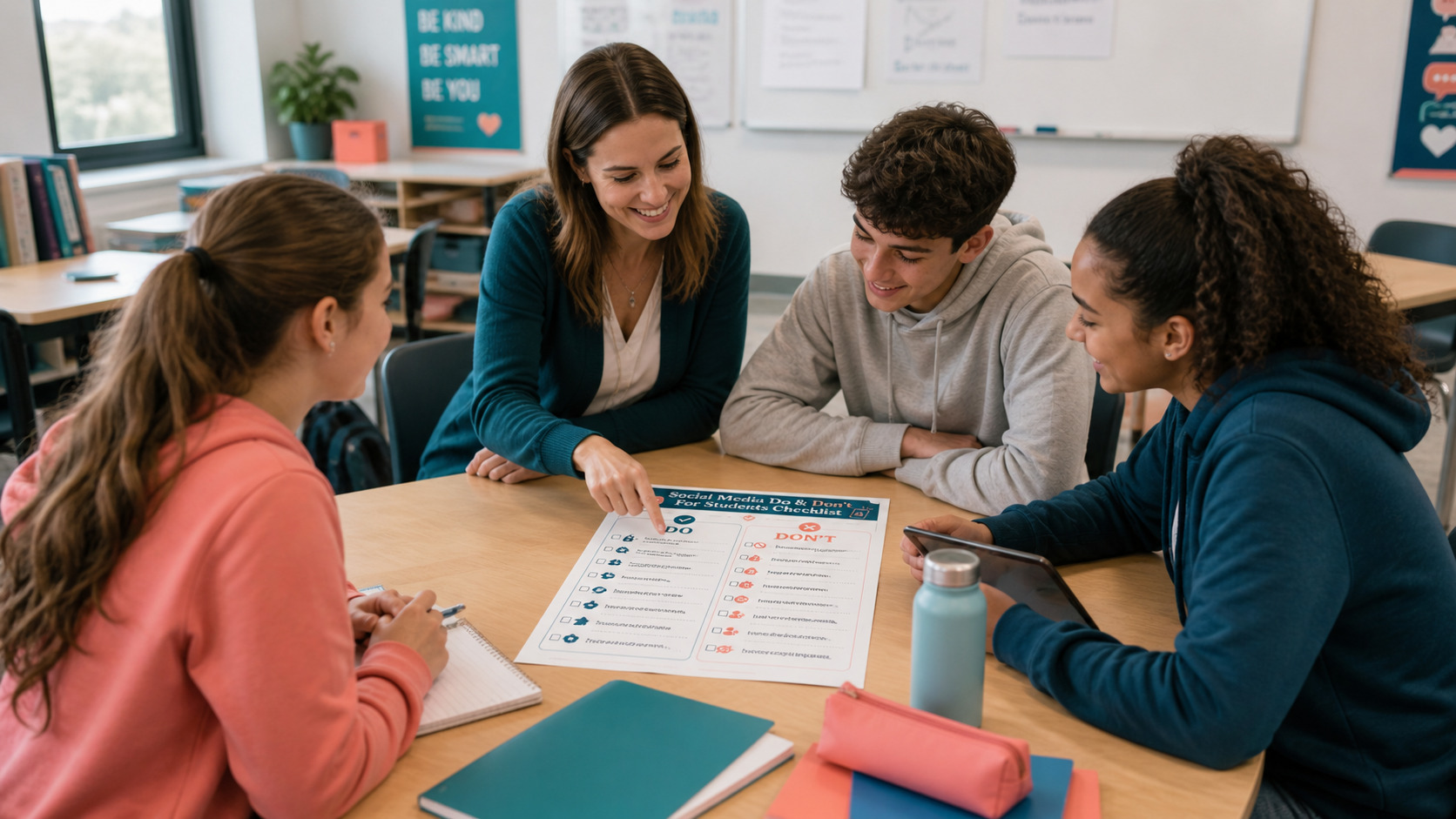
Most students live half their lives online, but very few get a clear social media checklist for students that’s easy to remember. Responsible social media use for students isn’t just about “don’t get in trouble”—it’s about protecting your safety, mental health, and future opportunities. A clear Social Media Do and Don’t for Students checklist turns big scary warnings into calm, practical steps.


In this guide, you’ll find social media safety tips for students, social media etiquette for students, and concrete examples of what students should not post on social media. You can turn these tips into a social media rules for high school students pdf, classroom social media rules poster, or social media do and don’t infographic for students so expectations are visible and easy to use in real life.

Why Students Need A Social Media Do & Don’t Checklist
For today’s middle school, high school, and college students, social media is part of friendships, school projects, and even future careers. But one impulsive post can affect safety, college admissions, and job opportunities years later. Having a social media checklist for students puts guardrails around everyday decisions so they don’t rely only on willpower in emotional moments.
A written Social Media Do and Don’t for Students checklist also helps teachers and parents create consistent social media rules for high school students pdf handouts or a classroom social media rules poster. When everyone is working from the same list, it’s easier to have calm conversations about what is okay, what’s risky, and how to fix mistakes.
The “Do” List: Healthy Social Media Habits For Students
Think of the “Do” side of responsible social media use for students as basic digital hygiene—simple habits that keep you safer and help your online presence support your real‑life goals.
Key “Do” habits to include in your checklist:
- Make your social media profiles private so only people you trust can see your posts.
- Personalize your privacy settings on social media instead of leaving everything on default.
- Be intentional about who you follow; unfollow accounts that make you feel unsafe, anxious, or bad about yourself.
- Follow educational and career related accounts that share scholarships, internships, portfolio ideas, and study tips.
- Think before you post online—pause and imagine a teacher, parent, or future employer seeing it.
- Use social media to build professional network by connecting with clubs, mentors, and organizations in your fields of interest.
- Share positive achievements and school projects, like competitions, art, coding, volunteering, or presentations.
- Check tags and mentions before allowing them on your profile; remove anything that feels embarrassing, unsafe, or unfair.
- Use two factor authentication on social media to add an extra layer of security to your accounts.
These “Do” actions are perfect for a social media do and don’t infographic for students or a quick classroom social media rules poster so they become part of daily habits.
The “Don’t” List: What Students Should Not Post On Social Media
The “Don’t” side is where many social media safety tips for students live. It helps students see exactly what crosses the line, instead of guessing.

Important “Don’t” rules for your social media checklist for students:
- Don’t post illegal or inappropriate content, including vandalism, theft, hate speech, or harassment—even as a joke.
- Don’t post about drugs alcohol or violence, including photos, memes, or “funny” stories that could look like endorsements.
- Don’t cyberbully or be rude online; never join in on dogpiling, name‑calling, or humiliating someone on purpose.
- Don’t overshare personal information like your home address, phone number, full schedule, or financial details.
- Don’t share friends photos without permission; ask first, especially if someone looks uncomfortable or is in a sensitive situation.
- Don’t click suspicious links on social media, including “free gift” offers, unknown surveys, or weird DMs.
- Don’t accept friend requests from strangers, even if they claim to go to your school or know your friends.
- Don’t post when you are angry or emotional; wait until you’re calm and have talked to someone offline.
- Don’t post anything you would not show to a teacher or employer or that you wouldn’t want screenshot and shared.
These “Don’t” items are ideal for a social media do and don’t infographic for students or a lesson plan social media do and don’t for teachers, because they translate directly into class discussions and role‑plays.
Turning Rules Into A Student‑Friendly Checklist
Students (and teachers) remember rules better when they’re short, visible, and repeated often. That’s where a social media rules for high school students pdf or classroom social media rules poster can make a big difference.
You might create:
- A one‑page social media checklist for students with “Do” and “Don’t” columns posted near classroom computers.
- A social media do and don’t infographic for students shared in the school newsletter and student portal.
- A lesson plan social media do and don’t for teachers, including discussion questions, example posts to analyze, and spaces where students write their own “social media etiquette for students” commitments.
Keep wording simple and concrete so students can quickly ask, “Does my post match the ‘Do’ column or the ‘Don’t’ column?” before they tap “share.”
Practical Social Media Do & Don’t For Students Checklist
Use this practical checklist as a base for your printable, poster, or infographic.
Do:
- Make your social media profiles private.
- Personalize your privacy settings on social media.
- Be intentional about who you follow.
- Follow educational and career related accounts.
- Think before you post online.
- Use social media to build professional network.
- Share positive achievements and school projects.
- Check tags and mentions before allowing them.
- Use two factor authentication on social media.
Don’t:
- Don’t post illegal or inappropriate content.
- Don’t post about drugs alcohol or violence.
- Don’t cyberbully or be rude online.
- Don’t overshare personal information.
- Don’t share friends photos without permission.
- Don’t click suspicious links on social media.
- Don’t accept friend requests from strangers.
- Don’t post when you are angry or emotional.
- Don’t post anything you would not show to a teacher or employer.
You can adapt this for different ages, subjects, or school policies, but the heart stays the same: protect yourself and others, and use social media as a tool to support your future instead of quietly damaging it.
A clear Social Media Do and Don’t for Students checklist doesn’t need to be complicated or scary. Start with a few core “Do” and “Don’t” rules, turn them into a social media rules for high school students pdf or simple classroom social media rules poster, and let students practice these habits in small, everyday choices.

FAQ
FAQs About Social Media Do & Don’t for Students Checklist
What if I don’t have time to teach a full social media unit?
You don’t need a week‑long unit to cover responsible social media use for students. Start by introducing a short social media checklist for students at the beginning of the year and revisiting it briefly before projects that involve online research or posting. A simple social media rules for high school students pdf can live in student planners, digital classrooms, or on your doors so the message is constant without taking large chunks of class time.
How can I support students who already feel overwhelmed by online drama?
For overwhelmed students, keep the focus on small protective habits. Emphasize core social media safety tips for students like making social media profiles private, being intentional about who you follow, and not posting when you are angry or emotional. Offer low‑pressure check‑ins where they can talk about online issues, and use the Social Media Do and Don’t for Students checklist as a neutral reference point instead of a personal judgment.
How do I help students stay consistent with these rules?
Consistency grows when rules are visible, repeated in many contexts, and modeled by adults. Post a classroom social media rules poster, embed the Social Media Do and Don’t for Students checklist into digital class pages, and refer to it whenever you discuss digital citizenship or group projects. Invite students to help refine the list so they feel ownership instead of seeing it as a top‑down lecture.
What if my classroom or school doesn’t have many devices?
Even in low‑tech classrooms, students still use phones and social apps at home, so a social media etiquette for students conversation is still valuable. You can use printed scenarios, group discussions, and a simple social media rules for high school students pdf handout to explore what students should not post on social media and how to respond to online conflict. The checklist becomes part of your overall life skills and character education, not just a “tech” topic.
How can this checklist reduce mental load for teachers and parents?
A clear Social Media Do and Don’t for Students checklist turns vague worries into specific, shared expectations. Instead of making up responses in the moment, teachers and parents can point to the same list when something happens: “Which rule did this break, and how do we repair it?” It also makes it easier to create aligned tools like a social media do and don’t infographic for students or a lesson plan social media do and don’t for teachers, so you aren’t reinventing the wheel every year.
You don’t need to implement every rule at once for this to be useful. Start with a tiny version—maybe five “Do” and five “Don’t” rules—then expand or customize as your students grow. Save this post so you can reuse the checklist next term, and follow @theclutteredblog on Pinterest for more printable classroom social media rules poster ideas and student‑friendly digital life tools.