

























If your kids love Easter but you’re not exactly excited about neon dye splashing across your table, this DIY Easter egg decorating guide for kids is going to feel like a breath of fresh spring air. We’ll walk through Easter egg decorating ideas for kids that are simple, low‑stress, and totally doable on a weeknight, even if you’re tired and short on time. You’ll find easy Easter egg crafts for children, mess‑free Easter egg decorating options, and step‑by‑step Easter egg decorating ideas that work for toddlers, preschoolers, and big kids too. Think simple Easter egg designs for kids using things you probably already have: crayons, markers, washi tape, stickers, and more. Save this post to your Easter board and follow @theclutteredblog on Pinterest so you can come back to these ideas anytime you need a cozy family craft night.

Who This Easter Egg Guide Is For (And What’s Inside)
This guide is for busy parents, caregivers, and teachers who want Easter egg decorating ideas for kids that are fun without becoming a giant clean‑up project. It’s especially helpful if you’re looking for dye‑free Easter egg decorating, easy Easter egg crafts for children, or ways to adapt Easter egg decorating activities for toddlers and preschoolers. Inside, you’ll find simple Easter egg designs for kids, no‑dye Easter egg ideas, painted Easter eggs for kids, and even wooden egg decorating and plastic egg decorating ideas for when you want keepsakes that last beyond one weekend. We’ll walk through a step‑by‑step Easter egg decorating routine, a starter kit of craft supplies for Easter eggs, tons of practical variations, and a few gentle mindset shifts so this whole thing feels like cozy family Easter craft time—not another chore.
- Who it’s for: busy families, teachers, grandparents, babysitters, and anyone planning school holiday Easter egg projects or Easter fine motor skills activities.
- What you’ll learn: step‑by‑step Easter egg decorating flow, mess‑free Easter egg decorating options, dye‑free Easter egg decorating, and activity ideas for toddlers, preschoolers, and older kids.
- What you need: basic craft supplies for Easter eggs (stickers, crayons, markers, washi tape, kid‑safe paint, plastic or wooden eggs).
- Extra perks: ideas to support fine motor skills, calm creative time, and low‑pressure family Easter craft time.

What DIY Easter Egg Decorating for Kids Really Is
What This Easter Craft Time Really Looks Like
When we talk about a DIY Easter egg decorating guide for kids, we’re not talking about a Pinterest‑perfect, all‑day production. We’re talking about a cozy, realistic family Easter craft time that fits into an afternoon or a weekend morning without leaving your kitchen looking like a science lab. It’s a mix of Easter egg decorating ideas for kids, easy Easter egg crafts for children, and simple Easter egg designs that kids can actually do themselves. Think finger painting on plastic eggs, sticker Easter egg art, and washi tape Easter eggs that look adorable even when they’re a little wonky.
Why It’s a Game‑Changer for Families
This kind of Easter egg decorating activity for toddlers and big kids gives them a creative outlet and you a chance to slow down for a bit. It can double as an Easter fine motor skills activity when kids peel stickers, place sequins, or wrap washi tape around eggs. Moreover, choosing mess‑free Easter egg decorating or dye‑free Easter egg decorating options means you’re spending more time laughing with your kids and less time scrubbing food coloring out of your grout. Plus, these Easter egg crafts for preschoolers and school‑age kids can easily turn into sweet traditions they remember year after year.
Key Elements of a Calm DIY Easter Egg Decorating Routine
1. Keep It Simple and Kid‑Led
One of the biggest secrets behind easy Easter egg crafts for children is letting them lead. Offer a few simple Easter egg designs for kids—like dots, stripes, simple faces, or fingerprint Easter eggs—and then let them experiment. You can show a quick example and then step back so they feel proud of what they create instead of trying to copy a “perfect” version.
2. Choose the Right Eggs for Your Kids
You don’t have to use real eggs at all if that stresses you out. Wooden egg decorating is great for kids who like to press hard with crayons or markers, while plastic egg decorating ideas are perfect for toddlers who might drop things or for families who want to reuse eggs every year. For older kids, hard‑boiled eggs or hollowed‑out eggs work well for watercolor Easter eggs, crayon resist Easter eggs, or marbled Easter eggs with oil.
3. Mix Mess‑Free and “A Little Messy” Options
A calm family Easter craft time doesn’t have to be totally clean, but it also doesn’t have to be chaos. Offer mess‑free Easter egg decorating ideas like sticker Easter egg art, washi tape Easter eggs, and marker and Sharpie Easter eggs for easy wins. Then, if you have energy, add one “medium mess” option like Kool‑Aid dyed Easter eggs, tempera paint Easter eggs, or glitter and sequin Easter eggs (with a tray underneath) so kids feel that extra bit of magic.
4. Build in Mini Breaks and Clear Endings
Kids’ attention spans are short, especially toddlers and preschoolers. Plan your DIY Easter egg decorating guide for kids as a short, clear block of time—maybe 20–40 minutes—with a natural finish. For example, you could say, “We’re each decorating three eggs today” or “We’ll craft until this playlist ends,” which helps everyone know when clean‑up is coming.
5. Use It as Quiet Connection Time
Finally, think of this as more than just Easter egg decorating ideas for kids—it’s a cozy moment to reconnect. You can play soft music, light a candle away from little hands, and chat about spring, school, or anything that comes up. In addition, Easter egg crafts for preschoolers and older kids can become an easy way to talk about sharing, taking turns, and being gentle with each other.

Step‑by‑Step DIY Easter Egg Decorating Routine for Kids
Step 1: Choose Your Eggs and Cover Your Space
First, decide whether you’ll use hard‑boiled eggs, wooden eggs, or plastic eggs before you invite the kids to the table. Lay down a plastic tablecloth, kraft paper, or an old sheet so mess‑free Easter egg decorating stays mostly mess free. Set up a simple Easter egg decorating activity for toddlers on one side (think stickers and jumbo crayons) and slightly more detailed Easter egg crafts for preschoolers or older kids on the other.
Step 2: Prep Easy Craft Supplies within Reach
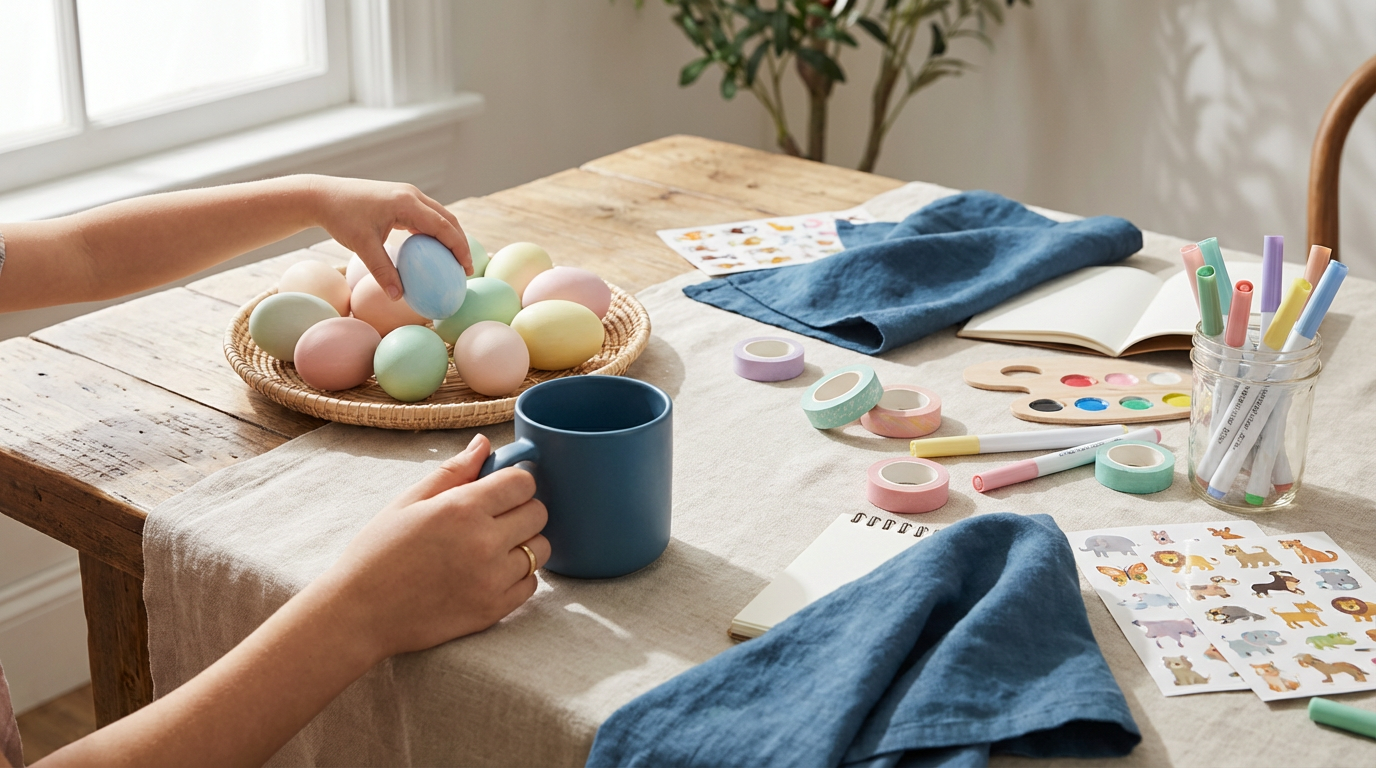
Next, build a mini craft supplies for Easter eggs station. Place washi tape rolls, sticker sheets, kid‑safe markers, crayons, washable paint, small brushes, cotton swabs, and maybe a little cup of oil if you’re trying marbled Easter eggs with oil. Keep everything in shallow trays or muffin tins so small hands can reach without knocking things over.

Step 3: Start with No‑Dye and Low‑Mess Designs
Begin with no‑dye Easter egg ideas to build momentum and confidence. Try crayon resist Easter eggs (kids color on warm hard‑boiled eggs with crayons so the wax melts slightly) or marker and Sharpie Easter eggs for older kids who can handle permanent markers. For little ones, sticker Easter egg art and washi tape Easter eggs are perfect; they’re forgiving, tactile, and great as an Easter fine motor skills activity.
Step 4: Add One “Wow” Technique
Once everyone is warmed up, bring in one special technique so the kids feel like total artists. You might try watercolor Easter eggs with watered‑down paint, Kool‑Aid dyed Easter eggs for a food‑safe option, or glitter and sequin Easter eggs with glue dots to keep it semi‑contained. If you’re decorating wooden eggs, consider collage / decoupage Easter eggs using tissue paper or napkins with a thin layer of kid‑safe glue.
Step 5: Let Eggs Dry and Shift to Cleanup Mode
As eggs fill up the table, designate a drying spot: an empty egg carton, a wire rack, or a tray lined with parchment. While the eggs dry, invite kids to help with a quick clean‑up game—who can gather the most scraps, or who can return all the markers to the cup? This keeps the step‑by‑step Easter egg decorating routine smooth and prevents everyone from wandering off while you do everything.
Step 6: Display and Celebrate
Finally, display the eggs in a basket, on a tray, or as a simple centerpiece. Take photos of your painted Easter eggs for kids, your no‑dye Easter egg ideas, and your favorite simple Easter egg designs so you can look back next year for inspiration. As a result, this becomes more than just a one‑day craft; it feels like a little family tradition you can tweak and repeat.
Your Cozy Easter Egg Decorating Starter Kit
When you have a few things prepped ahead, Easter egg decorating activity for toddlers and older kids feels so much easier. Here’s a simple “before you start” checklist you can save.
- Eggs: hard‑boiled, plastic, or wooden eggs (or a mix).
- Basic tools: paper towels, table cover, egg cartons or trays, kid aprons or old tees.
- Drawing supplies: crayons for crayon resist Easter eggs, washable markers for little kids, Sharpies or paint markers for bigger kids.
- Tape & stickers: washi tape Easter eggs supplies, foam stickers, puffy stickers, letter stickers for names or messages.
- Paints: tempera paint Easter eggs supplies, watercolor pans or liquid watercolors, small brushes, cotton swabs.
- Special effects: a small bowl of vegetable oil for marbled Easter eggs with oil, a shallow cup of Kool‑Aid if you want Kool‑Aid dyed Easter eggs, kid‑safe glitter, sequins, and small gems.
- Surfaces & storage: trays or baking sheets, parchment paper, small cups or jars for brushes, a box or basket to store finished eggs.
- Mindset: low expectations, lots of praise, and a plan to keep designs simple and kid‑led.

Practical DIY Easter Egg Decorating Ideas for Real Life
Now for the fun part: a big bank of real‑life Easter egg decorating ideas for kids you can mix and match depending on your energy, your space, and your kids’ ages. Use these as a menu—pick two or three ideas for one session instead of trying them all.

- Sticker Easter egg art: let toddlers cover plastic eggs with stickers—no drying time, instant gratification.
- Washi tape Easter eggs: wrap strips of colorful tape around eggs for stripes, patterns, or little flags.
- Fingerprint Easter eggs: dip fingertips in washable paint to make tiny chicks, flowers, or polka dots.
- Crayon resist Easter eggs: color on warm eggs with crayons, then dip in light dye or Kool‑Aid for secret patterns.
- Watercolor Easter eggs: brush diluted paint in soft layers for a dreamy, pastel look.
- Tempera paint Easter eggs: let kids paint bold patterns, faces, or abstract art on wooden or plastic eggs.
- Marker and Sharpie Easter eggs: older kids can doodle faces, patterns, or hand‑lettered words.
- Glitter and sequin Easter eggs: use glue dots or a thin glue layer and a tray to catch stray sparkles.
- Collage / decoupage Easter eggs: tear tissue paper or napkins and press onto eggs with a glue‑water mix.
- Marbled Easter eggs with oil: swirl a bit of oil and food coloring or liquid watercolor in water for marbled effects.
- Wooden egg decorating: treat them like mini canvases; paint, draw, or collage so you can keep them year after year.
- Plastic egg decorating ideas: decorate fillable eggs, then hide little notes or treats inside for an extra surprise.
You can turn any of these into a simple Easter egg decorating activity for toddlers by choosing larger stickers, thicker crayons, and bigger plastic eggs. For school holiday Easter egg projects, you can pick two or three of the low‑mess ideas—like washi tape Easter eggs, marker eggs, and sticker eggs—so clean‑up stays manageable in a classroom.
Before vs After: How This Changes Easter for Your Family
Before you create a calm DIY Easter egg decorating routine, it might feel like there’s only one way to do things: bowls of dye, stained fingers, kids fighting over colors, and a rushed scramble to clean up before bedtime. The whole thing can feel overwhelming, especially if you’re already tired from work, school schedules, and never‑ending laundry. In that version, Easter egg decorating ideas for kids can feel like another item on your to‑do list.
After you switch to simple Easter egg designs for kids, mess‑free Easter egg decorating, and a clear step‑by‑step Easter egg decorating flow, everything slows down. You get to choose no‑dye Easter egg ideas when you’re low on energy, or pull out marbled Easter eggs with oil or glitter and sequin Easter eggs when you’re ready for a more magical day. Your kids feel proud because they can actually do the projects themselves, and you feel calmer because you’re prepared.

Habits and Mindset Shifts to Make It Stick
If you want DIY Easter egg decorating for kids to become a tradition, keep your habits tiny and realistic. Store a small “Easter craft box” with plastic eggs, washi tape, stickers, and a few markers, so you don’t have to reinvent the wheel every year. In addition, remind yourself that the goal isn’t perfect eggs—it’s a few moments of connection and creative play.
You can even keep a simple affirmation in mind while you set up: “Our Easter crafts don’t have to be perfect to be meaningful.” Another one that helps on low‑energy days: “It’s enough to show up with simple ideas and a little bit of heart.” When you catch yourself spiraling about the mess or the time, come back to these.

Using Visual Planners, Checklists, and Trackers for Easter Crafts
If you’re the type who loves planners, you can absolutely turn this DIY Easter egg decorating guide for kids into a mini system. Create a one‑page Easter egg decorating planner with three sections: “Supplies to Gather,” “Ideas to Try,” and “Display Plans.” Add checkboxes for things like no‑dye Easter egg ideas, painted Easter eggs for kids, or plastic egg decorating ideas so you can mix up your routine each year.
You can also make a simple tracker for kids—a little grid where they can draw or write each Easter egg decorating idea they tried (“washi tape egg,” “fingerprint chick,” “watercolor swirl,” etc.). As a result, they feel involved and excited to try something new without pressure.

Next Steps and a Cozy Easter Craft Toolkit
From here, keep things simple. Pick two or three Easter egg decorating ideas for kids from this guide—maybe sticker Easter egg art, washi tape Easter eggs, and watercolor Easter eggs—and try them this week. You don’t need a huge stash of supplies; a small, curated craft supplies for Easter eggs kit can take you through the whole season.
If you love printables, you can build a mini “Easter craft toolkit” for your family: a one‑page idea bank, a supply checklist, a planner page for school holiday Easter egg projects, and a little journal sheet where kids can write or draw their favorite designs. Start with what feels light and fun, and let the rest go.
Common DIY Easter Egg Decorating Mistakes to Avoid
Even the cutest Pinterest ideas can backfire a bit in real life, especially with kids. Here are a few common DIY Easter egg decorating guide for kids mistakes and how to sidestep them:
- Trying too many techniques in one session instead of focusing on a few easy Easter egg crafts for children.
- Setting up only messy options (like full dye baths and glitter) without including mess‑free Easter egg decorating ideas.
- Forgetting to prep drying space, so finished eggs end up smudged or rolling onto the floor.
- Using only breakable eggs with toddlers instead of plastic egg decorating ideas or wooden egg decorating.
- Expecting “perfect” simple Easter egg designs for kids instead of celebrating their quirky, creative versions.
- Skipping aprons or table covers, then feeling frustrated about the clean‑up.
- Not adjusting techniques for different ages; for example, fingerprint Easter eggs and sticker Easter egg art for toddlers, and marker and Sharpie Easter eggs for older kids.
A Simple 5‑Day Easter Egg Decorating Challenge for Kids
If your kids love a challenge chart on the fridge, turn this into a fun five‑day experiment. Each day, try one new idea from this DIY Easter egg decorating guide for kids and keep the vibe light and playful.
Day 1: Sticker‑only Easter eggs (perfect for toddlers and a gentle warm‑up).
Day 2: Washi tape Easter eggs with stripes and criss‑cross patterns.
Day 3: Fingerprint Easter eggs or watercolor Easter eggs for soft, artsy vibes.
Day 4: Crayon resist Easter eggs or marbled Easter eggs with oil for a “magic reveal.”
Day 5: Glitter and sequin Easter eggs or collage / decoupage Easter eggs as your grand finale.
FAQs About DIY Easter Egg Decorating Guide for Kids
How long does a DIY Easter egg decorating session usually take?
Most families find that 30–60 minutes is the sweet spot for Easter egg decorating ideas for kids. You can do a very quick session in 20 minutes if you stick to no‑dye Easter egg ideas, sticker Easter egg art, or washi tape Easter eggs. If you’re planning school holiday Easter egg projects or a bigger family day, you might stretch it to 90 minutes with a snack break. In addition, remember you can always do two shorter sessions across the weekend instead of one long marathon.
What should I do on low‑energy days when I still want to do something special?
On low‑energy days, lean hard into mess‑free Easter egg decorating. Pull out plastic egg decorating ideas with stickers and markers, or try simple Easter egg designs for kids like smiley faces, hearts, or squiggles. You can even declare it a “marker‑only” or “sticker‑only” day so you don’t have to set up paint, cups, or dye. As a result, you still get the cozy memory without draining your battery.
How can we stay consistent and make this a yearly tradition?
The easiest way is to keep a tiny “Easter craft box” with your favorite supplies: washi tape, stickers, plastic eggs, a few wooden eggs, crayons, and maybe a small watercolor set. Each year, pull out this DIY Easter egg decorating guide for kids, pick two or three Easter egg decorating ideas for kids, and add one new technique. Over time, your kids will even remember their favorites—like marbled Easter eggs with oil or Kool‑Aid dyed Easter eggs—and start requesting them.
What if we live in a small space with limited surfaces?
Small spaces are totally fine; you just have to be intentional. Cover a single table, coffee table, or even a large cutting board with paper to create a “pop‑up craft station.” Focus on dye‑free Easter egg decorating and simple Easter egg designs for kids to minimize clean‑up. Moreover, use vertical storage (like a tiered tray or shelves) to display your painted Easter eggs for kids so your home still feels cozy, not cluttered.
How do I handle the mental load and overwhelm around holiday crafts?
Holiday crafts can feel like a lot, especially when social media is full of elaborate ideas. Give yourself permission to treat this DIY Easter egg decorating guide for kids as a flexible menu, not a checklist you have to complete. Choose only the Easter egg crafts for preschoolers or older kids that feel doable this year, and let imperfect eggs and half‑finished ideas be more than enough. You’re creating memories, not a competition entry.
Ready to Try Your First Cozy DIY Easter Egg Decorating Session?
You don’t need a perfect plan, a giant supply haul, or a full afternoon to make Easter egg decorating feel special for your kids. Start with one or two easy Easter egg crafts for children, add a mess‑free Easter egg decorating option, and let the rest unfold naturally. Save this guide to your Easter or Kids’ Crafts board, and follow @theclutteredblog on Pinterest so you always have simple, cozy ideas ready for your next family craft day.
Now that you’ve seen how a full DIY Easter egg decorating guide for kids can look in real life, it’s time to peek at some actual Pinterest‑worthy examples. Below, you’ll find a curated visual roundup of Easter egg decorating ideas pulled straight from real pins, so you can see how different styles, colors, and textures show up on actual eggs. Use this listicle like a menu: pick one or two ideas that feel doable this week, save the pins you love to your own boards, and come back anytime you need fresh inspiration for kid‑friendly Easter egg crafts.

30 DIY Easter Egg Decorating Ideas for Kids
If you’re more of a visual person, this is your shortcut. Below you’ll find real-life DIY Easter egg decorating ideas for kids pulled straight from high-engagement Pinterest pins.
Use this roundup like a menu: pick one or two ideas that fit your space and energy level this week, click through to the original pin for full details, and save your favorites to your own Easter boards so they’re easy to find next year.
Try an Artistic Mixed-Pattern Easter Egg Set

This pin shows a beautiful collection of painted Easter eggs in soft, modern colors with a mix of stripes, florals, and abstract patterns, perfect for kids who love to experiment with brushes.
Use it as inspiration for a family “egg gallery” where each person paints a different design so your centerpiece feels collected and creative instead of perfectly matched.
To make it kid-friendly, stick to a limited palette of pastels and let younger artists fill in big shapes while older kids add the tiny details and outlines.
Build a Colorful Collage of Decorated Eggs

This idea highlights a mix of tissue paper, foil, and traditional dye to create a playful collage of eggs in one photo, which is perfect if your kids want to try a few different methods at once.
Use the layout as a reminder to keep finished eggs together on a tray or platter so all the different textures and colors feel cohesive.
It’s a great option for school holiday Easter egg projects where each child can use a different technique, but everything still looks cute displayed side by side.
Paint Cozy Neutral Easter Eggs with Tiny Motifs

Here you get a sweet mix of soft background colors with simple doodles and faces, which makes it a perfect style reference for older kids who love drawing.
Have children sketch their designs in pencil first, then go over them with fine-tip markers or paint pens to keep things neat without stress.
This look pairs well with wooden egg decorating too, especially if you want a set of reusable “keepsake” eggs in calm, cozy colors.
Create Textured Barnyard Animal Eggs for School

This pin shows a collection of pastel barnyard animal eggs with fuzzy, textured details that kids will want to touch and explore.
It’s ideal for school holiday Easter egg projects because you can assign different animals to small groups and let each child add features like ears, spots, or snouts.
Use felt, pom-poms, and foam shapes to keep it fairly mess-free while still giving a big sensory payoff.
Wrap Easy Washi Tape Stripe Easter Eggs

These eggs use strips of washi tape to create clean, bold stripes, making them a perfect mess-free Easter egg decorating idea for younger kids.
Offer a few rolls of tape and let children choose their own color combos, then help them smooth the tape around the curves of the eggs.
This idea works especially well with plastic egg decorating, since you can reuse the eggs next year and refresh the tape designs with new patterns.
Make Funny Character Eggs for a Laugh

This pin features humorous, character-style eggs that are perfect for kids who love jokes and silly stories.
Encourage each child to design a “character family” with different expressions, hair, and accessories using markers and simple craft pieces.
It’s a great way to turn Easter egg crafts into a storytelling game, where each egg gets its own name and personality.
Use Bright Colors for High-Impact Kid Eggs

This pin shows a cluster of brightly colored eggs that instantly signal “kids were here” in the best way.
Use it as inspiration to let children choose the boldest dyes or paints they love, even if they’re not your usual muted palette.
Display the finished eggs in a simple neutral basket so the colors really pop without overwhelming your space.
Set Up a Pastel Egg Decorating Party Station

This scene shows a full egg decorating station with bowls, eggs, and pastel decor, which is perfect inspiration if you’re hosting a small Easter party.
Use different containers for dyes, paints, and tools so kids can move around the table “buffet style” and choose their own adventure.
It’s a great way to mix older kids and little ones—set the more advanced supplies in one area and low-mess options in another.
Use Rainbow Egg Clipart as a Color Guide

This colorful egg clipart sheet works as a visual idea bank, showing different patterns and color combos kids can copy onto real eggs.
Print a similar sheet or open it on a tablet so kids can point to a design and try recreating it with crayons, markers, or paint.
It’s especially helpful for kids who feel “stuck” and need a little inspiration to get started.
Draw Simple Faces on Pastel Eggs

These eggs are dyed in soft pastels and finished with simple smiling faces, making them charming and very achievable for kids.
Let younger children handle the coloring while older ones add the expressions with a fine marker.
You can even turn it into a guessing game later: each family member picks the egg that best matches their current mood.
Explore Toddler-Friendly Easter Egg Alternatives

This pin highlights several toddler Easter egg decorating ideas that skip traditional dye and focus on simple, hands-on play.
Use it as a reminder that you can fill eggs, tape them shut, or decorate large plastic shells instead of worrying about fragile real eggs.
It’s a great reference when you’re planning an Easter egg decorating activity for toddlers who still put everything in their mouths.
Go for Bold Artistic Marbled Easter Eggs

These marbled eggs lean into saturated colors and swirling patterns, which older kids will love experimenting with.
Use shaving cream or oil and dye to create similar marbled Easter eggs with oil or foam, then let kids swirl and dip to reveal patterns.
Display them in a simple white bowl so the colors become the star of your Easter table.
Try Simple Painted Easter Eggs with Kids

This pin features straightforward Easter egg painting ideas with dots, stripes, and color blocks that kids can manage without frustration.
Set out a few primary paints and let them mix new colors while they experiment with different brush sizes.
It’s a perfect intro to painted Easter eggs for kids who want something beyond basic dye but still very simple.
Mix Cute Designs Kids Will Love

This tray of decorated eggs blends several easy motifs—faces, simple patterns, and bright colors—that are perfect for kids of different ages.
Use the mix as a mood board when you’re planning Easter egg decorating ideas for kids who all like something slightly different.
Each egg can be quick, which makes this approach ideal for shorter crafting windows or low-energy days.
Blend Classic Easter Egg Decorating Favorites

This pin pulls together several themed egg ideas—characters, monsters, and bright solids—into one joyful collection.
It’s a great visual to show kids how different techniques can still look cohesive when you repeat some of the same colors.
Let each child pick a “theme” egg and one “freestyle” egg so they feel structured but still creative.
Use Preschool Easter Egg Crafts You’ll Want to Keep

This visual shows a mix of preschool-friendly Easter egg crafts that use stamping, stickers, and household tools to make patterns.
Let kids explore process art—rolling, stamping, tapping—without worrying about a “perfect” final egg.
The finished pieces are charming enough to display on the fridge or tuck into an Easter basket as little artworks.
Set Up a Kid-Friendly Egg Painting Hub

This pin shows a kid-focused painting setup with eggs, brushes, and simple design examples close by.
Use it as a model to position sample eggs or sketches where kids can see them while they work.
It keeps your DIY Easter egg decorating guide for kids feeling intentional without being rigid.
Keep It Cute with Simple Painted Eggs

These eggs use basic techniques—solid colors, speckles, and a few faces—to create a really sweet collection.
It’s a helpful visual reminder that simple Easter egg designs for kids can still look very “Pinterest-y.”
Pair this style with wooden egg decorating if you want a reusable set you pull out every spring.
Paint Easter Egg Rocks for a Twist

This rock-painting take on Easter eggs is perfect if you want something durable for gardens or outdoor play.
Let kids paint egg-shaped rocks with dots, stripes, and swirls, then hide them outside for a different kind of “egg hunt.”
It’s a fun way to keep the theme going even if you’re not using actual eggs at all.
Make Unicorn-Themed Easter Eggs

These unicorn eggs are a dream for kids who love fantasy and magical creatures.
Use paper horns, painted lashes, and pastel dyes to create similar looks as a special “feature project.”
They make a fun centerpiece or surprise tucked into a child’s Easter basket.
Try Fresh Combos from a Genius Idea Board

This idea board groups multiple Easter egg decorating ideas in one glance, from pastels to bold patterns.
Use it as inspiration to pick one “simple” style and one “wow” style each year so your routine feels fresh.
It’s a nice visual to keep in mind when you’re planning a DIY Easter egg decorating guide for kids that grows over time.
Mix Easter Egg Crafts for All Ages

This shot combines multiple Easter crafts, including egg-inspired suncatchers and painted projects, great for siblings of different ages.
Take a similar approach by pairing simple egg crafts for preschoolers with slightly more detailed ones for older kids.
Everyone gets something at their level, but your display still feels cohesive and festive.
Turn Egg Cartons into Easter Craft Displays

This upcycle idea uses egg cartons themselves as the base for cute Easter crafts, which pairs perfectly with egg decorating.
Let kids paint carton cups and use them as little nests or stands for their decorated eggs.
It’s an easy way to add dimension to your display while reusing something you already have at home.
Paint Modern Color-Blocked Easter Eggs

These color-blocked eggs use strong brushstrokes and bright hues that older kids and tweens will love.
Have them tape off sections or simply paint half-and-half designs with contrasting colors.
The look is bold and modern while still very doable with basic brushes and kid-friendly paint.
Add Dainty Floral Details to Your Eggs

These floral eggs are perfect if you or your older kids enjoy slow, detailed painting sessions.
Try simple petals, leaves, and dots first, then layer extra blossoms once the base is dry.
They pair beautifully with simpler kids’ eggs in a shared basket for a mix of playful and polished.
Doodle Bold Graphic Patterns on Eggs

These chalk-marker eggs show how striking simple doodles can be when you repeat shapes and keep the palette limited.
Give kids one marker color each and challenge them to fill an egg with only lines, another with dots, and another with tiny icons.
It’s a mess-free Easter egg decorating idea that still feels fresh and creative.
Make Kawaii-Style Cartoon Easter Eggs

These kawaii eggs have big eyes, rosy cheeks, and soft colors that kids and teens will adore.
Help younger kids with the face outlines, then let them color and add tiny details like hearts or stars.
They look especially cute lined up on a shelf or tucked into a pastel basket.
Set Out a Decorate-Your-Own Egg Station

This setup shows blank eggs next to pens, stickers, and decorations so kids can freestyle their own designs.
Use it as a template for your DIY Easter egg decorating guide for kids: one tray of eggs, one tray of tools, and lots of open-ended creativity.
It’s perfect for parties or family gatherings where everyone has different ideas and skill levels.
Display Simple Pastel Eggs in a Cozy Vignette

This cozy vignette proves your eggs don’t need complicated designs to look beautiful—soft colors and a sweet display go a long way.
Invite kids to help you choose a tray, add some faux grass or paper shreds, and arrange their favorite eggs.
It turns their crafting into part of your seasonal decor in a really gentle, homey way.
Paint Bunny and Chick Character Eggs

These bunny and chick character eggs are a classic, adorable way to finish your Easter egg decorating lineup.
Use paint for the base, then add faces, ears, and beaks with markers or glued paper pieces so kids can help with each step.
They’re the perfect “ta-da” moment for your DIY Easter egg decorating guide for kids and look great tucked into any Easter basket.
Love saving ideas like these? Follow us on Pinterest for more inspiration, templates, and easy-to-use resources.