













A front yard does a lot more than fill the space between your house and the street. It shapes the first impression of your home, adds curb appeal, and can even make everyday life feel a little calmer when you pull into the driveway.


The tricky part is figuring out what actually works for your space. A small entry area, a narrow lot, patchy grass, too much sun, too much shade, or a busy schedule can all make landscape planning feel overwhelming. The good news is that the right front yard landscaping ideas can make a space look polished without turning it into a full time project.

Start With the Shape and Size of Your Yard
Before choosing plants, stone, or edging, look at the structure of your space. Great landscaping usually begins with layout, not decoration. This is especially true for small front yard landscaping ideas or simple front yard landscape design that needs to look tidy without feeling crowded.
If your yard is small, focus on a clean walkway, a defined planting border, and a few layers of greenery instead of trying to fit in too many features. For a narrow front yard, long curved beds or slim planting strips can guide the eye and make the space feel wider. If you have a corner lot, use larger anchor plants or low shrubs to give the space shape from multiple viewing angles.
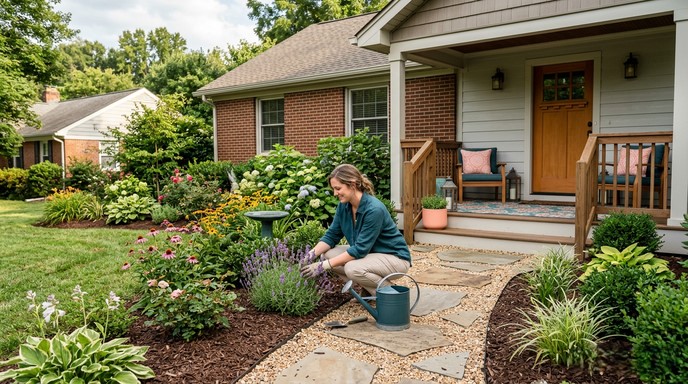
A good front yard layout often includes three basic zones. The first is the path to the front door. The second is the planting area around the house. The third is an open space that keeps everything from feeling too busy. That simple balance works in modern front yard landscaping ideas, cottage style yards, and even low maintenance front yard landscaping plans.
Choose Plants That Match Your Lifestyle
A beautiful yard only stays beautiful if you can realistically care for it. That is why low maintenance front yard landscaping matters so much. The best design is not the one with the most plants. It is the one you can keep healthy with the time and energy you actually have.
If you want easy care front yard plants and shrubs, look for hardy choices that fit your climate. Drought tolerant front yard landscaping can include ornamental grasses, lavender, agave, salvia, and other plants that need less water once established. If your entry area gets limited light, shade front yard landscaping ideas might include hostas, ferns, hydrangeas, or leafy evergreen shrubs.
Try to mix plant types for a fuller look. Use one small tree or tall focal plant, medium shrubs for body, and lower flowers or ground cover near the edge. This layered style helps even a no grass front yard landscaping idea feel lush and intentional.
Use Hardscaping to Make Everything Look Finished
Plants bring life, though hardscaping is what makes a yard feel complete. Walkways, edging, gravel, mulch, pavers, and decorative stone all help organize the space. They also reduce maintenance and improve function.
Front yard walkway and flower bed ideas work especially well when the path feels connected to the planting design. A curved path can soften a boxy house, while straight pavers can support a more modern or minimalist front yard landscape design. Rock beds are also useful for front yard rock garden ideas, especially in dry climates or areas where grass struggles.
For townhouse front yard ideas or small front yard landscaping on a budget, simple upgrades can go a long way. Fresh mulch, a neat border, stepping stones, and a few symmetrical plants near the porch can completely change how the yard feels without requiring a major renovation.
Pick a Style That Matches Your Home
The easiest way to make landscaping look expensive is to keep it consistent with the home itself. A modern house usually looks best with clean lines, repeating shapes, and a restrained color palette. A cottage style home can carry softer borders, layered flowers, and a more relaxed planting mix. Tropical front yard landscaping ideas often work best with bold foliage, oversized leaves, and warm weather friendly textures.
If you want front porch and front yard landscaping to feel connected, repeat colors and materials between both spaces. A black planter by the door can echo dark edging in the yard. A stone porch can connect beautifully with a gravel bed or stepping stone path. Matching details make the entire exterior feel planned instead of pieced together.
Front yards with trees and shrubs often look strongest when one main focal point leads the design. That could be a flowering tree near the walkway, a pair of sculpted shrubs near the entrance, or a bold plant grouping that frames the porch.
Budget Friendly Ideas That Still Look Pulled Together
You do not need a huge budget to create better curb appeal. Some of the best front yard curb appeal ideas are simple and strategic.
Start by cleaning up what is already there. Trim overgrown shrubs, remove anything dead, define your garden edges, and refresh mulch or gravel. Then invest in one or two upgrades that add real impact. That might be a better walkway, a new grouping of drought tolerant plants, or a small tree that adds height and structure.
When working with small front yard landscaping on a budget, repetition helps. Using the same plant in several spots looks cleaner than buying lots of different plants. Repeating materials also makes the space feel more intentional. A limited palette almost always looks more polished.

A Practical Front Yard Landscaping Checklist
Use this checklist to plan a yard that looks good and feels manageable
- Check how much sun and shade your front yard gets
- Measure the width of walkways and planting beds
- Pick one overall style for the yard
- Choose a simple color palette for plants and materials
- Keep the path to the front door clear and easy to follow
- Add one focal point such as a tree, planter, or shrub grouping
- Layer plants by height from back to front
- Use mulch, gravel, or rock to reduce weeds and mess
- Select low maintenance plants that fit your climate
- Repeat a few materials or plant types for a cohesive look
- Leave open space so the yard does not feel crowded
- Finish with lighting or porch accents for extra curb appeal
A front yard does not need to be large or elaborate to feel beautiful. With the right mix of structure, plants, and simple finishing touches, even a small or awkward space can feel welcoming, calm, and much easier to maintain.

FAQ
FAQs About Front Yard Landscaping Ideas
How can I improve my front yard if I only have a small space?
A small yard can still look beautiful with the right layout. Focus on a clean walkway, one focal point, and a few layered plants instead of trying to fit in too many features. Small front yard landscaping ideas usually work best when the design feels simple, open, and balanced. Even one tidy flower bed and fresh mulch can make a big difference.
What is the easiest low maintenance front yard option?
Low maintenance front yard landscaping often starts with fewer plant varieties and more durable ground cover like mulch, gravel, or rock. Choose easy care shrubs and plants that match your climate so they need less watering and trimming. A no grass front yard landscaping design can also save time if mowing is one of your biggest frustrations. The goal is to create a yard that still looks cared for without constant work.
What should I do if my front yard gets too much sun or not enough light?
The best approach is to match plants to the actual conditions instead of forcing a style that does not fit the space. Drought tolerant front yard landscaping works well in hot sunny areas, while shade front yard landscaping ideas are better for entry areas blocked by trees or the house itself. Once your plants suit the light, the yard becomes easier to maintain and looks healthier. That one choice can prevent a lot of trial and error.
How do I make my front yard look more expensive on a budget?
A polished front yard usually comes from consistency, not cost. Repeating a few plant types, using neat edging, refreshing mulch, and keeping the layout uncluttered can make a budget friendly design feel much more elevated. Simple front yard landscape design tends to look cleaner and more intentional than a yard filled with too many random features. Start with structure first, then add a few finishing details.
Small steps still count, especially with outdoor projects that can feel bigger than they really are. Start with one corner, one bed, or one path upgrade and build from there. Save this post for later and follow @theclutteredblog on Pinterest for more practical home ideas that make everyday spaces feel calmer and more put together.