












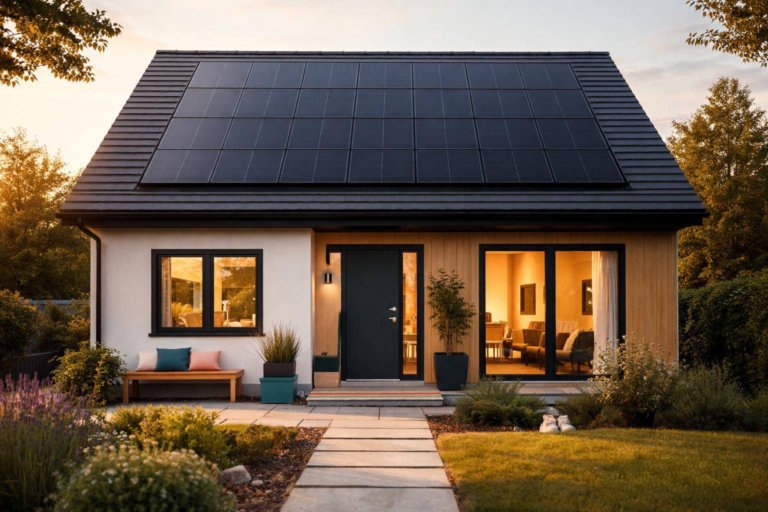
Bringing solar into your home is exciting, but it can feel scary if you worry your roof will look cluttered or “too industrial”. When you focus on aesthetics from the start, clean energy can actually upgrade your curb appeal instead of fighting it.


This guide walks you through how to make solar panels look good on your house, from panel color and layout to building‑integrated solutions and small architectural tweaks. You’ll learn how to match your system to your roof, use it as a design feature, and plan smarter during renovation so everything feels intentional.
Think of this as a style guide for a stylish solar powered home design, whether your vibe is minimalist white, modern farmhouse, or warm terracotta.

Start With the Look You Want
Before you compare quotes, get clear on the aesthetic you want your home to have once solar is installed. This will guide decisions about panel type, placement, and even wiring details.
Ask yourself:
- Do you want the panels to disappear, or to become a visible “tech chic” feature?
- Is your home modern, traditional, farmhouse, or Mediterranean?
- Is curb appeal from the street more important, or the view from your backyard deck?
Many homeowners now choose black solar panels for modern homes because their solid dark color reads as sleek and intentional, especially on simple rooflines.
Choosing Panels That Match Your Roof
Panel color and finish do a lot of the heavy lifting when it comes to solar panels and home aesthetics. If you can, pick hardware that visually blends with your existing roof.
- For dark roofs: All black solar panels to match dark roof surfaces (slate, charcoal shingles, dark grey metal) keep everything uniform and low‑contrast.
- For white or light minimalist homes: Low profile solar panels with a thin frame look cleaner, especially if you maintain strong lines and symmetry.
- For metal roofs: Matching solar panels to dark grey or black metal roof panels creates a monolithic, almost invisible energy layer.
- For terracotta or clay tile roofs: Consider solar roof tiles that look like regular shingles or clay‑tone BIPV modules so the warm roof character remains.
Finish matters too. Matte finish solar panels vs glossy options can reduce glare and reflections, so the array feels quieter and more architectural, especially in full sun.
Layout, Symmetry, and Where You Place Panels
Even the most beautiful panel looks messy in a chaotic layout. The best way to arrange solar panels on roof surfaces is to treat them like a large design element, not just a technical add‑on.
- Aim for rectangular blocks, not scattered patches across multiple roof faces.
- Prioritize symmetrical solar panel layout ideas that align with windows, gables, or roof edges.
- If possible, keep arrays on one or two main roof planes to avoid visual noise.
Homeowners often ask about solar panels on front vs back of house. If your front roof has strong street visibility, you can either keep panels on the back for traditional curb appeal or embrace a contemporary home design with visible solar panels as a “feature facade”.
Don’t forget the details: aesthetic ways to hide solar panel wiring (painted conduit, roof‑color junction boxes, routing through attic spaces) prevent cables from becoming the first thing people notice.
Using BIPV and Solar as Design Elements
If you’re building new or doing a major renovation, building integrated photovoltaics roof and facade options can make solar feel like part of the architecture from day one.
Examples include:
- Solar roof tiles that look like regular shingles or blend into standing seam metal.
- Solar glass skylight and balcony railing ideas that double as daylighting and power generation.
- Solar pergola and carport design ideas where panels act as shade structures for patios, walkways, or parking.
Using solar panels as shade structures works especially well in warm climates: a solar pergola over an outdoor dining space or a carport can feel like a premium architectural feature that just happens to lower your bill.

Matching Different Home Styles
You don’t need a hyper‑modern boxy house to make solar feel stylish. With a bit of planning, you can integrate solar with almost any style.
- White minimalist homes: Pair low profile solar panels and simple rectangular arrays with thin black frames; keep the rest of the exterior calm and clutter‑free so panels look like a deliberate graphic element.
- Modern farmhouse style: Combine a simple gabled roof, dark standing seam metal, and black solar panels; add warm wood accents and black window frames so the dark roof reads cohesive, not heavy.
- Terracotta or Mediterranean: Use solar solutions that harmonize with terracotta or clay tile roofs, either with color‑matched modules or BIPV shingles.
- Contemporary glass‑heavy homes: Integrate solar with modern architecture through solar balcony railings, facade panels, and canopies that echo your clean lines.
The key is repeating colors and materials: when your trim, roof, and hardware share tones, even visible panels feel like part of the original design rather than an afterthought.
Planning During Renovation or New Builds
If you’re touching the roof or changing your exterior, it’s the perfect time to get solar‑ready. Solar ready roof design tips usually focus on structure and layout, but you can also size and position roof planes for aesthetics.
- Keep at least one large, unobstructed roof plane facing a useful sun direction.
- Align vents, chimneys, and skylights so they don’t “cut into” your future array.
- Plan where inverters, battery storage, and conduits will live so they’re accessible but discreet.
Planning solar panel placement during renovation also makes it easier to combine energy efficient windows and solar panels for a holistic envelope upgrade. For very energy‑focused projects, passive house design with rooftop solar can give you a home that is both low‑energy and visually cohesive, instead of a patchwork of add‑ons.
Practical Checklist: Make Solar Look Intentional
Use this quick checklist when talking to installers, architects, or when reviewing designs so your system stays in line with your style goals.
- Decide your priority: invisible panels or bold tech feature?
- Note your roof color and style (dark, light, metal, terracotta, farmhouse, minimalist).
- Ask about black solar panels or all black solar panels that match your roof color.
- Choose matte finish solar panels where possible to minimize glare.
- Request low profile solar panels and slim mounting hardware.
- Group panels into clean rectangular blocks, not scattered patches.
- Aim for symmetrical solar panel layout ideas that align with windows and roof edges.
- Decide on solar panels on front vs back of house based on your curb‑appeal goals.
- Ask your installer for aesthetic ways to hide solar panel wiring and junction boxes.
- Explore building integrated photovoltaics roof and facade options if you’re renovating or building new.
- Consider solar roof tiles that look like regular shingles or match terracotta/clay tiles.
- Look into solar glass skylight and balcony railing ideas for modern homes.
- Brainstorm solar pergola and carport design ideas to combine shade and power.
- Coordinate panel colors with trim, gutters, and metal details for a unified palette.
- Document your preferences in writing so every contractor is on the same page.
When you treat your system like part of your home’s decor, not just a utility upgrade, you end up with a clean energy setup that feels like it was always meant to be there.

FAQs About How to Make Solar Panels Feel More Integrated Into Your Home Style
How can I improve the look of my existing solar panels without replacing them?
You can upgrade aesthetics by focusing on everything around the panels: clean up visible wiring, repaint conduit to match your roof, and tidy any exposed hardware. If your layout looks busy, ask an installer whether some modules can be regrouped on fewer roof faces during a future maintenance visit. In the meantime, refresh trim, gutters, and fascia in a coordinated color so the panels sit in a more polished frame. Small landscaping updates, like framing views with trees or pergolas, can also soften how the system reads from the street.
What if I have very little time or energy to plan solar aesthetics?
If your energy is low, focus on just a few high‑impact decisions: choose panel color (usually all‑black) that matches your roof and request a simple, symmetrical layout from your installer. Ask them specifically for low profile solar panels and hidden wiring so you don’t have to micromanage the technical details. You can always refine small things later, like painting conduit or adding a simple solar pergola, once the main system is in place. Starting with a clean, compact array will carry most of the visual impact for you.
Is there anything I can do in a small home or on a small roof?
In small spaces, placement and multi‑use design matter more than size. Consider concentrating modules on a single roof plane for the cleanest look, even if that means a slightly smaller system. You can also use solar pergola and carport design ideas to bring generation down into your outdoor living area instead of crowding a tiny roof. Building integrated options like solar balcony railings or compact BIPV facades can help apartment‑style or narrow homes add power without feeling cluttered.
How do I handle the mental load of all these small design decisions?
Treat solar like any other design project: define your “mood board” first so every decision has a clear direction. Pick 3 words to describe your goal (for example: “minimal, dark, calm”) and share them with your installer and designer. Then choose just a handful of non‑negotiables—like “all‑black panels” or “no visible conduit on the front facade”—and let the professionals handle the rest within that brief. Capturing everything in a simple checklist keeps the mental load manageable and prevents decision fatigue.
Can visible panels ever look good from the front of the house?
Yes—especially on modern or contemporary homes where sharp rooflines and strong contrasts are part of the look. In that case, embrace solar panels on front vs back of house by treating the array like a bold design statement, not something to hide. Use black solar panels for modern homes, align them carefully with the roof edges, and repeat dark accents in windows, railings, or doors so the entire facade feels intentional. A well‑designed front‑facing system can actually increase perceived value and modernize an older exterior.
Taking one small step—like choosing a panel color you genuinely like or clarifying a simple layout—already moves you closer to a home that feels both stylish and sustainable. Start tiny, save this post for later, and follow @theclutteredblog on Pinterest so you’ll have a steady stream of cozy, practical ideas as you go.