








If weeknight dinners feel like chaos—mystery leftovers, random ingredients, and takeout menus on speed dial—Sunday can be your reset button. You don’t need to meal prep like a pro chef or spend eight hours in the kitchen. You just need one simple Sunday flow that sets you up with a few prepped ingredients, a rough plan, and a kitchen that feels ready instead of overwhelming.


This guide walks you through a realistic Sunday prep for an organized home cook: plan, shop, prep a few building blocks, and organize your space so cooking at 6 p.m. feels lighter and faster.

Why Sunday Prep Works (Even If You Hate Meal Planning)
Many home cooks give up on meal prep because they imagine rigid, perfectly labeled containers and eating the same chicken and broccoli five nights in a row. In reality, light-touch Sunday prep is more about reducing decision fatigue and having a head start on the parts of cooking you dislike most.
Guides from home-cooking and nutrition experts show that prepping just a few key items—like cooked grains, roast vegetables, and a protein—plus a loose weekly plan, can dramatically cut weeknight stress. You still cook fresh meals, but you’re not starting from zero every night.
Think of Sunday prep as building a “support system” for your future tired self, not a rigid food schedule.
Step 1: Set Your Intention and Time Limit
Before you start, decide:
- Your time budget: 60–90 minutes is enough for a minimalist Sunday prep; 2–3 hours if you enjoy being in the kitchen.
- Your focus: Are you trying to reduce takeout, eat more vegetables, save money, or just stop staring into the fridge at 6 p.m.?
Many successful “Sunday prep” frameworks recommend deciding upfront how much you realistically want to do, then sticking to that limit. This prevents burnout and keeps the habit sustainable week after week.
You can even set a timer: when it goes off, you’re done. Whatever you’ve prepped is already more than you had before.
Step 2: Plan 3–5 Anchor Meals (Not a Full Menu)
Instead of planning seven dinners with perfect recipes, choose 3–5 anchor meals you’re likely to actually cook. This matches how flexible meal planners work: a few solid ideas, plus room to pivot.
How to Pick Your Anchor Meals
- Check your calendar:
- Busy nights? Plan ultra-fast or leftovers.
- Slower nights? Plan a slightly more involved recipe.
- Choose meals around shared ingredients (for example, a roast chicken can become tacos, salad, or soup later).
Examples of anchor meals:
- Roast chicken + potatoes + vegetables
- Sheet pan sausage and vegetables
- Pasta with a big batch of sauce
- Stir-fry using pre-chopped veggies and cooked rice
- Soup or chili that doubles as lunch leftovers
Write your 3–5 anchors on a sticky note or in a planner: that’s your weeknight roadmap.
Step 3: Shop Smart (or Check What You Already Have)
If you’re shopping Sunday, do a quick pantry and fridge scan first:
- Note what you already have: grains, beans, pasta, proteins, produce.
- Toss expired items, especially in the fridge, to avoid clutter and confusion.
Organizing resources suggest grouping your pantry into zones—like breakfast, quick dinners, baking, snacks—to make it easier to see what you’re missing and what you’re stocked up on.
Use your anchor meals to create:
- A core grocery list (proteins, produce, grains)
- A short “prep list” for Sunday (items you’ll cook in bulk)
This reduces midweek emergency trips, which are often when takeout sneaks in.
Step 4: Prep Building Blocks, Not Full Meals
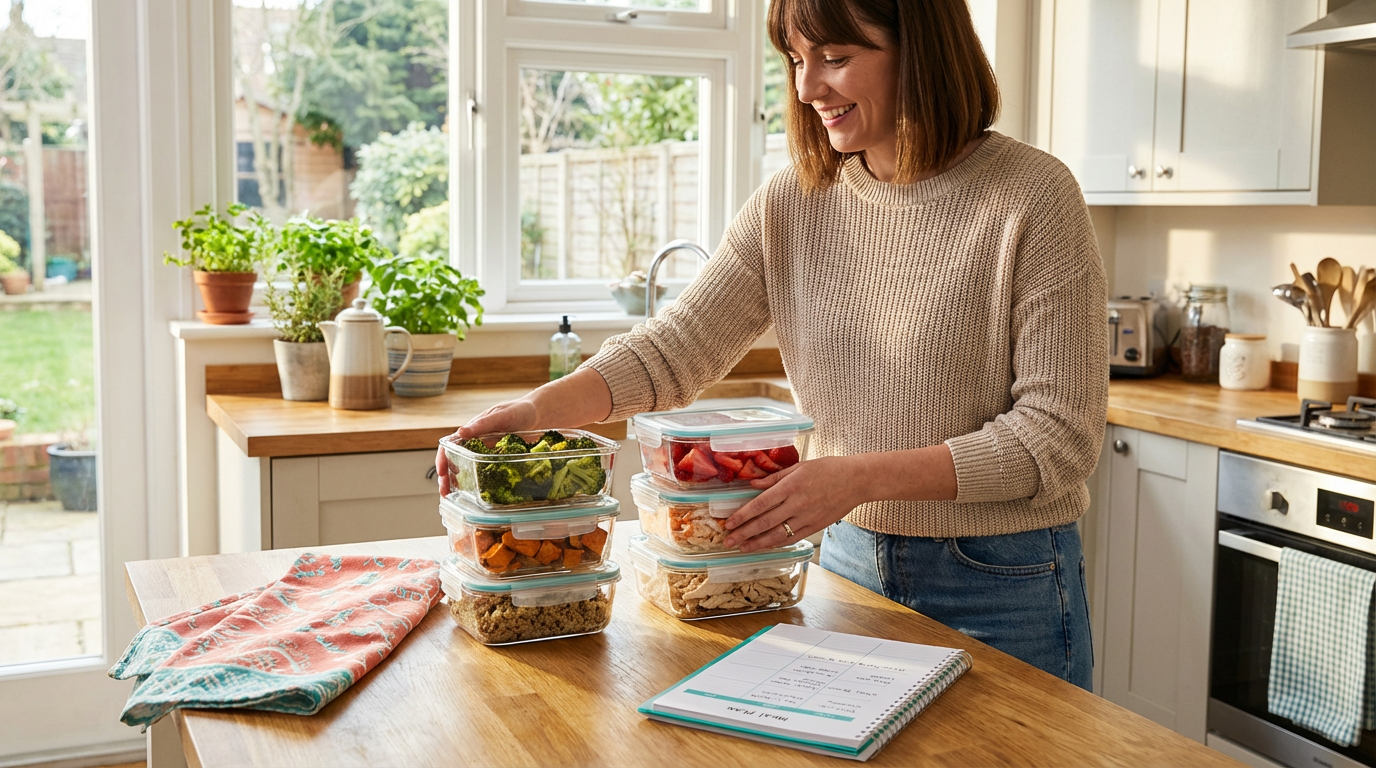
You don’t have to cook every single dinner in advance. Many experienced meal preppers recommend focusing on building blocks that make multiple meals easier: cooked grains, roasted veggies, a protein or two, and a sauce or dressing.
High-Impact Sunday Prep Ideas
Pick a few from each category based on your anchor meals:
1. Proteins (Cook Once, Eat Twice or More)
- Roast a whole chicken or a tray of chicken thighs for multiple dinners and lunches.
- Brown a batch of ground meat (beef, turkey, or plant-based) with simple seasonings to use in tacos, pasta, or stuffed vegetables.
- Bake or grill a fillet of salmon or other fish for one dinner and a leftover salad.
2. Grains & Carbs
- Cook a pot of rice, quinoa, or another grain to use in bowls, stir-fries, and sides.
- Boil a batch of pasta and toss with a bit of oil so it doesn’t stick, ready to be reheated with sauce.
- Roast a tray of potatoes or sweet potatoes for easy sides and breakfast hash.
3. Vegetables
- Roast a big tray (or two) of mixed vegetables: bell peppers, carrots, zucchini, broccoli, squash, onions, and more.
- Wash and chop salad greens and hardy veggies like carrots, cucumbers, and cabbage for quick salads or sides.
Roasting large batches at once in a hot oven is a common Sunday prep strategy: you get lots of flavor and multiple dinners out of one session.
4. Breakfasts & Snacks
- Prep overnight oats, chia pudding, or yogurt parfait jars.
- Bake a quick bread or muffins for grab-and-go breakfasts and snacks.
- Cut fresh fruit and portion nuts or trail mix.
5. Sauces, Dressings, and “Flavor Boosters”
- Make one or two simple dressings or sauces (vinaigrettes, tahini sauce, peanut sauce).
- Pickle some onions or prep a quick salsa or herb sauce to make basic meals feel special.
These building blocks give you mix-and-match flexibility: your anchor meals become easier to throw together, and you can improvise when plans change.
Step 5: Organize Your Fridge and Pantry for the Week Ahead
Sunday prep isn’t just about cooking; it’s about making your kitchen work for you. Organization resources emphasize creating clear zones and making prepped food visible so it actually gets used.
Pantry & Fridge Zoning for the Organized Home Cook
- Create a “Ready to Use This Week” zone:
Use a shelf or bin labeled “This Week’s Ingredients” where you keep the items tied to your anchor meals—proteins, prepped vegetables, sauces. - Use clear containers when possible:
Transparent containers for prepped grains, proteins, and veggies make it easier to see what you have at a glance. - Label with name and date:
A piece of masking tape and a marker is enough. Labeling helps you use things in time and reduces mental load. - Group by meal type:
In the pantry, you might group:- “Quick Dinner Starters” (pasta, sauce, canned beans)
- “Breakfast” (oats, nut butter, coffee)
- “Snacks” in one visible basket
When you open the fridge on a Tuesday, you want it to feel like, “These are my building blocks for the week,” not “Random chaos.”
Step 6: Make a Simple “Sunday Prep Map” You Can Repeat
To keep Sunday prep sustainable, create a repeatable template you can use almost every week. Many successful meal prep routines follow the same skeleton and just change the ingredients.
Example 90-Minute Sunday Prep Map
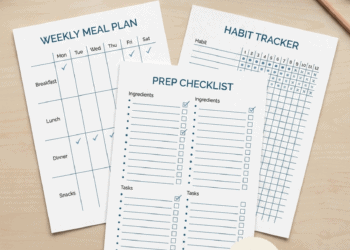
You can adapt this to your Pinterest-style checklist or planner:
- 0:00–0:15 – Quick Plan & Clear Out
- Check calendar, choose 3–5 anchor meals.
- Scan fridge and pantry, toss expired items, pull out ingredients for this week.
- 0:15–0:25 – Start Proteins
- Put a chicken, tray of thighs, or sheet pan of sausage in the oven.
- Or start browning ground meat on the stove.
- 0:25–0:40 – Start Grains & Carbs
- Put rice or another grain on the stove or in a cooker.
- Boil water for pasta if it’s part of your plan.
- 0:40–1:10 – Veggie Prep
- Wash, chop, and roast a big tray of mixed vegetables.
- Chop extra raw veggies for snacks and salads.
- 1:10–1:30 – Breakfast/Snacks & Quick Clean-Up
- Assemble overnight oats, yogurt jars, or bake a quick bread.
- Mix a dressing or sauce if time allows.
- Clear counters, wipe surfaces, and stack prepped containers in your “This Week” zone.
If you only have 60 minutes, scale this down to one protein, one grain, one tray of veggies, and a breakfast item.
Step 7: Protect Future You with a Few Rules
To actually feel the benefits of Sunday prep, set a few gentle house rules around how you use what you prepped:
- Use prepped food first.
Before deciding on takeout, ask, “Can I build a meal from something we prepped on Sunday?” - Schedule one “leftovers night.”
Plan one night where everyone builds a plate from prepped items and leftovers. - Freeze extras quickly.
If you’re tired of a specific food, portion and freeze it for another week instead of letting it die in the fridge. - Let “good enough” be enough.
Scrambled eggs with roasted veggies and toast is still dinner. The key win is that you had components ready.
Sunday prep is there to support you—not to become a new source of guilt.
Quick Sunday Prep Checklist for Organized Home Cooks
You can copy this into your planner or notes app:
- Check calendar and choose 3–5 anchor dinners
- Scan pantry/fridge, toss expired items, list what you need
- Cook 1–2 proteins (chicken, beef, beans, tofu, fish)
- Cook 1–2 grains or starches (rice, quinoa, pasta, potatoes)
- Roast a big tray of mixed vegetables
- Prep 1–2 breakfasts or snacks (overnight oats, muffins, yogurt jars)
- Make 1 sauce or dressing
- Organize fridge/pantry “This Week” zone and label containers
You don’t have to hit every item every week. Even doing half of this list gives you a softer landing on busy weeknights.