



























Why a Little Awning Changes Everything
If you’ve ever opened your front door in a downpour and gotten completely soaked, you already know why DIY door awning plans are worth your time. You get instant front door rain protection, a spot to juggle keys and packages, and a little architectural detail that makes your home look more “finished” from the street. At the same time, a door canopy can protect your trim, door hardware, and even your threshold from constant water damage and harsh sun. Instead of replacing warped doors later, you’re investing in a small project now that keeps everything in better shape for years.
The fun part? There are so many styles to play with. You can go for a DIY front door awning that feels modern and sleek with metal and clean lines, or a rustic wooden door canopy that looks like it’s always been part of the house. If your back entry takes most of the daily traffic, a simple DIY back door awning can make muddy‑boot runs and grocery trips way less annoying. You can keep things as small as a narrow eyebrow roof, or build a mini‑porch that doubles as a tiny hangout spot. The ideas in this guide are meant to help you visualize what’s possible and then actually build it.

In this guide, you’ll find everything from simple door canopy plans using 2x4s and basic brackets to more advanced designs like timber‑frame style awnings and corrugated metal covers. Some ideas lean more “decor piece,” while others are very much “How to build a door awning that survives real weather.” You’ll also see project types that work for renters (like fabric and PVC frames you can remove later) and for homeowners ready to commit with lag bolts, wall‑mounted awning brackets, and permanent door awning frame plans. Think of this as your moodboard plus a practical checklist rolled into one.
How to Choose the Right DIY Door Awning
When you’re scrolling through inspiration, it’s easy to fall in love with a look that doesn’t actually fit your space. Before you dive into any step‑by‑step door awning tutorial, it helps to ask a few questions:
- What’s the main goal?
- Front door rain protection
- Shade over front door for afternoon sun
- Purely decorative curb appeal
- Where is it going?
- Front entry
- Back door or mudroom
- Side door off the driveway
- What’s your siding type?
- Vinyl, fiber cement, brick, or wood will change how you handle attaching awning to siding safely.
If you want something you can knock out in a single weekend, look for an easy DIY door awning with a simple structure—think a 2×4 door awning frame with two support braces and a lightweight roof panel. Those designs often use common lumber sizes and have a very straightforward cut list. If you’re more experienced, you might enjoy a wood awning over door with angled rafters, decorative corbels, and maybe even shingles that match your main roof. For a more industrial vibe, a DIY metal door awning with a corrugated metal roof looks amazing over both modern and farmhouse‑style doors.
Style Options You’ll See in This Guide
You can absolutely mix and match ideas, but here are some of the main categories you’ll bump into as you browse:
- Wooden door awning
Classic, warm, and easy to customize with stain or paint. These usually rely on a simple frame with DIY awning support braces, plus a roof panel made from wood, metal, or polycarbonate panels. - Corrugated metal door awning
Great for a farmhouse, barndo, or modern industrial look. Lightweight corrugated panels make it easier to keep the awning roof pitch and angle consistent and help water shed cleanly away from your door. - Fabric door awning / canvas door canopy
Perfect for renters or anyone who wants a softer look. A PVC pipe door awning frame paired with waterproof awning fabric can be surprisingly sturdy and still removable. - Polycarbonate door awning ideas
Clear or tinted polycarbonate gives you weather protection without blocking natural light. It’s especially handy for shady porches where you don’t want to make things darker.
You’ll also see a mix of DIY entry door canopy ideas that look almost like mini‑porches, complete with posts and small railings. Those can be more of a project, but they completely transform the feel of a small front stoop in a way a simple overhang can’t.
Practical Planning: Measurements, Pitch, and Materials
Before you pick up a saw, it’s worth spending a little time with a tape measure and notepad. Good door awning frame plans always start with a clear awning measurements and cut list. That list keeps you from making extra trips to the store and helps you visualize how everything fits together. At minimum, measure:
- Door width (including trim)
- Desired awning width (usually door width + 6–12 inches on each side)
- Depth of the awning (how far it sticks out)
- Height above the door where the frame will attach
Once you know the depth, you can think through awning roof pitch and angle. For most climates, a gentle slope is fine, but in areas with heavy rain or snow, you’ll want a steeper pitch so water runs off quickly. Many wooden or metal designs aim for something like 3–4 inches of drop per foot of depth to keep water moving. That pitch also affects where your wall‑mounted awning brackets land on the siding, so double‑check you aren’t hitting trim edges, electrical boxes, or window frames.
For beginners, a 2×4 door awning frame is often the easiest starting point: 2x4s for the wall ledger and outer front board, plus angled side pieces or braces that create your slope. You can skin the top with plywood plus shingles, corrugated metal, or polycarbonate. If you want a lighter‑weight build, you might mix materials: a wood frame with metal panels, or a metal frame with waterproof awning fabric stretched over it. Each material has its own vibe:
- Wood: warm, classic, customizable
- Metal: durable, sleek, and low‑maintenance
- Polycarbonate: modern and light‑friendly
- Fabric: soft, seasonal, and easy to swap out
Quick Checklist Before You Start Building
A few things to confirm before you commit to a specific DIY door awning plans tutorial:
- Skill level
- Total beginner: look for frameless kits, simple brackets, or very clear “How to build a door awning” guides with photos.
- Intermediate DIYer: angled cuts, pocket‑holes, or basic metal cutting is totally doable.
- Tools on hand
- Drill/driver, level, ladder, saw (miter saw or circular saw), and the right anchors for your siding.
- Siding/structure
- For vinyl or lap siding, you’ll likely need to locate studs and use proper flashing to keep water out when attaching awning to siding.
- For brick, plan on masonry anchors and possibly slightly longer brackets.
- Budget
- Want a budget‑friendly door awning project? Look for designs that rely on standard lumber lengths, off‑the‑shelf brackets, and a simple roof material like corrugated metal or polycarbonate offcuts.
If you’re more of a visual learner, a step‑by‑step door awning tutorial with diagrams or video is worth its weight in gold. Many of the Pinterest ideas behind this article link back to in‑depth guides with photos, material lists, and sketch‑style drawings so you can copy the layout with confidence.

Common Mistakes to Avoid (and Easy Fixes)
Even simple easy DIY door awning projects can go sideways if you rush certain details. Here are a few pitfalls to watch for:
- Undersizing the awning
If the cover is only an inch or two wider than your door, rain will still sneak in at the edges. Aim for a bit of extra width and depth so your awning truly feels like shelter. - Ignoring runoff
A flat or nearly flat awning might look minimalist, but without enough awning roof pitch and angle, water can pool, stain, or even warp the material. - Weak support braces
Particularly for a wooden door awning, don’t skimp on DIY awning support braces. Oversized, well‑anchored braces not only look intentional but also keep everything from sagging over time. - Bad flashing or sealing
Anytime you penetrate siding, take extra care with flashing, caulk, or trim pieces to ensure water doesn’t sneak behind the awning and into your wall. This matters as much as the visible design.
If you’re nervous about load, especially with heavy snow, consider smaller projections or lighter materials like fabric and polycarbonate. You can still get that curb appeal door awning moment without over‑engineering a giant roof.
Matching Your Awning to Your Home’s Style
This is the fun, “Pinterest‑board” part. A few quick pairings to spark ideas:
- Modern front door awning
- Clean steel or aluminum brackets, flat or low‑slope roof, maybe a corrugated metal door awning in matte black.
- Try polycarbonate panels for a minimalist glass‑like feel.
- Rustic wooden door canopy
- Chunky 4×4 or 6×6 brackets, stained cedar, and maybe shingles that match your main roof.
- Works beautifully with board‑and‑batten or farmhouse siding.
- Small porch awning idea
- If you already have a tiny stoop, extending it with a simple roof transforms it into a cozy spot. Add a sconce, a mat, and a plant, and you’ve got a mini “entry moment.”
- Back door workhorse awning
- More about function than show. A DIY back door awning can be narrower and higher, just enough to keep rain off while you unlock the door or move in and out with groceries.
Don’t forget the small details—paint the brackets a contrasting color, use wall‑mounted awning brackets with a decorative shape, or choose a striped canvas door canopy that ties into your outdoor cushions. Those little decisions help your awning feel like it belongs in your overall exterior story.
Basic Maintenance and Seasonal Tips
Once your awning is up, the ongoing care is pretty simple, but it’s worth planning for:
- For wood builds, re‑seal or re‑stain every few years, especially on a wood awning over door that gets full sun.
- For fabric or waterproof awning fabric, plan on taking it down before harsh winter storms or at least checking for mildew and reapplying waterproofing spray as needed.
- For metal, check fasteners once a year and clear leaves or debris so they don’t trap moisture.
- For polycarbonate, use gentle cleaners to avoid scratching or clouding the surface.
If you treat your awning like a tiny roof, doing a quick seasonal check alongside your gutter clean‑outs, it will stay beautiful and functional much longer. And because many of these DIY door awning plans are modular, you can always swap the roof material, tweak the brackets, or repaint the frame when your style changes.
Skill Level & Time‑Saving Tags
To help you skim the listicle later and pick the right starting point, here’s a rough breakdown you can keep in mind:
- Skill levels
- Beginner: fabric awnings, simple bracket installs, basic PVC pipe door awning frame builds.
- Intermediate: 2×4 framed awnings, corrugated metal covers, small portico‑style builds.
- Advanced: full door canopy plans with posts, detailed trim, or timber‑frame details.
- Time expectations
- 2–4 hours: hanging a pre‑made canopy or simple metal/fabric awning.
- 1 weekend: building a DIY front door awning with framing, braces, and roofing.
- 2–3 weekends: full DIY entry door canopy with posts, railings, and integrated lighting.
Use this as a quick filter when you look at each of the 25 ideas. If a design uses lots of complex angles, custom brackets, or a very detailed awning measurements and cut list, save it for later and start with something simpler first.
Why You’ll Love These Ideas
- They’re realistic for real homes, not just magazine photos.
- There’s a mix of budget‑friendly door awning project ideas and “wow” builds you can work up to over time.
- You’ll get inspiration for both front and back entries, plus small porches and tight side doors.
- Many ideas come from real DIYers who have already done the experimenting for you, so you can use their step‑by‑step door awning tutorial style as a safety net.
Once you’ve skimmed through, pick just one idea that matches your current tools, budget, and comfort level. Then treat it as a fun weekend project—because at the end, you’re not just building an awning, you’re creating a more welcoming, weather‑proof entrance you’ll walk through every single day.
DIY Door Awning Plans: 25 Easy Ideas for Cozy Entrances
Want to stop getting drenched every time you unlock the door and give your entry a little style moment at the same time? A DIY door awning is one of those small projects that makes everyday life feel so much easier.
In this list, you’ll find 25 DIY door awning plans and ideas—from rustic wood canopies to corrugated metal overhangs and simple fabric covers—that work for front doors, back doors, and side entries.
Classic Timber Front Door Awning

This timber awning wraps your entry in warm wood tones, with chunky support braces and a simple sloped roof that feels classic and welcoming.
It’s a great example of DIY door awning plans that rely on a straightforward 2×4 frame and sturdy brackets, so you get solid front door rain protection without an overly complicated build.
Use this as inspiration if you’re dreaming of a rustic wooden door canopy that instantly boosts curb appeal on a farmhouse, cottage, or craftsman‑style home.
Farmhouse Wood Awning Over the Door

This farmhouse‑inspired wood awning creates a cozy frame around the front door with simple rafters and a shallow pitch that feels relaxed but intentional.
If you’re searching for a DIY front door awning that looks high‑end but uses basic lumber, this style is perfect—just follow solid door canopy plans and keep your cuts clean.
Stain the wood to match your shutters or porch beams to tie the whole exterior together in a really natural way.
Mini Gable Roof Over the Front Door

This tiny gable roof turns a flat entry into a charming mini‑porch, giving you shade over the front door and a more defined entryway.
The structure is still simple enough for a weekend warrior, but it feels more like a full DIY entry door canopy than a basic overhang.
Follow a clear step‑by‑step door awning tutorial for framing the rafters and setting the right roof pitch so water sheds cleanly.
Simple Shed Roof Over the Back Door

For everyday entrances, this small shed roof is the perfect DIY back door awning—just enough coverage to keep you dry while you juggle keys and groceries.
The design leans on a straightforward 2×4 frame with strong support braces, so it’s a very approachable easy DIY door awning project.
Use this idea if you want function first, with clean lines that still look good from the driveway or yard.
Corrugated Metal Door Awning

Love a bit of industrial edge? A corrugated metal door awning adds instant character and handles rain like a champ.
This DIY metal door awning is a great option if you want something slim, durable, and modern without a lot of bulky framing.
Pair it with black wall-mounted awning brackets and a bold door color for a modern front door awning that really pops.
Wooden Awning on a Brick Wall

This wood awning mounted on brick shows how a simple frame and sloping roof can add both shade and architectural interest to an otherwise flat wall.
The look works beautifully above a door or even a set of patio doors, especially if you pair it with matching planters or outdoor lighting.
When attaching awning to siding or masonry, be sure to use the correct anchors and follow solid awning measurements and cut list so everything lines up.
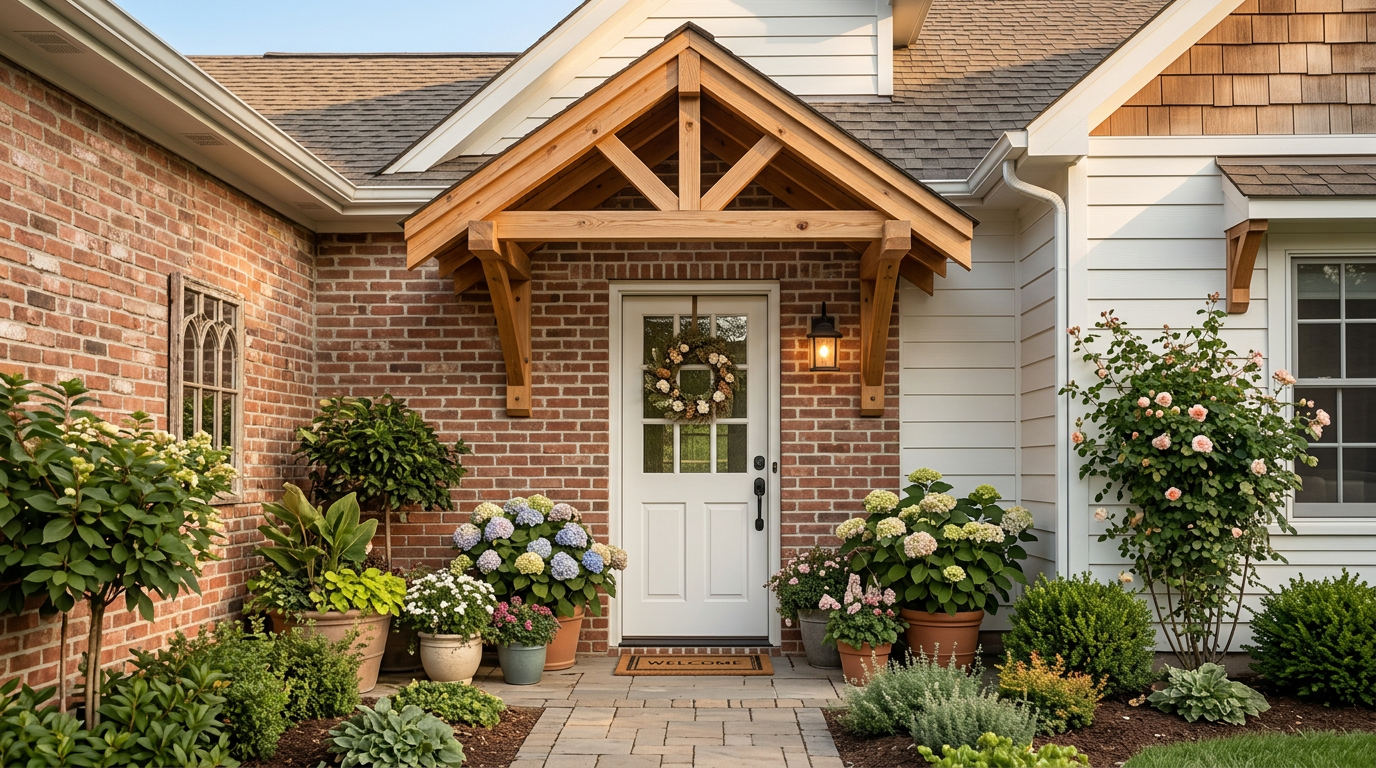
Charming Timber Frame Door Canopy

This timber frame awning feels like a mini porch with exposed beams and a beefy profile that suits cottage and country homes.
If you’re comfortable with woodworking, these door canopy plans let you show off joinery and framing details without building a full porch.
Finish it with shingles or metal roofing to match your house for a cohesive, storybook‑style entry.
Ready-Made Polycarbonate Door Awning

If you want quick results, a polycarbonate canopy kit gives you a modern look and bright light with almost no framing or cutting.
This is a perfect budget-friendly door awning project for beginners who still want a sleek, modern front door awning feel.
Just double-check your measurements and follow the manufacturer’s door awning frame plans for a snug, weather-tight fit.
Soft Fabric Door Canopy Over a Shed Door

This shed makeover shows how a simple fabric awning can completely refresh a plain door with color, pattern, and a bit of shade.
A fabric door awning like this is ideal if you want a seasonal look or a renter-friendly option that doesn’t require heavy brackets.
Choose waterproof awning fabric and a basic frame, and you’ve got an easy DIY awning outdoor project you can swap out anytime.
Compact Metal Awning for Tight Spaces

For narrow side entries or doors that open into walkways, this compact metal awning delivers coverage without feeling bulky.
Clean lines and a simple slope make it perfect as a modern front door awning or a side entry solution where space is precious.
Use this as a template if you’re planning a DIY metal awning frame and want something low-profile and minimal.
Traditional Apex Door Canopy

This apex canopy has that classic, tidy look that works beautifully with traditional homes and symmetrical facades.
If you love the idea of door awning frame plans that arrive mostly prebuilt, apex canopies are often available as kits you can install yourself.
Pair it with a fresh door color and simple porch decor for instant curb appeal door awning magic.
Simple Modern Overhang Above the Door

Here, a slim, modern awning stretches just enough to shade the doorway without competing with the rest of the facade.
It’s a great reference for a modern front door awning that feels custom but can be built with basic materials and a clear cut list.
Stick to neutral colors and crisp angles to keep the look sleek and contemporary.
Farmhouse Pergola-Style Door Awning

This pergola-style awning uses chunky wood beams to frame the door and create a little architectural moment above the entry.
It’s an inspiring example if you want a rustic wooden door canopy that leans more pergola than full roof but still offers a bit of shade.
Add climbing plants or string lights to turn the whole area into a welcoming, lived‑in entryway scene.
Corrugated Metal Awning with Full Tutorial

This corrugated metal awning comes with a detailed how-to guide, making it a great pick if you want a step-by-step door awning tutorial to follow.
The mix of wood framing and metal roofing hits that sweet spot between rustic and modern, perfect for many US homes.
Use the guide’s awning measurements and cut list as a template, then tweak the width and depth to fit your own doorway.
Cozy Wood Door Awning with Braces

This compact wood awning uses oversized braces to support a tidy roof, proving you don’t need a huge structure to make a big visual difference.
If you love the idea of wooden awning plans that are beginner-friendly, this design is a great inspiration point.
Paint the frame to match your trim for a classic look, or leave it stained for a warmer, more rustic vibe.
French-Inspired Wooden Canopy

This French-style wooden canopy looks at home over a door or a tall window, with delicate lines and a soft curve to the roof.
It’s a lovely reference if you want a small porch awning idea that feels romantic and old‑world instead of heavy and chunky.
Match the finish to shutters or balcony railings to keep everything visually tied together.
Small Portico Over the Front Door

This mini portico turns a plain stoop into a sheltered entry, complete with a proper roof and the feel of a tiny porch.
If you’re ready for a bigger DIY door awning project, portico-style builds offer serious shade and a high-end look.
Just be sure to follow solid door canopy plans and check local codes if you’re tying into the main roofline.
Timber Frame Awning Plan Set

If you’re a planner, you’ll love awning designs that come with full timber frame awning plans and diagrams for every joint.
This style of door awning frame plans helps you build a long-lasting, heirloom‑quality canopy that feels like part of the architecture.
It’s more advanced, but the result is a statement-making entrance you’ll admire every time you walk up the path.
Clean Wood Awning with Simple Brackets

This clean-lined wood awning straddles the line between classic and modern, with straight supports and a crisp rectangular roof.
It’s a great template if you want a wood awning over door that feels updated but still warm and inviting.
Adjust the projection and height to dial in just the right amount of shade over front door or garage entries.
Budget DIY Awnings on the Cheap

This project proves you can get real shade and style from DIY awning ideas without spending a fortune on custom metalwork.
By sticking to simple framing and basic materials, you can tackle a budget-friendly door awning project that still looks polished.
It’s especially good for small homes, rentals, or outbuildings where you want a big visual upgrade on a modest budget.
Front Door Wooden Canopy with Porch Vibes

This wooden canopy extends just far enough to make your entry feel like a tiny porch, perfect for a welcome mat and a lantern.
It’s a strong option if you want a rustic wooden door canopy that feels a little more substantial than a basic awning.
Use sturdy DIY awning support braces and a solid roof pitch so it can stand up to real weather.
Small Canopy Over a Back Door

This tiny canopy is proof that even a very small awning can make back door traffic feel more comfortable and intentional.
It’s a smart DIY back door awning idea if you’re working with a super tight space or a modest budget.
Match the color to your trim or gutters for a subtle, low‑profile upgrade that still adds real function.
Metal Awnings for a Modern Facade

On this contemporary exterior, simple metal awnings repeat across doors and windows to create a cohesive, high-design look.
If you’re planning a modern front door awning, consider echoing the same profile over key windows for a pulled‑together facade.
Keep lines straight and finishes matte for a clean, architectural vibe that still feels approachable.
DIY Gable Awning with Visual Instructions

This pin doubles as a visual checklist for building a gable over a front door, breaking down the steps into clear, confident phases.
It’s a perfect companion if you like having a step-by-step door awning tutorial you can glance at while you work.
Use the guide to plan your awning roof pitch and angle before you cut a single board.
Door Awning Design Gallery for Inspiration

This design gallery-style pin pulls together multiple awning ideas, from sleek modern covers to more traditional, decorative canopies.
It’s a great place to start if you’re still deciding between a modern front door awning, a rustic wooden door canopy, or something in between.
Save the images that match your siding, door style, and porch layout, then use those favorites to guide your final DIY door awning plans.
Frequently Asked Questions
How deep should my DIY door awning be?
For most standard doors, aim for an awning that projects at least 18–24 inches out from the wall so it actually blocks rain and sun. In very exposed spots, going 30 inches or more can make a big difference, as long as your support braces and anchors are sized appropriately.
What is a good roof pitch for a door awning?
A gentle slope of around 3–4 inches of drop per foot of depth is a solid starting point for most climates. In areas with heavy rain or snow, a steeper awning roof pitch and angle helps water shed quickly and keeps debris from sitting on the roof.
Can I attach an awning to vinyl siding?
Yes, but you’ll want to mount through the siding into studs and use proper flashing and sealant. Many DIYers remove or notch siding where the ledger and brackets sit so water can’t sneak behind the awning and into the wall.
Is wood or metal better for a DIY door awning?
Wood is easier to work with using basic tools and gives a warm, classic look, while metal is more durable and low‑maintenance. A lot of people choose a hybrid: a wood frame with metal or polycarbonate panels on top for the best mix of style, strength, and weather resistance.
Love saving ideas like these? Follow us on Pinterest for more inspiration, templates, and easy-to-use resources.