


















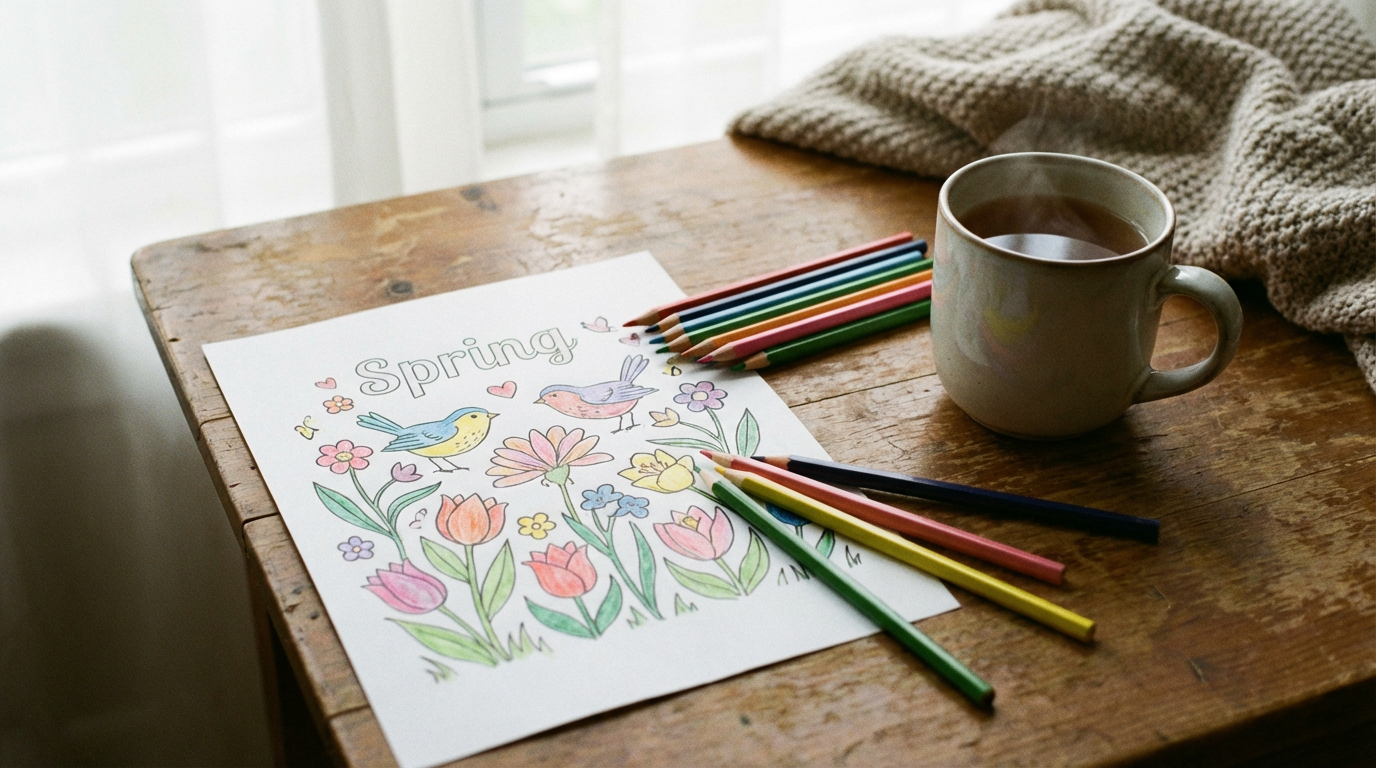
Spring is such a hopeful season… but it can also still feel busy, noisy, and a little overwhelming, especially if you’re juggling kids, work, and a never‑ending to‑do list. Spring time coloring pages are a simple way to slow down, reset your brain, and invite some calm creativity into your day. Instead of scrolling your phone, you can grab a handful of markers, sit with a cute spring coloring sheet, and let your mind wander in the best way. Think of this as a cozy, low‑effort hobby that works for both kids and adults.


In this guide, we’ll walk through what spring coloring pages are, how they help with stress relief and anxiety, and simple ways to build a coloring routine into your week. You’ll find ideas for kids, busy moms, beginners, and anyone craving screen‑free relaxation, plus a time‑saving checklist and a planner-style routine you can actually stick to. Save this guide to your favorite board so you can come back to it, and don’t forget to follow @theclutteredblog on Pinterest for more calm, cozy, practical ideas.
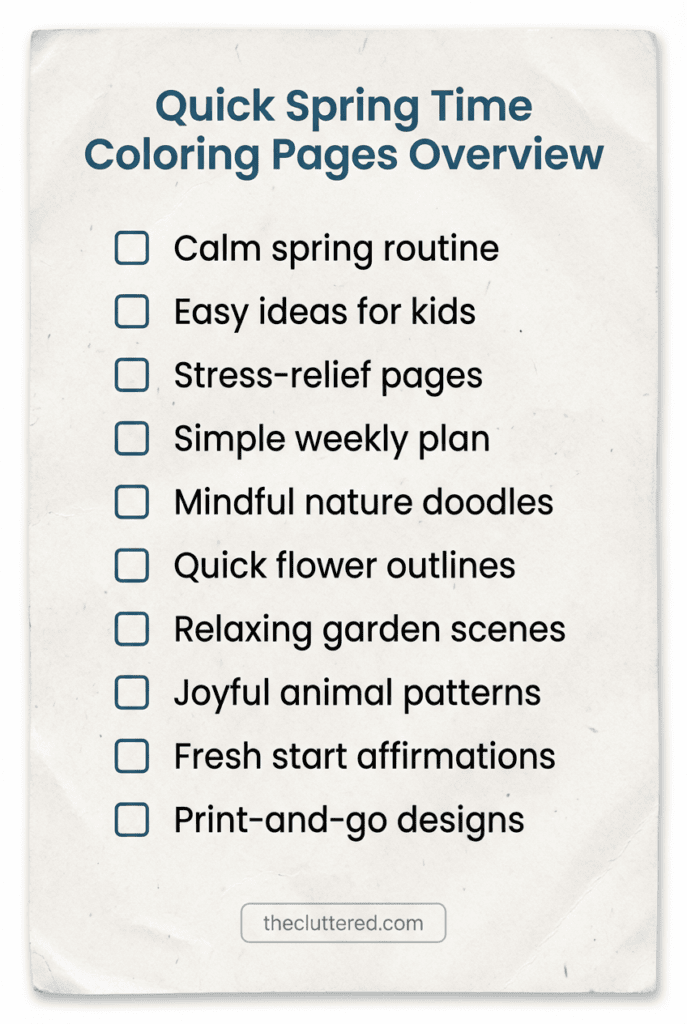
Quick Peek at What’s Inside
- Perfect for busy moms, teachers, and anyone craving a calm spring reset.
- Easy spring time coloring pages for kids and adults, from simple doodles to detailed florals.
- A step‑by‑step guide to building a cozy coloring routine you’ll actually look forward to.
- Printable checklist and planner ideas so you can turn this into a simple weekly habit.
- Stress‑relief tips, anxiety‑friendly coloring ideas, and low‑energy options for tired days.
What Spring Time Coloring Pages Are and Why They Help
Spring time coloring pages are printable or digital coloring sheets with spring themes—think flowers, baby animals, rainy‑day scenes, butterflies, rainbows, and simple outdoor designs. They can be super simple for toddlers, medium‑detail for kids, or more intricate spring coloring pages for adults who love detailed patterns and floral designs. You can print them at home, slip them into a folder, and have a cozy stack ready for quiet time or a Sunday reset.
Coloring is more than “just for kids.” It gives your brain something gentle to focus on, which can help reduce stress, calm anxiety, and create a mini‑meditation moment in the middle of a chaotic day. For moms and caregivers, spring coloring pages for relaxation can double as bonding time with kids and personal self‑care once everyone’s in bed. For kids, spring coloring sheets help with fine‑motor skills, creativity, and screen‑free play that doesn’t require much setup.
Some subtle benefits of a cozy spring coloring habit:
- Gives your mind a break from decision fatigue and mental load.
- Helps you unwind physically—coloring has been shown to calm the brain and body.
- Encourages creativity without pressure to be “good at art.”
- Creates an easy, low‑cost family activity that feels special but doesn’t require leaving the house.
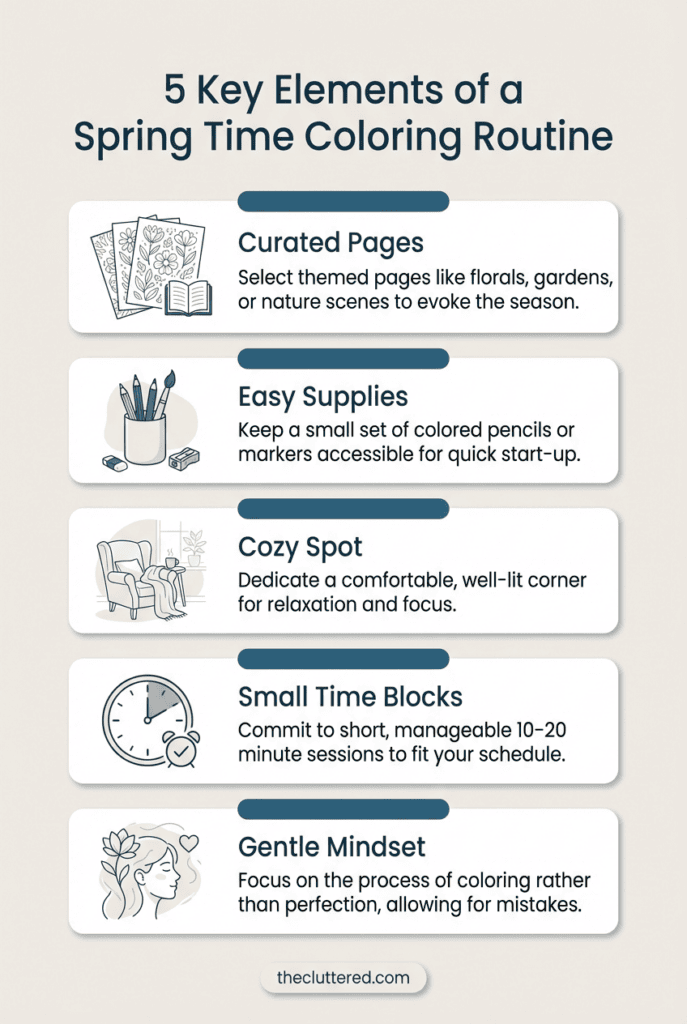
Key Elements of a Solid Spring Time Coloring Setup
A good spring time coloring routine doesn’t have to be complicated, but it does have a few core elements that make it feel calm, cozy, and easy to repeat.
1. A Small, Curated Stack of Pages
Instead of hoarding dozens of random printables, pick 5–15 spring themed coloring pages you genuinely like—floral designs, spring animals, rainy‑day scenes, or simple doodles for beginners. This makes it easier to start because you’re not overwhelmed by choice. For example, you might keep a folder with one page of tulips, one of baby chicks, one spring garden scene, and one detailed adult coloring page for stress relief.
2. Easy‑to‑Grab Supplies
Keep a small pencil case or caddy with your go‑to coloring tools: a set of colored pencils, a handful of markers, maybe a couple of pastel highlighters for those soft spring vibes. When everything is in one place, you’re more likely to reach for it instead of your phone. For kids, you can create a “spring coloring basket” with crayons, washable markers, and a stack of spring coloring sheets they can grab without asking.
3. A Cozy, Repeatable Spot
Choose one or two spots where coloring normally happens—at the dining table after dinner, at the coffee table during your morning coffee, or at the kids’ small table by a window. Having a predictable spot turns coloring into a tiny ritual. You might light a candle, play soft music, open a window to feel the spring air, and pull out your spring time coloring pages as part of your slow living routine.
4. Flexible Time Blocks
You don’t need an hour. Think 10–20 minutes. Maybe you color one small corner of a page while your coffee brews, or you sit with your child for a quick after‑school calm‑down session. On weekends, you can make it a Sunday reset activity: everyone chooses one spring coloring page and colors together quietly for 20–30 minutes.
5. A Gentle, No‑Perfection Mindset
Coloring is not about staying perfectly in the lines or choosing “the right” colors. It’s about giving yourself permission to play, even as an adult. Let your kids use unexpected colors for flowers, and let yourself leave pages unfinished. You can think of your spring coloring routine as a cozy, anxiety‑friendly hobby, not another task to “do perfectly.”
Step‑by‑Step Guide to Creating Your Spring Time Coloring Routine
Step 1: Choose Your Season Mood
First, decide what kind of spring vibe you want your coloring time to bring: calm and slow, bright and playful, or a mix. This helps you pick pages and colors that match how you want to feel, not just what’s cute. For example, if you’re craving peace, choose simple floral spring time coloring pages and soft pastels; if you’re coloring with energetic kids, pick fun spring animal pages with bold outlines and brighter colors. You can also choose different moods for different days—soft and cozy on weeknights, fun and colorful on weekends.
Step 2: Curate 10–15 Go‑To Spring Pages
Next, gather 10–15 spring coloring pages that you love and print them out or save them in a dedicated folder if you’re coloring digitally. Include a mix: easy spring coloring sheets for kids, a few more detailed adult coloring pages for stress relief, and some medium‑difficulty designs for family coloring nights. Label a simple folder “Spring Coloring” and keep it where you’ll actually see it—on your desk, near your planner, or in a kitchen drawer. Having a pre‑curated set makes it feel like a cozy little “menu” you can flip through.

Step 3: Set a Simple Weekly Rhythm
Now, decide how coloring fits into your week. Maybe you choose “Spring Coloring Tuesdays” after school, a 15‑minute bedtime coloring wind‑down for the kids, or a cozy Saturday morning session just for you. You can treat this like a tiny coloring routine: pick one page per week and slowly work on it whenever you have a spare 5–10 minutes. If you’re a busy mom or student, think of it as a small ritual tucked between everything else—not a big project that needs perfection.
Step 4: Create a Cozy Setup You Can Leave Out
If possible, keep a small tray or basket with your spring coloring pages, pencils, and markers ready to go. That way, you can literally sit down and start coloring without hunting for supplies. Add one or two cozy touches—like a mug of tea, a candle, or a soft blanket—to make it feel like a tiny self‑care moment, even if it’s just 10 minutes before bed. For kids, you might keep a little coloring station near where they normally play so they can choose spring coloring sheets on their own.

Step 5: Add Simple Rituals to Make It Special
Finally, add small rituals that make your spring coloring time feel special. Maybe you always color while listening to a calm playlist, or you light a candle only during your coloring sessions. With kids, you can frame it as “Spring Quiet Time”—everyone grabs a spring time coloring page, and the rule is calm voices and cozy vibes for 15 minutes. These little rituals help your brain associate coloring with slowing down and feeling safe, which is especially powerful if you’re using coloring for anxiety or stress relief.
Practical Spring Coloring Ideas and Variations You Can Try
Here are lots of ways to use spring time coloring pages in real life, whether you’re low‑energy, short on time, or looking for new ideas.
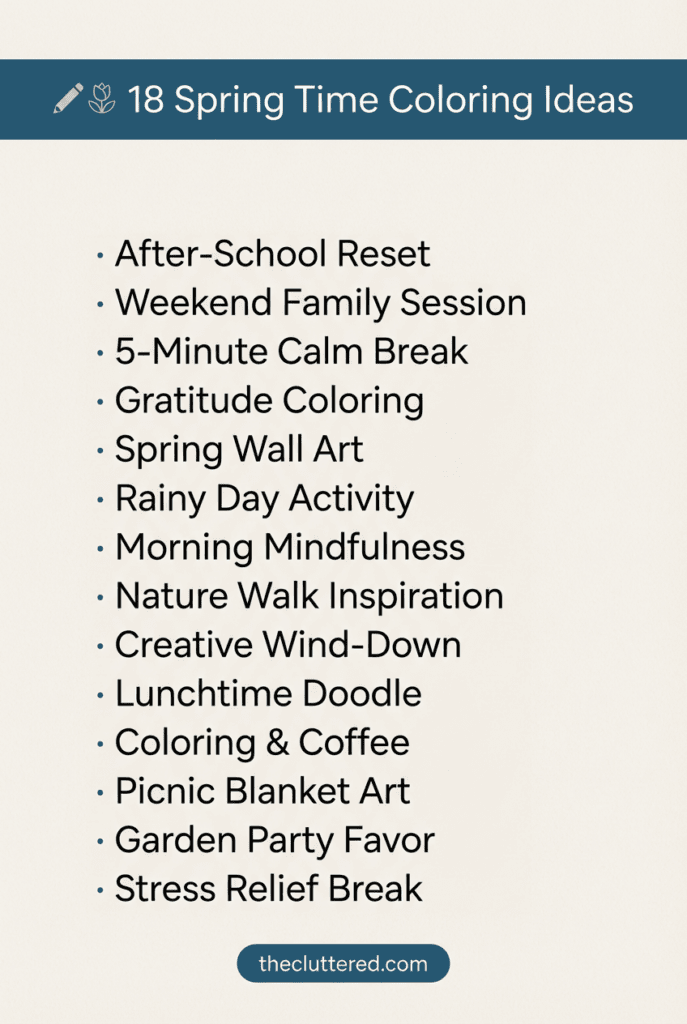
- “After‑School Reset” pages: Keep an easy stack of spring coloring sheets near the kitchen table so kids can color while you prep snacks and decompress together.
- Weekend family coloring session: Print spring coloring pages for kids and adults, put everything on a tray, and let everyone choose a design while you sip coffee.
- “5‑Minute Calm” routine: Keep one detailed spring floral coloring page and add just a few petals or leaves each day during your coffee break.
- Spring self‑care night: Pair spring adult coloring pages with a face mask, soft music, and a cup of tea for a cozy DIY spa vibe.
- Low‑energy day backup plan: When you don’t have energy for messy crafts, bring out easy spring time coloring pages and a handful of crayons.
- Mindful coloring for anxiety: Focus on repetitive patterns—like rows of flowers or raindrops—and breathe slowly while you color each one.
- Gratitude page: Use a simple spring doodle page and write small gratitude notes in the sky, petals, or background as you color.
- Color‑by‑weather activity: Have kids color sun, clouds, or rainbows based on the day’s actual weather—it’s simple, fun, and educational.
- Spring alphabet coloring: Find or create pages where each letter is paired with a spring word (A for April, B for bloom, C for chick) for younger kids.
- Spring decor: Color floral or garden pages, trim them, and tape them up as seasonal wall art or on the fridge.
- Bookmark project: Cut strips from finished pages to turn into colorful spring bookmarks.
- Gift tags: Cut small squares from spring coloring pages, punch a hole, and add string to create cute gift tags.
- Classroom calm corner: Teachers can keep a folder of spring coloring pages for kids to use during quiet time or when they need a break.
- Spring party activity: Set up a coloring station at a spring birthday or Easter gathering with themed pages and cups of markers.
- Coloring date with yourself: Take yourself to a café, bring a spring coloring page and a few pencils, and just sit and color slowly.
- Sunday reset bundle: Pair spring time coloring pages with planning your week; color while you think through meals, schedules, and your to‑dos.
- Screen‑free mornings: Swap 10 minutes of scrolling for 10 minutes of coloring before you check your phone.
- Seasonal memory pages: Write tiny spring memories or quotes in the margins as you color, like “first day without a jacket” or “planted basil today.”
When you actually use your coloring routine, life tends to feel different in small but powerful ways. Before, your evenings might feel scattered, with kids bouncing between screens and you mindlessly scrolling just to decompress. After you start using spring coloring pages with a simple routine, evenings can feel more grounded: everyone gathers around the table, the house is a little calmer, and you all have something quiet and creative to focus on. Over time, that shift—from reactive and overstimulated to calm and intentional—adds up.
How to Make Your Coloring Habit Stick
A spring coloring routine only works if it’s gentle enough to keep when life gets messy. Instead of aiming for “perfect daily coloring,” focus on “good‑enough most weeks.” Expect that some days will be too full or too exhausting, and that’s okay—you can always come back to your spring time coloring pages when you have a moment.
One simple way to make it stick is to pair coloring with something you already do, like your morning coffee, kids’ snack time, or your evening tea. Keep your pages and supplies where you’ll actually see them, not hidden in a closet. And when you skip a week, don’t turn it into a story about failing; just pick up a fresh spring coloring sheet and begin again.
A few short affirmations you can use while you color:
- “I’m allowed to rest, even in small moments.”
- “Slow, simple things count as self‑care.”
Save‑Friendly Visuals and How to Use Them
To make this even easier, think of your spring coloring as a visual toolkit you can save and reuse. The quick overview checklist pin is perfect for your “Calm Spring” or “Mom Life” boards—it gives you a snapshot of how to use spring time coloring pages without rereading the whole guide. The step‑by‑step routine pin works well for days you feel overwhelmed and just want someone to tell you what to do first.
The ideas list pin is your go‑to when kids say “I’m bored,” and you need simple, screen‑free options. And if you’re a planner person, the planner or tracker preview pin is a reminder that you can absolutely weave coloring into your weekly planning routine—almost like a tiny habit tracker for creativity and rest. Save the pins that match what you want to focus on this week: maybe stress relief, maybe family time, maybe solo creative nights.
Next Steps
You don’t need to overhaul your whole life to enjoy spring time coloring pages—just pick one or two simple ideas from this guide and try them this week. Maybe that’s printing three spring pages and keeping them by your coffee maker, or starting a 10‑minute “Spring Quiet Time” after school.
Keep it flexible, keep it gentle, and let coloring be something that supports you, not another task on your list. Save this post to a cozy board so you can find it again, and follow @theclutteredblog on Pinterest for more calm, cozy, spring‑inspired ideas.
Grab Your Free Spring Coloring Planner & Checklist
To make this even simpler, imagine you have a small printable bundle designed just for your spring coloring habit—a Spring Coloring Planner & Checklist. It’s made for busy moms, students, and anyone who wants to bring more calm creativity into their week without overthinking it. You can use it whether you love adult spring coloring pages, kid‑friendly sheets, or a mix of both.
Inside, you’ll find:
- A weekly “Spring Coloring Routine” planner page.
- A quick‑start checklist so you can set up your coloring spot in under 20 minutes.
- A “Pages to Print” tracker to list your favorite spring time coloring pages and where you found them.
- A “Before & After Mood” reflection page to notice how coloring shifts your stress and anxiety.
- A habit tracker to mark the days you colored, even if it was just 5 minutes.
When you grab the printable, save the matching pin so you remember to actually use it—and come back to tweak your routine as the season goes on. And of course, make sure you’re following @theclutteredblog on Pinterest so you don’t miss future cozy printables and calm‑living ideas.

FAQs About Spring Time Coloring Pages
How do I start if I’m not “artistic”?
You absolutely do not need to be artistic to enjoy spring time coloring pages. Choose simple designs—flowers, eggs, rainbows, or baby animals—and stick to a small color palette so you’re not overwhelmed. Focus on the feeling of filling in the shapes, not on making something perfect. Remember, the goal is stress relief and enjoyment, not a museum‑worthy masterpiece.
Are spring coloring pages good for anxiety?
Coloring can be very soothing for anxiety because it gives your mind a gentle, repetitive task and helps your body relax. Many adults use detailed coloring pages as a form of mindfulness practice or meditation. Spring time coloring pages with soft, nature‑based designs—like flowers and gardens—can be especially calming and comforting.
What if I don’t have much time?
You don’t need a big chunk of time to benefit from coloring. Even 5–10 minutes with a small section of a spring floral page or a simple doodle can give your brain a tiny reset. Try pairing it with something you already do—like your morning coffee or kids’ snack time—so it feels like a small addition, not a whole new routine.
How can I use spring coloring pages with kids of different ages?
Offer a mix of difficulty levels: very simple spring sheets for toddlers, medium‑detail pages for early elementary kids, and more detailed designs for older kids. Put everything in one basket and let them choose what feels right for them. You can all color together at the table, even if everyone is working on different pages.
Can I turn finished pages into something useful?
Yes, and it’s a fun way to make spring coloring feel more rewarding. Use finished spring coloring pages as wall art, bookmarks, gift tags, or covers for simple DIY notebooks. You can even laminate a few favorites to use as placemats or reusable desk decor.
You don’t have to do every idea in this guide—just start tiny and build from there. Let your spring time coloring pages be a cozy, low‑pressure way to slow down and breathe a little deeper. Save this post so you can come back when you need fresh ideas, and follow @theclutteredblog on Pinterest for more calm, cozy, practical inspiration.