



















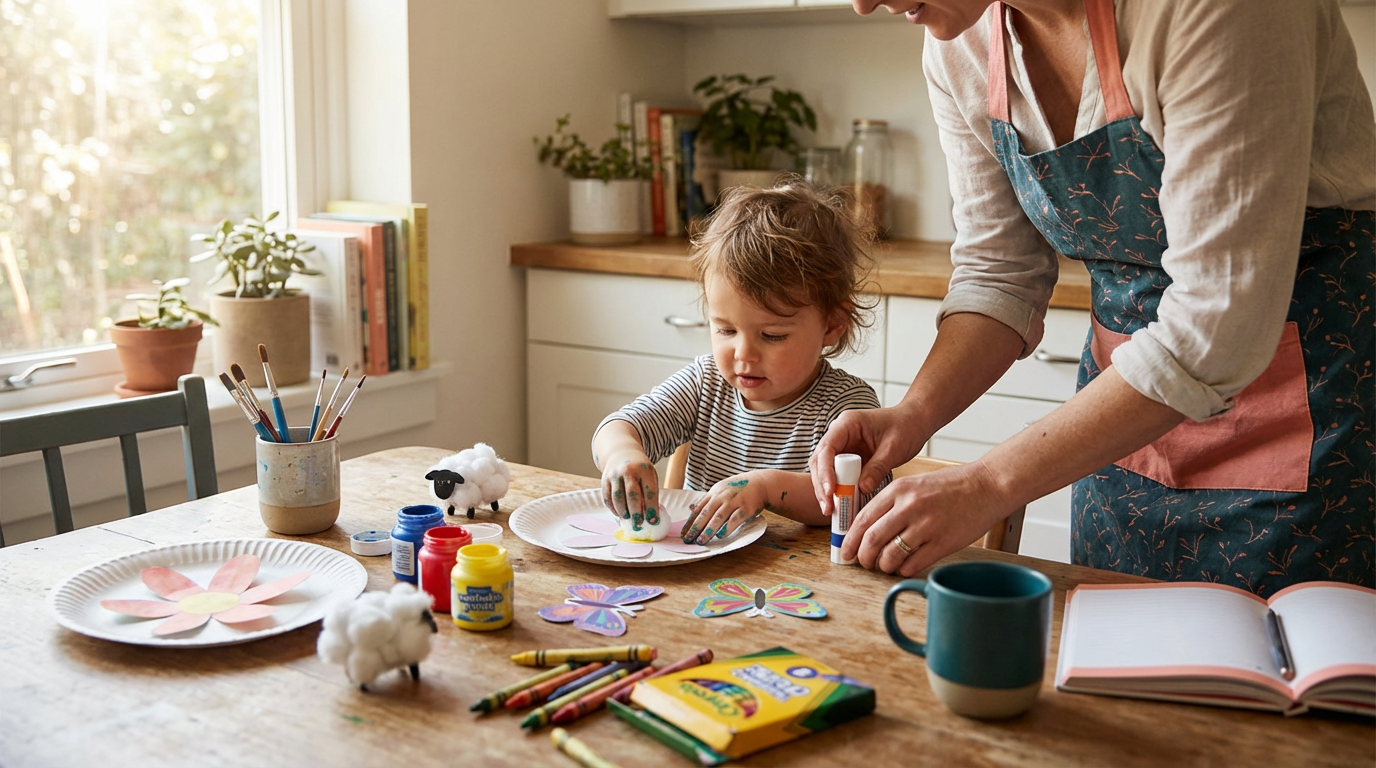
Spring is the perfect excuse to pull out the paint, glue, and recyclables and let your little one explore color, texture, and nature. When you set up spring crafts for toddlers with simple steps and low‑prep supplies, creativity feels fun instead of stressful. Even better, these easy spring crafts for 2 and 3 year olds double as fine‑motor practice, sensory play, and sweet keepsakes for your home or classroom.


In this guide, you’ll find simple spring art activities for toddlers, from paper plate flowers and coffee filter butterflies to cotton ball sheep and flower suncatchers. We’ll walk through no‑prep spring crafts for toddlers at home, ideas with recycled materials, and spring classroom crafts for toddlers that work beautifully in daycare or preschool. All of these kids crafts are designed to be flexible, so you can adapt them for mixed ages or low‑energy days.

Why Spring Crafts Are Perfect For Toddlers
Spring is full of natural prompts toddlers already notice: flowers, rain, birds, bugs, and brighter days. Turning those observations into spring crafts for kids helps them connect what they see outside with what they create inside. Simple themes like blossoms, rainbows, chicks, and butterflies are easy for little hands to explore with stamping, printing, and gluing.
These spring arts and crafts for kids also support early skills in a playful way. Painting egg carton flowers or cotton ball sheep builds finger strength and coordination, while paper towel butterflies and paper plate chicks introduce color mixing and shapes. For busy parents and teachers, spring crafts preschool ideas keep kids engaged with minimal prep and maximal joy.
Easy Flower & Nature Crafts
Flower crafts for toddlers are classics for a reason: they’re bright, forgiving, and work with almost any art material. Try paper plate flowers painted with bold colors, coffee filter flowers that bleed beautifully with water, egg carton flowers for 3D fun, or handprint flower bouquets for keepsake cards. You can also offer mosaic flowers with pre‑cut paper pieces to practice simple scissor skills or gluing.
Nature spring crafts connect toddlers to the outdoors using real materials. Flower suncatchers made with contact paper and real petals look stunning in a window, while leaf printing with paint or stamp pads turns a nature walk into art time. Add a Duplo painted spring tree or fingerprint cherry blossom tree so toddlers can dab “blossoms” onto branches with fingers or chunky blocks.
Quick Nature Craft Ideas For Toddlers
- Paper plate flowers with big paintbrushes or sponge dabbers.
- Coffee filter flowers sprayed lightly with water to blend markers.
- Egg carton flowers painted and glued onto cardboard stems.
- Flower suncatchers made from contact paper and real petals.
- Fingerprint cherry blossom spring tree on cardstock.
- Leaf printing with washable paint and simple pressed leaves.
Spring Animals & Bug Projects
When you think seasonal crafts for kids, chicks, bunnies, sheep, and butterflies show up everywhere—and toddlers love them. Chick and bunny spring crafts for toddlers can be as simple as paint‑splat paper plate chicks, tissue paper chicks glued onto circles, or bunny puppets made from paper bags or popsicle sticks. Add a few feathers or cotton balls and you’ve got instant texture.
Butterfly crafts for toddlers are perfect for exploring color. Use paper towels or coffee filters colored with markers and spritzed with water, then pinch them into butterflies with pipe cleaner bodies. Paper plate butterflies painted with splat techniques or folded prints also work well. For farm‑style fun, make cotton ball sheep on cardstock or yogurt‑pot sheep with glued cotton, and simple paper plate birds decorated with feathers or scrap paper.
Simple Animal Craft Ideas
- Paper plate chick with feather wings and triangle beak.
- Tissue paper chicks glued onto card circles.
- Bunny puppets made from paper bags or cardstock ears.
- Paper towel butterflies with clothespin bodies.
- Paper plate butterflies with paint splats folded in half.
- Cotton ball sheep on card or recycled yogurt pots.
- Paper plate birds with cut‑paper wings and googly eyes.
Sensory, Recycled, and Fine‑Motor Friendly Crafts
Many toddlers learn best when they can squish, stamp, and explore texture, which makes sensory spring crafts for kids such a win. Spring finger painting rainbows, puffy paint clouds, and sponge‑paint tulips give them a chance to feel the paint while creating something recognizable. Puffy paint clouds above a paper plate rainbow are especially satisfying for tiny hands.
Recycled spring crafts for toddlers are kind to both your budget and the planet. Turn egg cartons into flowers or bird feeders, cardboard tubes into tulips or ladybirds, and plastic bottles into flower stampers. These projects build fine‑motor skills as kids squeeze glue, pinch small pieces, or press stamps. Tissue paper spring crafts—like rainbows, wreaths, or flower collages—offer lots of scrunching and sticking practice too.
Favorite Sensory & Recycled Ideas
- Finger painting rainbow arcs on sturdy paper.
- Puffy paint clouds above a paper rainbow or rain scene.
- Egg carton flower craft with bright paints.
- Egg carton bird feeders decorated by toddlers.
- Toilet paper roll flowers and bugs with simple stamping.
- Soda bottle stamper flowers using the bottle base as a stamp.
- Tissue paper rainbows, spring wreaths, and chick collages.
No‑Prep Crafts For Home & Daycare
On low‑energy days, you need no‑prep spring crafts for toddlers at home that come together in minutes. Keep a small basket of basics—paper plates, cotton balls, dot markers, stickers, crayons, and glue sticks—and you can quickly set up a chick, bunny, or rainbow craft on the kitchen table. Many of the ideas above work with just paper, crayons, and one fun extra like stickers or tissue paper.
For daycare and preschool, spring classroom crafts for toddlers should be easy to batch and clean up. Printable spring craft templates for toddlers—like sheep, flowers, or butterflies—make prep fast and help you support circle time spring art activities such as fork‑print tulips or stamp flowers. You can reuse the same simple templates across different weeks by switching colors, tools (forks, sponges, cotton balls), or add‑ons like sequins.
No‑Prep Setup Tips
- Pre‑cut simple shapes (circles, eggs, flowers) during nap time.
- Store glue sticks, stickers, and cotton balls in labeled bins.
- Use washable paints and a single tray color per session.
- Keep a stack of paper plates for instant animal faces or flowers.
- Print a few basic spring craft templates and reuse all season.

Practical Spring Craft Checklist For Busy Grown‑Ups
Use this checklist to make spring crafts for toddlers easy, calm, and actually doable on real‑life days.
- Gather a small “spring craft bin” with paper plates, cardstock, glue sticks, crayons, cotton balls, tissue paper, dot markers, and safety scissors.
- Choose 1 simple theme per session (flowers, rainbows, chicks, butterflies, sheep) instead of trying to do everything at once.
- Set up the craft area before inviting your toddler: cover the table, pour small amounts of paint, lay out tools within reach.
- Pre‑cut tricky shapes (flower petals, egg carton cups, bunny ears) so toddlers can focus on painting and gluing.
- Plan 10–20 minutes of focused crafting and be okay if your toddler finishes earlier or wants to repeat the same step.
- Offer choices like “Do you want to make a chick or a butterfly today?” but limit to 2 options to avoid overwhelm.
- Use large, chunky tools (big brushes, sponges, stamps, Duplo blocks) for easier gripping and less frustration.
- Embrace sensory versions—finger painting, cotton ball clouds, tissue paper scrunching—if your toddler resists “neat” crafts.
- Keep a damp cloth or wipes nearby and dress kids in play clothes or smocks to reduce cleanup stress.
- Display finished crafts at kid‑height on a wall or window so your toddler can admire their work and talk about it.
- Turn repeats into a routine (for example, “Monday is spring craft day”) so your toddler knows what to expect.
- Note a few favorites and rotate them with tiny twists: new colors, different paper, or a nature walk before crafting.
- Save one or two special pieces per month in a folder or frame; quietly recycle the rest when your child isn’t attached.
- In classrooms, prep crafts in stations (painting, gluing, stamping) so small groups can rotate easily.
- Use simple verbal steps (“first paint, then glue, then show me”) and repeat them as you guide your toddler.
Finishing a spring craft together doesn’t have to be Pinterest‑perfect to matter; what counts is the shared time, conversation, and tiny bits of confidence your toddler builds each time they create.

FAQs About Spring Crafts For Toddlers
How do I fit toddler spring crafts into a busy day?
You don’t need an hour‑long block to make spring crafts for toddlers work; aim for 10–20 minutes once or twice a week. Set up a tiny “craft corner” with a wipeable cloth, a stack of paper, and a small bin of safe supplies so you can pull together a flower or chick craft quickly. Pick projects with two or three steps—like stamping bottle‑top flowers or gluing cotton ball sheep—so you can clean up fast if you’re interrupted. If evenings are hectic, try a short spring craft on weekend mornings while coffee brews.
What are good spring crafts when I’m low on energy?
On low‑energy days, keep it ultra simple: dot‑marker tulips, finger painting rainbows, or sticker‑covered paper plate eggs. Choose no‑prep spring crafts for toddlers at home that only need paper, crayons, and one fun extra—like tissue paper scraps or flower stickers—so you’re not running around gathering supplies. Sit beside your toddler to supervise, but let them lead; their version of a butterfly or sheep doesn’t need to look like a template to be valuable. When you’re really tired, focus on sensory spring crafts for kids like puffy paint clouds or cotton ball sheep that feel soothing and repetitive.
How do I stay consistent without getting bored of the same crafts?
Toddlers love repetition, so it’s okay if you feel more bored than they do. Instead of reinventing everything, keep a small rotation of spring craft ideas—flowers, chicks, bunnies, butterflies, rain clouds—and change one small thing each time (tool, color palette, size of paper). Turn it into a simple spring craft routine, like “Flower Fridays,” so you always know what theme is coming. You can also stretch a single idea over a few days: day one painting egg cartons, day two turning them into flowers, day three adding leaves or stems.
How can I do spring crafts in a small space or apartment?
In a small space, think vertical and contained. Use a foldable tray table or a single placemat as your “craft zone” and choose projects that stay mostly on the page, like paper towel butterflies or fork‑print tulips. Store supplies in one caddy or shoebox that slides into a closet, and rely on paper plates and pre‑cut templates to minimize mess. Dry finished spring crafts for kids on a hanging line or a fridge gallery rather than spreading them across counters.
How do I manage the mental load of planning crafts every week?
Reduce decision fatigue by picking 3–5 go‑to spring crafts for toddlers and using them all season with tiny variations. Create a simple list on your phone—flowers, chicks, butterflies, rainbows, sheep—with a couple of bullet points under each so you’re not searching ideas at the last minute. Keep a lightweight routine (for example, “Monday: flowers, Wednesday: weather, Friday: animals”) so planning becomes automatic. Remember that your toddler doesn’t need constant novelty; repeating familiar crafts can actually feel calming and help them see their progress.
Small, messy, imperfect sessions still “count,” and you’re doing enough if you offer a little color, glue, and connection now and then—save this post, start with one tiny idea this week, and follow @theclutteredblog on Pinterest so you always have a fresh spring craft ready when the mood strikes.