


















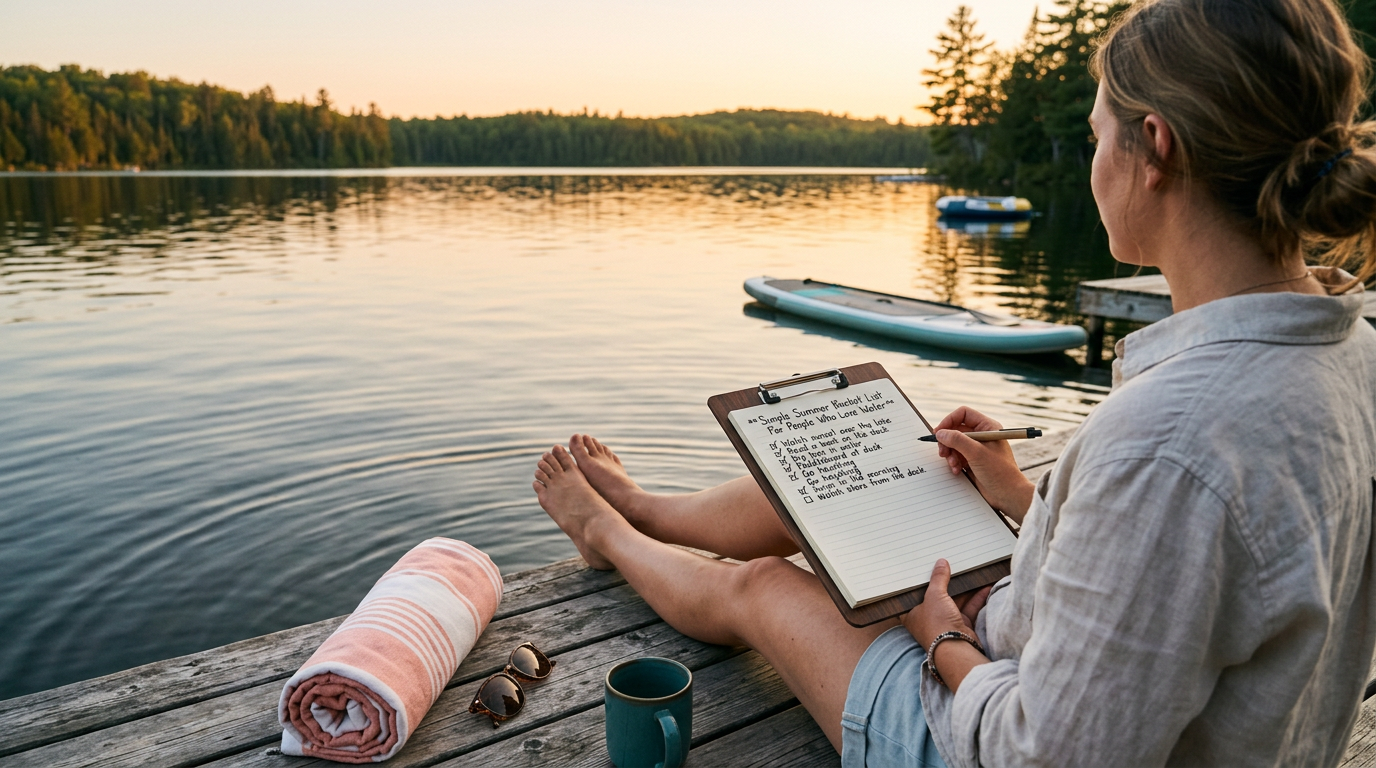
When the weather heats up, most of us dream about spending more time near the water—but busy schedules, tight budgets, or travel plans that never happen can make it feel out of reach. A simple summer bucket list for people who love water brings those dreamy moments back down to earth, with easy ideas you can actually fit into real life. From low‑cost water fun for families at home to tiny summer water adventures close to home, you can build a season that feels refreshing instead of overwhelming.


You don’t need a fancy beach vacation, a huge pool, or a boat of your own to enjoy water this summer. With a little planning, you can sprinkle in relaxed swims, backyard sprinkler days, and even a first try at paddleboarding or kayaking without turning your whole life upside down. Think of this list as a gentle guide: pick what fits your season, skip what doesn’t, and let water be the—very calming—theme.

Below, you’ll find easy summer bucket list ideas for people who love water, broken down into stress‑free categories: chill water time, at‑home water play, simple adventures, boating and coastal ideas, and a ready‑to‑use checklist you can print or save on your phone. Start with one idea this week and let the rest unfold as you go.
Why A Simple Summer Bucket List Helps
A simple summer bucket list works like a friendly blueprint: it keeps your water‑loving heart happy without over‑scheduling your calendar. Instead of scrolling social media and feeling behind, you have a small menu of easy water activities for summer you can actually do.
It also takes the mental load down a notch. When the kids ask “What are we doing today?” or you’re craving something relaxing after a long week, you can just scan your list and pick one small thing. No big planning session required.
Finally, a low‑key list helps you honor your real resources—time, money, and energy. By focusing on low cost water fun for families and simple summer water adventures close to home, you’ll enjoy the season more and stress way less.
Chill Water Moments For Busy Days
Not every water lover wants to spend the whole day in the sun or learn a new sport. Sometimes, the most memorable summer bucket list ideas for people who love water are the quiet, gentle ones that fit into a normal day.
Here are easy, slow‑paced ideas to try:
- Take a relaxed swim in a lake, river, or ocean this summer, even if it’s just for 20 minutes.
- Plan one sunset swim or evening dip bucket list idea where you drift, float, and watch the sky change colors.
- Relax in a lazy river or float on a tube at a pool, water park, or gentle river.
- Have a cozy picnic by the water—a lake, riverbank, or beach—complete with simple snacks and a light blanket.
- Keep a small “water bag” in your car with swimsuits, towels, sunscreen, and flip‑flops for spontaneous water stops.
These kinds of moments are perfect if your energy is limited or your schedule is tight. You still get that deep‑breath, grounded feeling that only water can give, without needing to dedicate a full weekend.
Backyard Water Play At Home
If travel isn’t in the budget or you’re in a season where staying home is easiest, at‑home water play is your best friend. This is where easy water activities for summer really shine—especially for kids and adults who just want to cool off fast.
Try mixing and matching these simple ideas:
- Host a backyard sprinkler day for kids and adults: set up a regular sprinkler, add some upbeat music, and treat it like a mini water park.
- Plan a water balloon fight or water blaster battle with buckets of pre‑filled balloons or squirt guns.
- Create a mini pool or kiddie pool spa day at home with warm water, bath salts (if safe for the material), and a few floating toys or candles.
- Turn chores into water games—washing the car, watering plants, or rinsing outdoor furniture with a hose can become gentle, playful water time.
- Use large tubs or storage bins as pop‑up water play stations: add cups, ladles, and plastic toys for low‑mess, low‑cost fun.
This kind of low cost water fun for families works beautifully when you’re short on time, short on money, or both. Most of these activities use what you already have at home and require minimal prep.
Simple Adventures For Water Lovers
If you’re craving something a little more adventurous—but still simple and beginner‑friendly—add one or two “try something new” items to your simple summer bucket list for water lovers. The goal isn’t to become an expert; it’s to give yourself one memorable story to look back on.
Consider adding:
- Try paddleboarding or kayaking once this summer at a calm lake, bay, or slow river (many places offer short rentals and basic instructions).
- Go snorkeling in clear, shallow water where you can comfortably stand and still see fish, shells, or rocks.
- Rent a paddle boat or rowboat at a local lake for an hour and take slow laps while chatting or listening to music.
- Join a beginner‑friendly guided tour, like a sunset paddle or easy kayak excursion, to reduce planning and increase safety.
- If you’re nervous, start by sitting or kneeling on a paddleboard close to shore instead of standing—“mini bravery” still counts.
These simple summer water adventures close to home help you stretch just enough to feel proud of yourself, without turning your summer into a risky, high‑stakes challenge.
Boating, Coastal Vibes, And Waterfront Magic
You don’t need to own a boat to enjoy boating and coastal experiences. Many marinas, waterfront towns, and lakeside parks make it easy to hop on board for an hour or two and then go right back to your regular life.
Add a few of these to your summer bucket list ideas for people who love water:
- Take a sunset cruise or boat ride—this could be a tourist boat, a small ferry, or a rented pontoon with friends.
- Watch fireworks from the water (on a lake or in a harbor) if your town offers holiday events—bring blankets and extra layers in case it cools down.
- Go fishing off a pier, dock, or small boat, even if you’re brand‑new; keep the focus on time near the water rather than catching a huge fish.
- Visit a nearby harbor, marina, or riverfront walkway in the evening to stroll, grab ice cream, and watch the boats come and go.
- If you can, schedule one low‑key “water day trip” to a nearby coast, lakefront, or riverside town—no overnight stay needed.
These experiences add that classic summer feeling without requiring a full‑scale vacation. Think of them as mini getaways you can tuck between work, school, and regular life.

Printable‑Ready Simple Summer Water Bucket List
Use this checklist as a ready‑to‑go, low‑stress plan for your season. You can print it, copy it into your notes app, or turn it into a one‑page planner or journal spread.
Simple Summer Bucket List For People Who Love Water – Checklist:
- Take at least one relaxed swim in a lake, river, or ocean this summer.
- Plan one sunset swim or evening dip.
- Spend a slow afternoon relaxing in a lazy river or floating on a tube.
- Have a picnic by the water (lake, riverbank, or beach).
- Pack a small “water bag” (swimsuits, towels, sunscreen) and keep it in the car.
- Host a backyard sprinkler day for kids and adults.
- Plan a water balloon fight or water blaster battle.
- Create a mini pool or kiddie pool spa day at home.
- Set up a simple at‑home water play station with tubs, cups, and toys.
- Turn at least one outdoor chore into playful water time.
- Try paddleboarding or kayaking once this summer.
- Go snorkeling in clear, shallow water.
- Rent a paddle boat or rowboat at a local lake.
- Take a sunset cruise or simple boat ride.
- Watch fireworks from the water if your town offers it.
- Go fishing off a pier, dock, or small boat.
- Visit a nearby harbor, marina, or riverfront for an evening stroll.
- Take one low‑key day trip to a nearby coast, lake, or riverside town.
You don’t need to finish every single item to “do summer right.” Even checking off four or five can completely change the way the season feels.
If summer has felt complicated or disappointing in the past, this is your invitation to keep things intentionally simple. Choose a few easy, water‑based moments that fit your life, keep your bucket list visible, and let small, refreshing rituals build a summer that actually feels like you.

FAQs About Simple Summer Bucket List For People Who Love Water
How do I enjoy water activities if I barely have any free time?
When your schedule is packed, tiny water moments matter more than big trips. Focus on activities that take 30–60 minutes door‑to‑door, like a quick evening dip at a nearby pool, a sunset walk by a river, or turning bath time into “mini spa” water play with kids. Build one repeating ritual into your week, such as Friday night lake visits or Sunday afternoon sprinkler time, so you’re not constantly re‑planning. Keeping a packed “water bag” in your car also removes preparation as a barrier, making spontaneous stops realistic even on busy days.
What if my energy is low but I still want a fun water‑filled summer?
Low energy summers call for “gentle water” ideas. Choose activities where you can mostly sit, float, or lie down: relaxing in a lazy river, floating on a tube, soaking your feet in a kiddie pool, or sharing a simple picnic by the water. Designate at‑home activities like backyard sprinkler days or mini pool spa sessions that don’t require travel or complicated prep. Give yourself permission to do just one small water thing per week and count it as a full win—your bucket list is there to support you, not exhaust you.
How can I stay consistent with my summer bucket list without feeling pressured?
Treat your simple summer bucket list for water lovers as a menu, not a to‑do list. Instead of trying to “complete” it, circle a few non‑negotiable favorites and leave the rest as bonus ideas. Add one water plan to your calendar each week and keep it flexible—if weather or energy change, swap it for another item instead of canceling water time altogether. Checking off even a few items is enough to create memories and a sense of progress, so drop the all‑or‑nothing mindset and let the list be playful.
What if I don’t have much space at home for water play?
Small spaces can still host great low cost water fun for families with a little creativity. Use compact options like a collapsible kiddie pool, large storage bins, or even a single dish tub for scooping and pouring water. Focus on vertical play (spray bottles, squirt guns, or hose “rain” from above) instead of sprawling setups. Keep supplies in one small basket so you can set up and pack away in minutes, making balcony, patio, or tiny yard water play feel easy instead of chaotic.
How do I reduce the mental load of planning summer water activities?
Front‑load a bit of planning once so you can coast later. Write your simple summer water adventures close to home on a single page, save your bucket list in your notes app, and keep basic gear (swimsuits, towels, sunscreen, simple toys) in one labeled basket. Decide on a couple of “default” water activities—like backyard sprinkler day, a walk by the river, or a trip to the local pool—so when you’re tired, you don’t have to invent new ideas. The more you automate decisions, the lighter summer feels on your brain.
Small, simple steps are more than enough to build a water‑filled summer you actually enjoy. Start with one tiny idea from this list, save this post so you can come back to it later, and follow @theclutteredblog on Pinterest for more cozy, realistic ideas to make your everyday life flow a little easier.