


















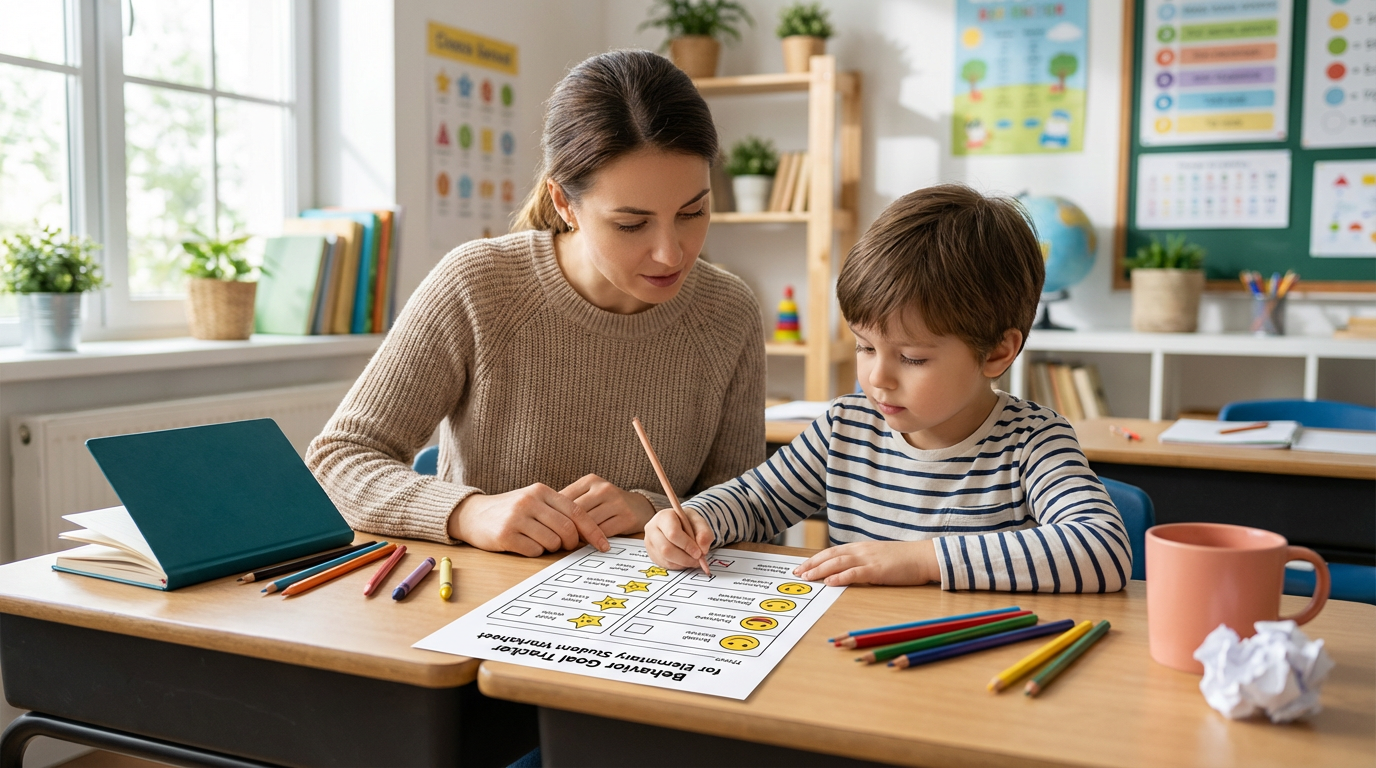
Helping kids build positive habits in the classroom can feel overwhelming, especially when you’re juggling lessons, transitions, and big emotions all day long. A behavior goal tracker for elementary students turns those daily struggles into clear, visual steps kids can actually follow. With the right worksheet and classroom behavior goal chart, you can support self‑control, focus, and respect—without adding more chaos to your plate.


In this guide, you’ll learn how to set up an elementary student behavior chart that is simple, visual, and consistent enough for real life. We’ll walk through daily behavior check in charts, weekly behavior goal tracking sheets, sticker and smiley face systems, and reflection tools that help students take ownership of their choices. You’ll also see how to connect your classroom behavior goal tracker with home, so families feel informed and kids feel supported on all sides.

Whether you’re a teacher, counselor, or parent, you can use these ideas to build an individual student behavior goal chart that fits each child’s needs. You don’t need a complicated system—just clear goals, a visual tracker, and a routine you can stick with.
What Is a Behavior Goal Tracker Worksheet?
A behavior goal tracker worksheet is a simple tool that helps students see their progress toward specific behavior goals throughout the day or week. Instead of vague “good” or “bad” days, kids see concrete moments when they followed directions, stayed on task, or showed respect.
For younger students, a simple visual behavior tracker with pictures (for K–2) might use icons like ears for listening, hands for keeping to self, or a desk for staying in their seat. Older elementary students can use number scales or checkboxes for more detailed feedback on self control and respect, on task and participation, and following classroom rules.
A well‑designed classroom behavior goal tracker typically includes clear expectations, space for daily ratings, and room for notes or rewards. Over time, this becomes a data‑rich behavior tracking sheet that supports parent communication, IEP documentation, and targeted interventions.
Positive Behavior Goals That Work for Elementary Students
Before you print any worksheet, you need clear positive behavior goals for elementary students that fit your classroom culture. Positive goals focus on what you want to see more of, not just what you want to stop.
Here are common classroom rules and behavior goals checklist items you might include:
- I can follow directions the first time.
- I can raise my hand and wait to be called on.
- I can keep my hands, feet, and objects to myself.
- I can use kind words and a respectful tone.
- I can stay on task during work time.
- I can take turns and share materials.
- I can move safely and quietly around the classroom.
These “I can” behavior goal chart statements help students internalize expectations and feel proud when they meet them. You can highlight 2–3 goals at a time on an individual student behavior goal chart so the focus stays realistic and manageable.
For students working on self control and respect, pair your goals with clear replacement behaviors: “When I feel frustrated, I can ask for a break” or “When I disagree, I can use a calm voice.” These phrases can be printed right on the worksheet so kids see them every time they check in.
Daily and Weekly Behavior Tracking Formats
Your format matters just as much as your goals. A behavior goal tracker for elementary students should fit your schedule, energy, and students’ developmental level.
Common formats include:
- Daily behavior check in chart: Break the day into blocks (morning, math, reading, specials, afternoon) and rate behavior in each block.
- Weekly behavior goal tracking sheet: Summarize each day on one page so you can spot patterns across the week.
- Sticker chart for behavior goals: Give one sticker each time a student meets a target, building toward a small reward.
- Smiley face behavior chart for elementary: Use smiley, neutral, or frowny faces to make feedback quick and visual.
- Simple visual behavior tracker with pictures (for K–2): Replace words with icons so emergent readers can participate independently.
For students who need more intensive support, you can use a home school behavior communication chart that travels between school and home. This chart might show daily ratings for self control, on task and participation, and respect, with a small comment box and a parent signature line.
When choosing between daily versus weekly tracking, start with a daily behavior chart for immediate feedback. As students grow more consistent, you can zoom out to a weekly behavior goal tracking sheet that celebrates long‑term progress.
How to Set SMART Behavior Goals with Kids
Goal setting helps students feel like partners, not just recipients of consequences. A student behavior goal setting template can walk them through exactly what they’re working on and how they’ll know they’ve succeeded.
Use SMART behavior goals for students:
- Specific: “I will raise my hand before speaking.”
- Measurable: “I will do this in at least 4 out of 5 lessons today.”
- Achievable: Fits the student’s current skills and support level.
- Relevant: Connects to classroom rules and behavior goals checklist items.
- Time‑bound: “This week” or “for the next 10 school days.”
A simple template might include:
- My behavior goal is: ______
- This goal matters because: ______
- I will practice this during: (circle) whole group, small group, independent work, transitions.
- My teacher will track my progress using: (circle) sticker chart, smiley face behavior chart, daily check in.
- My reward for meeting my goal will be: ______.
Review goals briefly at morning meeting or before the first lesson so they’re fresh. Tie the goal directly to the individual student behavior goal chart they’ll be using that day.

A Ready-to-Use Behavior Goal Tracker Checklist
Use this practical checklist to build or customize your own classroom behavior goal tracker or individual worksheet. This is designed to work for most elementary classrooms with minimal prep.
Behavior Goal Tracker Setup Checklist (15 items):
- Choose 2–3 positive behavior goals per student (e.g., follow directions, raise hand, stay on task).
- Decide on format: daily behavior check in chart or weekly behavior goal tracking sheet.
- Pick a rating style: smiley faces, numbers, or stickers.
- Create an “I can” behavior goal chart section with student‑friendly statements.
- Add icons or pictures for K–2 students who can’t yet read independently.
- Break the school day into clear blocks (e.g., morning, math, reading, specials, afternoon).
- Include one small box for teacher comments or quick notes.
- Add a space for self‑reflection at the end of the day (“What went well?” “What can I improve?”).
- Add a simple reward menu tied to consistent effort, not perfection.
- Include a parent signature line if using a home school behavior communication chart.
- Decide when you will check in with the student (e.g., after each block, at lunch, end of day).
- Introduce the tracker in a calm, encouraging way—focus on growth, not punishment.
- Model how to fill out the chart, including what each symbol or score means.
- Store the chart in the same place every day (desk, folder, clipboard) so it becomes a routine.
- Review progress weekly and adjust goals or supports as needed.
You can turn this entire list into a printable behavior reflection sheet for elementary students by adding checkboxes next to each item and a small reflection area at the bottom. Keep it simple enough that you can realistically use it on your busiest days.
Using Reflection Sheets and Home-School Charts
A behavior reflection sheet for elementary students gives kids a structured way to think about what happened and what they can try next time. Instead of lengthy lectures, you guide them through a few short prompts that connect their choices to their goals.
A reflection sheet might include:
- Today I felt: (circle) happy, calm, silly, frustrated, angry, tired.
- One thing that went well today:
- One behavior I want to improve:
- Next time I can try:
- Do I need help from my teacher, counselor, or family? (yes/no).
Pair this with a home school behavior communication chart so parents see not only the data but also the student’s own reflection. This reinforces that the goal is growth and self control, not shame or blame.
For some students, especially those with behavior plans, you might also share classroom behavior goal tracker summaries at IEP meetings or conferences. These data points can guide supports, accommodations, and future goals.
It’s okay if you don’t use every tool every day. The key is having a small set of consistent routines: a daily or weekly chart, simple reflection, and brief communication with home when needed.
Simple Routines to Make Behavior Trackers Stick
Any behavior goal tracker for elementary students only works if you can actually stick with it. The most effective teachers build short, predictable routines around their charts so they become part of the day, not an extra task.
Try a routine like this:
- Morning: Quickly review the student’s behavior goal setting template and “I can” statements.
- Midday: Do a 1–2 minute daily behavior check in chart update, focusing on on task and participation.
- End of day: Fill in any remaining ratings, let the student self‑rate, and complete a short reflection sheet.
- Weekly: Transfer key data to a weekly behavior goal tracking sheet, send home the home school behavior communication chart, and celebrate wins.
You might also build in a quick “smiley face behavior chart for elementary” moment just before dismissal, where students see their overall rating and share one positive choice they made. Over time, they begin to anticipate this routine and connect their day’s choices with the outcomes on their chart.
Remember, consistency beats perfection. If you miss a block, keep moving. The habit of checking in regularly is what builds awareness, self control, and long‑term change.
With a clear classroom behavior goal tracker, positive “I can” statements, and simple reflection tools, you’re giving students a roadmap for how to show up, participate, and grow—one small checkbox at a time.

FAQs About Behavior Goal Tracker For Elementary Student
How do I use a behavior goal tracker when I’m short on time?
When your day is packed, choose the simplest possible format, like a one‑page daily behavior check in chart with just a few time blocks. Instead of tracking every little detail, focus on 2–3 key goals such as following directions, staying on task, and showing respect. Keep ratings fast—use smiley faces, numbers, or quick checkmarks rather than long comments. You can always jot a brief note in one box if something important happens, then review patterns later using a weekly behavior goal tracking sheet.
What if I don’t have the energy to manage a complicated behavior chart?
You do not need an elaborate system for a behavior goal tracker for elementary students to work. Start with a smiley face behavior chart for elementary that fits on half a page and tracks just morning and afternoon. Use stickers or quick circles instead of writing, and let students help by coloring their own icons when they meet an “I can” behavior goal chart target. As the routine becomes natural, you can layer in a home school behavior communication chart or reflection sheet if you still have capacity.
How can I help students stay consistent with their goals?
Consistency comes from routines, not willpower. Build tiny habits around your classroom behavior goal tracker—like a 60‑second morning reminder of their “I can” statements and a 2‑minute end‑of‑day reflection. Use the same visual format every day so students know what to expect, especially with a simple visual behavior tracker with pictures for K–2. Celebrate small wins using a sticker chart for behavior goals, and gradually raise expectations as students show more self control and respect.
How can I use behavior trackers in small spaces or flexible seating classrooms?
In small or flexible classrooms, portability is key. Try individual student behavior goal charts on clipboards, mini laminates on desks, or half‑sheet trackers that fit inside a folder. A weekly behavior goal tracking sheet can live in a central binder, while daily charts travel with students from spot to spot. You can also rely on quick, visual options like color dots or smiley faces that don’t take up wall space but still keep expectations and progress visible.
How do I reduce the mental load of tracking behavior while teaching?
To lighten your mental load, standardize as much as you can. Use one core behavior goal setting worksheet for kids with the same layout for every student, changing only the specific goals. Keep your classroom rules and behavior goals checklist short and post it near your main teaching area as a cue. Schedule brief but predictable times to update the behavior tracker—like after transitions—so you’re not trying to remember everything at dismissal. Over time, students can take on more of the work by self‑rating and filling in their own behavior reflection sheet for elementary students, while you just confirm and sign.
Taking small steps toward a calmer classroom is more than enough. You don’t need a perfect system; you just need a simple behavior goal tracker you can actually use and tweak over time. Start with one worksheet, one routine, and one student if that feels manageable, then build from there as your confidence grows. Save this post so you can come back to it when you’re ready for the next step, and don’t forget to follow @theclutteredblog on Pinterest for more gentle, practical tools for everyday life.