









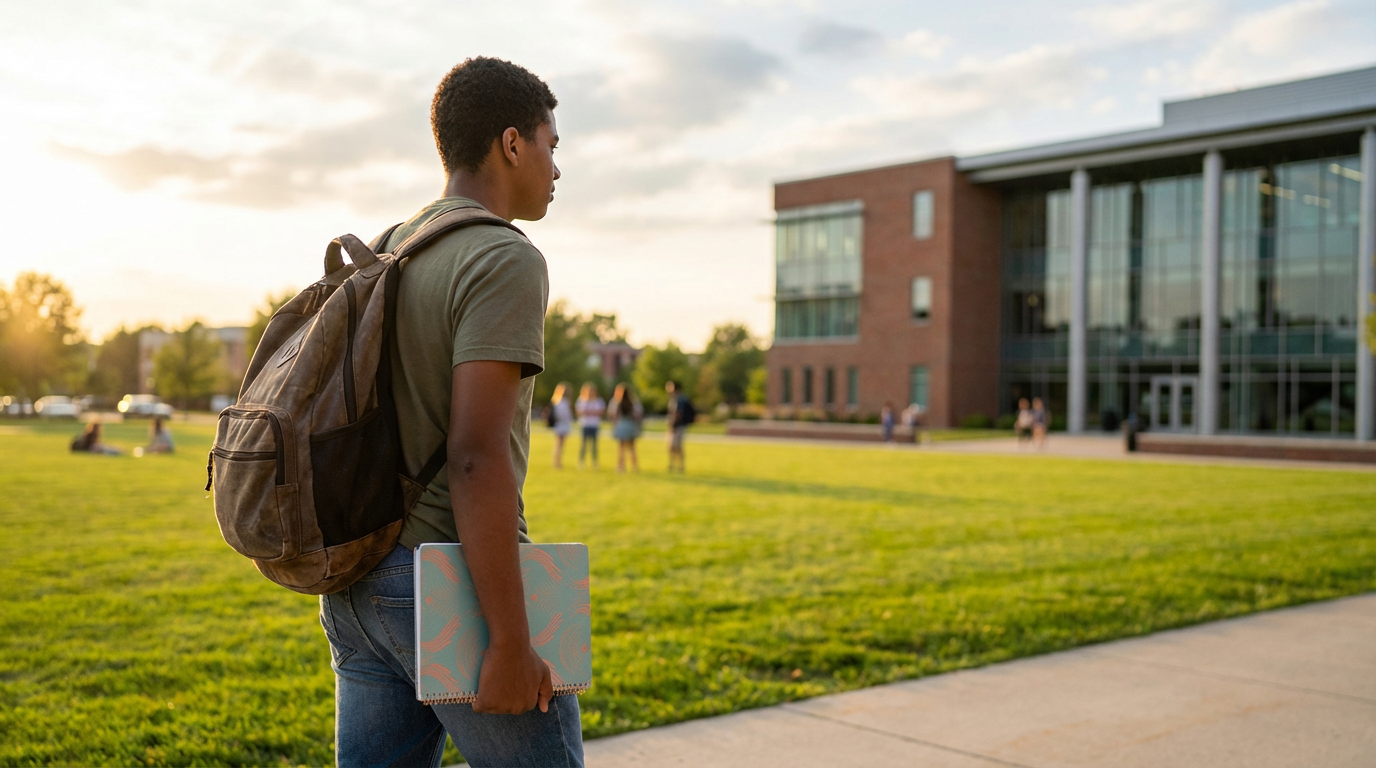
Being the first in your family to go to university is a big deal. It can feel exciting, but also confusing and lonely, because the people who love you most may not know how applications, financial aid, or campus life work. A journey map—step-by-step from early high school to your first year on campus—can turn that uncertainty into a clear path you can follow.


This guide is written directly to first-generation students (and the adults who support them). It walks you through six key stages: early exploration, research and requirements, applications and money, summer transition, and thriving in your first year at university.

Why First-Generation Students Need a Roadmap
A first-generation student is generally someone whose parents have not completed a four-year university degree, so they can’t pass down firsthand experience about applications, campus culture, or academic expectations. Research shows first-gen students often face:
- Less access to “insider” information about admissions, financial aid, and college norms.
- Higher financial stress and family responsibilities.
- Strong feelings of pressure and sometimes “imposter” feelings once they arrive on campus.
At the same time, first-gen students bring huge strengths: resilience, resourcefulness, and motivation. Guides and studies repeatedly highlight that starting early, building support networks, and using campus resources make a major difference in first-gen success.
Stage 1: Early Exploration (Grade 9–10)
You do not need your whole life planned in 9th or 10th grade. Here, the goal is to stay curious and keep doors open, not to pick one perfect path.
Key Actions
- Notice what genuinely interests you
Pay attention to the classes, hobbies, and topics that make you feel alive—science labs, writing, building things, art, caring for others, fixing tech, performing, languages, and more. Jot them down in a note or journal so you don’t forget. - Start learning college vocabulary
Get comfortable with words like GPA, credits, major, minor, financial aid, scholarship, and first-generation student. Many university and nonprofit resources explain these basics in simple language for first-gen students. - Tell a trusted adult you’re college-bound and first-gen
Let a school counselor, teacher, advisor, or program leader know that you’re first-gen and thinking about university. First-gen guides emphasize that counselors and teachers are often the first big source of information and encouragement for students like you. - Build study and time-management habits
Work on turning in assignments on time, asking questions when you’re stuck, and studying in short, focused blocks. These habits matter more than being perfect.
Think of this stage as drawing a rough sketch of your future—not carving anything in stone.
Stage 2: Research & Requirements (Grade 10–11)
By 10th or 11th grade, it’s time to turn your curiosity into specific options and understand what different universities expect.
Key Actions
- Create a starter list of 3–5 schools
Include different types: a nearby public university, a community college that transfers to a four-year school, maybe one more selective option, and a more affordable local choice. First-gen guides recommend looking closely at schools with strong first-gen support and realistic costs. - Check admission requirements for each school
For each option, note:- Required high school subjects or exam scores (where relevant).
- Typical admitted GPA ranges.
- Whether essays, portfolios, or interviews are needed.
- Application deadlines and timelines.
- Match your high school courses to your goals
Talk with your counselor about taking classes that will keep options open—challenging but doable for you. Some research shows first-gen students are less likely to take advanced coursework unless someone encourages them. - Look for first-gen and outreach programs
Many universities now highlight first-gen support—bridge programs, mentoring, and dedicated advising—on their websites. National organizations and local nonprofits also run college access programs that help with preparation, applications, and financial aid.
In this stage, your journey map becomes more concrete: you’re learning exactly what it will take to get where you want to go.
Stage 3: Applications, Essays, and Deadlines (Grade 11–12)
This is where everything starts coming together. Having a map keeps things from becoming overwhelming.
Key Actions
- Understand the application systems you’ll use
Depending on your country, you might apply through a shared platform, a national portal, or individual school applications. First-gen guides emphasize getting familiar with these tools early and using admission offices as a resource. - Plan tests if they’re still required
In some regions, standardized tests are still part of admission. If you need them:- Register ahead of time.
- Use free prep resources from schools, libraries, and reputable online platforms.
- Start your personal statement early
Good essays rarely happen in one draft. Many university and nonprofit guides suggest:- Telling a true story about your background, challenges, and growth.
- Showing what you’ve done with the opportunities and obstacles you’ve had.
- Asking teachers, counselors, or mentors for feedback.
- Track all deadlines in one place
Use a planner, calendar app, or simple spreadsheet to list:- Application deadlines
- Essay drafts and revision dates
- Scholarship deadlines
- Test dates
Universities and college advisors consistently stress that starting early and tracking everything significantly reduces stress and missed opportunities for first-gen students.
Stage 4: Money, Financial Aid, and Scholarships (Senior Year)
Money is often the biggest worry for first-gen students and their families—but there are more tools and supports than many realize.
Key Actions
- Learn the basics of financial aid
First-gen guides recommend understanding:- Grants and scholarships (money you don’t need to repay).
- Loans (money you must pay back, sometimes with interest).
- Work-study or on-campus jobs.
- Complete key financial aid forms on time
Forms like FAFSA (in the U.S.) or other national systems often open on specific dates and have priority deadlines. Completing them early can unlock more aid for first-gen students. - Ask for help filling out forms
Many universities, community organizations, and high schools run financial aid nights or offer one-on-one guidance for families. Experts strongly encourage first-gen students and parents to use this help instead of struggling alone. - Apply widely for scholarships
Look for:- First-generation scholarships
- Local community or corporate awards
- School-specific scholarships listed on university websites
- Compare offers, not just school names
When acceptance and aid letters arrive, compare:- Tuition and fees
- Housing and meal costs
- Grants and scholarships vs. loans
- Cost of living in the city or region
Sometimes a less “famous” school with a good support program and solid aid package is a smarter, more sustainable choice.
Stage 5: Summer Bridge & Transition (After Graduation, Before University)
The summer between high school and university is crucial for first-gen students. It’s your chance to practice being a college student before the real thing starts.
Key Actions
- Join bridge, first-gen, or summer transition programs if offered
Many campuses run summer bridge programs or first-gen welcome initiatives that let students:- Take a class or two.
- Learn college-level study strategies.
- Explore campus resources in a low-pressure way.
- Meet other first-gen students and supportive staff.
- Make the most of orientation
Whether orientation is a day, a weekend, or longer:- Find out how to register for classes and who your academic advisor will be.
- Locate key offices: financial aid, tutoring, counseling, disability services, and first-gen support.
- Ask questions—even ones you think are “obvious.” Staff expect this and want to help.
- Strengthen life skills for independence
Guides for families recommend using the summer to practice:- Basic budgeting and tracking expenses.
- Doing laundry and cleaning.
- Cooking a few simple meals or planning food.
- Navigating transport (public transit, maps, ride shares).
These skills reduce stress once classes start, so you have more energy for academic and social challenges.
Stage 6: Thriving in Your First Year at University
When you arrive on campus, it can feel like everyone else already knows the rules. In reality, many students—first-gen and not—are figuring it out step by step.
Key Actions
- Use academic resources early and often
Research and institutional guides repeatedly urge first-gen students to:- Go to office hours to ask questions and build relationships with professors.
- Use tutoring centers, writing labs, and study groups from the beginning of the term, not only when you’re in crisis.
- Build a support network and community
Look for:- First-gen student groups or programs.
- Cultural, identity-based, or interest clubs.
- Peer mentoring programs that match you with older students.
- Take care of your mental health
It’s normal to feel stressed, homesick, or like you don’t belong. Many first-gen resources recommend: - Practice time management and realistic expectations
You’re learning how to manage your time without a bell schedule. University and counseling guides encourage:- Using a planner or digital calendar for classes, assignments, and work shifts.
- Breaking large tasks into smaller pieces with mini-deadlines.
- Saying “no” when you need to study or rest, even if there are fun things happening.
Remember: your first year is about learning how college works, not being perfect at everything. Asking questions, using support, and adjusting your plan is exactly what successful first-gen students do.
Common Challenges for First-Gen Students—and How to Respond
Challenge 1: Feeling Like You Don’t Belong
You might feel like everyone else has parents who went to college and “speak the language,” while you’re faking it. This is a classic version of imposter feelings, especially common among first-gen students.
What helps:
- Remember that admissions chose you because you earned your spot.
- Spend time with first-gen groups where your story feels normal.
- Talk with mentors or counselors about these feelings—many have been there too.
Challenge 2: Family Expectations and Guilt
Some first-gen students feel guilty for leaving home, not working full-time, or not immediately contributing money. Others feel pressure to pick only “safe” majors or careers.
What helps:
- Have gentle, ongoing conversations about how your education is a long-term investment for you and your family.
- Share milestones (orientation, first exams, joining a club) so they can feel part of your journey.
- Seek mentors who understand your cultural and family context.
Challenge 3: Money Stress
Worrying about tuition, housing, food, and textbooks can be intense.
What helps:
- Meet with financial aid advisors early and regularly to review your options and budgets.
- Ask about emergency funds, book lending programs, and additional scholarships for later years.
- Consider on-campus jobs designed for students; they tend to be more flexible around classes.
Turning This Journey Map Into Your Personal Plan
You can turn this article into something concrete:
- Circle your current stage (for example, “Stage 2 – Grade 10–11”).
- Choose 2–3 realistic actions from that stage to focus on this month.
- Write them in one place—paper planner, notes app, or wall calendar.
- Check them off as you go, and then move on to the next set of actions.
Your journey as a first-generation student might not be smooth or straight, but that doesn’t mean you’re doing it wrong. Every step—asking a question, attending a workshop, filling out a form, joining a group—is part of building a future that’s truly your own.
You are not behind. You are the first.