












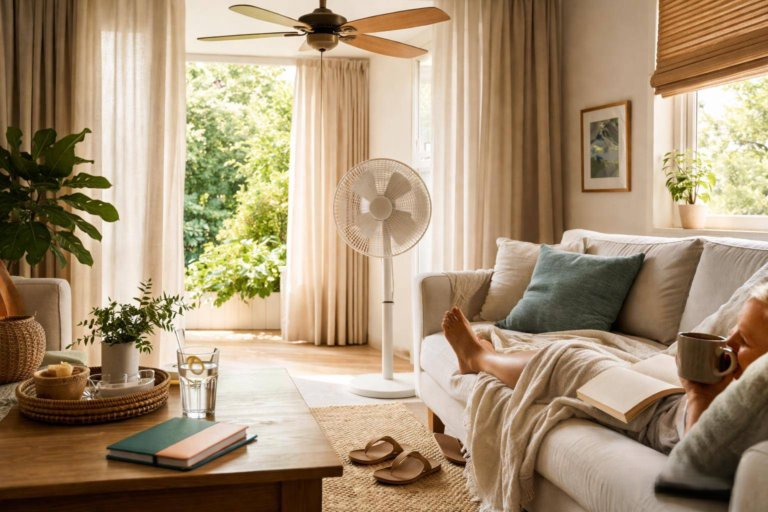
Summer is supposed to feel light and easy, but a spiking electric bill can make every heatwave feel stressful. When the temperature climbs, it’s easy to lean on air conditioning all day and then feel shocked when the bill arrives.


Low-Energy Summer Home Tips for a Less Stressful Electric Bill focuses on gentle changes that keep your home cooler without demanding a full lifestyle overhaul. You’ll mix smarter fan use, window tweaks, and simple daily habits so your home stays comfortable while your energy use stays calmer.
Think of this as a realistic guide to how to lower your electric bill in summer, especially if you’re already tired, busy, or working with a small space.

Cooling 101: Fans, Airflow, and When to Use AC
The first step is understanding how to stay cool in summer without AC (or at least without using it nonstop). Fans use far less energy than air conditioning and can still make you feel several degrees cooler by moving air across your skin.
- Use fans instead of air conditioning to save energy whenever the air is warm but not unbearable. A basic fan can run all day for a fraction of the cost of AC.
- Ceiling fan direction for summer cooling should be counterclockwise so it pushes air down and creates a cooling breeze.
- Remember that fans cool people, not rooms—turn them off when you leave to avoid wasted electricity.
In very hot stretches, you can still use AC, but try pairing it with fans and higher thermostat settings so it doesn’t work as hard.
Smart Window, Curtain, and Shade Habits
Windows are often the biggest source of unwanted heat. Good habits with blinds, curtains, and shade can dramatically reduce how often you need AC.
- Keep blinds and curtains closed to block heat, especially on sun‑facing windows in the middle of the day.
- Use window shades and reflective film to cut summer heat if your windows get strong direct sun; reflective film can bounce a lot of solar gain back outside.
- Seal windows and doors to stop cool air leaks so the cool you’ve paid for doesn’t slip out through gaps.
- Use natural shade (trees, awnings) to keep home cooler and protect walls and windows from direct sun where possible.
In the evening and early morning, when outside air is cooler, you can do the opposite: open windows wide and use fans to pull cool air in and push hot air out.
Cross Ventilation and Alternative Cooling
Cross ventilation tricks to cool your home naturally can make a noticeable difference on milder days. The goal is to move hot air out and draw cooler air in.
- Place a fan in a shaded window to pull cool air inside and another on the warmer side to blow hot air out.
- Open windows or vents on opposite sides of your home to create a path for air to travel through.
- At night, when the outside temperature drops, use window fans to flush out the stored heat.
If you live in a dry climate, it’s worth comparing swamp cooler vs AC energy use. Evaporative coolers (swamp coolers) can use about 75% less electricity than a traditional AC unit and may cool a typical home for roughly a third of the energy cost in some regions. That makes them a powerful low‑energy summer option in the right climate.
Gentle Daily Habits That Cut Summer Energy Use
Sometimes the easiest wins come from small shifts in your daily routine. These gentle summer energy saving tips for home don’t demand perfection; they simply nudge your habits in a cooler, more efficient direction.
- Run appliances at night to reduce summer energy use, especially laundry and dishwashers, so you’re not adding heat during the hottest hours.
- Minimize oven use and cook outside or with small appliances like air fryers, slow cookers, or microwaves, which add less heat than a full oven.
- Lower water heater temperature in summer to save energy; many sources suggest about 120°F as a comfortable, efficient setting.
- Unplug electronics to avoid standby power in summer—chargers, game consoles, and idle devices still draw power and can add tiny bits of heat.
Think of these as low‑energy habits you can layer in slowly. Even changing one or two routines can keep your house cooler and reduce electricity bill stress over time.
Light Tech Upgrades for a Cooler, Calmer Home
You don’t need a full system overhaul to see benefits. A few simple upgrades can support your low‑energy summer home tips without feeling overwhelming.
Programmable thermostat settings for summer energy savings are a big lever: many experts recommend starting around 78°F when you’re home and bumping the temperature up when you’re away. Smart or programmable thermostats can automatically raise and lower temperatures throughout the day so you’re not constantly adjusting.
Pair that with:
- Energy efficient fans and AC units that carry ENERGY STAR or local efficiency labels.
- Portable solar panels or solar generators to offset summer power use for fans, lights, or small appliances, especially during peak sun hours.
These light tech upgrades help keep house cool and reduce electricity bill pressure without asking you to micromanage every switch.

Practical Checklist: Low-Energy Summer Home Routine
Use this checklist as a simple weekly or seasonal reset. You don’t have to do it all at once—highlight a few items that feel easiest right now.
- Flip ceiling fans to summer (counterclockwise) and use them before turning on AC.
- Use fans instead of air conditioning whenever the air is warm but not extreme.
- Keep blinds and curtains closed on sun‑facing windows during the day.
- Add window shades or reflective film to hot, bright windows.
- Seal windows and doors to stop cool air leaks around frames and thresholds.
- Use natural shade (trees, awnings, pergolas) to block intense sun.
- Open windows at night or early morning and use fans for cross ventilation.
- Compare swamp cooler vs AC options if you live in a dry climate.
- Run laundry and dishwasher at night to reduce indoor heat and peak energy use.
- Minimize oven use; cook outside, grill, or use smaller appliances.
- Lower water heater temperature in summer (around 120°F, if safe for your household).
- Unplug electronics or use smart strips to reduce standby power.
- Program your thermostat with higher setpoints when you’re away.
- Choose energy efficient fans and AC units when upgrading.
- Consider portable solar panels or a small solar generator to offset summer power.
Low‑energy summer living is less about suffering through the heat and more about aligning your home with the weather on purpose. A few well‑chosen tweaks can leave you cooler, calmer, and less anxious when the bill arrives.

FAQ
FAQs About Low-Energy Summer Home Tips for a Less Stressful Electric Bill
What can I do if I have very little time or energy to think about summer energy savings?
If your energy is low, focus on two or three high‑impact habits instead of trying to “optimize everything”. An easy starting combo is using fans instead of air conditioning whenever possible, keeping blinds and curtains closed on hot windows, and running big appliances at night. You can set a reminder at the start of summer to flip your ceiling fan direction and lower your water heater temperature once, then forget about it. Small, one‑time changes like these reduce the mental load while still nudging your bill down.
How can I stay cool without AC in a small space?
In small homes or apartments, airflow is everything. Use cross ventilation tricks to cool your home naturally by opening windows on opposite sides and using fans to pull cool air in and push hot air out when it’s cooler outside than inside. Keep sun‑facing windows covered with blinds, curtains, or reflective film to cut heat gain. Because your space is compact, every bit of shade, sealed draft, and fan placement will have a bigger impact.
How do I stay consistent with these habits when I’m already busy?
Treat low‑energy summer home tips like tiny routines, not a big project. Choose one habit for mornings (for example: open shaded windows and set fans) and one for evenings (like closing blinds and running the dishwasher). Automate what you can—a programmable thermostat and a lower water heater setting mean less to remember. You’re allowed to start imperfectly; even partial consistency still lowers your electric bill over time.
Do these tips still matter if I have efficient AC?
Yes, because even efficient AC can use a lot of power when it runs for long hours. Using ceiling fan direction for summer cooling, closing blinds on hot days, and sealing windows and doors all reduce how hard your AC needs to work. Programmable thermostat settings for summer energy savings help you avoid cooling an empty home. Think of these ideas as teammates for your efficient AC, not replacements.
Is it worth looking into swamp coolers or portable solar options?
If you live in a dry climate, swamp cooler vs AC energy use comparisons strongly favor swamp coolers—they can use about 75% less electricity than standard air conditioners and cost much less to run in some regions. They’re not ideal in humid areas, but they can be a game changer where the air is dry. Portable solar panels or solar generators don’t replace your whole system, but they can offset summer power use for fans, lights, and chargers, especially during peak sun hours.
It’s completely okay to start with tiny steps—like flipping your fan direction or closing one sunny window—and build from there. Save this post so you can come back when you have more capacity, and follow @theclutteredblog on Pinterest for cozy, practical energy‑saving ideas that fit real life.