











If your home feels a little cluttered and mismatched, but you hate the idea of throwing things away, upcycling is going to be your new favorite hobby. Upcycling ideas for home decor are perfect when you’re on a budget, short on time, and craving a calmer, more intentional space. Instead of buying new, you’ll learn to upcycle old jeans, glass bottles, furniture, and more into cozy touches that actually fit your style. This guide walks you through a simple framework, beginner‑friendly projects, and realistic routines you can try in a small apartment, busy family home, or anything in between. Save this guide for later and come hang out on Pinterest at @theclutteredblog for more cozy, clutter‑friendly ideas.


What Upcycling Actually Is (and Why It Helps Your Home Feel Calmer)
Upcycling is the art of turning something you already own (or can thrift for cheap) into something more useful, beautiful, or both—without sending it to the landfill. It’s different from recycling because you’re not breaking items down; you’re creatively re‑using them as decor, storage, or furniture. This is especially powerful in a home that feels chaotic, because choosing to upcycle old furniture, clothes, and containers forces you to be intentional with what stays. Instead of a pile of random clutter, you build a collection of pieces that tell a story: the denim pillow made from your favorite jeans, the candle holder made from glass bottles, the nightstand you rescued from the curb. Upcycling also helps beginners ease into DIY decor, because many projects are low‑risk, low‑cost, and perfect for weekends or quick night‑time resets.

Who Upcycling Home Projects Are Perfect For
Upcycling ideas for home are ideal if:
- You’re on a budget but still want stylish, modern decor.
- You live in a small apartment and need smart storage and multi‑use pieces.
- You’re a sentimental person who struggles to let go of old clothes, books, or furniture.
- You care about sustainability and want to waste less.
- You love the cozy, “collected over time” look more than a brand‑new showroom vibe.
Whether you’re trying to upcycle old chairs from your parents’ house, upcycle cardboard boxes from online orders, or finally upcycle old books into something special, this approach makes your home feel more intentional and less like a storage unit.
The 6 Key Pillars of Cozy Upcycling at Home
Think of your upcycling routine as a simple framework that keeps projects fun instead of overwhelming. These six pillars work whether you’re trying to upcycle tshirts, upcycle electronics parts, or transform an old dresser you found on Facebook Marketplace.
- Function first
Before you grab the paint, ask: what problem will this solve? Extra storage, better lighting, a place to sit, or just a little joy on a boring wall? - Shop your home
Walk through each room and pull out “maybes”: clothes you don’t wear, chipped dishes, plastic bottles, cardboard boxes, an old ladder, even broken crayons from the kids’ art drawer. - Choose one micro‑project at a time
Upcycling is way easier when you commit to one tiny thing: upcycle glass bottles into vases tonight, then upcycle old sheets into cleaning rags next weekend. - Keep the palette calm
To avoid visual clutter, choose a simple color palette for most projects—neutrals plus a few accents like deep blues, greens, or warm woods. - Mix memory pieces with workhorses
Pick a few sentimental items (like old jewelry or a favorite sweater) and mix them with purely practical pieces (like tin cans or pallets furniture) so your home feels both meaningful and functional. - Finish and style, don’t over‑perfect
Done is better than perfect. A slightly rustic upcycled picture frame or uneven paint on a tin can planter still looks charming when styled well with plants, books, and textiles.
What You Need to Start: Simple Upcycling Starter Kit
You don’t need a fancy workshop to start playing with upcycling ideas for home decor. A tiny corner, basic tools, and a small stash of “raw materials” are enough for most beginner projects.
Here’s a simple starter kit you can build over a few weeks:
- Basic tools: scissors, utility knife, ruler, measuring tape, small hammer, screwdriver set.
- Adhesives: hot glue gun, wood glue, strong craft glue, double‑sided tape.
- Paint & finish: a small selection of neutral paints, a mini can of white or cream, and a tester pot in a calm accent like #2D5F7B, plus clear sealant.
- Textiles: old jeans, tshirts, sweaters, and old sheets washed and folded for future projects.
- Containers & bases: glass bottles, wine corks, tin cans, plastic bottles, cardboard boxes, and a couple of pallets or scrap wood pieces for pallets furniture experiments.
- Extras: sandpaper, painter’s tape, a couple of cheap paintbrushes, and a simple drop cloth or old sheet to protect your floor or table.
[PIN IMAGE: STARTER KIT / SETUP – 1000x1500px ratio 2:3. Title: “Upcycling Ideas for Home Starter Kit”. Show 8–10 short items taken directly from this list: “Scissors & utility knife”, “Hot glue gun”, “Neutral paints + #2D5F7B”, “Old jeans & tshirts”, “Sweaters & sheets”, “Glass bottles & jars”, “Tin cans & cardboard boxes”, “Basic screwdriver set”. Clean pale background with small illustrated icons for tools; #2D5F7B used in headers and icons. Layout looks like a real printable checklist card. “thecluttered.com” at bottom center in a rounded box.]
A Simple 5‑Step Upcycling Flow for Busy Days
If you’re a busy mom, a student, or just tired after work, you don’t need a huge project. Use this simple step‑by‑step routine whenever you feel inspired to tackle one tiny upcycling task.
- Step 1 – Collect 3–5 “maybes”
Grab a basket and collect a handful of candidates: a few glass bottles, an old tshirt, a tin can, a cardboard box, maybe a wobbly old chair. - Step 2 – Match each item to a need
Ask: Do I need storage, decor, or function? Maybe that tin can becomes a pen holder, and that old dresser becomes an entryway console.

- Step 3 – Pick one micro‑project
Choose the easiest win: maybe tonight you just upcycle old jeans into a pillow cover or upcycle old sheets into reusable gift wrap. - Step 4 – Gather simple supplies
Keep it minimal: one type of glue, one paint color, one pair of scissors or a screwdriver—this keeps decision fatigue low. - Step 5 – Finish and style in 30 minutes
Set a timer, finish the project, then immediately style it in your space: the pen holder goes on your desk, the glass bottle vase on your nightstand, the re‑styled chair at your dining table.
18 Cozy Upcycling Ideas for Every Room
Ready for specific projects? Here are practical upcycling ideas for home that work in small spaces and busy homes, using the things you already have.
Soft textiles & clothing
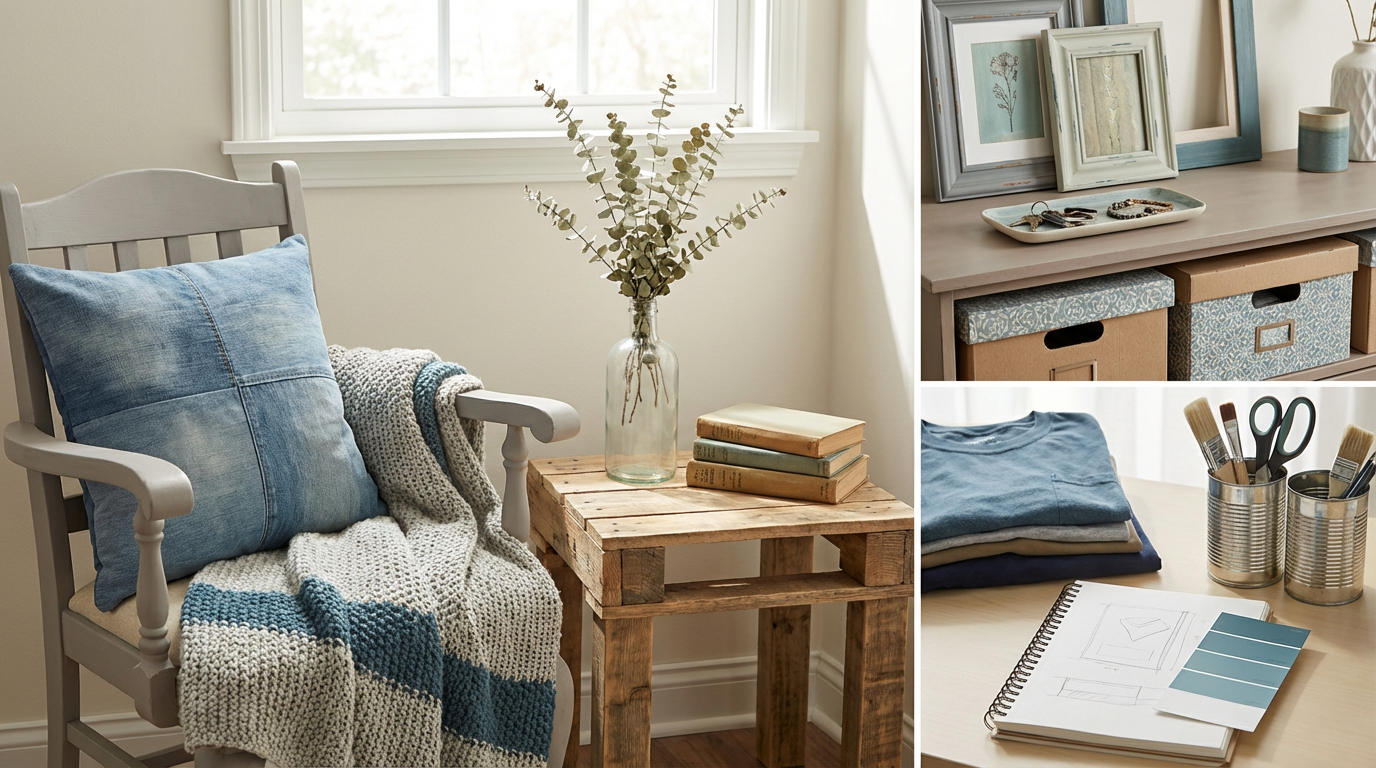
- Upcycle old jeans into throw pillow covers or a patchwork floor cushion for the living room.
- Upcycle tshirts into braided rugs, soft coasters, or plant hanger cords.
- Upcycle sweaters into cozy cushion covers, hot water bottle covers, or winter slipcovers for stools.
- Upcycle old sheets into cloth napkins, cleaning rags, simple curtains, or reusable gift wrap.
Containers, bottles, and little details
- Upcycle glass bottles into simple vases, bedside carafes, or soap dispensers with pump tops.
- Upcycle wine corks into coasters, trivets, or a small pinboard framed in an upcycled picture frame.
- Upcycle tin cans into desk organizers, utensil holders, or mini planters with a fresh coat of paint.
- Upcycle plastic bottles into drawer organizers, kids’ craft caddies, or small hanging planters.
- Upcycle cardboard boxes into storage bins covered with fabric, wrapping paper, or old maps.

Decor, books, and frames
- Upcycle old books into stacked side‑table risers, book‑page garlands, or simple wall art in a frame.
- Upcycle picture frames with new paint, fabric backing, or by turning them into jewelry organizers using mesh or lace.
- Upcycle old jewelry into drawer pulls, framed art, or decorative accents on photo frames and boxes.
- Upcycle broken crayons by melting them into fun new crayon shapes in silicone molds for kids’ art.
Furniture & bigger statements
- Upcycle old furniture with new hardware, paint, or by changing how you use it (like turning an old dresser into a bathroom vanity).
- Upcycle old chairs with fresh paint, new fabric seats, or by turning one into a plant stand.
- Upcycle an old dresser into a media console, entryway piece, or toy storage with labeled drawers.
- Try upcycle pallets furniture projects like a coffee table, shoe rack, or simple bench for the balcony.
- Upcycle electronics parts (like old keyboards or circuit boards) into quirky wall art, coasters, or desk organizers if you love a techy vibe.
A Before & After Story: From Random Clutter to Cozy Corners
Picture this: your entryway is full of cardboard boxes, plastic bottles waiting for recycling, and a sad old chair that doesn’t match anything. The living room shelves are stacked with old books and random glass bottles from parties. It feels chaotic, and even though you want a Pinterest‑worthy home, it just feels like too much work.
Now imagine this instead: the cardboard boxes are now neat fabric‑covered storage bins, that old chair is painted a calm blue and holds a cozy sweater cushion, and the glass bottles are grouped as simple vases on the shelf. Your old dresser has become an organized entryway command center, with a tray made from an old picture frame and a bowl that used to be “just” old dishes. Same home, same stuff—just intentionally upcycled.
Mindset Shifts That Make Upcycling Stick
The biggest difference between “I’ll upcycle someday” and a home full of meaningful pieces is mindset, not skill. A few gentle mindset shifts make upcycling ideas for home feel like a calming ritual instead of another chore on your list.
Try these thoughts when you feel stuck:
- “I don’t have to fix everything today. One small project is enough.”
- “It’s okay if it looks handmade; that’s part of the charm.”
- “I’m allowed to let go of what I truly won’t use, even if it once cost money.”
- “Every time I upcycle one thing, my home gets a little calmer.”
Two affirmations to repeat when you feel overwhelmed by clutter:
- “I create a cozy home one tiny project at a time.”
- “My space doesn’t have to be perfect to feel peaceful.”
Common Upcycling Mistakes to Avoid
Even with the best intentions, a few common mistakes can make upcycling feel frustrating or cluttered instead of calming. Keep an eye out for these pitfalls:
- Starting too many projects at once and finishing none.
- Using every bright paint color so your home feels noisy instead of cozy.
- Keeping items “for someday” without a clear plan, which just creates organized clutter.
- Skipping surface prep (cleaning, sanding, priming), so paint chips or peels quickly.
- Ignoring function—making decor you don’t actually need or have space for.
- Trying advanced furniture flips before you’ve tried simpler projects like tin cans or picture frames.

How to Use a Simple Upcycling Planner or Tracker
Because upcycling projects can easily pile up in your brain, a tiny on‑paper planner helps keep things realistic. You can use a simple printable or notebook spread with three basic sections:
- “Project Ideas” – a running list like “upcycle old dishes into a jewelry tray” or “upcycle electronics parts into wall art.”
- “This Month’s Projects” – two or three realistic micro‑projects you actually intend to do.
- “Finished & Styled” – a quick note when you finish something and where it now lives in your home.
Use symbols for time and energy: low‑energy projects (like upcycle wine corks into coasters) get a single dot, bigger ones (like upcycle old dresser into entryway storage) get three dots so you can choose based on how you feel that day. Over time, your planner becomes a little visual history of how your home has evolved through simple upcycling ideas.
Next Steps + Free Resource Idea
If you’re feeling excited but also a tiny bit overwhelmed, your next step is simple: pick one corner of your home and one category of stuff. Maybe it’s your living room and glass bottles, or your bedroom and old clothes. From there, choose one project from the ideas above—like upcycle old chairs with new paint, or upcycle old dishes into a bedside catch‑all—and actually schedule it for this week.
To make this even easier, imagine having a small printable bundle: an upcycling ideas checklist, a monthly project planner, and a simple habit tracker to remind you to do one tiny project each week. You can recreate this in a notebook or bullet journal, or grab a printable version from thecluttered.com when it’s available.
FAQs About Upcycling Ideas for Home
How do I start upcycling if I have almost no free time?
Start with projects that take 30 minutes or less and use what you already have on hand. Upcycle broken crayons into new multicolor crayons, upcycle cardboard boxes into covered storage bins, or upcycle glass bottles into vases with nothing more than a rinse and a bit of twine. Choose one evening a week or a Sunday afternoon as your “upcycling pocket” instead of trying to fit it in every day. Over time, these tiny windows add up to a big transformation without stealing your whole weekend.
What are the best beginner‑friendly upcycling projects?
Beginner‑friendly projects are the ones that don’t require power tools or advanced skills. Upcycle tshirts into cleaning rags or braided coasters, upcycle old sheets into cloth napkins, upcycle tin cans into desk organizers, or upcycle plastic bottles into shallow drawer dividers. You can also upcycle old books into simple stacked risers under plants or decor, and upcycle wine corks into easy coasters with just hot glue. Once those feel easy, you can move on to upcycle picture frames, small stools, or side tables.
Can I upcycle in a very small apartment?
Absolutely—small spaces are actually perfect for smart, intentional upcycling ideas for home decor. Focus on projects that add storage or vertical organization, like upcycle cardboard boxes into labeled closet bins, or upcycle pallets furniture into a narrow shoe rack or wall shelf. Upcycle old chairs into slim plant stands or bedside tables, and use upcycle old books and glass bottles as styled decor instead of having them stuffed in cabinets. The key is to avoid massive projects and focus on pieces that help your small space work harder.
What if I’m not “creative” or artistic?
You don’t need to be naturally artistic to upcycle; you just need a few simple formulas. Stick to neutral paint plus a calm accent like #2D5F7B, and repeat the same techniques—like painting, basic gluing, and simple fabric wrapping—across different items. Follow tutorials for specific projects like upcycle old jewelry into framed art or upcycle electronics parts into geometric wall decor so you’re not starting from scratch. The more you practice, the more your own style shows up, and imperfections become part of the cozy, handmade vibe.
How do I keep upcycling from turning into more clutter?
Give every potential project a clear “job” before you keep it. If you can’t quickly list how you’ll use that object—like “this tin can becomes a pen holder” or “this old dresser becomes TV storage”—it goes into recycling or donation instead. Use a small bin or shelf as your “upcycle parking lot” and don’t let it overflow; when it’s full, you either complete a project or let something go. Your planner or tracker can also help you see which projects you actually finish, so you can stop saving categories you never touch.
Start Small and Let Your Home Evolve
You don’t need a full weekend makeover or a massive budget to start playing with upcycling ideas for home. One denim pillow cover, one glass bottle vase, or one freshly painted old chair is enough to change how a corner of your home feels. As you practice, you’ll start seeing possibilities everywhere—from upcycle old furniture projects to tiny crafts using broken crayons and electronics parts. Save this post, pick one tiny project for this week, and follow @theclutteredblog on Pinterest for more cozy, sustainable ideas that grow with your real life.