
















If your toddler goes from giggles to meltdown in 0.3 seconds, you are so not alone — this is literally their brain still wiring itself. Using Montessori emotional regulation activities for toddlers is a gentle way to help them understand their big feelings instead of just “stopping” the tantrum. These ideas focus on simple calm-down activities, predictable routines, and hands-on tools your toddler can actually use by themselves. We’ll walk through a quick overview, key elements, step‑by‑step setup, easy ideas for busy days, and a free printable checklist you can keep on the fridge. Save this guide for later, and come hang out with more cozy, calm toddler ideas by following @theclutteredblog on Pinterest.


Quick Peek at This Montessori Calm-Down Toolkit
- For parents of 1–3 year olds who are dealing with tantrums, big feelings, and constant mood swings.
- Focuses on gentle, Montessori‑inspired emotional regulation activities you can weave into everyday toddler routines.
- Includes calm‑down corner ideas, sensory play for emotional regulation, breathing games, and toddler‑friendly scripts.
- Offers quick ideas for busy moms, “low energy” days, and simple checklists you can print and stick on your fridge.
- Helps you build a calmer home, predictable rhythms, and a toddler who slowly learns to name and manage their feelings.

What Montessori Emotional Regulation Activities Are and Why They Help
Montessori emotional regulation activities are calm, hands‑on experiences that help toddlers notice what they feel in their bodies, name that feeling, and choose a simple tool to calm down. Instead of focusing on punishment or “good/bad” behavior, the Montessori approach treats emotions as information and gives the child concrete ways to respond. For toddlers, this might look like a peace corner, a calm‑down basket, deep breathing games, or simple sensory activities woven into their daily routine. The goal is not a perfectly calm child, but a toddler who slowly learns, “I feel mad. I can squeeze my ball and take a breath,” with you as their calm guide.
Why this matters in real life:
- Toddlers’ brains are still developing the part that handles impulse control and self‑regulation.
- Predictable routines and a prepared environment lower anxiety and reduce emotional overwhelm.
- Hands‑on activities (pouring, transferring, sensory bins) act like mini-meditations that regulate the nervous system.
- A calm, consistent response from the adult builds trust, emotional safety, and long‑term resilience.
Montessori emotional regulation activities aren’t about shutting down a tantrum quickly; they’re about showing your toddler that all feelings are welcome, and there are gentle tools to navigate them.
Key Elements of a Solid Montessori Emotional Regulation Routine
A thoughtful Montessori emotional regulation routine for toddlers usually has a few simple pillars that repeat day after day. When these elements are in place, even a very spirited toddler starts to feel safer and more capable with their big feelings.
Predictable Daily Rhythm
A predictable rhythm (not a minute‑by‑minute schedule) helps toddlers feel secure and less anxious. Think: wake‑up, breakfast, play, snack, outdoor time, rest, and so on, roughly in the same order each day. When they know what comes next, they’re less likely to feel out of control and spiral into meltdowns.
Calm, Prepared Environment
Montessori spaces are simple, ordered, and scaled to the child, and this calm environment itself is a powerful emotional regulation tool. Low shelves, a few carefully chosen toys, and a cozy reading corner mean less sensory overload. A specific “peace corner” or calm‑down spot gives toddlers a safe place to go when things feel too big.
Emotion Language and Naming Feelings
Toddlers don’t have the words yet, so they scream, hit, or flop instead. Narrating feelings (“You’re angry because I turned off the TV”) and reading books about emotions help them slowly link sensations to words. Simple tools like emotion cards, a feelings wheel, or puppets with different expressions fit beautifully with Montessori emotional regulation activities.
Hands‑On Calm‑Down Tools
Montessori emphasizes real, tactile materials, which work wonderfully for calming. Think squeeze balls, fabric to stroke, a glitter jar, or a sand timer they can flip when they need a reset. These tools go into a calm‑down basket or peace corner, always available but never forced.
Co‑Regulation with a Calm Adult
Before toddlers can self‑regulate, they need you to co‑regulate: your calm presence, soft voice, and steady body. Sitting nearby, offering a hug, or breathing together shows them what emotional regulation looks and feels like. Over time, they internalize this and begin using the Montessori calm‑down activities on their own.

Step-by-Step Guide to Creating Your Montessori Emotional Regulation Setup
Step 1: Observe Your Toddler’s Triggers
Before you set up anything, spend a few days just noticing when and where meltdowns happen. Is it always before naps, when transitions come too fast, or when there’s a lot of noise or clutter? Jot down patterns on your phone: times, places, what happened right before the big feelings. This helps you pick emotional regulation activities that actually match your toddler’s real life, not just a cute idea from Pinterest.
Step 2: Create a Simple Peace Corner
Choose a small corner of the living room or your toddler’s room and make it feel cozy but uncluttered. Add a soft rug or mat, a couple of pillows, maybe one stuffed animal, and a low basket with 3–6 calm‑down tools like a glitter jar, squeeze ball, or board book about feelings. Introduce this space during a calm moment by saying something like, “This is your cozy corner for when your feelings are big; we can breathe and rest here together.”

Step 3: Build a Calm-Down Basket
Gather 4–8 items that are safe, toddler‑friendly, and soothing to touch or watch. Ideas: a small mirror for checking facial expressions, a soft piece of fabric, a simple glitter jar, a squeeze ball, and one favorite picture book. Keep the basket consistent so your toddler can learn, “When I feel wild, these are my tools.” You can also add an emotion card or picture of a calm breathing pattern for older toddlers.
Step 4: Teach One Simple Breathing Game
Choose one deep breathing game and repeat it often, especially when your toddler is calm. For example, “Smell the flower, blow out the candle”: pretend to sniff a flower (slow inhale) then blow a candle (slow exhale). Practice together during story time or before bed so it becomes familiar before you try it mid‑tantrum. You might say, “Your body feels loud; let’s smell the flower and blow the candle together.”
Step 5: Add a Predictable Calm-Down Routine to Your Day
Pick one or two anchor points in the day where you’ll always include a quick regulation activity: after naps, after coming home, or before bedtime. This could be 5 minutes of sensory play, a mini yoga pose, or flipping a sand timer and reading a feeling book. Over time, this rhythm becomes a cozy habit that keeps emotions from piling up. On rough days, you can add an extra calm‑down moment instead of pushing through.

Practical Montessori Emotional Regulation Activities and Variations
Here are lots of concrete Montessori‑inspired emotional regulation activities for toddlers you can rotate through, depending on your energy and your child’s mood. Mix and match a few to create a calm‑down toolkit that fits your family.
On Busy Days
- Glitter Jar Reset: Shake a simple glitter jar and watch together until the “sparkles” settle, talking about how their feelings can settle too.
- Smell the Flower, Blow the Candle: Use this breathing game while your toddler sits on your lap at the kitchen table.
- One Song Dance Break: Play a calm song and sway together to release pent‑up energy before transitions.
On Low-Energy Days
- Sensory Bin Calm: Offer a small bin of rice, beans, or kinetic sand with just a couple of scoops or cups.
- Matching Feelings Cards: Lay out two or three emotion faces and ask, “Which face feels like you right now?”
- Soft Blanket Cuddle Corner: Sit in the peace corner under a soft blanket and quietly label what happened: “You felt mad when the toy broke.”
For Everyday Routines
- Feelings Check at Breakfast: Use a simple feelings wheel and ask, “How’s your face this morning – happy, tired, or grumpy?”
- Calm Transition Basket by the Door: Keep a small stress ball or fidget toy near the front door for hard transitions like leaving the park.
- Bedtime “Body Scan” Game: Gently talk through their body: “Are your feet sleepy? Your tummy? Your shoulders?” to help them relax.
For Big Tantrums and Aggression
- Safe Punching Pillow: Offer a dedicated “angry pillow” they can hit or squeeze instead of hitting people.
- Animal Walks: Suggest they stomp like a dinosaur or hop like a bunny to move frustration through their body.
- Co‑Regulation Hug: Kneel down, open your arms, and say, “I’m here when you’re ready for a hug,” staying close but not overwhelming.
For Social-Emotional Learning
- Emotion Story Time: Read books about feelings and pause to ask, “How is this character feeling? What helped them?”
- Puppet Role Play: Use simple puppets to act out common scenarios like toy sharing or leaving the playground.
- Nature Feelings Walk: On a walk, ask how different things might feel: “How do you think this small tree feels in the wind?”
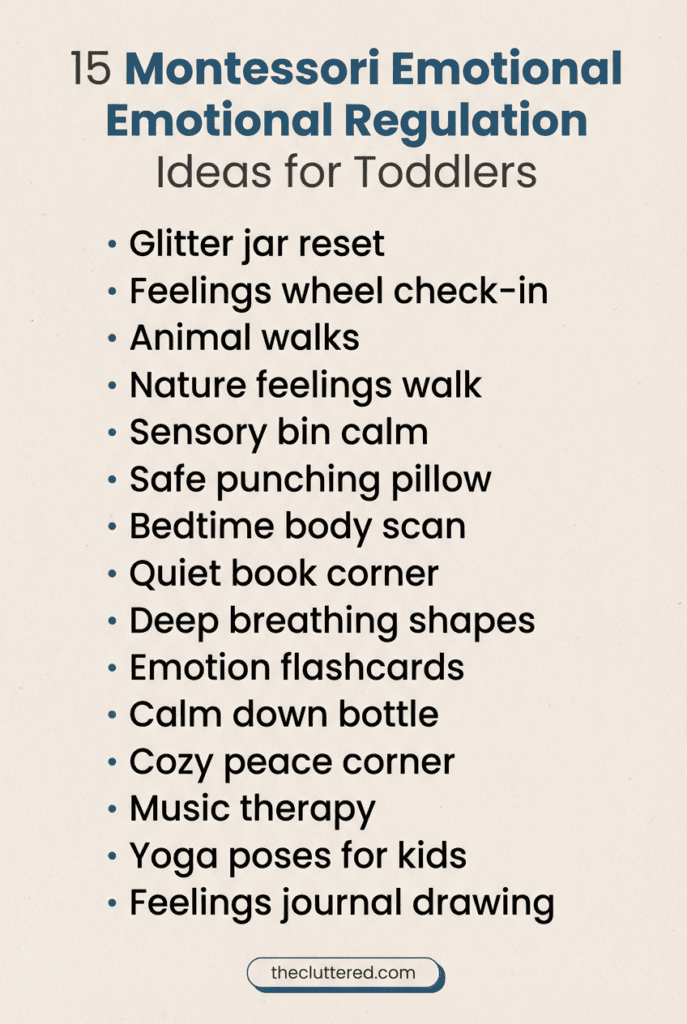
Before vs After: How These Activities Change the Day
Before using Montessori emotional regulation activities, your days might feel like constant emotional whiplash: sudden meltdowns, power struggles over tiny things, and you ending the day completely drained. Once you gently add a peace corner, a few breathing games, and a steady rhythm, you start to notice earlier signs of overwhelm and offer tools before things explode. Your toddler might still cry and yell (they’re human!), but they’ll also begin reaching for the calm‑down basket, choosing the peace corner, or using your shared breathing game. Over time, the overall vibe shifts from “we’re constantly firefighting” to “we have a few simple routines that help us both recover faster.”

How to Make It Stick (Habits, Boundaries, Mindset)
The secret is not doing every single activity — it’s picking a few Montessori emotional regulation ideas and repeating them consistently with warmth. Decide what’s non‑negotiable (like a simple bedtime calm‑down routine), and let the rest flex with your energy and season of life. Remember that toddlers will still have tantrums even with the best peace corner; this is developmentally normal, not a sign you’re failing.
A few mantras you can borrow when things feel heavy:
- “Big feelings are not bad feelings; they’re just loud feelings.”
- “My job is to stay steady, not perfect.”

When a day goes completely off the rails, lean on connection over perfection: a cuddle, a simple apology if you yelled, and starting fresh at the next calm‑down moment. Your toddler learns just as much from how you repair after conflict as they do from the calm‑down activities themselves.
Save-Friendly Visuals and How to Use Them
Think of your Pinterest saves as your tiny emotional regulation toolbox for exhausted days. The quick overview checklist pin gives you a bird’s‑eye view of the Montessori emotional regulation routine you’re building, perfect for a fast reset when you’re overwhelmed. The step‑by‑step routine pin walks you through what to try first (observe, corner, basket, breathing), so you don’t have to rethink everything when you’re tired.
The ideas list pin is your go‑to when your toddler is spiraling and your brain is blank — scroll, pick one idea, and try it. A planner or tracker preview pin can remind you to intentionally plan 1–2 calm‑down activities into your week instead of hoping they “just happen.” Save the pins that match what you want to focus on this week, like “calm corner setup” or “breathing games,” so they’re easy to find in the middle of chaos.

Next Steps
You don’t need a full Pinterest‑perfect setup to help your toddler right now — just pick one or two Montessori emotional regulation activities from this guide to test this week. Maybe that’s creating a tiny peace corner and choosing one breathing game, or adding a 5‑minute sensory calm‑down block before bedtime. Keep it gentle and flexible; if something doesn’t work, tweak it instead of tossing the whole idea. Save this post so you can slowly add more ideas over time, and follow @theclutteredblog on Pinterest for more calm, cozy, practical Montessori toddler routines.
FAQs About Montessori Emotional Regulation Activities for Toddlers
How early can I start Montessori emotional regulation activities?
You can start very simple emotional regulation activities as early as 12–18 months by labeling feelings, keeping routines predictable, and offering basic sensory calm‑down options. At this age, it’s mostly about your calm presence and environment, not expecting them to “control” themselves. As they approach age 2–3, you can add a small peace corner, a calm‑down basket, and one simple breathing game.
What if my toddler refuses the peace corner or calm-down basket?
Totally normal — the goal is to offer, not force. Introduce the peace corner during calm times, maybe with a cozy story, and let them explore the basket without pressure. In a meltdown, you can gently say, “Your feelings are big; I’ll be in the cozy corner if you want to sit with me,” so it stays a safe invitation, not a time‑out.
How do I handle tantrums in public with Montessori principles?
In public, think “simplify and connect.” Move to a quieter spot if you can, get down on their level, and calmly narrate what’s happening (“You’re so upset we have to leave the park”). Use one familiar tool like your breathing game, a comfort object in your bag, or a quick “big squeeze” hug. Later at home, you can reflect briefly and maybe add that scenario to your planner so you’re more prepared next time.
Is Montessori emotional regulation only for Montessori homes?
Not at all. These activities work in tiny apartments, mixed‑style homes, and with siblings of different ages. The heart of Montessori here is respect for the child, a prepared environment, and giving them real tools and choices — you can absolutely mix that with other parenting styles.
What if I lose my cool when my toddler melts down?
You’re human, and this will happen. When it does, repair matters more than perfection: offer a simple apology (“I yelled; I was feeling overwhelmed”), a cuddle, and then model a calm‑down tool together. This shows your toddler that everyone is still learning emotional regulation, even grown‑ups, and that relationships can be repaired after conflict.
You do not need to turn your home into a textbook Montessori classroom to support your toddler’s big feelings — a peace corner, a calm‑down basket, and a few gentle routines are already a huge step. Start tiny, notice what actually helps, and slowly build a Montessori emotional regulation rhythm that feels cozy for both of you. Save this guide so you can come back on hard days, and follow @theclutteredblog on Pinterest for more calm, clutter‑kind, toddler‑friendly ideas.