











If your living room feels a little flat, echoey, or “not quite finished,” your rug is probably doing less work than it could. Living room rug ideas aren’t just about pretty patterns; the right rug can make your space feel bigger, calmer, and more intentional. We’ll walk through the best rugs for living room comfort, a simple living room rug size guide, and fresh living room rug trends that actually work in real homes. Think cozy living room rug ideas for small spaces, modern living room rugs for open plans, and easy layered rug ideas in the living room that you can try this weekend. Save this post to your decor board and come hang out with @theclutteredblog on Pinterest for more calm home inspiration.


Why Your Living Room Rug Matters So Much
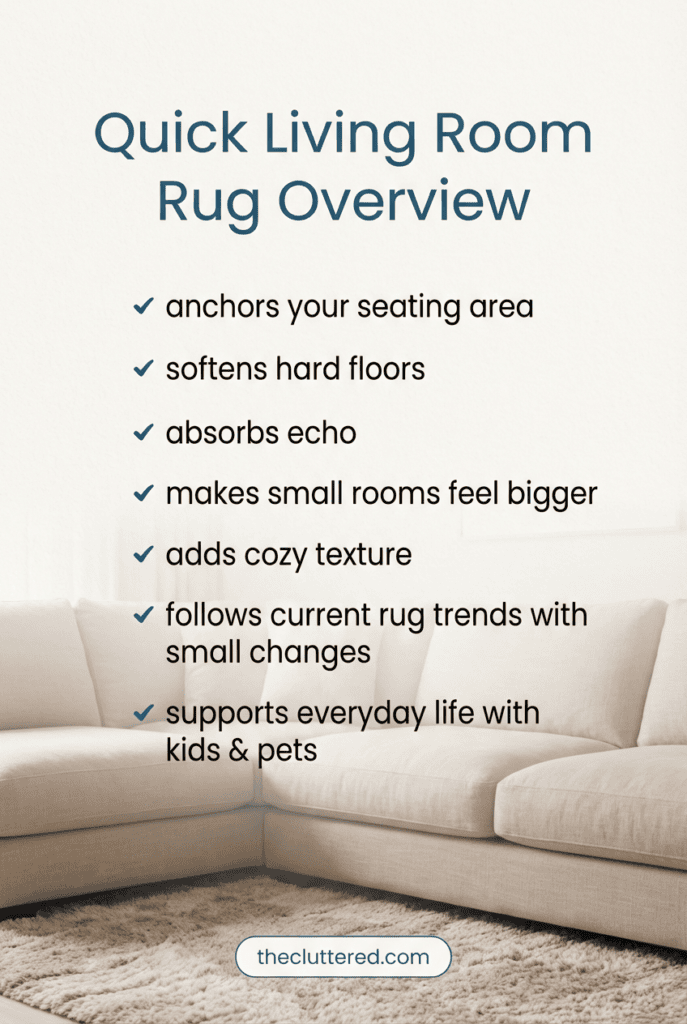
A good rug quietly anchors your entire living room: it absorbs sound, softens hard floors, and visually pulls your seating area together. When you choose the best rugs for living room comfort and durability, everyday life feels easier—kids can play on the floor, pets have a soft landing, and you’re not tiptoeing around cold tiles. The right rug size, style, and placement can make even a tiny apartment living room feel intentional instead of cramped. And with current living room rug trends (like textured rugs and oversized living room rugs), you can get that designer look without changing all your furniture. This guide breaks everything down so you can choose a rug with confidence, not overwhelm.
The Core Elements of a Great Living Room Rug
When you’re scrolling living room rug ideas, it helps to have a simple framework in mind. Every successful living room rug usually nails these key elements: size, material, texture, color, pattern, and placement. Size creates that “pulled together” look; material and texture decide how cozy and durable it feels; color and pattern influence how calm or bold the room reads. Placement is the quiet hero that makes modern living room rugs look intentional instead of like a floating island in the middle of the floor. Once you understand these pillars, you can mix living room rug trends with timeless choices so your space still feels current in a few years.

Living Room Rug Size Guide (So Your Rug Doesn’t Look Too Small)
Choosing the right size is where most people get stuck, so let’s keep it simple with a living room rug size guide you can actually remember. In most average living rooms, 8′ x 10′ or 9′ x 12′ rugs work best because they allow either the front legs or all legs of your sofa and chairs to sit on the rug, which instantly makes the room feel more cohesive. In very small living rooms or studio apartments, a 5′ x 8′ can work, but it should at least hold the coffee table and touch the front legs of your seating so it doesn’t look like a tiny bath mat floating in the middle of the room. For spacious, open‑plan layouts or big sectionals, oversized living room rugs (9′ x 12′, 10′ x 14′ and up) help define the seating zone inside a large, open space. When in doubt, go one size bigger than your instinct—you almost never regret a slightly larger rug, especially in a living room.

Step‑by‑Step: How to Choose the Right Rug for Your Living Room
Step 1: Get Clear on How You Use the Space
Start by asking how your living room really works most days: movie nights, kids’ play, pets, guests, or a mix of everything. High‑traffic family rooms do best with durable, low‑pile or flatweave rugs that are easy to vacuum and spot clean. If your living room is more of a quiet, adults‑only space, you can lean into plush modern living room rugs with more texture and a softer feel. Knowing how you actually live helps you narrow down the best rugs for living room durability vs. pure coziness.
Step 2: Measure Your Seating Area
Measure the width of your sofa, the depth of your seating area, and how much floor you want visible around the edges. As a rule of thumb, aim for a rug that extends at least 20–30 cm wider than the sofa on each side so it doesn’t look undersized. Use painter’s tape to mark common rug sizes on the floor (like 5′ x 8′, 8′ x 10′, 9′ x 12′) and see how they feel in your room before you buy. This simple living room rug size guide hack saves you from expensive mistakes and returns.

Step 3: Choose Material and Texture
Material and texture make a huge difference in how cozy your living room feels day to day. Wool and cotton rugs tend to be soft, durable, and forgiving for family spaces, while jute and other natural fibers bring beautiful texture and a casual, neutral look. If you want cozy living room rug ideas that still handle spills, look for low‑pile textured rugs in wool or washable synthetics so you get depth without a dust‑collecting shag. Textured rugs in the living room—like subtle ribbing, small loops, or carved patterns—add visual interest without feeling busy.
Step 4: Pick Color, Pattern, and Style
Now for the fun part: deciding whether you want neutral living room rug ideas or something bolder. Neutral rugs in beige, greige, or soft gray are timeless and make it easy to switch out pillows and decor, while patterned rugs (geometrics, vintage‑inspired, stripes) can hide dirt and become a focal point. To tap into current living room rug trends, try monochrome rugs with interesting texture, vintage‑style faded patterns, or organic shapes that feel relaxed instead of rigid. If your furniture is already busy, let your rug be calm; if your furniture is simple and solid, your rug is where you can play.
Cozy Living Room Rug Ideas for Different Styles and Sizes
This is where we turn the living room rug ideas into real‑life examples you can borrow and tweak for your space. Use these as inspiration for small living rooms, rentals, and bigger family rooms that need a refresh without starting from scratch. Mix and match your favorite cozy living room rug ideas with your existing furniture so it feels personal and not like a catalog.
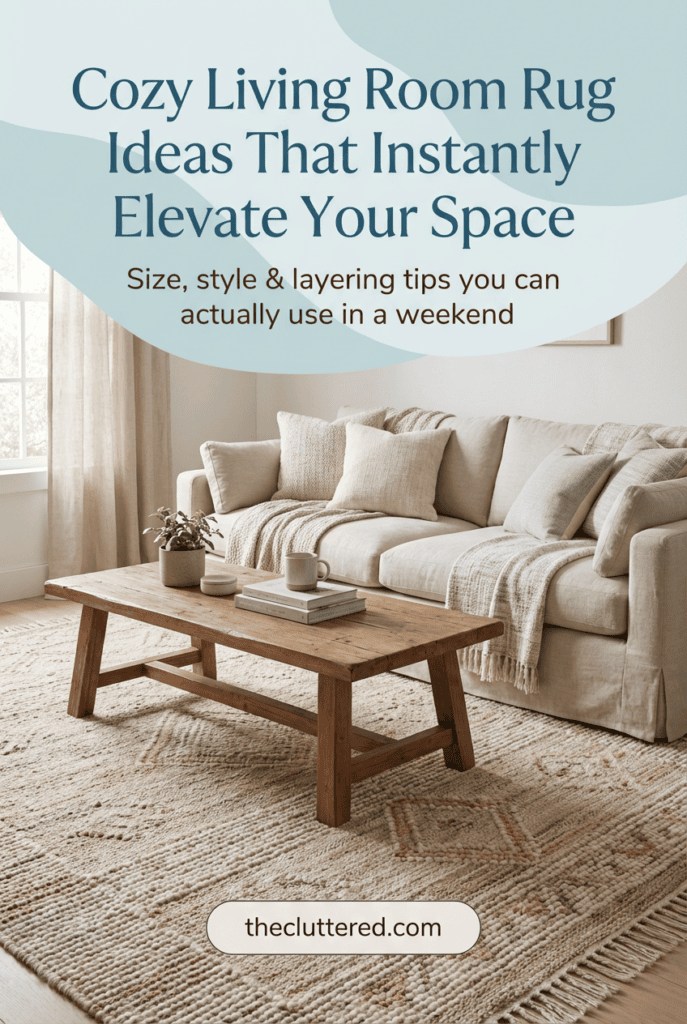
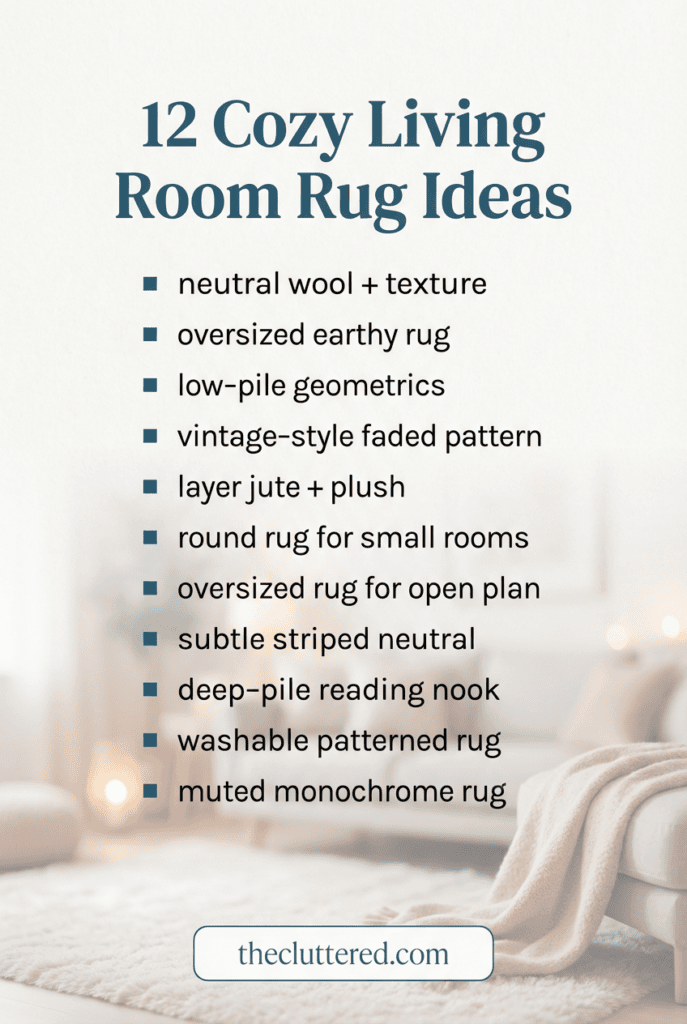
- Neutral wool rug with subtle texture under a light sofa for a soft, airy, calm look.
- Oversized living room rug in a warm, earthy tone (terracotta, taupe, or sage) to ground an open‑plan space.
- Low‑pile geometric rug in soft gray and ivory for modern living room rugs that still feel cozy.
- Vintage‑style faded rug in muted blues and rusts to add character to a simple rental living room.
- Layered rug ideas in the living room: a large jute rug on the bottom with a smaller, plush patterned rug on top.
- High‑contrast black‑and‑white rug in a minimalist room to create a bold but still clean focal point.
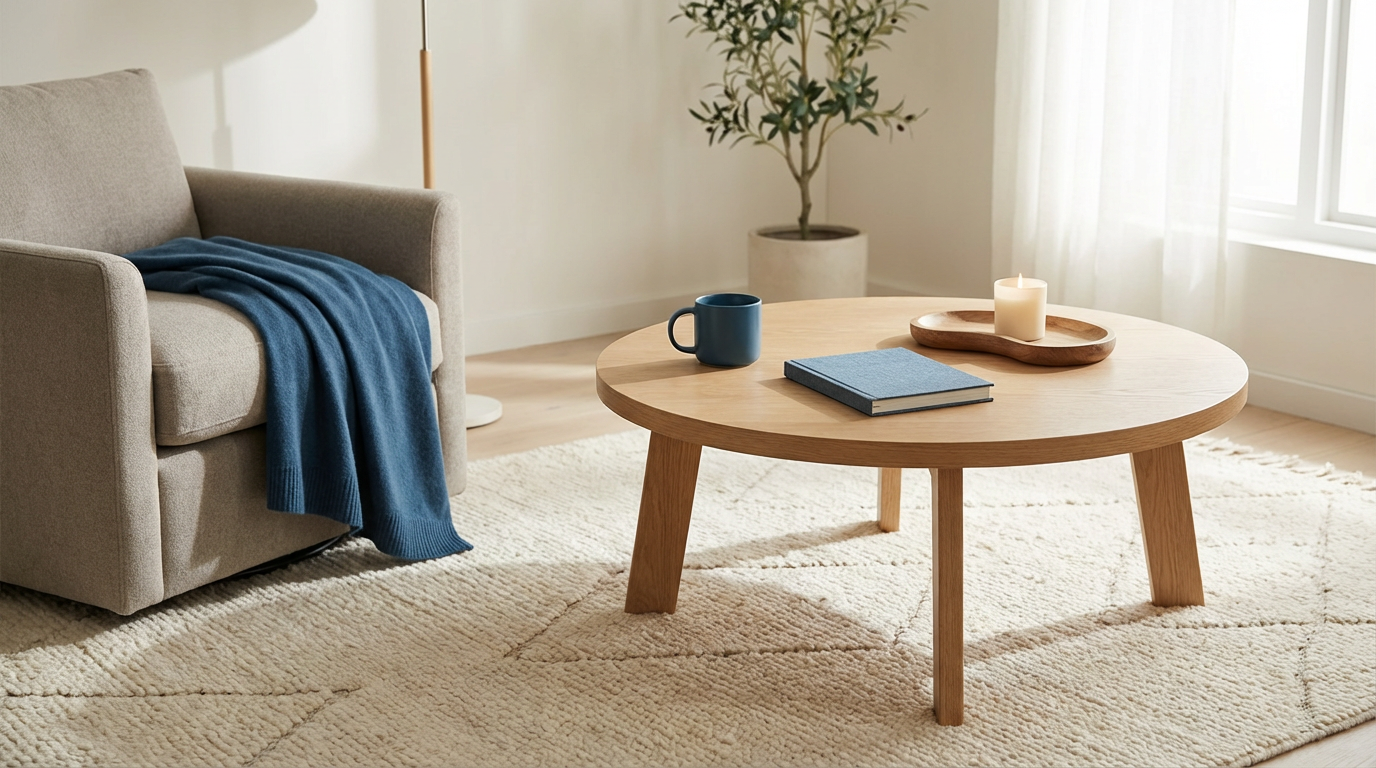
- Round textured rug centered under a round coffee table in a small square living room.
- Oversized living room rugs with all furniture legs on top in a big family room to create a “living zone” inside an open plan.
- Neutral living room rug ideas with subtle stripes to elongate a narrow room visually.
- Deep‑pile textured rugs in the living room reading corner to create a cozy nook by a chair and lamp.
- A washable patterned rug for homes with kids and pets so spills feel less stressful.
- A muted monochrome rug paired with colorful throws and pillows so you can change your accent colors seasonally.
Before & After: How the Right Rug Transforms Your Living Room
Imagine a “before” living room: small rug floating under the coffee table, echoey, lots of bare flooring, and furniture that feels scattered. The room might technically be furnished, but it still feels unfinished and a little cold, even if you’ve added cushions and throws. Now picture the “after”: an oversized living room rug extends beyond the sofa, all front legs sit on the rug, and there’s a soft, textured surface underfoot. Suddenly the space feels intentional, warmer, and more cohesive—like a living room you actually want to curl up in at the end of the day. This simple change is why living room rug ideas (especially size and texture) are some of the highest‑impact updates you can make.

Layered Rug Ideas for a Collected, Cozy Look
Layered rug ideas in the living room are perfect when you want more texture, warmth, or flexibility. Start with a large, neutral base rug—often a jute, sisal, or flatweave in a light natural tone—that covers most of the seating area. Then add a smaller, cozier rug (like a plush wool, shag, or patterned rug) on top, centered in front of the sofa or under the coffee table. This approach is great for renters, because you can use a more affordable base rug to cover a large area and splurge on a smaller rug with more personality and color. It also lets you experiment with living room rug trends (like bold patterns or unusual shapes) without committing to a huge statement piece.
Neutral and Textured Rugs for Calm, Modern Living Rooms
If your brain craves calm at the end of the day, neutral living room rug ideas are your best friend. Think soft beiges, warm greiges, light oatmeal tones, or gentle charcoal—colors that don’t shout for attention but still ground the space. To keep neutral rugs from feeling flat, lean into textured rugs in the living room: subtle stripes, ribbed patterns, heathered yarns, or small loops that catch the light differently throughout the day. These modern living room rugs work beautifully with layered textiles like throws, cushions, and curtains, and they pair well with both minimalist and cozy, collected styles. When everything else in the room is busy, a neutral, textured rug becomes the calm base that ties it all together.
Make It Last: Habits and Mindset for a Cozy Rug You Actually Enjoy
A living room rug only feels cozy if it’s not stressing you out with constant crumbs and stains. Instead of aiming for perfection, build small habits around your rug: a quick nightly crumb sweep, shoes‑off near the living room, and a light vacuum routine a couple of times a week. Choose rug materials and colors that match your real life—if you have kids, pets, or snacks on the sofa, a forgiving pattern or mid‑tone color will always feel calmer than a bright white rug. One simple mindset mantra to keep: “My living room doesn’t have to be perfect to feel cozy and cared for.” Let your rug support your everyday life, not become another source of pressure.
How to Use a Simple Rug Planner to Map Your Space
Before you commit to a rug, it helps to “plan it out” on paper or on your tablet so you can see how size and placement will feel. Sketch your living room shape, add your sofa, chairs, and coffee table, then draw different rug sizes underneath—5′ x 8′, 8′ x 10′, 9′ x 12’—to see which layout looks most balanced. Use this as your personal living room rug size guide, especially if your room layout is tricky or slightly awkward. You can even note down cozy living room rug ideas you love (like layered rugs or textured neutrals) next to each sketch so you have a mini rug planner to reference while shopping. This simple planner habit turns random scrolling into a calm, intentional decision.
Next Steps: Free “Cozy Rug Corner” Checklist Idea
If you’re feeling inspired but still a bit overwhelmed, start with just one zone: your “cozy rug corner.” Choose a small area—maybe by the sofa, a reading chair, or near the window—and use this post as a mini checklist: pick a size that fits, a cozy texture, and a color that makes you exhale. You can turn this into a simple printable or phone note where you list your room measurements, favorite modern living room rugs, and a few living room rug trends you want to try later. Treat this as your personal toolkit for building a calm, layered, and cozy living room over time rather than in one big, stressful shopping trip.

FAQs About Living Room Rug Ideas
How do I choose the right rug size for my living room?
Start by measuring your seating area, not just the coffee table. In most average‑sized living rooms, 8′ x 10′ rugs are a safe starting point, while 9′ x 12′ rugs work well for larger spaces or open‑plan layouts. Aim for at least the front legs of your sofa and chairs to sit on the rug so the seating area feels unified rather than scattered. If you’re in a very small space, a 5′ x 8′ rug can work, but make sure it still touches the furniture so it doesn’t look too tiny. When in doubt, tape out the size on the floor and choose the bigger option if both feel okay.
What are the best rugs for living room spaces with kids and pets?
For family living rooms with kids and pets, look for durable, low‑pile rugs in materials like wool, cotton, or high‑quality washable synthetics. These handle crumbs, playtime, and little spills better than deep shag rugs that trap everything. Patterns and mid‑tone colors are your friend—they hide everyday mess much better than solid white rugs. A washable area rug can be a game changer if food and crafts happen in your living room often. Pair your rug with a rug pad for extra cushioning and to keep it from sliding during rough‑and‑tumble play.
Which living room rug trends are worth trying if my style is simple?
If your style leans minimal or neutral, start with living room rug trends that focus on texture and subtle pattern instead of loud colors. Monochrome textured rugs (like tone‑on‑tone stripes or carved patterns) instantly make a room feel more modern without overwhelming it. Vintage‑style faded patterns in soft tones can add character while still reading as calm. You can also try organic‑shaped rugs or slightly oversized living room rugs to give your space that relaxed, designer feel. The key is to keep the palette soft and let the texture do the talking.
How can I make a small living room feel bigger with a rug?
In a small living room, a larger rug almost always makes the space feel bigger because it unifies the furniture instead of chopping the floor into tiny pieces. Choose a rug that extends under the front legs of the sofa and chairs so the seating area reads as one zone. Neutral living room rug ideas in lighter tones help bounce light around the room, while subtle stripes can visually lengthen or widen the space. Avoid lots of busy, high‑contrast patterns in very tight rooms, or keep the pattern soft and slightly faded. A round rug can also be a smart choice in a small, boxy room to soften corners and add movement.
How do I keep my living room rug looking nice without a ton of effort?
Focus on simple routines instead of perfection. A quick daily or every‑other‑day crumb sweep and a weekly vacuum go a long way, especially for textured rugs in the living room. Rotate your rug every few months to even out fading and wear if you get a lot of sunlight. Spot clean spills as soon as they happen, but don’t panic over every mark—choose materials and patterns that hide “life” well so you can relax. Remember your mindset mantra: your living room rug is there to support your life, not to be the star of the show every single day.
Start Small and Build Your Cozy Rug Story
You don’t have to nail every living room rug idea in one weekend to have a home that feels good. Start with one decision—maybe sizing up your current rug, adding a textured neutral, or experimenting with layered rug ideas in the living room. Each small change adds up to a space that feels softer, calmer, and more “you” every time you walk in. Save this post for later, pin your favorite ideas, and follow @theclutteredblog on Pinterest for more cozy, clutter‑friendly living room inspiration.