


















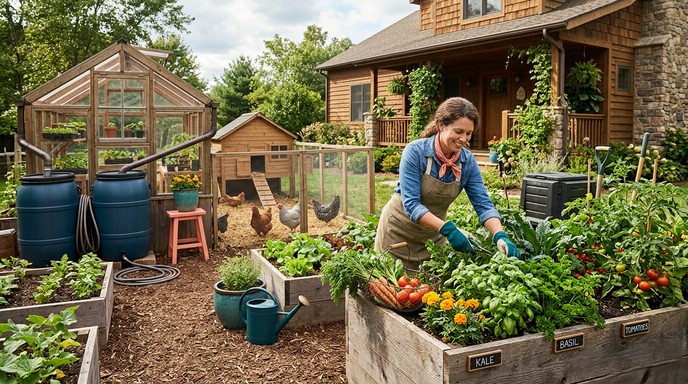
The Self-Sufficient Backyard Review: Is This Homesteading Guide Worth It in 2026?
If you love the idea of growing more of your own food, cutting utility dependence, and turning an ordinary property into something more useful, you have probably noticed how overwhelming homesteading advice can feel. One guide tells you to buy more gear, another assumes you have endless land, and a lot of it skips the practical details people actually need.
The Self-Sufficient Backyard takes a different angle. It is built around small space, staged progress, and realistic projects that aim to help regular homeowners, suburban families, retirees, and beginner homesteaders become more self-reliant without turning life upside down.
At a glance
- Product The Self-Sufficient Backyard
- Tagline A practical guide to building a low maintenance backyard homestead with food, water, energy, and income ideas
- Overall rating 4.6 out of 5 stars
- Best for Beginners, suburban homeowners, retirees, and anyone who wants more self-reliance without needing a huge farm
- Main strengths Broad topic coverage, step by step ideas, small space focus, low cost mindset, strong beginner appeal
Quick pros
- Covers food, water, power, storage, compost, chickens, and greenhouse planning
- Designed with small backyards and staged progress in mind
- Useful for people with limited time or physical strain concerns
- Includes bonus digital resources
- Backed by a 60 day money back guarantee
Things to know
- Better as a broad action guide than a deep specialist manual on one topic
- Some readers may still need follow up research for advanced builds
- The page does not clearly display every technical specification up front

For a lot of people, the dream is not going fully off the grid tomorrow. It is having a smarter garden, lower grocery bills, backup water ideas, better food storage, and a backyard that actually works for your life instead of just sitting there. That is exactly why The Self-Sufficient Backyard is interesting.
It is not trying to sell you some fantasy of buying a massive property and disappearing into the woods next week. It focuses on making the most of what you have, even if your space is modest and your schedule is busy. After going through it, I would say it is a very good fit for beginners and practical minded homeowners, though less ideal for someone who only wants highly technical engineering depth on one narrow subject.
Quick Take: Is The Self-Sufficient Backyard Worth It?
Yes, for the right person, I think it is. The biggest value here is not one single project. It is the way the guide pulls together food growing, preservation, water systems, greenhouse thinking, compost, chickens, medicinal herbs, and low maintenance backyard design into one practical roadmap.
If you want one resource that helps you think more clearly about self-reliance without needing acres of land or a giant startup budget, this is worth a serious look. If that sounds like you, you can check today’s details and access options here.
Key Specs and Features of The Self-Sufficient Backyard
At its core, this is a digital homesteading guide built for people who want a more independent lifestyle starting from a normal home, modest plot, or backyard. The content blends planning, project ideas, system design, and practical examples rather than focusing on just one niche.
| Feature | What it means for you |
|---|---|
| Digital product | Easy to access and revisit while planning projects at home |
| 40 years of lived experience behind the system | Feels grounded in trial and error rather than theory alone |
| Designed to work with small properties | Helpful if you are in suburbia or on a limited lot |
| Guidance for food, water, power, storage, and income ideas | Gives a fuller picture of backyard self-reliance |
| Claims roughly 1,020 square feet per person for food self sufficiency methods | Encouraging benchmark for people who assume they need huge acreage |
| Step by step project style content | More useful for action takers than vague inspiration only |
| Bonus resources included | Adds extra value if you like having supporting material |
| 60 day money back guarantee | Reduces the risk if you are on the fence |
What stood out to me is how broad the guide is. You are not just getting garden bed ideas. You are also looking at rainwater collection, hybrid electricity concepts, medicinal herbs, root cellars, greenhouse upgrades, seed saving, food preservation, compost systems, chicken setup advice, and even possible backyard income angles.
A lot of readers do not need more random tips. They need one practical resource that helps connect the dots. That is where this guide seems strongest.
My Experience Using The Self-Sufficient Backyard
If you are the kind of person who likes to learn by imagining how ideas would actually fit into your own week, this guide is pretty easy to work with. The tone feels like it is speaking to regular people who may be curious, motivated, and maybe a little overwhelmed.
My first impression was that it tries to remove a lot of the intimidation factor from homesteading. Instead of pushing an all or nothing lifestyle leap, it leans into staged progress. That alone makes it feel more realistic for busy homeowners or couples who are just trying to become a bit less dependent on stores and utilities.
In day to day use, I can see this being the kind of guide you read in sections. One weekend you might focus on water collection. Another week you might sketch out raised beds, compost, or greenhouse placement. During colder months you might revisit the parts on indoor growing, preservation, and backup systems.
The best surprise is how often the content circles back to practical limits such as time, land, money, and physical strain. If you are older, dealing with back pain, or simply not trying to turn every spare minute into hard labor, that emphasis is refreshing. The trade off is that readers who already know a lot may wish some sections went even deeper technically.
Design and Build of the Information
Score 9 out of 10This is not a physical tool or machine, so the design question here is really about structure and usability. The material appears to be organized around actual backyard systems and projects, which makes it easier to connect ideas to real life instead of bouncing through abstract theory.
The strongest design choice is scope. It looks at a backyard as an integrated system. Food, water, compost, energy, preservation, and shelter for beneficial creatures are treated like parts of one ecosystem. That is exactly how beginners need to think if they want lasting results.
Ease of Use and Learning Curve
Score 8.8 out of 10One reason this works well for beginners is that it does not assume you are already an expert grower, builder, or off grid tinkerer. The messaging is consistently beginner friendly and suggests you can start in stages, even with limited time each week.
That matters because most people do not fail from lack of motivation. They fail because the learning curve feels too steep. This guide seems intentionally built to make the first few steps feel possible.
Performance and Real World Value
Score 9.1 out of 10The strongest performance category here is practical relevance. The book covers things people actually want help with right now, such as reducing grocery dependence, storing food, harvesting water, building low effort systems, growing in tight spaces, and creating more resilience in uncertain times.
I especially like that it includes both self sufficiency and small scale profit ideas. For some readers, that could mean microgreens, orchard planning, eggs, or more efficient use of a quarter acre lot. It makes the guide feel more useful than simple garden inspiration.
Low Effort and Accessibility
Score 9 out of 10This is one of the more compelling parts of the offer. The guide repeatedly positions itself as suitable for people who cannot or do not want to do constant heavy labor. There is even specific mention of gardening ideas that are easier on the back.
If you are retired, working full time, or trying to build a more useful backyard without wrecking your weekends, that is a major plus. Not every homesteading resource makes room for that reality.
Breadth of Topics
Score 9.3 out of 10There is a lot packed in here. Water collection, drinking water options, hot water ideas, hybrid electricity, medicinal herbs, pest control via wildlife habitat, root cellars, greenhouse concepts, indoor microgreens, seed saving, preservation, compost towers, chicken systems, and orchard thinking all appear inside the same ecosystem.
The upside is huge range. The downside is obvious too. A broad guide can point you in the right direction across many areas, but it may not replace a specialist manual for one advanced construction project. For most buyers, that is still a fair trade.
Value for Money
Score 9 out of 10Even without a clearly displayed public price on the section I reviewed, the value proposition is easy to understand. You are getting one digital guide plus bonus materials and a 60 day refund policy. That can be attractive if you want a single resource to help you think through many parts of backyard independence.
If one or two ideas from the guide help you improve yield, reduce wasted spending, or avoid a bad setup decision, the purchase could pay for itself pretty quickly.
Pros and Cons of The Self-Sufficient Backyard
Pros
- Excellent fit for beginners who want a practical starting point
- Strong focus on small spaces and suburban realities
- Covers far more than gardening alone
- Encourages staged progress instead of all or nothing thinking
- Includes low effort ideas and accessibility minded projects
- Useful mix of self reliance and extra income concepts
- Bonus digital resources add more value
- 60 day money back guarantee lowers the risk
Cons
- May feel too broad if you only want deep expertise on one topic
- Some advanced readers may want more technical details in certain sections
- Not every spec or format detail is obvious at first glance on the sales page
- The tone and positioning are more lifestyle driven than academic
If you care more about getting a useful, motivating roadmap than obsessing over technical perfection in a single niche, these drawbacks probably will not be dealbreakers. On the other hand, if you only need a specialist manual on solar wiring or greenhouse engineering, you may want a narrower resource.
The Self-Sufficient Backyard vs Alternatives
Most buyers are not deciding between this and nothing. They are usually choosing between a broad practical guide like this, a cheaper basic gardening resource, or a more technical specialist manual.
| Option | Best for | Key advantages | Main drawbacks |
|---|---|---|---|
| The Self-Sufficient Backyard | Beginners and practical homeowners wanting a wide self-reliance roadmap | Broad coverage, small space mindset, staged learning, low maintenance emphasis | Not the deepest single topic manual |
| Basic gardening books or blogs | People who only want help growing vegetables | Cheaper, simple, easy to browse | Usually do not cover energy, water, preservation, and resilience systems |
| Advanced specialist manuals | Readers focused on one technical system | Deeper detail in one area | Less helpful as a whole backyard strategy guide |
| Premium consulting or custom homestead planning | People with bigger budgets and complex land projects | Tailored recommendations | Far more expensive and less accessible |
Where this guide fits best is in the middle. It is more complete than a simple gardening handbook, but more approachable than a stack of specialist resources. That makes it especially useful if you are still figuring out your long term backyard vision and want something practical enough to act on now.

FAQ About The Self-Sufficient Backyard
Is The Self-Sufficient Backyard good for beginners?
Yes, that is one of its strongest selling points. The guide is positioned for regular people who want to become more self-reliant in stages, even if they do not have special skills yet.
Do you need a lot of land to use it?
No. A major part of the appeal is that it is designed around small properties and suburban style setups, not only large homesteads. That makes it more realistic for many readers.
Does it only focus on gardening?
Not at all. Gardening is a big part of it, but it also covers water, food preservation, compost, chickens, greenhouse planning, medicinal herbs, and even off grid energy ideas.
Is this better for retirees or younger families?
Honestly, both can benefit. Retirees may appreciate the low maintenance and easier on the back approach, while younger families may like the long term savings, resilience, and food security angle.
Is there any risk if I buy it and do not like it?
The product is backed by a 60 day money back guarantee, which makes trying it feel less risky. That is helpful if you are curious but still unsure whether the approach matches your goals.
Will this replace deeper technical resources?
Probably not for every advanced project. It is better viewed as a broad, action oriented guide that helps you plan smarter and start faster. For highly technical systems, you may still want specialist follow up material.
Final Verdict: Should You Buy The Self-Sufficient Backyard?
If you are looking for a realistic way to make your home more productive, resilient, and independent without pretending you have endless land, money, or spare time, The Self-Sufficient Backyard is a very strong option. It is especially appealing for beginners, suburban homeowners, retirees, and anyone who wants a smarter backyard plan rather than random disconnected tips.
If you already have advanced experience and only want deep technical instruction on a single build, you might be better served by a specialist manual. Still, for most readers, the broader roadmap is the real value here because it helps you see how all the pieces fit together.
Overall, I think the value for money looks solid because the guide combines practical backyard planning, self-reliance systems, bonus resources, and a refund window that keeps the risk lower. That is a pretty attractive mix for people who want useful guidance and not just homesteading daydreams.
If you are looking for a more self-sufficient backyard without making the whole process feel overwhelming, The Self-Sufficient Backyard is one of the more approachable options in this space. You can check the latest details and current offer here.
Small steps still count. You do not need to master everything at once to make progress. Save this post for later and follow @theclutteredblog on Pinterest so you have practical ideas ready when you want to start tiny.