
























Struggling with papers exploding from your binder? Our complete how to organize your binder guide with 60 essential steps transforms chaos into color-coded calm. Perfect for back to school binder organization, teacher binder setup, or professional project binders.
This Pinterest-famous binder organization checklist works for high schoolers juggling AP classes, college students surviving midterms, homeschool moms, and executives managing client folders. 60 categorized steps cover supplies → purge → category creation → daily maintenance.
Print, pin, and conquer paper clutter forever! Your organized binder system starts here.
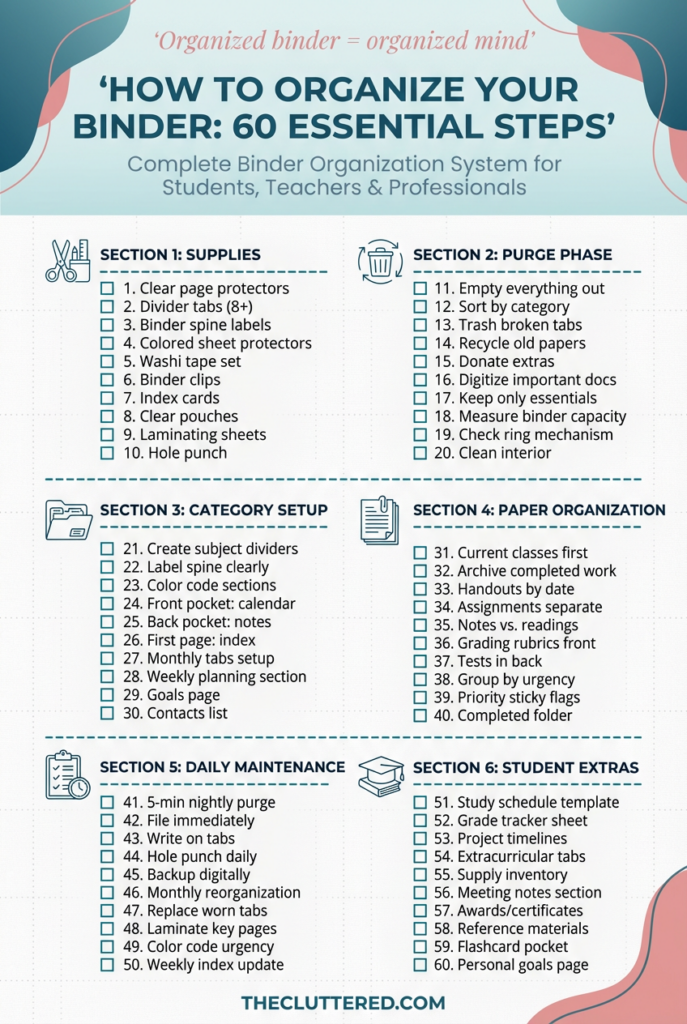
Why Binder Organization Changes Everything
82% of students report better grades with organized materials (StudyBlue). Professional binders cut meeting prep by 70%. Poor organization = lost assignments, missed deadlines, mental overload.
Our 60-step binder organization system delivers:
- Color-coded categories for instant access
- Daily 5-minute maintenance routine
- Archive system prevents overload
- Customizable for any age/subject
Complete 60-Step How to Organize Your Binder Checklist
Phase 1: GATHER SUPPLIES (10 Steps) – Right Tools First
Invest $20-30 for lasting organization.
- Clear page protectors (50-pack, heavyweight)
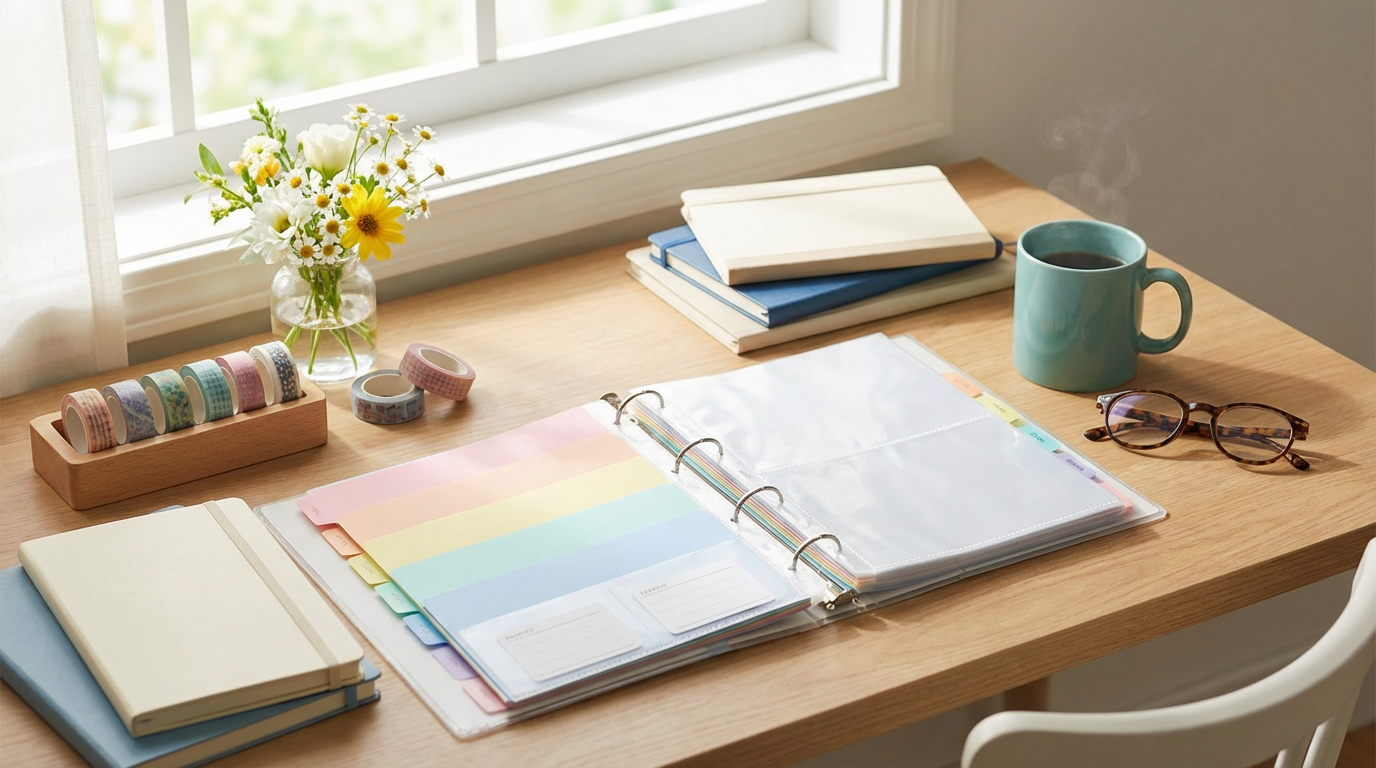
- Divider tabs (8+ colors, printable labels)
- Binder spine labels (laminated, custom printed)
- Colored sheet protectors (5 colors match tabs)
- Washi tape set (decorative section dividers)
- Binder clips (mark current pages)
- Index cards (quick reference tabs)
- Clear pouches (3D items: USBs, stickers)
- Laminating sheets (protect schedules/rubrics)
- 2-3 hole punch (consistent paper prep)
Phase 2: THE GREAT PURGE (10 Steps) – Start Fresh
Marie Kondo your binder – keep only joy/brilliance.
- Empty everything out (kitchen table works)
- Sort into piles by category (subject/priority)
- Trash broken/worn tabs (no salvaging)
- Recycle outdated papers (last year’s notes)
- Donate extras (old supplies to siblings)
- Digitize important documents (Google Drive scan)
- Keep only current semester (archive rest)
- Measure binder capacity (don’t overfill)
- Check ring mechanism (replace if broken)
- Wipe down interior (disinfect + dust)
Phase 3: CREATE CATEGORIES (10 Steps) – Custom Sections
Color = clarity. Match your brain’s filing system.
- Create subject dividers (Math=Blue, History=Red)
- Label spine clearly (1.5″ labels visible shelved)
- Color code every section (consistent system)
- Front pocket: semester calendar
- Back pocket: blank paper/notes
- First page: master index (page numbers)
- Monthly tabs (September, October, etc.)
- Weekly planning section (current week first)
- Semester goals page (SMART format)
- Contacts/cheat sheet (teachers, deadlines)
Phase 4: PAPER ORGANIZATION SYSTEM (10 Steps) – Logical Flow
Front to back = urgency to archive.
- Current classes first (today’s priority)
- Archive completed work (back section)
- Handouts organized by date (newest front)
- Assignments folder separate (due this week)
- Notes vs. readings (two sub-tabs)
- Grading rubrics upfront (know expectations)
- Tests/quizzes in back (study/review)
- Group by urgency (Week 1, Week 2)
- Priority sticky flags (due Friday=YELLOW)
- Completed work folder (graded papers)
Phase 5: DAILY/WEEKLY MAINTENANCE (10 Steps) – Stay Organized
5 minutes nightly = zero backlog.
- 5-minute nightly purge (file or trash)
- File papers immediately (same day rule)
- Write directly on tabs (current unit)
- Hole punch daily (don’t let pile grow)
- Digital backup (photo/scan key docs)
- Monthly reorganization (Day 1 new month)
- Replace worn tabs (have spares ready)
- Laminating rotation (protect most-used)
- Color code new urgency (flags system)
- Weekly index update (5-minute Sunday)
Phase 6: STUDENT/PROFESSIONAL EXTRAS (10 Steps) – Power Features
Level up your binder game.
- Study schedule template (weekly planner)
- Grade tracker sheet (Excel printout)
- Project timelines (Gantt chart pages)
- Extracurricular tabs (sports, clubs)
- Supply inventory (restock checklist)
- Meeting notes section (PTC, advisement)
- Awards/certificates (laminated display)
- Reference materials (formulas, vocab)
- Flashcard pocket (practice set)
- Personal goals page (quarterly reflection)
Binder Organization Mistakes to Avoid
- ❌ Overstuffing (max 80% capacity)
- ❌ No color system (everything blends)
- ❌ Weekly filing (daily = 5 mins, weekly = 45)
- ❌ No index (searching = frustration)
- ❌ Mixing subjects (one binder per major class)
- ❌ No purge routine (grows like weeds)
Supplies Shopping List by Budget
| Budget | Must-Haves | Nice-to-Haves |
|---|---|---|
| $10 | Dividers, page protectors | Washi tape |
| $25 | + Hole punch, labels | Colored tabs |
| $50 | + Laminator, pouches | Custom spine labels |
Digital Binder Companions (Hybrid Approach)
- GoodNotes/Notability (iPad PDF annotation)
- Google Drive folders (mirror physical)
- Notion databases (digital index)
- Todoist (assignment tracker)
FAQ: How to Organize Your Binder
How often should I reorganize my binder?
Weekly 15-minute Sunday reset + monthly full reorganization. Daily 5-minute filing prevents buildup.
What’s the best binder size for high school?
1.5-2 inch holds one semester per subject. Color-code binders themselves (Math=Blue, English=Green).
Should I keep EVERY graded paper?
No! Keep one sample per grading period + anything below B-. Digitize the rest.
How do I organize a teacher binder?
Same system + tabs for: lesson plans, student data, parent comms, standards alignment, sub plans.
What if I lose papers between classes?
Daily backpack purge + portable file folder (current week papers only).
Can adults use this student binder system?
Yes! Perfect for project binders, client folders, recipe collections, medical records.
Your Organized Binder Awaits!
[Download Free Binder Organization Templates Pack]
Transform binder chaos to calm with our 60-step system. Pin it, print it, live it! Tag @theclutteredblog with your before/after.