











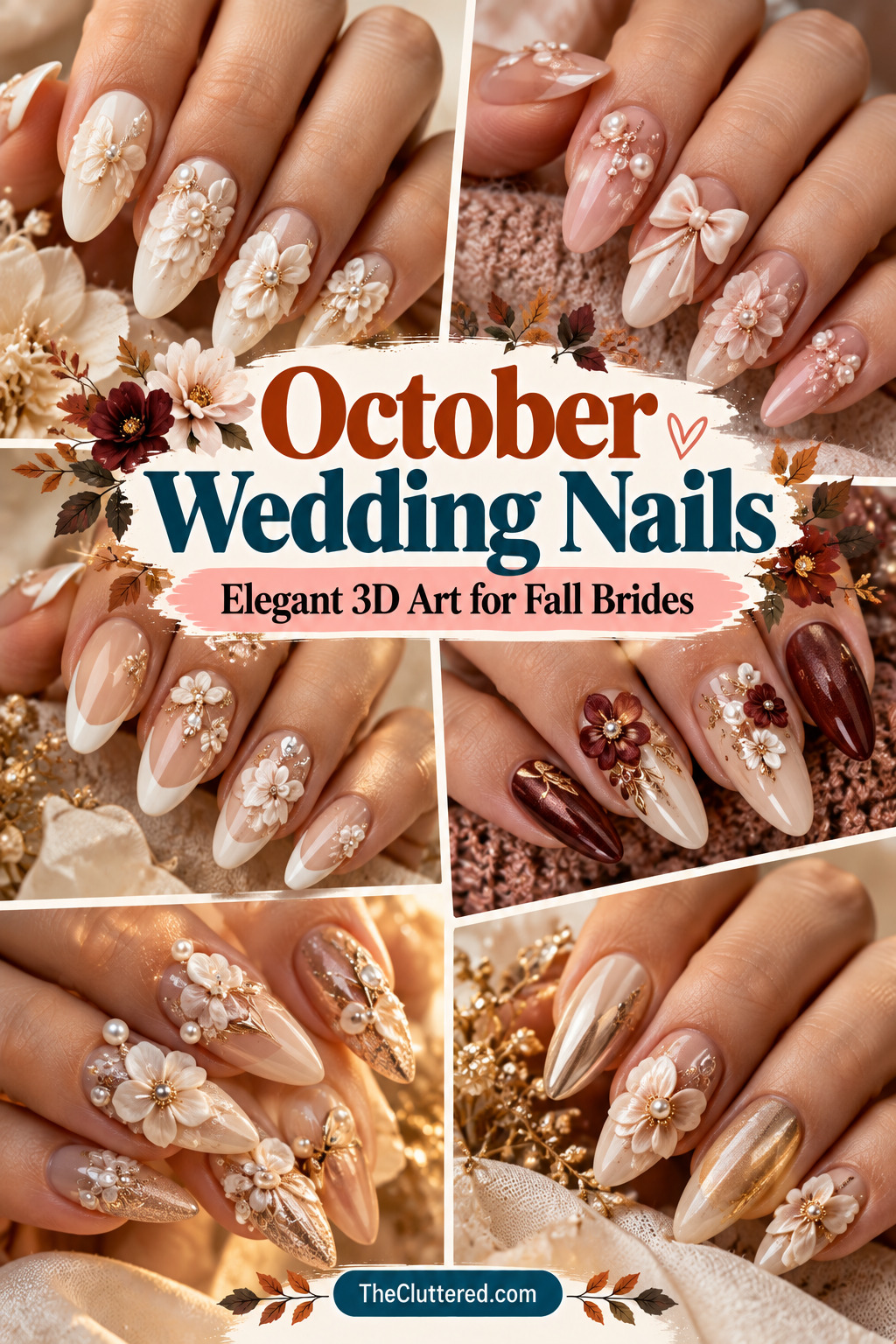
October wedding nails can feel especially beautiful when soft bridal details meet the richer colors and textures of fall. October wedding nails with 3D art offer plenty of room to personalize that balance, whether you prefer delicate white flowers, pearls, French tips, bows, champagne accents, or deeper autumn shades.
The key is to choose a base and shape that feel bridal first, then use dimensional details to add personality. The ideas below bring together elegant 3D wedding nail art, fall-inspired colors, and different manicure shapes so you can narrow down a look that fits the wedding rather than simply following a single trend.
How to Choose October Wedding Nails
A wedding manicure has to work with more than the nail itself. Consider your dress, jewelry, bouquet, venue, wedding colors, and how much detail you want your hands to carry in photos. A highly sculpted 3D design can be the focal point, while a quieter manicure can use dimensional art on only a few nails.
Try ivory, soft nude, French tips, pearls, and white 3D flowers.
Consider blush, bows, floral sculpture, pearls, and soft gold.
Use burgundy, brown, mauve, champagne, or terracotta as controlled accents.
Mix French structure, chrome or cat-eye effects, and one or two 3D statement nails.
3D Details That Work Beautifully for Weddings
3D Floral Wedding Nails
Raised flowers are one of the easiest ways to make a bridal manicure feel dimensional without relying on a busy overall pattern. White or ivory flowers can sit on a neutral base, while a small pearl or gold center adds another layer of detail.
3D Pearl Wedding Nails
Pearls work particularly well with soft bridal palettes because they add dimension while remaining visually delicate. Use them as individual accents, borders, flower centers, or small clusters rather than covering every nail.
3D Bow Wedding Nails
Bows create a romantic, feminine direction that works especially well with blush, nude, ivory, and French bases. A single raised bow can act as a statement detail while the remaining nails stay relatively simple.
3D Gold and Crystal Accents
Gold details can connect the manicure to wedding jewelry, while crystals introduce sparkle. Keeping metallic or crystal details consistent across the set helps the manicure look intentional rather than overloaded.
How to Bring October Into a Bridal Manicure
Fall wedding nails do not have to become dark or heavily seasonal. October can be represented through a restrained palette: champagne, muted brown, burgundy, mauve, terracotta, or warm gold. These tones can appear on one or two accent nails, within floral details, or as a subtle French variation.
Choosing the Nail Shape
| Shape | Visual Direction | Works Well With |
|---|---|---|
| Almond | Soft, elongated, romantic | 3D flowers, pearls, French tips |
| Stiletto | Dramatic and statement-making | Large floral details, crystals, sculptural art |
| Short or soft shape | Clean and understated | Small flowers, pearls, French details |
Simple October Wedding Nail Formulas
- French + 3D flower + pearl: A classic base with one clearly dimensional focal point.
- Nude + 3D bow + gold: A softer romantic combination with subtle metallic detail.
- Ivory + floral art + champagne: A warm neutral direction that suits an autumn wedding without becoming overly seasonal.
- Burgundy accent + neutral base + pearl: A deeper fall direction balanced by softer bridal elements.
- Blush + floral sculpture + crystal: A feminine combination for a more decorative manicure.
October Wedding Nails for Bridesmaids and Guests
Bridesmaids and wedding guests can borrow the same design language without matching the bride exactly. A shorter shape, a simplified 3D detail, or a fall-colored accent can create a coordinated look while leaving the bride’s manicure more distinctive.
For a wedding party, choosing one shared element—such as champagne, pearl, blush, French tips, or a particular floral detail—can create visual cohesion across different nail lengths and styles.
Quick Checklist Before Your Nail Appointment
- Choose your preferred nail shape.
- Decide whether you want a neutral or fall-toned base.
- Select one main 3D detail.
- Choose between flowers, pearls, bows, crystals, or another focal detail.
- Decide whether French tips belong in the design.
- Pick one metallic accent if desired.
- Consider whether the manicure should coordinate with your jewelry.
- Consider your bouquet colors.
- Decide whether every nail should match or only selected nails should carry 3D art.
- Choose a reference image to show your nail artist.
- Keep the overall palette consistent with the wedding.
- Consider whether the design feels appropriate for your dress.
- Decide how much texture you want in close-up photographs.
- Save a few alternatives before your appointment.
- Bring your final inspiration images to discuss the desired finish and shape.
FAQ
Are 3D nails appropriate for an October wedding?
Yes. Dimensional flowers, pearls, bows, and subtle embellishments can create an elegant bridal manicure. The overall effect depends on how much 3D detail is used and how it works with the rest of the wedding styling.
What colors work with October wedding nails?
Ivory, nude, blush, champagne, mauve, burgundy, warm brown, terracotta, and restrained gold can all fit an October wedding aesthetic. Neutral bases can keep deeper autumn accents feeling bridal.
Can I combine French tips with 3D nail art?
Absolutely. French tips provide a clean foundation for dimensional flowers, pearls, bows, or small gold accents. They can be especially useful when you want the 3D detail to remain the visual focal point.
Do all nails need 3D decoration?
No. Using 3D details on selected nails can create contrast and keep the overall manicure balanced. This approach also lets you combine more decorative nails with simpler supporting nails.
Can fall wedding nails still look classic?
Yes. Use fall colors as accents rather than the entire base, and pair them with traditional bridal elements such as ivory, French tips, pearls, delicate flowers, or champagne details.
The most versatile October wedding nails balance two ideas: the softness expected from bridal beauty and the richer texture of autumn. Start with the base, shape, and overall wedding palette, then let one or two carefully chosen 3D details create the personality. The visual gallery below offers additional combinations to save and discuss with your nail artist.
White 3D Floral Stiletto Bridal Nails

Source: Pinterest
This manicure combines long stiletto nails with raised white floral details, pearls, and delicate sparkle. The bright bridal palette keeps the sculptural decoration feeling refined and wedding-focused.
The dimensional flowers create an obvious focal point, while the lighter base allows the embellishments to stand out. It is a strong direction for a bride who wants her manicure to feel decorative and photographed from close range.
For a softer October interpretation, keep the white flowers but replace some of the crystal sparkle with champagne or a subtle warm neutral accent.
Iridescent Pearl and 3D Floral Almond Nails

Source: Pinterest
These almond nails pair a luminous pearl effect with dimensional floral decoration. The shape feels softer than a stiletto while still giving the manicure plenty of length and presence.
The iridescent finish adds movement without requiring a dark fall color. That makes the look useful when the wedding palette is romantic, neutral, or centered around pearls and soft metallics.
Adapt the idea by using a creamy ivory base and placing the 3D flowers only on a few accent nails for a quieter bridal finish.
Dreamy 3D Floral Nails with Gold Accents

Source: Pinterest
Raised flowers become the central feature in this romantic bridal direction, with small gold details adding warmth. The overall effect is feminine without depending on a heavy seasonal palette.
Gold is especially useful for connecting the manicure to wedding jewelry or warm-toned accessories. The dimensional flowers keep the design visually interesting even when the base remains light.
For October, pair this idea with champagne or muted mauve instead of brighter pink to create a slightly warmer autumn mood.
Classy 3D Floral Nails with Gold and Pearls

Source: Pinterest
This look layers three classic bridal details: flowers, pearls, and gold. The combination gives the manicure texture and shine while maintaining a sophisticated wedding direction.
It works particularly well when you want noticeable nail art without introducing a strong dark color. The details themselves provide the visual interest.
For an October wedding, use warm champagne gold or pair the design with one muted brown or mauve accent nail.
Beige Wedding Nails with 3D Flowers

Source: Pinterest
A beige foundation gives these dimensional flowers a warm, understated setting. The result feels softer than a bright white manicure while still reading clearly as bridal.
This kind of neutral base can work beautifully with October wedding colors because it sits comfortably beside champagne, brown, burgundy, and muted floral tones.
Personalize it with a slightly pinker nude or a warmer cream depending on your dress, bouquet, and jewelry.
Pastel French Tips with 3D Flowers

Source: Pinterest
A French foundation keeps this manicure recognizable and clean, while pastel color and raised flowers make it more decorative.
The combination is useful when you want 3D nail art but still prefer a structured manicure rather than a fully covered design.
For October, shift the pastel accents toward dusty rose, mauve, champagne, or another muted fall-friendly tone.
3D Flower Wedding Nails with Pearls and Diamonds

Source: Pinterest
This design takes floral bridal nail art in a more embellished direction, combining raised flowers with pearls and sparkling details.
The layered texture creates a statement manicure that can complement similarly detailed jewelry or wedding accessories.
If you want a more restrained version, keep the dimensional flowers but reduce the number of crystals and use a soft neutral base.
Bridal 3D Floral Press-On Almond Nails

Source: Pinterest
The almond shape gives this decorative design a soft silhouette, while flowers and pearl-like embellishments add dimensional interest.
It demonstrates how several romantic elements can coexist when they share a restrained palette and similar scale.
Use the same concept with salon-applied sculptural details if you prefer a customized manicure rather than a ready-made set.
Soft Blush 3D Bow Nails with Pearls

Source: Pinterest
Soft blush creates a romantic alternative to pure white, while the raised bows provide an immediately recognizable bridal detail.
Pearls and floral touches keep the manicure connected to classic wedding styling without making every nail equally elaborate.
For an October version, use dusty blush or muted mauve and introduce champagne gold as a small supporting accent.
Luxury Pearl White 3D Floral Nails

Source: Pinterest
A pearl-white finish gives this manicure a luminous bridal quality while the 3D flowers add tactile detail.
The monochromatic approach is especially useful when the dress or jewelry already provides plenty of visual detail.
Bring in October subtly through champagne jewelry or a single warm-toned accent instead of changing the entire white palette.
Crystal Bridal Nails with 3D Floral Extensions

Source: Pinterest
Long stiletto nails create a dramatic canvas for sculptural floral decoration and crystal accents.
This direction suits a bride who wants the manicure to read as a major accessory rather than a quiet finishing touch.
If the length feels too dramatic, keep the floral concept and transfer it to a longer almond shape with fewer crystal accents.
Luxury 3D Flower Bridal Nail Art

Source: Pinterest
The sculptural flowers give this manicure an artistic quality while keeping the bridal theme easy to recognize.
It is a useful reference if you want to show a nail artist the type of raised floral texture you have in mind.
Pair the idea with a neutral base and one fall accent color if you want the manicure to feel more distinctly October-inspired.
Elegant Bridal Acrylic Nails with 3D Flowers

Source: Pinterest
This set leans into statement bridal nail art with sculptural flowers placed over a polished acrylic base.
The decorative approach works when the manicure needs to hold its own alongside a detailed dress, veil, or photographed bridal accessories.
For a more understated version, use the dimensional flower treatment on only two or three nails and simplify the rest.
Autumn Leaf Wedding Nails

Source: Pinterest
Leaf-inspired details bring the October setting directly into the manicure without requiring a heavily themed design.
The natural motif can complement an outdoor venue, autumn bouquet, warm-toned flowers, or a wedding palette inspired by changing leaves.
Combine the leaf detail with a nude or ivory base and add a small 3D floral element if you want more dimension.
Classy Fall Wedding Nails

Source: Pinterest
This reference shows how a wedding manicure can acknowledge fall while retaining a polished, bridal character.
The restrained approach is useful if your wedding styling already includes strong seasonal colors or textures.
Add a small 3D flower, pearl, or gold detail to translate this broader fall direction into a more dimensional manicure.
Creative Fall-Themed Wedding Nails

Source: Pinterest
This manicure leans more visibly into the fall season, making it useful for couples whose wedding design embraces autumn color.
It demonstrates that seasonal nails do not have to abandon elegance; the overall styling can remain coordinated and intentional.
To add the requested 3D element, retain the autumn color story and introduce raised flowers or a small sculptural accent.
3D Maple Leaf Fall Nail Art

Source: Pinterest
Maple leaf-inspired art provides a direct visual connection to October and the changing-season atmosphere.
The dimensional approach adds texture and can turn a simple seasonal motif into a more editorial manicure detail.
For a wedding adaptation, pair the leaf with ivory, nude, champagne, or a soft French base so the seasonal element remains bridal.
Burgundy Ombre 3D Flower Nails

Source: Pinterest
Burgundy gives this manicure a distinctly autumnal character, while raised flowers and gold details keep the look decorative.
This is a stronger color direction for brides who want the manicure to visibly reference the season rather than stay entirely neutral.
Use burgundy as an accent if a full deep-color manicure feels too bold, keeping the remaining nails ivory or nude.
Floral Gold Wedding Nails with a Heart Charm

Source: Pinterest
The heart detail gives this manicure a distinctly romantic element, while gold and dimensional flowers provide structure.
Small charms can be useful when you want one playful feature without turning every nail into a statement.
For October, keep the heart and floral elements but introduce champagne or muted burgundy in a controlled accent.
Classy Fall Wedding French and Chrome Nails

Source: Original Source
French structure and a modern reflective finish create a polished alternative to heavily sculpted nail art.
This direction is useful when you want an October manicure that feels current while remaining restrained enough for formal wedding styling.
Add a single small 3D flower or pearl to bring the manicure closer to the dimensional theme of the article.
Fall Wedding Nail Designs for October

Source: Original Source
This broader fall wedding reference is useful for exploring seasonal color and styling before choosing a specific 3D treatment.
It can help bridesmaids and guests find coordinated inspiration without copying the bride’s exact manicure.
Use the seasonal direction as the foundation, then add a small dimensional floral, pearl, or bow detail for a more personalized result.
Autumn-Inspired Fall Wedding Nails

Source: Pinterest
This visual demonstrates how autumn can influence wedding nails through color, finish, and overall mood.
The approach is useful when you want a manicure that coordinates with a fall wedding without relying on obvious seasonal symbols.
Layer in 3D flowers or pearls while keeping the autumn color palette soft enough to retain a bridal feel.
Modern Cat-Eye Wedding Nails

Source: Original Source
A reflective cat-eye effect adds movement to a bridal manicure without requiring a large amount of surface decoration.
This can be a useful contrast to heavily sculpted 3D flowers, especially if you want some nails to remain sleek and simple.
Combine the reflective finish with a small raised floral or pearl detail to connect the modern effect to the overall wedding theme.
3D White Jasmine and Gold Accent Nails

Source: Pinterest
White floral details create a clean bridal foundation, while small gold accents add warmth and visual definition.
The floral motif can feel especially appropriate for a romantic wedding because it echoes botanical details that may already appear in the bouquet or decor.
For October, pair the white flowers with champagne or a very subtle warm neutral instead of introducing a large amount of dark color.
Champagne Floral Bridal Nails

Source: Original Source
Champagne brings warmth to the bridal manicure while keeping the overall palette light and sophisticated.
The floral direction makes it easy to connect the nails with an October wedding palette without relying on very dark seasonal shades.
Use this as a starting point for a custom set by adding one or two raised flowers, pearls, or small gold details for extra dimension.
Love these ideas? Follow @theclutteredblog on Pinterest for more cozy, practical gift inspiration!