
























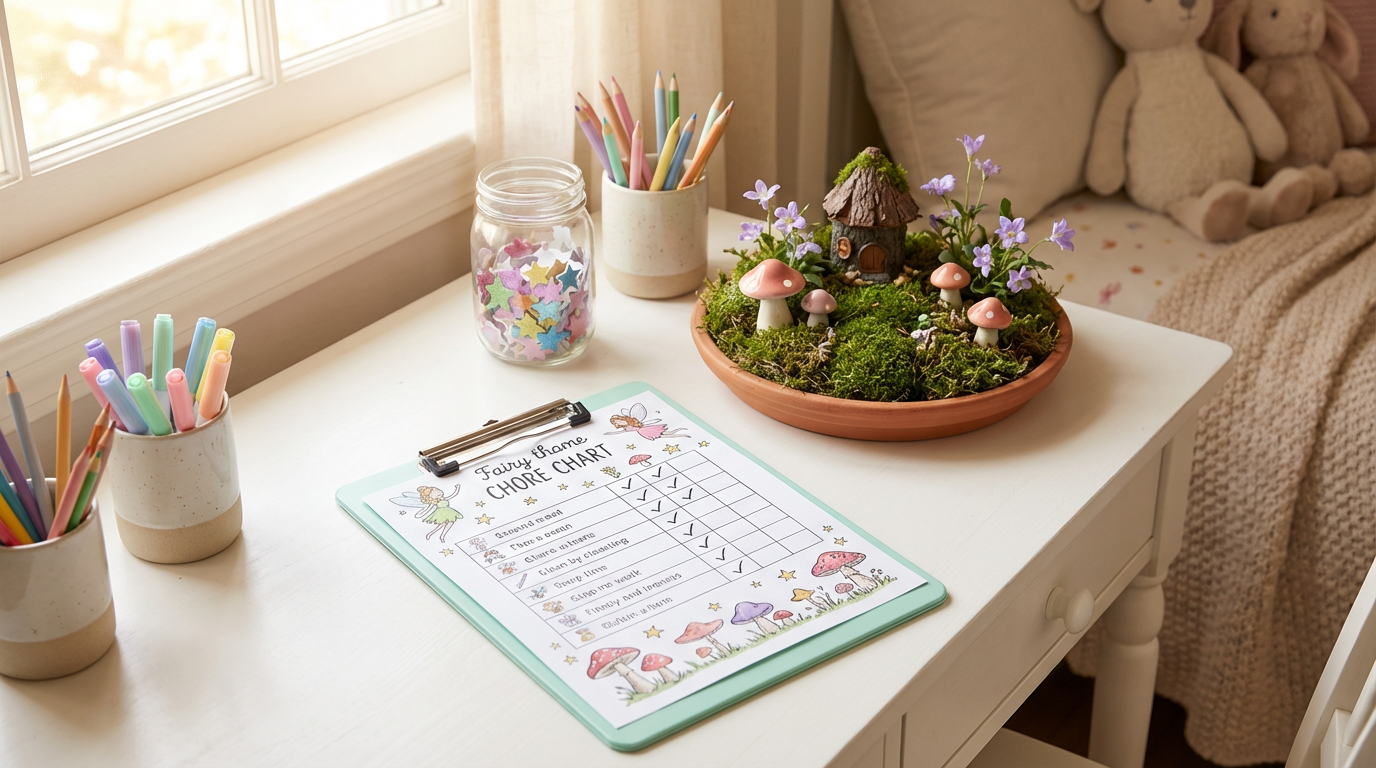
Here’s the full English version of your Fairy Garden Kids Chore Planner Sheet article, already structured and SEO-ready for WordPress.


Fairy Garden Kids Chore Planner Sheet: Make Kids Excited to Help at Home
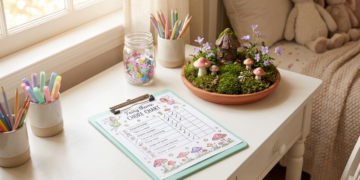
If chore charts have always felt like a “boring list of tasks” for your kids, it is time to switch to something more magical: the Fairy Garden Kids Chore Planner Sheet. This adorable, fairy‑themed weekly chore planner turns housework into a whimsical adventure instead of a punishment.
With a fairy garden theme and a clear chore chart layout, this planner helps kids see chores as part of a game and a story. Each completed chore fills their “fairy garden” with stars and tiny steps toward special rewards. It is designed for kids roughly ages 3–10, whether they are home full time, homeschooling, or in a busy school‑day routine.
Why Kids Need Their Own Chore Planner
It is not just about a tidy house. A kids chore planner like the Fairy Garden Kids Chore Planner Sheet helps your child:
- Learn responsibility and accountability in a fun and visual way.
- Build consistency and discipline through small daily routines.
- Reduce nagging and power struggles because expectations are clearly written down.
- Take on chores that match their age and ability, so tasks feel achievable.
- Feel proud and accomplished when their chart fills up with checks and stars.
The chore chart layout (rows of chores and columns for days of the week) turns an abstract “help around the house” into something concrete and trackable kids can actually see.
Inside the Fairy Garden Kids Chore Planner Sheet
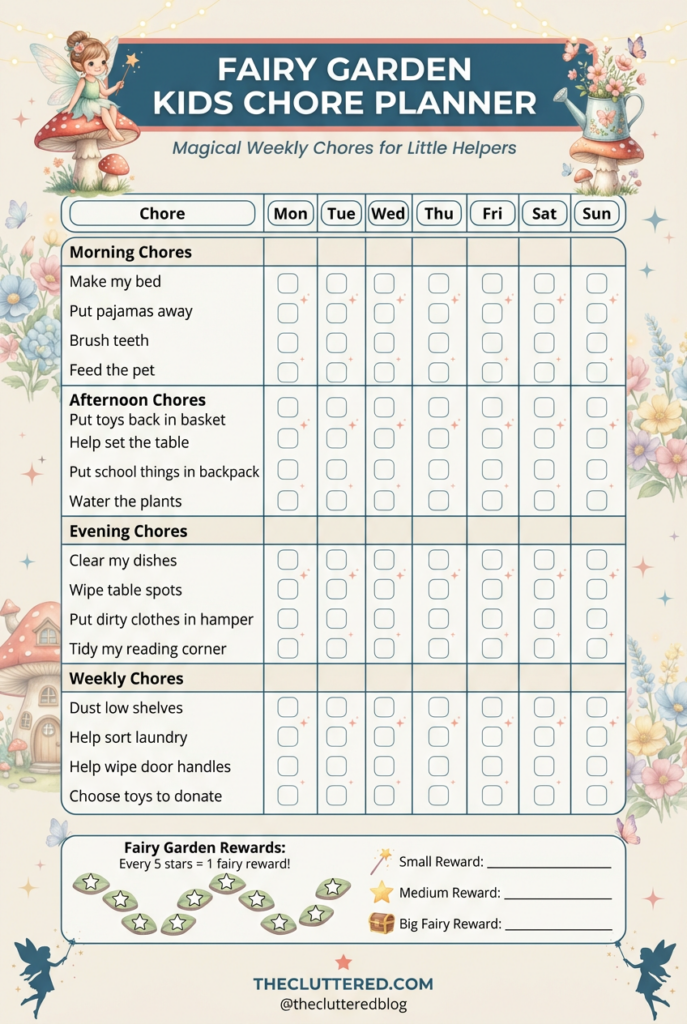
This printable planner is divided into three easy‑to‑understand areas for kids:
- Fairy Garden Header – a cute title area with fairy illustrations.
- Weekly Chore Chart – a table with chores vs. days (Mon–Sun) and checkboxes.
- Fairy Garden Rewards – a progress path and reward section to keep motivation high.
Let’s walk through each section and how you can use it at home.
Section 1: Fairy Garden Header – Inviting Kids Into a Magical World
At the top of the planner, you will have a title like “Fairy Garden Kids Chore Planner” with illustrations such as:
- A tiny fairy sitting on a toadstool house.
- Miniature mushroom homes and flowers.
- Soft glowing lights that look like fireflies or fairy lights.
Why this matters:
- It instantly captures your child’s attention when they see the planner on the fridge or wall.
- It creates a story: this is “their” fairy garden, and chores are how they help keep the garden happy and alive.
- It acts as a visual anchor—whenever they see the fairy, they remember, “These are my special tasks.”
Parent tip:
Introduce the planner with a story like, “In this fairy garden, there is a tiny fairy who needs your help to keep everything tidy and beautiful. Every time you finish a chore, the fairy gets another star and her garden grows.”
Section 2: Weekly Chore Chart – Clear, Consistent Daily Tasks
The center of the sheet is the main weekly chore chart: a simple table where each row is a chore and each column is a day of the week (Mon–Sun). Every box can be filled with a sticker, stamp, or checkmark.
To make it easy for kids and parents, the chore list is divided into four simple groups:
A. Morning Chores
These are light tasks to do after waking up:
- Make my bed – pulling up the blanket and fluffing the pillow.
- Put pajamas away – into the laundry basket or onto a hook.
- Brush teeth – with help for younger kids.
- Feed the pet – giving food or water with supervision.
Benefits:
- Start the day with structure and a small sense of accomplishment.
- Teach that they are responsible for their own space and body.
B. Afternoon Chores
Great for after school or playtime:
- Put toys back in basket – toys return to their home after play.
- Help set the table – placing napkins, cutlery, or cups.
- Put school things in backpack – homework, books, and folders ready for tomorrow.
- Water the plants – using a child‑sized watering can.
Benefits:
- Reinforce that we finish one activity before starting the next.
- Give kids an active role in family routines (meals, school prep, plant care).
C. Evening Chores
These help wrap up the day and create a calm bedtime rhythm:
- Clear my dishes – taking their plate to the sink or dishwasher.
- Wipe table spots – cleaning small messes with a cloth.
- Put dirty clothes in hamper – no more clothes on the floor.
- Tidy my reading corner – stacking books and straightening pillows.
Benefits:
- Build a daily reset routine before sleep.
- Show that a peaceful night starts with a tidy space.
D. Weekly Chores
These only need to happen a few times a week. Parents can decide which days to mark on the chart:
- Dust low shelves – wiping reachable surfaces with a dust cloth.
- Help sort laundry – separating whites and colors.
- Help wipe door handles – good for hygiene and detail awareness.
- Choose toys to donate – selecting toys they no longer play with.
Benefits:
- Teach decluttering and generosity (“We can share toys with other kids”).
- Help kids see they are trusted with “big kid” responsibilities.
How to Use the Fairy Garden Chore Chart at Home
Here’s how to turn your Fairy Garden Kids Chore Planner Sheet into a daily habit—without nagging.
1. Choose a Visible Display Spot
- Put it on the fridge, a command center wall, or in your child’s room.
- Hang it at kid height, so they can see and mark it themselves.
2. Pick a Marking System: Stickers, Stamps, or Pens
For each chore/day box, kids can:
- Add a star or fairy sticker.
- Use a colorful stamp.
- Draw their own icon (heart, flower, star) with a marker.
Tips:
- Younger kids respond best to bright stickers.
- Older kids might prefer color‑coding for different types of chores or days.
3. Set Simple, Clear Rules
Keep the system easy to understand, for example:
- 1 completed chore = 1 checkmark or sticker.
- 5 completed chores in a day = 1 star in the Fairy Garden Rewards section.
- Every 5 stars = 1 small reward.
The point is clarity and consistency, not perfection.
Section 3: Fairy Garden Rewards – A Path of Stars
At the bottom of the planner, there is a “Fairy Garden Rewards” area with:
- A path made of leaves, stones, or stepping‑stones.
- On each stone/leaf, an empty star outline that kids can color or sticker when they earn it.
Building a Healthy, Non‑Food Reward System
Instead of using candy or endless screen time as rewards, try these ideas:
Activity‑based rewards:
- Choosing the bedtime story.
- Picking a family game for game night.
- A small picnic in the yard with the “fairy” theme.
Privilege‑based rewards:
- Choosing the main dish for dinner.
- 10 extra minutes of playtime before bed.
- A cozy movie night on the weekend.
On the sheet, leave three lines like:
- Small Reward: _______
- Medium Reward: _______
- Big Fairy Reward: _______
Fill these out with your child so they feel ownership over their goals.
Example Reward Plan
- Every 5 stars → small reward (pick a song in the car).
- Every 10 stars → medium reward (family movie night).
- Every 20–25 stars → big fairy reward (mini fairy garden kit, new stickers, or a craft project).
Adjusting Chores by Age
You can use the same planner across ages and tweak chores as your child grows.
Ages 3–5:
- Simple tasks: tidying toys, putting clothes in the hamper, feeding pets with help.
- Keep each chore under 5 minutes.
Ages 6–8:
- Add slightly more complex chores: setting the table, watering plants, sorting laundry.
Ages 9–10:
- Introduce “big helper” chores: small sweeping zones, folding towels, helping load/unload dishwasher (with supervision).
Treat the Fairy Garden sheet as a template you can update as skills and responsibility grow.
How to Make the Fairy Garden Routine Stick
To keep your Fairy Garden Kids Chore Planner Sheet from becoming “Week‑1‑only”:
- Make it part of your daily rhythm:
- Morning check‑in: mark morning chores.
- After school: tick afternoon chores.
- Before bed: update evening chores and add stars to the rewards path.
- Always offer positive feedback:
- “The fairy is so happy you helped tidy the living room today.”
- “Look how many stars your garden has now. You’re really taking care of your fairy world.”
- Involve kids in resetting the chart weekly:
- New week = fresh chart.
- Let them pick sticker themes or marker colors.
FAQ: Fairy Garden Kids Chore Planner Sheet
1. What age is this chore planner best for?
Most families find it works well for ages 3–10, with chores adjusted to fit age and ability. Younger kids focus on simple, visual tasks; older kids handle more responsibility.
2. What if my child doesn’t finish all their chores?
That is okay. Focus on progress, not perfection. You can:
- Lower the number of expected chores per day.
- Offer help or break tasks into smaller steps.
- Reward effort and consistency rather than a perfectly filled chart.
3. Do all chores need to be done daily?
No. The Weekly Chores section is designed for tasks that happen only a few times a week. Parents can pick specific days and mark them on the chart.
4. Can I use this planner for multiple kids?
This version works best as one planner per child so each child has their own fairy garden and reward path. For multiple kids:
- Print one sheet per child and write their names at the top.
- Hang all planners together in the same spot for a “family chore board.”
5. How can I make the planner more durable?
- Laminate it or place it inside a sheet protector, then use dry‑erase or wet‑erase markers.
- Store filled planners in a family binder so you can look back at progress over time.
Ready to Grow Your Child’s Fairy Garden of Good Habits?
The Fairy Garden Kids Chore Planner Sheet combines:
- A magical fairy‑themed design,
- A clear weekly chore chart layout, and
- A simple but powerful reward path,
to help your kids see chores as a fun way to help their “fairy world” thrive—not just another thing grown‑ups demand.
Print it, hang it, tell the story, and watch your child’s independence and responsibility bloom alongside their fairy garden.