














Small Kitchen Storage Essentials: How an Under Sink Organizer Fits Into a Smarter Daily Routine
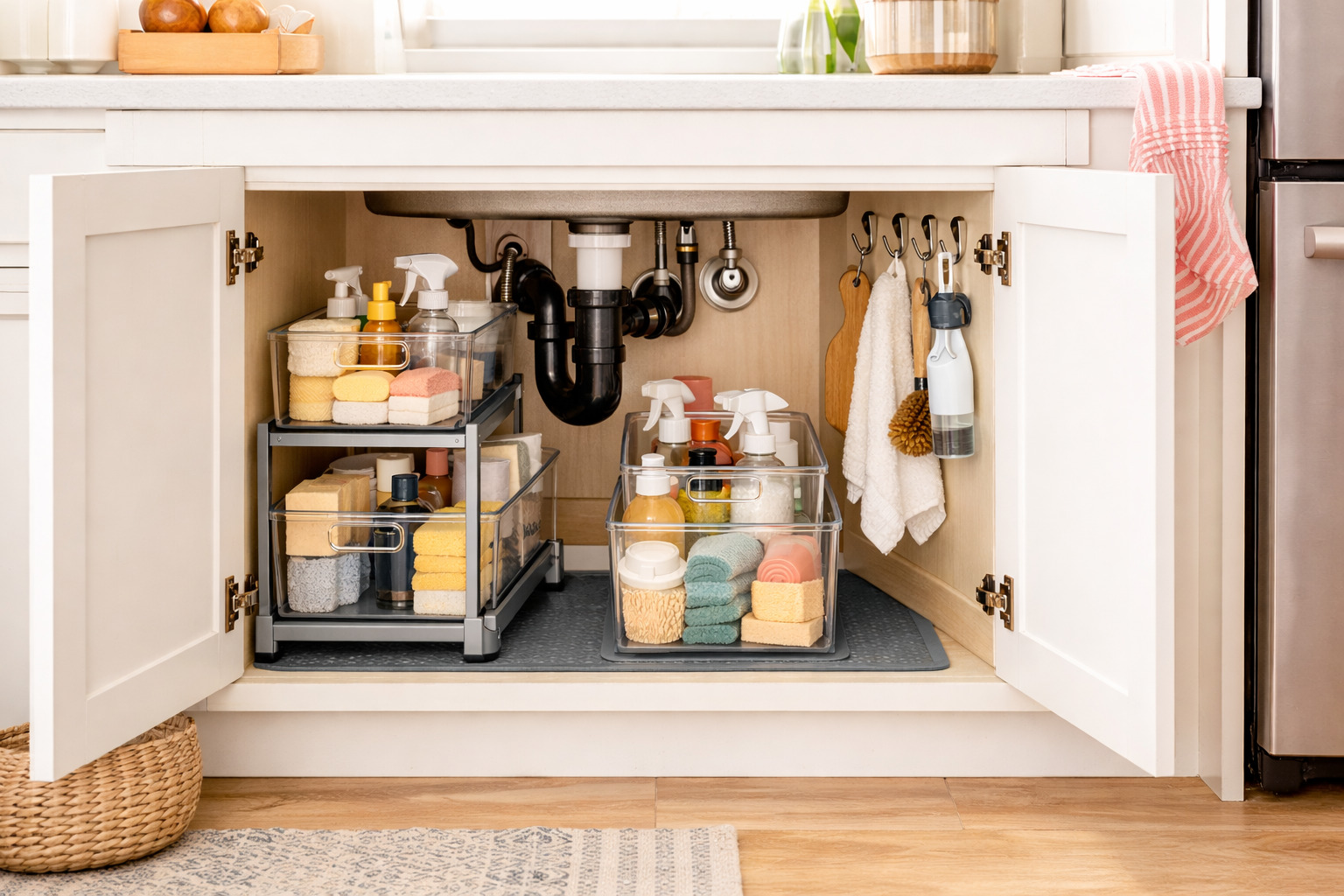
An Under Sink Organizer works best when it is part of a simple routine, not a random pile of products. This setup helps you protect the cabinet, separate backups from daily-use items, and make the space feel easier to keep up every day.
If your under-sink cabinet turns into a catch-all zone by the end of the week, you are not doing anything wrong. It is one of those spaces that gets used fast and cleaned slowly. A good Under Sink Organizer can make a huge difference, but it works even better when you pair it with a few small helpers that each do one job well.
I like this kind of setup because it feels realistic. You are not buying ten matching bins and starting over. You are building a routine that supports the way you already clean, restock, and move through your kitchen.

A simple routine at a glance
Step 1
Protect the cabinet base so small leaks and drips do not turn into a bigger cleanup job.
Step 2
Use an Under Sink Organizer to lift everyday bottles and make deep cabinet space easier to reach.
Step 3
Group backups and odd-shaped items into clear bins so the cabinet stays readable.
Step 4
Hang the grab-and-go tools so gloves, brushes, and cloths do not eat shelf space.
These four pieces work together better than buying a single organizer and hoping the rest of the space figures itself out.
This is the quiet helper in the bundle. You may not think about it every day, which is exactly why it matters. A mat gives the whole cabinet a cleaner starting point and makes everyday bottle drips feel less stressful.
What matters most here is edge protection and easy wipe-down cleaning. This type of piece is especially useful if your sink area gets damp, you store refills below, or you just want a buffer between products and cabinet wood.
Who it is best for. Anyone who wants to prevent mess before it starts. Who can skip it. Someone with a metal pull-out system that already includes full base protection and no exposed cabinet floor.
This is the anchor product in the routine. It turns the space from a dark drop zone into a daily-use station. The biggest win is not just extra storage. It is being able to pull items forward instead of reaching into the back and knocking things over.
If you store dish soap, sprays, dishwasher tabs, sponges, or hand soap refills under the sink, this is the product that makes those items feel easier to maintain. It is also the reason the whole bundle works. Once the daily-use products have a home, everything else becomes easier to sort.
- Best for daily bottles and cleaning sprays
- Helpful if your cabinet is narrow but has some vertical space
- Less ideal if plumbing blocks most of the center area
My favorite way to use it is simple. Put the most-used products on the lower slide-out shelf and lighter backups or smaller items on top.

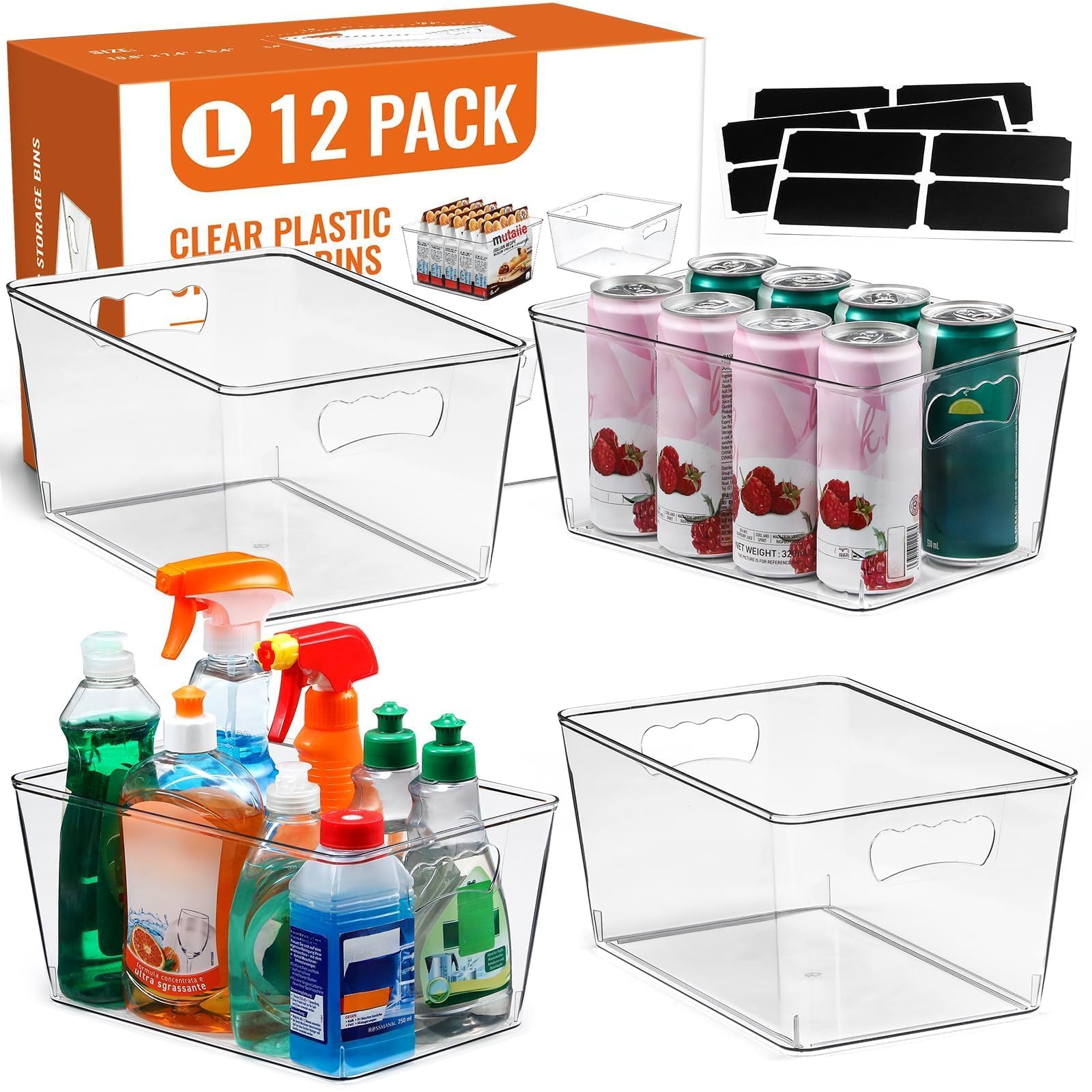
This is what keeps the organizer from getting overloaded. Not everything belongs on a slide-out shelf. Backup sponges, trash bags, dishwasher pods, microfiber cloths, and small refill bottles usually do better in grouped bins.
Clear bins help because you can see what you have without digging. Handles matter too. If a bin sits in the back corner, you can still pull it out quickly and put it back without rearranging half the cabinet.
Who should get these. Anyone who stores more than daily essentials under the sink. Who can skip them. Someone working with a very tiny cabinet and only three or four products total.
What feels most useful in real life
- One bin for backups only
- One bin for cloths and gloves
- One bin for dishwasher or sink accessories
- One small open space left empty for flexibility
This is the low-cost finishing touch that keeps the rest of the cabinet working. Hooks are great for the awkward items that do not stack well, like gloves, scrub brushes, or a small dustpan. They also free up shelf space for things that really need a surface.
The reason I like this step is that it makes the routine feel easier, not more complicated. You open the cabinet, grab what you need, and put it back in one motion.
Good reasons to add hooks
- Easy access for tools you use often
- Helps keep the base area less crowded
- Simple add-on if you do not want a bigger system
Things to watch
- Do not overload them
- Best on smooth clean surfaces
- Not every cabinet wall gives enough clearance
What is essential in an Under Sink Organizer setup
Essential
- A real Under Sink Organizer for daily-use bottles
- Some kind of base protection if leaks or drips are possible
- One simple sorting method for backups
Optional
- Extra bins if you keep very little under the sink
- Hooks if your cabinet walls are awkward or crowded
- Matching accessories that look nice but do not solve a problem
How to keep the bundle from getting cluttered or expensive
Start with the organizer and one support product. For most people, that means the Under Sink Organizer plus either the mat or the clear bins. Live with that setup for a week. Then decide what is still annoying.
This is the easiest way to avoid overbuying. A lot of organizing products look helpful online, but your kitchen only needs the pieces that remove friction from your real routine.
- Measure around pipes before you buy
- Keep one small empty zone for random items that come and go
- Use backups only where they stay visible and easy to count
- Do not turn under-sink space into long-term storage for things you rarely touch
If you want to begin with the strongest payoff, start with the main Under Sink Organizer here and add from there.

FAQ
Do I need an Under Sink Organizer if I already have a few bins?
Usually yes, if you are still reaching into the back or stacking bottles on top of each other. Bins sort categories. The organizer improves access.
What should go on the organizer versus in bins?
Put daily-use products on the organizer. Put backups, cloths, and smaller extras in bins. That split keeps the space easier to read.
Is a waterproof mat really necessary?
Not for every cabinet, but it is a smart addition if you have wood cabinetry, old plumbing, or frequent drips from cleaning bottles.
How many products should I actually keep under the sink?
Less than you think. Keep the items you use every week plus a small number of backups. The more crowded it gets, the faster the system breaks down.
Can this routine work in a bathroom too?
Yes. The same logic works in a bathroom vanity. Protect the base, lift the daily-use items, group the extras, and hang the tools if you have wall space.
One last thought
A better under-sink setup does not need to feel dramatic. One or two smart pieces can make your kitchen feel calmer every single day. Start with the part that solves your biggest annoyance first, then build from there.