












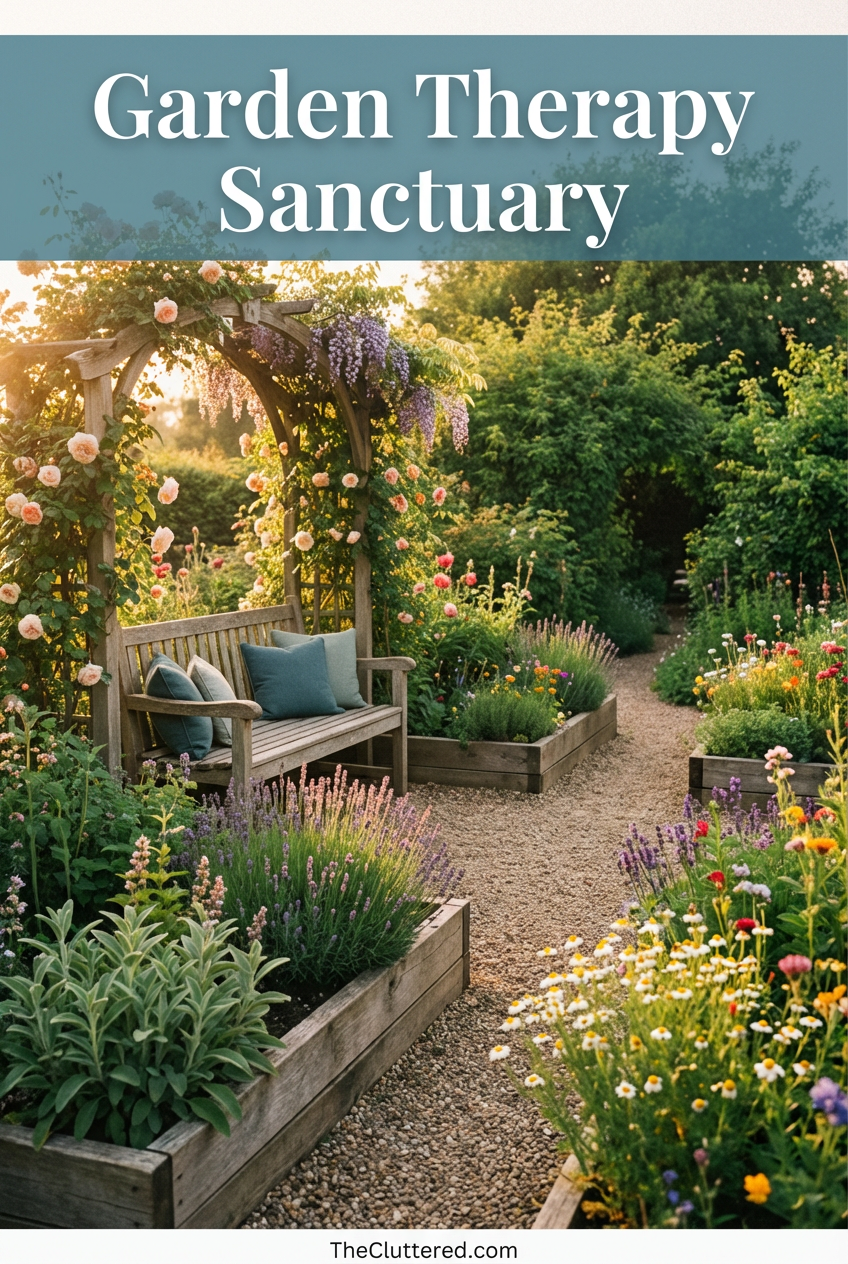


15+ Garden Therapy Ideas to Turn Your Backyard into a Healing Sanctuary
Garden therapy is the practice of using simple gardening activities, healing layouts, and nature-based rituals to support mental wellness, calm anxiety, and bring more joy back into everyday life.
From raised beds that double as mindful movement to sensory paths, herbal corners, and cozy reading nooks, the most viral Pinterest gardens right now all have one thing in common: they are designed first for how you want to feel, then for how they look.
How to Build a Garden Therapy Sanctuary — Even If You’re a Total Beginner
Before you buy another plant, get clear on your main healing goal: do you want to reduce anxiety, ease burnout, recover from grief, or simply spend less time on your phone and more time grounded in real life.
Once you know your “why”, you can start layering simple garden therapy elements that support your nervous system: soft textures, repetitive tasks, calming scents, and one small ritual you can repeat almost every day.
Step 1: Define your therapy zones
Start by dividing even the tiniest balcony or backyard into 2–3 micro-zones: a “doing” zone (planting, pruning, potting), a “being” zone (sitting, breathing, reading), and, if possible, a “wandering” zone (a short path you can slowly walk along).
Viral therapy gardens often mix edible beds, herbs, and flowers in layered borders so the whole space feels immersive rather than flat.
Step 2: Choose calming plants and textures
Prioritize plants that give you multi-sensory comfort: lavender and chamomile for scent, soft grasses that move with the wind, leafy greens you can harvest, and flowers in colors you find soothing rather than loud.
Many healing gardens use silvery greens, dusty pinks, and gentle whites to keep the space visually quiet, then add one or two high-impact focal points like a flowering arch or a statement tree.
Step 3: Add one simple grounding ritual
Pick a tiny ritual you can repeat most days in under ten minutes: morning watering with bare feet on the soil, evening herb picking for tea, or three slow laps around your garden path while you count your breaths.
Research-backed horticultural therapy programs often rely on small, repeatable tasks because they gently boost dopamine, help regulate mood, and give you a concrete sense of progress.
Step 4: Design for comfort, not perfection
Therapy gardens trending right now are far from manicured; they lean into soft edges, wild edges, and “good enough” maintenance so you don’t feel like you’re constantly behind.
Think: a low bench tucked under a tree, a weathered chair among potted herbs, or a small table for tea and journaling rather than endless rows you feel guilty about.

Step 5: Make it accessible and low-effort
If you live with pain, low energy, or limited mobility, copy what senior-friendly and no-till gardens do so well: bring beds up to waist height, reduce bending, and use wider paths so movement feels safe and relaxed.
Swap heavy tilling and constant digging for mulching, no-dig beds, and perennial planting so the garden works with you instead of demanding constant labor.
Common Garden Therapy Mistakes (and How to Fix Them)
Mistake 1: Turning your “healing” garden into a productivity project with too many beds, too many plants, and a to‑do list that feels like another job.
Fix: Start with one or two small zones, favor perennials and self-seeding flowers, and let part of the garden stay wild on purpose.
Mistake 2: Ignoring comfort — no seating, no shade, and no place to simply sit, read, or sip tea.
Fix: Copy popular garden nook and outdoor wellness layouts by prioritizing a chair, a bench, or even a yoga mat corner before adding more plants.
Mistake 3: Designing only for looks instead of all five senses.
Fix: Add at least one sensory feature: rustling grasses, fragrant herbs, a textured path, or a small fountain so your body can actually relax and engage with the space.
15 Garden Therapy Ideas That Are Blowing Up Pinterest in 2026 (Save Before You Scroll!)

The most viral garden therapy pins right now span everything from structured therapeutic layouts to cozy cottage corners, wellness platforms, and forest‑bathing inspired sanctuaries.
Use these ideas as modular blocks — you don’t have to copy them exactly, just steal the feeling and scale it down to whatever space you have.
- Therapy Garden Layout with Curved Beds
Create gentle curves in your beds and paths so the garden invites slow wandering instead of straight‑line rushing. Add mixed vegetables, herbs, and flowers in guild-like clusters for both beauty and harvest.
Tools Used: hand trowel, edging spade, mulch, mixed seedlings, simple gravel or bark path.
- Outdoor Wellness Oasis with Yoga Platform

Build (or fake) a small wooden platform, add potted greenery around the edges, and keep one side open to the view so you feel held but not trapped. This kind of space works on balconies too with outdoor mats and a few tall containers.
Tools Used: timber or outdoor mat, large planters, shade cloth or umbrella, soft outdoor lighting.
- Healing Herb Garden for Everyday Remedies

Dedicate one bed or series of pots to calming herbs like chamomile, lemon balm, mint, lavender, and tulsi. Use them for tea rituals, foot baths, or simple aromatherapy sessions at the end of a long day.
Tools Used: herb seeds or starts, medium pots, organic compost, watering can, small labels or painted markers.
- Forest‑Therapy Path for Slow Walks

Create even a tiny loop path with wood chips or stepping stones, then flank it with shrubs, small trees, and shade‑tolerant plants so you feel enclosed in green as you walk.
Tools Used: stepping stones or bark, pruners, shade plants, simple lanterns or solar lights.
- No‑Till Raised Bed Therapy Corner

Layer cardboard, compost, and mulch in a simple raised bed or on‑ground frame instead of tilling the soil. Plant high‑impact vegetables and flowers around the edges so tending it feels joyful, not exhausting.
Tools Used: cardboard, compost, mulch, raised bed frame, hose with soft spray head.
- Peace Garden with Reflective Pathway

Use a simple loop or figure‑eight path with a bench or low wall at the center. Add one focal tree or sculpture so your eyes have somewhere calming to land.
Tools Used: gravel, edging stones, bench, container water feature or birdbath.
- Spiritual Garden Sanctuary

Blend flowers, herbs, and small altars or objects that hold meaning for you. Keep lighting warm and low so evenings feel like stepping into a quiet outdoor chapel.
Tools Used: candles or solar lanterns, stacked stones, fragrant plants, simple side table for offerings or journaling.
- Mandala Meditation Bed

Create a circular bed divided into wedges or rings and plant by color or texture. Walk around the circle slowly as a grounding ritual while you weed, water, or simply observe.
Tools Used: string and stake for layout, compost, mixed flowering plants, low border plants.
- Cozy Garden Nook for Reading

Steal this idea by carving a tiny alcove in your planting beds, then adding a weather‑proof chair, cushion, and side table. Frame the view with taller plants behind you so you feel held by greenery.
Tools Used: outdoor chair, cushion, side table, tall grasses or shrubs, string lights.
- Outdoor Wellness Space Trend

Combine a low platform, a couple of loungers, and surrounding plants that soften boundaries with the outside world. This is perfect for meditation, breathwork, or morning coffee without your phone.
Tools Used: deck or rug, loungers, container trees, ambient lighting, outdoor throw blankets.
- Indoor Zen Garden Corner

Fill a shallow tray with sand or fine gravel, add a few stones and a tiny plant, then rake patterns as a quick meditation whenever you feel overwhelmed.
Tools Used: shallow tray, sand, small rake or fork, pebbles, mini succulent or moss.
- Potting Shed as Therapy Studio

Turn a corner of your shed or balcony into a mini “studio” with a potting bench, jars of seeds, and tools neatly arranged. The simple ritual of sowing, labeling, and tending seedlings becomes a deeply soothing practice.
Tools Used: potting bench, seed trays, hooks or shelves, jars for seeds, stool.
- Garden Therapy Quotes & Signage

Use a wooden plaque or metal sign with your favorite garden therapy quote and place it where you first step outside. That micro‑moment of reminder shifts the space from “yardwork” to “healing ritual”.
Tools Used: reclaimed wood or metal sign, weather‑proof paint or vinyl, screws or stakes.
- Healing Garden for Seniors

Borrow ideas from senior‑friendly gardens: raised beds at different heights, wide paths, stable handholds, and light tools. This is great if you’re planning a multigenerational therapy garden.
Tools Used: raised beds, ergonomic tools, non‑slip paths, sturdy seating, railings where needed.
- Children’s Sensory Healing Garden

Combine sand, stepping logs, edible plants, scented leaves, and sound elements like chimes. It becomes both therapy and play, especially powerful for kids who regulate through touch and movement.
Tools Used: sandpit or tray, logs or stepping stones, hardy kid‑safe plants, chimes, watering cans.
- Tranquil Healing Garden Illustration Brought to Life

Use a simple sketch or printed inspiration as your masterplan: one main path, one central seating area, and beds that wrap around it like an embrace.
Tools Used: pen and paper, ruler, colored pencils, basic hand tools, mulch, mixed plantings.
Your Ultimate Garden Therapy Prep Checklist — Print or Save to Nail It Every Time!
Use this checklist before you start planting, while you’re in the garden, and after you finish to keep your garden therapy practice simple, sustainable, and actually healing (not just another project).

Before You Start
- ☐ Write down your main intention for this season (stress relief, more time outside, grief support, creative play, etc.).
- ☐ Choose 1–2 therapy zones instead of trying to fix your whole yard at once.
- ☐ Check sun, shade, and wind so you can place seating and beds where your body will feel comfortable.
- ☐ Make a short plant list focused on easy, forgiving species (herbs, greens, hardy perennials).
- ☐ Gather tools you can actually lift and use without strain; skip anything that feels like punishment.
- ☐ Decide on one tiny daily ritual (watering, weeding, or a 5‑minute walk) you can realistically keep.
During Your Garden Therapy Sessions
- ☐ Put your phone on airplane mode or leave it inside so the garden has your full attention.
- ☐ Start with three deep breaths, feet grounded on soil, deck, or balcony floor.
- ☐ Work slowly: focus on one bed, one pot, or one path instead of multitasking across the whole space.
- ☐ Engage all your senses: notice scents, textures, bird sounds, temperature, and colors.
- ☐ Take mini breaks on your bench, chair, or mat instead of pushing through fatigue.
- ☐ Stop before you’re exhausted so your brain associates the garden with relief, not burnout.
After You Finish
- ☐ Drink water or an herbal tea made from your garden if possible.
- ☐ Note one small win: a new bud, a cleared patch, a moment of calm you felt.
- ☐ Do a quick 2‑minute tidy (put tools away, coil hose) so tomorrow’s entry feels easy.
- ☐ Take one photo of a detail you love to track your emotional and seasonal journey.
- ☐ Reflect on your mood before vs. after — even a 10% improvement means your therapy garden is working.
- ☐ Plan your next micro‑session so you’re not overwhelmed deciding what to do next time.
Pro tip: Laminate this checklist or keep a copy clipped in your shed so you can reuse it season after season as your healing garden evolves with you.
Follow me on Pinterest