














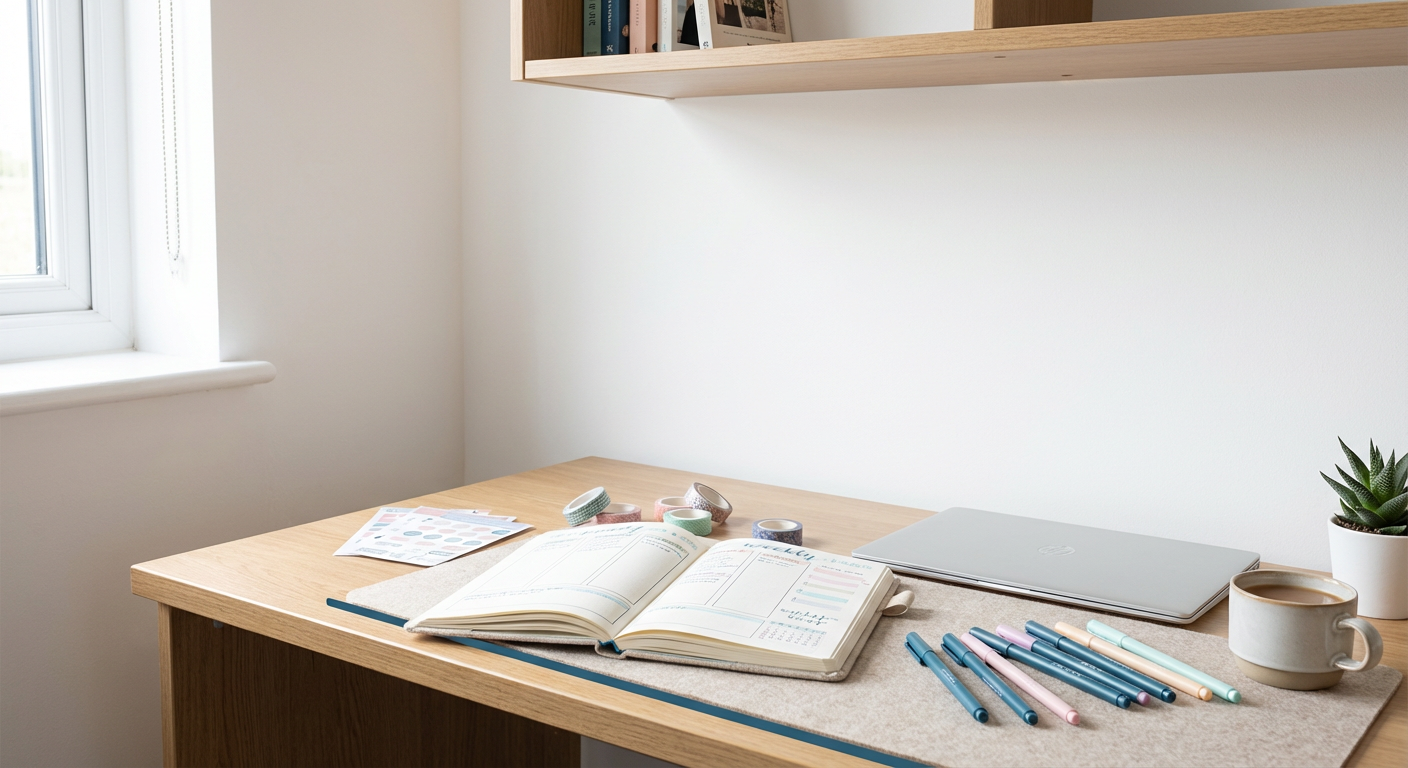


If you’re a student in the US trying to balance classes, homework, part-time work, and an actual life, your brain probably feels like a cluttered browser with 37 tabs open. An aesthetic journal can be that one safe tab where everything finally slows down and starts to make sense. Instead of random sticky notes and chaotic to‑do lists, you get aesthetic journal spreads that look satisfying, work hard for you, and feel like a tiny creative break every time you open them. When your pages feel cozy and intentional, it’s easier to keep up with planning, tracking habits, and actually remembering deadlines.
A big win of building a journal aesthetic layout is that it lets you combine function with creativity. You can track homework, grades, moods, and money in the same notebook that also holds your favorite quotes, playlists, and photos. Cute journal ideas don’t have to be complicated or expensive: a few washi tape strips, some simple doodles, and a couple of stickers can turn a blank page into a spread you’re excited to come back to each day. Once you see how your weekly or monthly pages start to tell the story of your semester, it becomes more than “just a planner” and feels more like a gentle anchor in your routine.

At the same time, it’s easy to get overwhelmed by all the journal decoration ideas online. You might save dozens of pins and still feel stuck when you sit in front of a blank page. That’s where a simple system helps. Think in layers: structure first (boxes, columns, calendars), then decoration (banners, borders, accents), then details (tasks, notes, reflections). Whether you prefer a soft pastel vibe, a vintage scrap style, or a minimal neutral look, you can adapt each idea to your own aesthetic. In this guide, you’ll find a mix of washi tape journal layouts, doodle journal ideas, hand lettering journal titles, and journal banner ideas that are beginner-friendly but still look polished.
Use this article as a visual menu of styles you can mix and match to build your own signature journal aesthetic. Start with one or two spreads that feel realistic for your weekly life—maybe a class schedule, a study tracker, or a mood log—and slowly add more creative pages as you get comfortable. As you experiment, you’ll discover what kind of stickers journaling style feels most like you: clean and minimal, soft and romantic, or layered and collage‑heavy. The goal isn’t perfection; it’s building a journaling routine that helps you stay organized, calmer, and a little more inspired every day.
Why Aesthetic Journals Work So Well for Busy Students
Aesthetic journaling works because it gives your brain clear visuals to latch onto. Color-coded boxes, simple icons, and tidy headers make it easy to scan a page and instantly see what matters today. When you combine a practical layout with cute journal ideas, your planner stops being another “should” and becomes something you actually look forward to using between classes or before bed. This is especially helpful if you’re neurodivergent or easily distracted; visual cues, repetition, and consistent layouts can make planning and reflection feel more intuitive.
You can also tailor your journal aesthetic layout to your energy level. On busy weeks, use simple boxes, bullet lists, and one accent color. On slower weekends, you might spend more time layering washi tape, adding mini collages, or practicing hand lettering journal titles. Over time, you’ll naturally build a library of journal decoration ideas that you can repeat: favorite corner doodles, a go‑to weekly spread, a banner you always use for assignments, and so on. Keeping a few “template” spreads you reuse each month saves time and makes your journaling routine easier to maintain.
Core Elements of an Aesthetic Journal
Instead of trying to copy entire complex spreads, think in terms of core elements you can mix and match:
- Headers and titles: Use simple journal banner ideas, brush‑pen lettering, or outlined block letters for your main headings.
- Accent areas: Highlight quotes, gratitude lists, or priorities with frames, colored boxes, or layered sticky notes.
- Trackers: Create minimalist grids for habits, moods, study sessions, or sleep patterns.
- Borders and margins: Add soft doodles along the edges for a quick aesthetic touch without overcrowding the center of the page.
- Focus areas: Reserve one box for “Today’s Top 3” tasks, exam countdowns, or reminders.
Washi tape journal accents are one of the fastest ways to build a cohesive look without needing advanced art skills. Choose 2–3 tapes that match your overall palette—maybe blush pink and beige, sage green and cream, or dark academia browns—and repeat them across several spreads. This makes your notebook feel more like a curated series instead of random pages. Pair your tapes with stickers journaling elements like tiny icons, labels, or word stickers to tie everything together visually.
Picking a Style That Fits Your Life
Before you dive into all the ideas, it helps to pick a general “vibe” that fits your lifestyle and schedule. If you’re a full‑time student with back‑to‑back classes, you might want simple daily logs with clean columns, minimal doodles, and a light color palette that doesn’t distract from your notes. If you’re juggling part‑time work, you might love spreads that combine schedules, budgeting, and self‑care check‑ins in one place. If you’re more of a creative, artsy type, you may enjoy collage‑heavy spreads with layered paper, vintage scraps, and big illustrated titles.
Ask yourself:
- How much time do I realistically want to spend decorating a weekly spread?
- Do I prefer clean white space or full, scrapbook‑style pages?
- Do I want my journal to focus more on planning, reflection, creativity, or all three?
Your answers will guide which cute journal ideas make the most sense for you. For example, if you want quick but pretty pages, focus on simple doodle journal ideas (like flowers, stars, and ribbons) and easy banners you can draw in seconds. If you enjoy slow, cozy journaling sessions, experiment with layered textures, printed photos, and more detailed illustrations.
Common Mistakes to Avoid
A few common pitfalls can make journaling feel harder than it needs to be:
- Overcomplicating layouts: If a spread takes you hours to set up, you’ll avoid using it. Start with simple grids and build from there.
- Using too many colors: Pick a small color palette so your spreads look cohesive and less chaotic.
- Comparing to Pinterest perfection: Remember that most photos you see are the “best” pages; your everyday spreads can be perfectly imperfect.
- Forgetting functionality: Make sure there’s enough space for writing, lists, and notes. Decoration should support, not overshadow, what you need to track.
It also helps to keep a small “reference” page where you test pen colors, practice hand lettering journal alphabets, or sketch quick journal banner ideas before committing them to your main spreads. Over time, this mini library of lettering styles and doodles will speed up your process and keep your aesthetic consistent.
Easy Ways to Start Today
If you’re new to aesthetic journal spreads, start small:
- Create one weekly spread with a simple calendar, class list, and to‑do section.
- Add a mood tracker using tiny icons or color swatches.
- Try one new doodle style in the margins each week (flowers, plants, stars, or tiny stationery items).
- Use washi tape to frame a quote or gratitude section.
- Add a few stickers journaling moments—like labels, hearts, or tabs—to mark important pages.
You don’t need a huge stash of supplies. A basic notebook, a black pen, one or two colored pens, a roll of washi tape, and a small sheet of stickers are more than enough to create pages that feel soft, organized, and uniquely yours. As you flip through your journal after a few weeks, you’ll start seeing how your style evolves. That’s the real magic: your notebook becomes a personalized, evolving record of your semester—both aesthetically and emotionally.
20 Aesthetic Journal Ideas for Students: Calm Your Mind Daily
When school, social life, and side projects all collide, a blank notebook can become the one place where everything finally feels a little more under control. Aesthetic journal ideas give you simple, repeatable layouts that look cute and still work hard for your daily planning.
These ideas are designed with busy students in mind: low-pressure spreads you can set up in a few minutes, using easy doodles, washi tape, and stickers. Whether you love soft pastels or cozy vintage tones, you’ll find layouts you can adapt to your own journal aesthetic layout without needing advanced art skills.
Brighten Margins with Easy Corner Doodles

This spread uses simple corner doodles to frame your writing, turning plain margins into a soft, playful border. Little leaves, stars, or ribbons make the page feel more intentional without crowding your notes.
It’s perfect for students who want quick doodle journal ideas that still look polished. You can keep the center of the page functional for to-do lists, class notes, or reflections while the edges bring in personality.
Try repeating the same corner motif across a whole month for a cohesive aesthetic journal spread, switching only the accent color to match your mood or theme.
Create a Pink-Themed Weekly Overview

A monochrome pink spread makes your entire week feel soft and cohesive, with matching boxes, headers, and accents. It’s a great example of how a single color family can define your journal aesthetic layout without needing complex artwork.
Use this idea for weeks with big exams or projects, so you can see all your deadlines and tasks at a glance. The color helps separate sections like homework, events, and self-care while still feeling calm.
If pink isn’t your style, swap in another signature color—sage green, lavender, or beige—and keep the same layout structure for future aesthetic journal spreads.
Build a Page of Aesthetic Headers

This spread is essentially a menu of title ideas, showing different banners, shadows, and lettering styles in one place. Having a reference page like this makes it easier to choose journal banner ideas when you’re setting up a new spread.
Students who are new to hand lettering journal techniques can practice a few styles here without the pressure of a “finished” layout. Later, you can reuse your favorite title designs for monthly overviews, habit trackers, or project pages.
Keep this page bookmarked or tabbed, so you can flip back whenever you need a quick, cute header for a new aesthetic journal spread.
Use Cherry Blossom Margins for Gentle Accents

Delicate cherry blossom doodles along the edge of a page are a quick way to transform a basic spread into something calming and pretty. The flowers stay in the margin, so your main writing area remains open for lists or notes.
This idea works well for reading logs, gratitude lists, or reflection pages where you want a softer, slower feel. A single floral style repeated across several pages creates a gentle, cohesive journal aesthetic layout.
Try matching the flower color to your highlighters or washi tape so the whole spread feels coordinated without much extra effort.
Create a Soft Scrapbook-Style Memory Spread

This idea leans into a scrapbook aesthetic, layering photos, ripped paper edges, and handwritten notes into one cozy collage. It’s perfect for documenting a semester highlight, a trip, or a friendship in your journal.
Students who love keepsakes will appreciate how this kind of spread feels like a mini photo album and gratitude page in one. You can mix tickets, printed screenshots, or Polaroid-style photos with small captions and dates.
Use muted colors and repeat similar shapes so the page feels balanced, even with multiple elements layered together.
Make a Page of Easy Doodles You Can Reuse

A dedicated doodle practice page takes the pressure off your main spreads and lets you collect go-to icons and sketches. Think mini plants, envelopes, stars, or coffee cups you can place in empty corners later.
This is a great starting point if you want doodle journal ideas but feel nervous drawing directly on your weekly layout. Once you’ve practiced a design a few times here, copying it into your functional spreads will feel much easier.
Over time, this becomes your personal reference library for quick, aesthetic decorations on any page.
Layer Stickers and Papers for a Cozy Collage Page

This page uses layers of vintage-style stickers, labels, and textures to create a highly aesthetic, scrapbook-like spread. It feels tactile and rich, even if you’re just working with flat stickers and printed pieces.
It’s ideal for mood boards, vision pages, or weekend reflection spreads where you’re not trying to fit in a strict schedule. Stickers journaling like this is all about building an atmosphere—romantic, vintage, or cozy—through color and texture.
To keep things from feeling cluttered, stick to one color palette and repeat similar sticker shapes across the page.
Fill a “Things to Do in Your Journal” Spread

This spread collects a whole list of ideas for what to add to your journal: lists, trackers, memories, and more. It’s a great rescue page for nights when you want to write but don’t know where to start.
Students can use this as a master prompt list throughout the semester, checking off ideas they’ve tried or circling favorites to repeat. The layout itself is simple—mostly text and minimal decoration—so it’s fast to create.
Add small icons or dots next to each idea category to keep the list readable and visually engaging.
Design a Themed Monthly Overview

This layout shows how a monthly theme can tie together calendars, trackers, and notes in one unified spread. By repeating colors and motifs, the entire month feels like one story instead of scattered pages.
It’s especially helpful for busy school months when you need to see exams, project deadlines, and personal plans at a glance. Aesthetic journal spreads like this can also include fun extras like a watchlist, playlists, or habit trackers.
Choose a simple theme—hearts, stars, or a single color—and carry it across headers, tiny doodles, and boxes to keep setup time manageable.
Set Up a Simple Beginner Bullet Journal

This spread focuses on clear boxes, clean lines, and minimal decoration—ideal if you’re just starting your journal and want something approachable. It shows that aesthetic journal ideas don’t have to be complicated to look good.
Students can use a similar layout for weekly planning, with sections for classes, tasks, and priorities. By keeping the structure simple, you’ll actually enjoy using it day after day.
Once this basic format feels natural, you can gradually add washi tape, doodles, or small stickers around the edges for extra flair.
Use a Prompt Grid to Guide Your Entries

This layout uses repeated prompts in a neat grid, making it easy to reflect a little bit every day. Each box can hold a short response, like a win of the day, one worry, or a gratitude note.
For students, it’s a low-pressure way to build a journaling habit alongside school responsibilities. The structure removes decision fatigue, so you always know what to write about when you open your notebook.
Keep the design clean, with simple lines and light colors, so the focus stays on your words and not just the decoration.
Decorate Simple Study Notes with Borders

This aesthetic note layout uses clean boxes, small doodles, and gentle borders to make study pages more inviting. It’s a great crossover between traditional notes and aesthetic journal spreads.
Students who take a lot of lecture notes can use similar journal decoration ideas to highlight key formulas, vocabulary, or summaries. The visual structure makes it easier to review before tests.
Stick to one or two accent colors and repeat the same header style throughout your notebook for a cohesive look.
Design a Vintage-Inspired Cover Spread

This cover-style spread uses vintage papers, neutral tones, and layered elements to set the mood for an entire journal. It feels like opening a tiny scrapbook every time you start writing.
Creating a special first page like this can motivate you to stick with your aesthetic journal ideas all semester. You can include your name, year, favorite quote, or word of the year in the center.
Use washi tape and printed scraps to build depth without making the page too heavy or thick.
Try a Monochrome Aesthetic Mood Spread

This spread sticks to a warm, monochrome color palette with layered photos, stickers, and text blocks. It’s perfect for capturing a specific mood—cozy fall, soft spring, or romantic winter vibes.
For students, a mood collage like this can be a calming weekend project and a visual check-in for how a month or season felt. It doubles as inspiration for future journal aesthetic layouts.
Choose 3–5 images, a few phrases or lyrics, and repeat one or two colors across all elements for a cohesive collage.
Dedicate a Page to Journal Sticker Ideas

This page highlights a variety of small stickers you can cut out and keep in the back of your journal. It’s a handy way to test how colors and designs look before using them on full spreads.
Students who love stickers journaling can use a similar page as a “sticker swatch sheet,” trying different combinations and placements. It’s also a fun way to fill an otherwise blank spread.
Organize your stickers by theme—study, self-care, seasons—so it’s easier to grab what you need when setting up new layouts.
Build an Aesthetic Travel Journal Spread

This spread combines photos, tickets, maps, and handwritten notes to document a trip in a scrapbook-style layout. It’s a great way for students to remember study breaks, vacations, or weekend adventures.
The mix of textures and handwriting makes it feel personal and cinematic, like flipping through a mini travel album. You can still keep some journal decoration ideas simple—basic frames, arrows, and labels—to balance the busy collage.
Leave space for a small reflection box where you jot down your favorite moment, what you learned, or one thing you’d do differently next time.
Experiment with Junk Journal-Inspired Pages

This junk journal-inspired spread uses scraps of paper, stamps, and botanical images to build a textured, vintage look. It’s less about neat boxes and more about intuitive layering.
Students who enjoy art journaling can reserve a section of their notebook for this style, using it as a creative outlet alongside more structured planning pages. It’s a fun way to reuse packaging, old book pages, or printables.
Balance busy areas with empty space or simple writing to keep the page readable and not overwhelming.
Create a Favorite Songs & Lyrics Journal Page

This music-themed spread organizes favorite songs, playlists, or lyrics into a visually pleasing layout. It’s like a soundtrack to your semester captured on paper.
Students can use it as a memory-keeping page, tying certain tracks to specific weeks, events, or moods. The layout can stay simple—boxes, lines, and small icons—while still feeling like an aesthetic journal spread.
Add small doodles of music notes, headphones, or cassette tapes to reinforce the theme without taking over the page.
Use Cute Printable Planner Pages as Inserts

This printable daily planner page offers a ready-made layout with cute boxes and headings you can paste into your journal. It’s ideal for days or weeks when you don’t have time to draw an entire spread from scratch.
Students can mix printed pages with hand-drawn ones for a flexible journal aesthetic layout that still looks cohesive. It’s a great way to experiment with different structures before committing to a layout in your notebook.
Trim the printable to fit your notebook, then add your own washi tape borders or small doodles to blend it into your existing style.
Build a Layout Library with Printable Bullet Pages

This set of printable bullet journal pages shows how many layouts you can keep on hand as a ready-to-use library. From trackers to calendars, you can print the pages you need most and tape or glue them into your notebook.
For students, this is a time-saving way to maintain aesthetic journal spreads during midterms or finals. You still get structured, cute journal ideas without having to design each layout from scratch.
Combine printables with your favorite hand lettering journal titles and washi tape edges to make each page feel personalized and unique.
Frequently Asked Questions
How do I start an aesthetic journal if I’m not artistic?
Begin with very simple layouts: basic boxes, bullet lists, and one accent color. Add small elements like washi tape strips or easy doodles in the corners, and reuse the same structures each week so setup becomes quick and familiar.
What tools do I need for aesthetic journal spreads?
You only need a notebook, a good black pen, and one or two colored pens to start. Over time, you can add washi tape, a small sticker sheet, and a highlighter set to make your journal decoration ideas more varied without buying a lot of supplies.
How can journaling help me as a student?
An aesthetic journal can combine your planner, notes, and reflections in one place, making it easier to track deadlines, study habits, and moods. The visual layouts also make reviewing information more engaging and help you feel more grounded during stressful weeks.
How do I keep my journal looking cohesive over time?
Pick a few repeatable elements—like a favorite header style, a small set of colors, or one type of doodle—and use them across multiple spreads. This consistency makes your pages feel connected, even when you experiment with new aesthetic journal ideas or themes each month.
Love saving ideas like these? Follow us on Pinterest for more inspiration, templates, and easy-to-use resources.